


Quick Answer: What Are the Main Disadvantages of Microspheres?
Microspheres provide controllable particle size, surface area and surface chemistry for diagnostics, bioseparation, immunoassays, chromatography and other applications. However, they also present several limitations, including particle aggregation, sedimentation, size variation, nonspecific adsorption, inconsistent biomolecule coupling, material compatibility problems and demanding storage conditions.
The severity of these disadvantages depends on the microsphere material, particle size, surface functional groups, dispersion medium and intended application. No single microsphere is suitable for every system.
Most limitations can be reduced by selecting an appropriate material and particle size, controlling surface chemistry, optimizing blocking and coupling conditions, and validating performance in the actual sample matrix.
Why Can Microspheres Create Application Challenges?
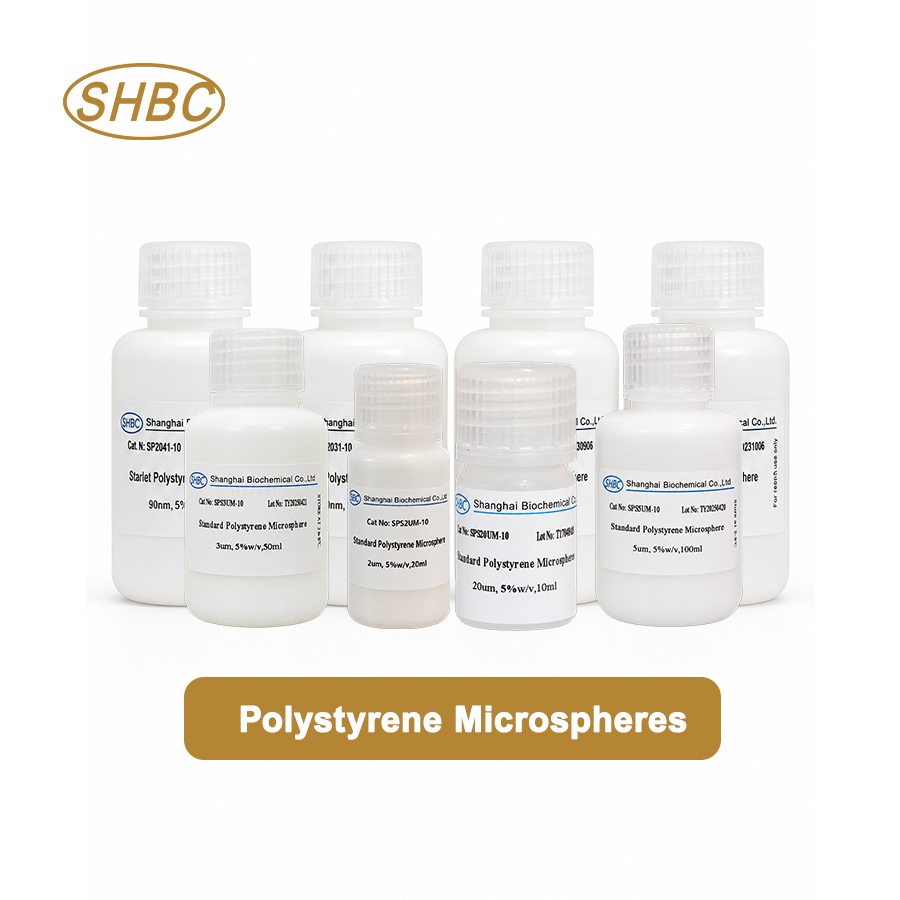
Microspheres are solid particles with a high surface-area-to-volume ratio. This large surface area is useful for immobilizing antibodies, proteins, nucleic acids and other ligands, but it also increases the possibility of nonspecific interactions and particle aggregation.
Two microspheres with the same nominal diameter may behave differently if they have different:
particle size distributions;
densities;
surface charge;
porosity;
crosslinking levels;
functional-group densities;
hydrophobicity;
magnetic content;
fluorescent dye loading.
Therefore, microsphere selection should be based on the complete application rather than particle size alone.
Main Disadvantages of Microspheres
1. Aggregation and Poor Dispersion
Aggregation is one of the most common disadvantages of microspheres. Particles may form clusters because of high surface energy, insufficient electrostatic or steric stabilization, unsuitable pH, high salt concentrations or interactions with proteins in the sample.
Aggregation can cause:
inaccurate particle concentration;
reduced available surface area;
inconsistent antibody or protein coupling;
higher assay background;
slower reaction kinetics;
irregular optical or magnetic signals;
poor reproducibility between experiments.
Gentle mixing, an appropriate dispersion buffer and carefully selected surfactants can improve stability. Excessive vortexing or sonication should be avoided when it could damage attached biomolecules or particle coatings.
2. Sedimentation During Storage and Use
Microspheres with larger particle sizes or higher densities can settle during storage and incubation. Silica and magnetic microspheres generally sediment more quickly than lower-density polymer microspheres.
If the suspension is not completely redispersed before use, the actual particle concentration transferred into each reaction can vary. This may affect coupling capacity, assay sensitivity and test-to-test consistency.
Sedimentation is not always a product defect. It is a physical characteristic influenced by particle size, density difference and medium viscosity. A validated resuspension procedure should therefore be included in the operating protocol.
3. Particle Size Variation
A broad particle size distribution can produce variations in surface area, binding capacity, settling rate and optical response.
Smaller particles usually provide more surface area per unit mass, but they may be more difficult to separate, wash or recover. Larger particles are easier to handle but may sediment quickly and provide less total surface area at the same mass concentration.
For quantitative assays, particle size uniformity and coefficient of variation should be evaluated carefully. Applications such as flow cytometry, lateral flow testing, turbidimetric immunoassays and calibration standards may require particularly narrow size distributions.
4. Nonspecific Adsorption
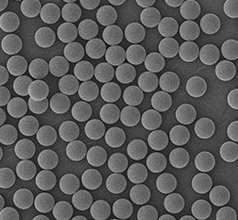
Many polymer microspheres, especially polystyrene particles, have hydrophobic surfaces that can adsorb proteins and other sample components nonspecifically.
Nonspecific adsorption may result in:
elevated background signals;
false-positive results;
reduced assay specificity;
loss of target molecules;
unstable calibration curves;
poor performance in serum, plasma or cell lysates.
Blocking agents such as BSA, casein, recombinant proteins or synthetic blockers can reduce unwanted adsorption. The optimal blocker must be tested because some blocking reagents may interfere with the target-binding reaction or downstream detection method.
5. Variable Surface Coupling Efficiency
Functionalized microspheres rely on surface groups such as carboxyl, amino, epoxy, aldehyde, NHS or streptavidin for biomolecule immobilization.
Coupling efficiency can vary because of:
incorrect activation conditions;
incompatible buffer components;
unsuitable pH;
hydrolysis of activated groups;
low functional-group density;
steric hindrance;
antibody aggregation;
excessive ligand loading.
For example, EDC/NHS coupling on carboxyl microspheres requires control of activation pH, reagent concentration and reaction time. Buffers containing primary amines should not be used during NHS-mediated coupling because they can compete with the target protein.
A higher coupling amount does not always produce a better assay. Excessive antibody density may restrict target access or increase nonspecific binding.
6. Limited Chemical and Thermal Compatibility
Different microsphere materials respond differently to solvents, temperature and extreme pH.
Polystyrene microspheres may swell or lose stability in certain organic solvents. PMMA microspheres provide useful optical and mechanical properties but may not offer the same chemical and thermal resistance as silica. Silica microspheres are rigid and generally stable, but their higher density can increase sedimentation, and exposed silanol groups can cause pH-dependent interactions.
Magnetic beads also depend on the integrity of their polymer or silica coating. Harsh chemical conditions may damage the coating, reduce surface functionality or expose the magnetic core.
Compatibility testing should be performed using the exact buffers, solvents, temperatures and incubation periods required by the application.
7. Optical, Fluorescent and Magnetic Signal Limitations
Microspheres can interfere with detection if their optical or magnetic properties are not matched to the instrument.
Highly concentrated particle suspensions may produce light scattering or turbidity. Fluorescent microspheres may experience photobleaching, spectral overlap or dye leakage if the fluorophore is insufficiently protected. Sample autofluorescence can also reduce signal-to-background ratios.
Magnetic beads require a balance between rapid magnetic separation and good suspension stability. Particles with a strong magnetic response may form compact pellets that are difficult to redisperse, while particles with insufficient magnetic content may separate too slowly.
8. Storage and Shelf-Life Requirements
Microsphere suspensions can change during long-term storage because of aggregation, microbial contamination, surface oxidation, ligand degradation or loss of functional-group activity.
Antibody-coated and protein-coated microspheres are usually more sensitive than unmodified particles. Freeze–thaw cycles, inappropriate preservatives and prolonged exposure to heat or light may reduce biological activity.
Recommended storage conditions should be validated for both the particles and the immobilized biomolecule. Users should also record the date of coupling, storage buffer, concentration and number of freeze–thaw cycles.
9. Manufacturing and Batch-to-Batch Consistency
Producing microspheres with controlled size, morphology and surface chemistry requires precise manufacturing conditions. Small changes in polymerization, washing, functionalization or dispersion processes may influence final performance.
Important quality-control parameters can include:
mean particle size;
particle size distribution;
surface morphology;
solid content;
functional-group density;
surface charge;
dispersion stability;
fluorescence intensity;
magnetic response;
biomolecule-binding capacity.
Applications requiring consistent quantitative results should evaluate representative samples and establish lot-acceptance criteria before changing production batches.
10. Application-Specific Validation and Regulatory Requirements
A microsphere that performs well in a research assay is not automatically suitable for an IVD, pharmaceutical or clinical application.
Users may need to validate raw-material consistency, traceability, biocompatibility, stability, interference, sensitivity and manufacturing controls. Regulatory requirements depend on the final product, intended use and target market.
Microsphere specifications should therefore be considered part of the complete validation process rather than the only evidence of application suitability.
Disadvantages of Different Microsphere Materials
Microsphere Type | Main Advantages | Potential Disadvantages |
|---|---|---|
Polystyrene microspheres | Good protein adsorption, controllable size and strong optical properties | Hydrophobic surface may cause nonspecific adsorption; limited compatibility with some organic solvents |
Carboxyl polystyrene microspheres | Suitable for covalent protein and antibody coupling | Coupling performance depends on activation chemistry, pH and functional-group density |
PMMA microspheres | Useful optical properties, relatively low density and broad size availability | Chemical and thermal resistance may be lower than silica in harsh conditions |
Silica microspheres | Rigid structure, hydrophilic surface and good chemical stability | Higher density causes faster sedimentation; surface silanol groups may create unintended interactions |
Fluorescent microspheres | Sensitive optical detection and multiplexing potential | Possible photobleaching, spectral overlap, autofluorescence interference or dye leakage |
Magnetic beads | Rapid magnetic separation without centrifugation | Aggregation, sedimentation and difficult pellet redispersion may occur if conditions are not optimized |
How to Reduce the Disadvantages of Microspheres
Define the Application Before Selecting the Particle
Start with the sample type, target molecule, detection method, required sensitivity and downstream processing steps. This prevents selection based only on a familiar material or particle diameter.
Select an Appropriate Particle Size
Smaller particles provide greater surface area but can be more difficult to recover. Larger particles are easier to observe and separate but may sediment more quickly. The best size depends on the balance between binding capacity, reaction speed and handling requirements.
Match the Surface Chemistry to the Ligand
Passive adsorption may be sufficient for some proteins, while covalent coupling is more suitable when higher stability is required.
Carboxyl, NHS, amino, epoxy and streptavidin surfaces have different reaction mechanisms. The biomolecule structure and available functional groups should determine the coupling strategy.
Optimize Blocking and Washing Conditions
Blocking should reduce nonspecific adsorption without covering active binding sites. Washing conditions must remove unbound material while preserving the immobilized ligand and particle dispersion.
Both insufficient and excessive washing can reduce assay performance.
Validate Performance in the Actual Sample Matrix
Results obtained in a simple laboratory buffer may not predict performance in serum, plasma, cell lysate, culture medium or environmental samples.
Matrix components can alter particle stability, target binding and signal generation. Testing should therefore include realistic samples and relevant negative controls.
Establish Storage and Resuspension Procedures
Define the storage temperature, buffer, preservative, light protection and maximum storage period. A standardized mixing or resuspension procedure helps maintain consistent particle concentration between tests.
How to Select the Right Microspheres
Before purchasing microspheres, consider the following questions:
What target molecule or analyte will be captured?
Is passive adsorption or covalent immobilization required?
What particle size is compatible with the instrument and separation method?
Will the microspheres contact organic solvents, extreme pH or elevated temperatures?
Is low nonspecific binding critical?
Is optical, fluorescent or magnetic detection required?
What level of batch consistency is needed?
Does the application require custom particle size or surface functionalization?
Answering these questions makes it easier to compare polystyrene, PMMA, silica, fluorescent and magnetic particles objectively.
Microsphere Solutions from SANYU GROUP
SANYU GROUP supplies polystyrene microspheres, carboxyl-functionalized microspheres, PMMA microspheres, silica microspheres, fluorescent microspheres and magnetic beads for research, diagnostics, immunoassays, separation and industrial applications.
Multiple particle sizes and surface chemistries allow developers to select particles according to binding mechanism, detection platform and sample requirements.
For projects that cannot be supported by a standard specification, custom particle design, surface functionalization and OEM/ODM services can help align particle properties with the intended workflow.
Final product selection should always be confirmed through testing in the customer’s actual buffer, sample matrix and analytical system.
Frequently Asked Questions
What Is the Biggest Disadvantage of Microspheres?
There is no single disadvantage that applies equally to every microsphere. Aggregation, nonspecific binding and batch consistency are common concerns, but the most important limitation depends on the material and application.
Why Do Microspheres Aggregate?
Aggregation can result from high surface energy, insufficient surface charge, unsuitable pH, high ionic strength, protein bridging or improper storage. Optimizing the dispersion buffer and surface treatment can improve stability.
Are Smaller Microspheres Always Better?
No. Smaller microspheres provide more surface area per unit mass, but they may be harder to wash, separate and recover. Larger microspheres are easier to handle but generally sediment more quickly.
Are Silica Microspheres Better Than Polymer Microspheres?
Neither material is universally better. Silica provides rigidity and chemical stability, while polymer microspheres can offer lower density, flexible surface modification and useful optical properties. Selection depends on the required application.
How Can Nonspecific Binding Be Reduced?
Nonspecific binding can be reduced through appropriate blocking agents, optimized buffer composition, controlled surface chemistry and sufficient washing. The blocking method should be validated using the actual sample matrix.
How Can Antibody Coupling to Microspheres Be Improved?
Use a surface chemistry compatible with the antibody, remove interfering buffer components, control pH and reaction time, and optimize the antibody-to-particle ratio. Coupling efficiency and retained antibody activity should both be evaluated.
Can Microspheres Be Reused?
Some microspheres can be regenerated, but reuse depends on the stability of the particle, surface coating and immobilized ligand. Harsh regeneration conditions may reduce binding capacity and increase variability. Single use is often preferred for quantitative diagnostic applications.
Conclusion
The disadvantages of microspheres mainly arise from aggregation, sedimentation, nonspecific adsorption, size variation, coupling variability, material compatibility and storage requirements. These limitations can usually be controlled by matching particle material, size and surface chemistry to the intended application.
SANYU GROUP provides polystyrene microspheres, carboxyl polystyrene microspheres, PMMA microspheres, silica microspheres and magnetic beads in multiple specifications for diagnostic, separation, research and industrial applications.
Explore the complete microsphere product portfolio or contact our technical team to discuss the appropriate particle material, diameter and surface functionality for your project.
Related Blogs
-
 How Silica Magnetic Beads Work: Quick AnswerSilica magnetic beads extract DNA and RNA through a reversible bind–wash–elute process.First, a lysis buffer breaks open cells, viruses or other biological materials and releases nucleic acids into solution. A binding buffer containing salts—and often alco
-
 Overview of the Silica Magnetic Bead MarketSilica magnetic beads are functional magnetic particles used to extract and purify DNA or RNA from biological, clinical, food, environmental and research samples.A typical bead contains a magnetic core and a silica or silica-like outer surface. Under suitab
-
 How to Choose Silica Magnetic Beads: Quick AnswerChoose silica magnetic beads according to the complete extraction workflow—not according to particle diameter or catalog price alone.The correct bead must match:The target nucleic acid;The sample matrix;The expected nucleic acid concentration;The requ
-
 Quick Answer: Top 10 Microsphere Manufacturers Serving EuropeThe top 10 microsphere manufacturers and specialist particle suppliers serving European lateral flow assay developers in 2026 are:Merck EstaporSHBCBangs LaboratoriesPolysciencesThermo Fisher ScientificJSR Life SciencesMagsphereSpherotechmi


