


How to Elute from Magnetic Beads
Elution from magnetic beads is the process of releasing a captured molecule from the bead system after binding, magnetic separation and washing.
However, there is no single elution buffer that works for every magnetic bead.
The correct elution method depends on the interaction holding the target to the bead.
For example, DNA bound to silica magnetic beads is usually released under low-salt aqueous conditions, while His-tagged proteins captured on nickel magnetic beads are commonly released by changing the metal-affinity interaction.
Other bead systems may use changes in pH, ionic strength, competitive ligands or denaturing conditions.
Therefore, the first step in any magnetic bead elution protocol is to identify the binding mechanism.
Quick Answer: How Do You Elute from Magnetic Beads?
A general magnetic bead elution workflow is:
Complete the final wash.
Remove residual wash buffer.
Remove the tube from the magnet.
Add a compatible elution buffer.
Fully resuspend the magnetic beads.
Incubate under conditions appropriate for the target.
Place the tube back on the magnet.
Allow the beads to collect.
Transfer the supernatant containing the eluted target to a clean tube.
The exact buffer, pH, salt concentration, temperature and incubation time depend on the bead surface chemistry and captured molecule.
Why Magnetic Bead Elution Depends on Surface Chemistry
Magnetic beads are separation tools, but their magnetic properties do not determine how a biomolecule is released.
The magnetic core allows the particles to move in response to an external magnetic field.
Binding and elution are controlled mainly by the bead surface and the chemistry used to capture the target.
Common magnetic bead systems include:
silica magnetic beads for nucleic acid purification;
nickel or Ni-NTA magnetic beads for His-tagged proteins;
streptavidin magnetic beads for biotinylated molecules;
antibody-functionalized magnetic beads for immunoprecipitation;
carboxyl, amino, NHS, epoxy and tosyl magnetic beads used as ligand-coupling platforms.
Because these systems use different interactions, their elution conditions are also different.
Eluting DNA and RNA from Silica Magnetic Beads
Silica magnetic beads are widely used for DNA and RNA extraction.
During binding, nucleic acids adsorb to the silica surface under suitable high-salt or chaotropic conditions.
After washing, DNA or RNA is typically released by changing to a low-ionic-strength aqueous environment.
Common elution options include:
nuclease-free water;
low-salt Tris buffer;
another nucleic-acid-compatible low-salt buffer.
When low-salt buffer or water is added, the silica surface and nucleic acid become rehydrated and the interaction weakens.
The released DNA or RNA moves into the liquid phase.
The beads can then be magnetically separated and the purified nucleic acid transferred to a clean tube.
Step-by-Step DNA and RNA Elution from Silica Magnetic Beads
Step 1: Complete the Final Wash
Complete all required wash steps before elution.
Residual proteins, chaotropic salts, alcohol and other contaminants can reduce downstream assay performance.
After the final wash, place the tube on the magnet and carefully remove the wash solution.
Step 2: Remove Residual Wash Buffer
Residual alcohol can interfere with PCR, qPCR, reverse transcription and other enzymatic reactions.
Remove as much residual wash buffer as practical without disturbing or losing the magnetic beads.
However, excessive drying should also be avoided because overdried beads can become difficult to resuspend.
Step 3: Add the Elution Buffer
Remove the vessel from the magnetic field.
Add nuclease-free water or an appropriate low-salt elution buffer.
The buffer should be compatible with the intended downstream application.
Step 4: Resuspend the Beads
Fully resuspend the magnetic beads in the elution buffer.
This is important because DNA or RNA must come into contact with the new low-salt environment before efficient release can occur.
Avoid leaving a compact bead pellet against the tube wall during elution.
Step 5: Allow Nucleic Acid Release
Allow sufficient contact time between the bead surface and elution buffer.
The optimum incubation condition depends on the bead system, nucleic acid type and desired recovery.
There is no universal incubation time or temperature that should be applied to every silica magnetic bead product.
Step 6: Magnetically Separate the Beads
Place the vessel back on the magnetic separator.
Wait until the beads have collected and the liquid is sufficiently clear.
Step 7: Transfer the Eluate
Carefully transfer the supernatant to a clean tube.
The supernatant now contains the purified DNA or RNA.
Avoid transferring magnetic particles into the final eluate.
Elution Volume: Concentration vs Total Recovery
Elution volume affects both final concentration and recovery.
A smaller elution volume generally produces a more concentrated sample.
However, if the volume is too small to fully resuspend and contact the bead surface, total recovery may decrease.
A larger volume can improve contact with the bead surface but produces a more dilute final sample.
The optimum volume therefore depends on:
amount of magnetic beads;
nucleic acid input;
required final concentration;
vessel geometry;
downstream application.
For this reason, fixed volume recommendations should not be applied to every magnetic bead system.
Does Heating Improve DNA Elution?
Moderate warming can improve nucleic acid release in some silica magnetic bead workflows.
However, temperature should be optimized according to the specific protocol.
Higher temperature is not automatically better.
The appropriate condition depends on:
DNA or RNA stability;
fragment length;
bead chemistry;
elution buffer;
downstream assay.
When working with RNA or heat-sensitive samples, unnecessary heating should be avoided.
Manufacturer-specific or validated extraction-kit conditions should take priority.
Can You Perform a Second Elution?
Yes.
If maximum total recovery is more important than final concentration, a second elution can sometimes recover additional material remaining on the beads.
The second eluate may be analyzed separately or combined with the first fraction.
However, combining the fractions also increases total volume and reduces final concentration.
A second elution should therefore be selected according to the downstream application.
Eluting His-Tagged Proteins from Nickel Magnetic Beads
Nickel magnetic beads use metal-affinity chemistry to capture proteins carrying polyhistidine tags.
This binding mechanism is completely different from silica-DNA adsorption.
For Ni-NTA systems, His-tagged proteins are commonly eluted using a competitive ligand such as imidazole.
Imidazole competes with histidine residues for interaction with the immobilized nickel ions.
As the imidazole concentration increases, the His-tagged protein can be released from the nickel magnetic bead.
Another possible strategy in some metal-affinity systems is to change the pH sufficiently to weaken histidine-metal binding.
However, the exact conditions should be selected according to the magnetic bead system and protein stability.
Commercial Ni-NTA magnetic bead protocols commonly use substantially more imidazole during elution than during binding or washing.
General Nickel Magnetic Bead Elution Workflow
The general workflow is:
Capture the His-tagged protein.
Magnetically separate the beads.
Wash to remove nonspecific proteins.
Remove the final wash solution.
Add the selected elution buffer.
Resuspend the beads.
Incubate under protein-compatible conditions.
Magnetically collect the beads.
Recover the protein-containing supernatant.
The elution conditions should balance protein recovery and preservation of protein activity.
If the protein must remain in a native state, harsh pH or denaturing conditions may not be appropriate.
Elution from Streptavidin Magnetic Beads
Streptavidin magnetic beads require special consideration.
The streptavidin-biotin interaction is extremely strong.
Therefore, directly releasing a biotinylated molecule from conventional streptavidin beads under mild conditions can be difficult.
Harsh conditions can sometimes disrupt the interaction, but these conditions may also denature streptavidin or damage the target.
For workflows where recovery of the biotinylated molecule is required, the release strategy should ideally be designed before binding.
Possible approaches include:
using a cleavable linker;
using a reversible biotin analogue;
releasing another member of the captured complex rather than breaking the streptavidin-biotin interaction.
Commercial streptavidin bead guidance likewise notes that conventional biotin-streptavidin binding generally requires harsh conditions for direct dissociation.
Eluting Proteins from Antibody Magnetic Beads
Immunoprecipitation magnetic beads usually capture a target through an antibody-antigen interaction.
Possible protein elution strategies include:
Low-pH Elution
An acidic buffer can weaken antibody-antigen interactions and release the captured protein.
If the recovered protein is sensitive to acidic conditions, the eluate may need rapid neutralization.
Competitive Elution
A soluble ligand, peptide or antigen can sometimes compete with the bead-bound interaction.
This can provide a milder elution method when a suitable competitor is available.
Denaturing Elution
If the downstream application is SDS-PAGE or Western blotting, proteins can sometimes be recovered using denaturing sample buffer.
This provides strong elution but does not preserve native protein structure.
The correct strategy depends on whether the downstream application requires native protein activity.
What About Carboxyl, NHS, Amino and Epoxy Magnetic Beads?
Carboxyl, NHS, amino and epoxy magnetic beads are often used as coupling platforms.
Antibodies, proteins, peptides or other ligands can be covalently attached to the bead surface.
In these systems, the immobilized ligand is normally intended to remain attached to the bead.
The molecule that is subsequently captured by that ligand may be eluted by disrupting the ligand-target interaction.
Therefore, the correct elution method depends on what has been immobilized.
For example:
Carboxyl Magnetic Bead + Covalently Coupled Antibody + Antigen
The antibody is normally retained on the bead.
The antigen may be released by altering antibody-antigen binding conditions.
This distinction is important because an elution buffer should not automatically be expected to reverse the original covalent coupling chemistry.
Not Every Magnetic Bead Interaction Should Be Eluted
Some magnetic bead systems are specifically designed for stable immobilization.
Examples include:
covalent DBCO-azide conjugates;
covalently coupled proteins on NHS beads;
proteins immobilized through EDC/NHS chemistry;
strongly bound biotin-streptavidin complexes.
In these cases, the purpose of the bead may be to keep the ligand permanently attached.
If target release is required, a reversible interaction or cleavable linker should be incorporated when designing the assay.
Elution strategy is therefore best considered before the bead coupling step.
Factors That Affect Magnetic Bead Elution Efficiency
Binding Mechanism
This is the most important factor.
Silica adsorption, metal affinity, antibody affinity and streptavidin-biotin binding require different elution strategies.
Elution Buffer
The buffer must specifically weaken the interaction responsible for binding.
Examples include:
low ionic strength for silica-bound nucleic acids;
competitive imidazole for Ni-NTA systems;
altered pH for selected protein-affinity interactions;
competitive ligand for selected affinity systems.
Elution Volume
A smaller volume increases final concentration but may reduce complete recovery.
A larger volume may improve total recovery but dilute the sample.
Incubation
Some interactions release rapidly, while others require additional contact time.
Incubation should be optimized rather than extended automatically.
Mixing
The bead pellet should generally be resuspended during elution.
Poor resuspension reduces bead-buffer contact and may decrease recovery.
Temperature
Temperature can influence the rate of release.
However, the target molecule may be sensitive to heat.
Bead Drying
For nucleic acid extraction, excessive drying after alcohol washing can make silica magnetic beads difficult to resuspend and may reduce recovery.
Magnetic Bead Carryover
Beads accidentally transferred into the eluate can affect downstream optical measurements, enzymatic assays or analytical instruments.
Allow complete magnetic collection before transferring the final supernatant.
Why Is My Elution Yield Low?
Low elution yield can originate from either the elution step or an earlier step.
First determine whether the target successfully bound to the magnetic beads.
If large amounts of the target remained in the binding supernatant, changing the elution buffer will not solve the main problem.
Possible reasons for low recovery include:
incomplete initial binding;
insufficient bead quantity;
target loss during washing;
overdried silica beads;
inappropriate elution buffer;
incomplete bead resuspension;
inadequate incubation;
unsuitable pH;
incompatible downstream quantification.
Analyze the input, binding supernatant, wash fraction and eluate when possible.
This makes it easier to identify where the target was lost.
Why Are Magnetic Beads Present in the Eluate?
Magnetic bead carryover usually occurs because the particles have not completely collected before the supernatant is transferred.
Possible improvements include:
allowing additional magnetic separation time;
using an appropriate magnetic separator;
slowing the aspiration rate;
positioning the pipette away from the bead pellet;
transferring the eluate again on a magnet if necessary.
Particle size and magnetic response can also affect separation behavior.
Why Is DNA Concentration High but PCR Performance Poor?
A high measured nucleic acid concentration does not necessarily indicate clean DNA.
Possible causes include:
residual ethanol;
chaotropic salt carryover;
protein contamination;
bead carryover;
other sample inhibitors.
If PCR performance is poor, evaluate purity and extraction chemistry rather than only nucleic acid concentration.
How to Improve Elution Reproducibility
For reproducible results, keep the following variables consistent:
bead quantity;
sample volume;
wash procedure;
degree of bead drying;
elution buffer;
elution volume;
mixing method;
incubation condition;
magnetic separation time.
When optimizing a protocol, change one major variable at a time.
This makes it easier to identify which condition actually improves recovery.
Silica Magnetic Beads for DNA and RNA Purification
Silica magnetic beads are designed for reversible nucleic acid binding and magnetic separation.

They are suitable for applications including genomic DNA extraction, viral DNA/RNA purification, total RNA extraction, PCR product purification and automated nucleic acid extraction.
For silica-based systems, successful elution depends on both the bead surface and the surrounding extraction chemistry.
SANYU GROUP supplies Silica Magnetic Beads for nucleic acid extraction and purification, including multiple particle-size options for manual and automated workflows.
Nickel Magnetic Beads for His-Tag Protein Purification
Nickel Magnetic Beads provide a metal-affinity platform for His-tagged recombinant protein capture and purification.

The captured protein can be released using an elution condition appropriate for the Ni-NTA interaction and the stability requirements of the target protein.
SANYU GROUP supplies Nickel Magnetic Beads in multiple particle sizes for His-tag protein purification and biomolecule separation.
Streptavidin Magnetic Beads for Biotin-Based Capture
Streptavidin Magnetic Beads provide high-affinity capture of biotinylated antibodies, proteins, peptides and nucleic acid probes.
Because conventional streptavidin-biotin binding is extremely strong, researchers should determine in advance whether the final workflow requires permanent immobilization or recovery of the biotinylated target.
SANYU GROUP provides Streptavidin Magnetic Beads in multiple particle sizes for immunoassays, nucleic acid capture and bioseparation applications.
Frequently Asked Questions About Eluting from Magnetic Beads
What Is the Best Elution Buffer for Magnetic Beads?
There is no universal best buffer.
The correct buffer depends on the binding mechanism.
Silica-bound nucleic acids commonly use low-salt aqueous elution, while Ni-NTA protein purification commonly uses competitive imidazole-based elution.
Can I Elute DNA with Water?
Yes.
Nuclease-free water can be used for many silica magnetic bead nucleic acid purification workflows.
A suitable low-salt buffer may provide better pH control for some applications.
Should Magnetic Beads Be on the Magnet During Elution?
The beads normally need to be resuspended in the elution buffer so that the entire particle surface can contact the new buffer.
After incubation, place the vessel back on the magnet and recover the target-containing supernatant.
Does More Elution Buffer Increase Yield?
It can improve total recovery in some systems, but it also reduces final concentration.
The optimum volume should be determined according to the bead amount and downstream requirements.
Can I Elute Twice?
Yes.
A second elution may improve total recovery, although the resulting sample will be more dilute if the fractions are combined.
Why Does DNA Remain on Silica Magnetic Beads?
Possible causes include overdrying, incomplete resuspension, unsuitable elution conditions or insufficient contact with the elution buffer.
How Are His-Tagged Proteins Eluted from Nickel Magnetic Beads?
Competitive imidazole is commonly used in Ni-NTA purification systems to release His-tagged proteins.
The exact concentration should follow the selected bead protocol and protein requirements.
Can Biotin Be Easily Eluted from Streptavidin Magnetic Beads?
Generally not under mild conditions.
The streptavidin-biotin interaction is extremely strong, so a reversible capture strategy should be designed in advance when gentle recovery is required.
Can Elution Damage My Protein?
Yes.
Low pH, denaturing agents, elevated temperature and other harsh conditions can affect protein structure or activity.
Use the mildest conditions compatible with the binding interaction when native protein recovery is required.
How Can I Reduce Magnetic Bead Carryover?
Allow complete magnetic collection and transfer the supernatant carefully from the side opposite the bead pellet.
Conclusion
Successful elution from magnetic beads begins with understanding how the target was captured.
Silica magnetic beads, nickel magnetic beads, antibody affinity beads and streptavidin magnetic beads do not use the same binding chemistry and therefore should not use the same elution conditions.
For DNA and RNA purification with silica magnetic beads, low-salt aqueous conditions are commonly used to release nucleic acids after washing.
For His-tag protein purification using nickel magnetic beads, competitive metal-affinity elution such as imidazole-based conditions is commonly used.
For antibody and other affinity systems, elution may depend on pH, salt, competitive ligands or denaturing conditions.
Strong or covalent immobilization systems may require a specially designed release mechanism rather than a conventional elution buffer.
SANYU GROUP supplies Silica Magnetic Beads, Nickel Magnetic Beads, Streptavidin Magnetic Beads and other functional magnetic bead platforms for nucleic acid purification, protein purification, immunoassays and bioseparation.
If you need help selecting magnetic bead surface chemistry or particle size for a purification workflow, contact our technical team with your target molecule, binding mechanism and downstream application.
Related Blogs
-
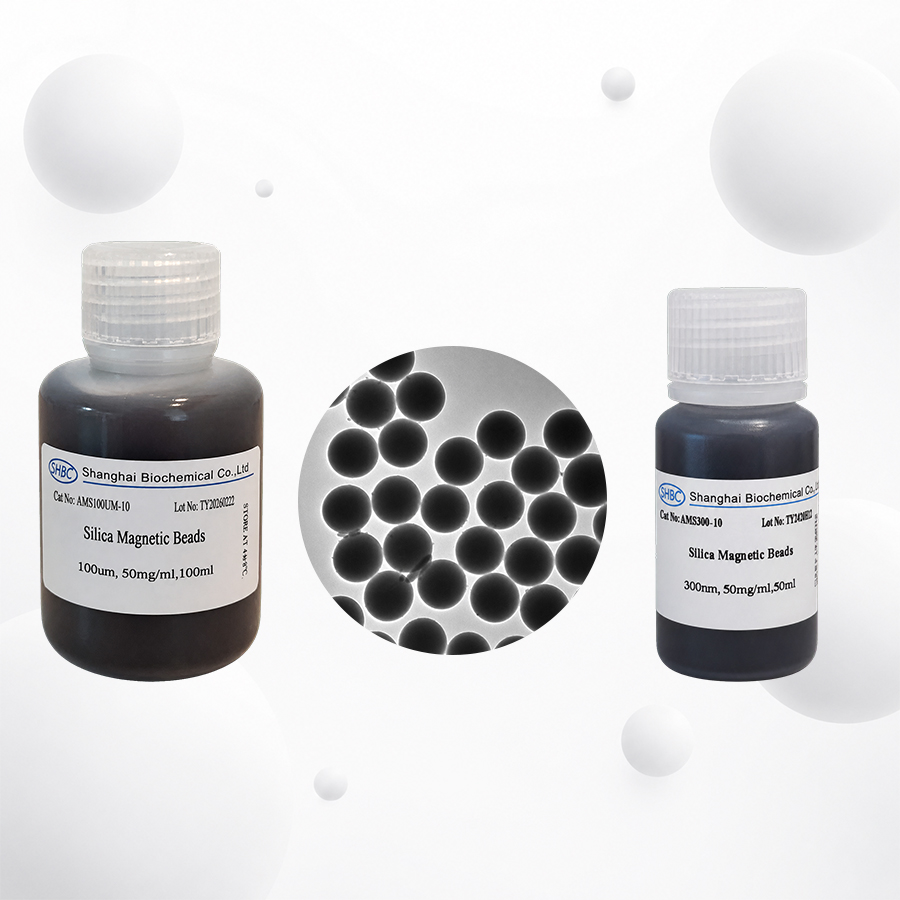 How Silica Magnetic Beads Work: Quick AnswerSilica magnetic beads extract DNA and RNA through a reversible bind–wash–elute process.First, a lysis buffer breaks open cells, viruses or other biological materials and releases nucleic acids into solution. A binding buffer containing salts—and often alco
-
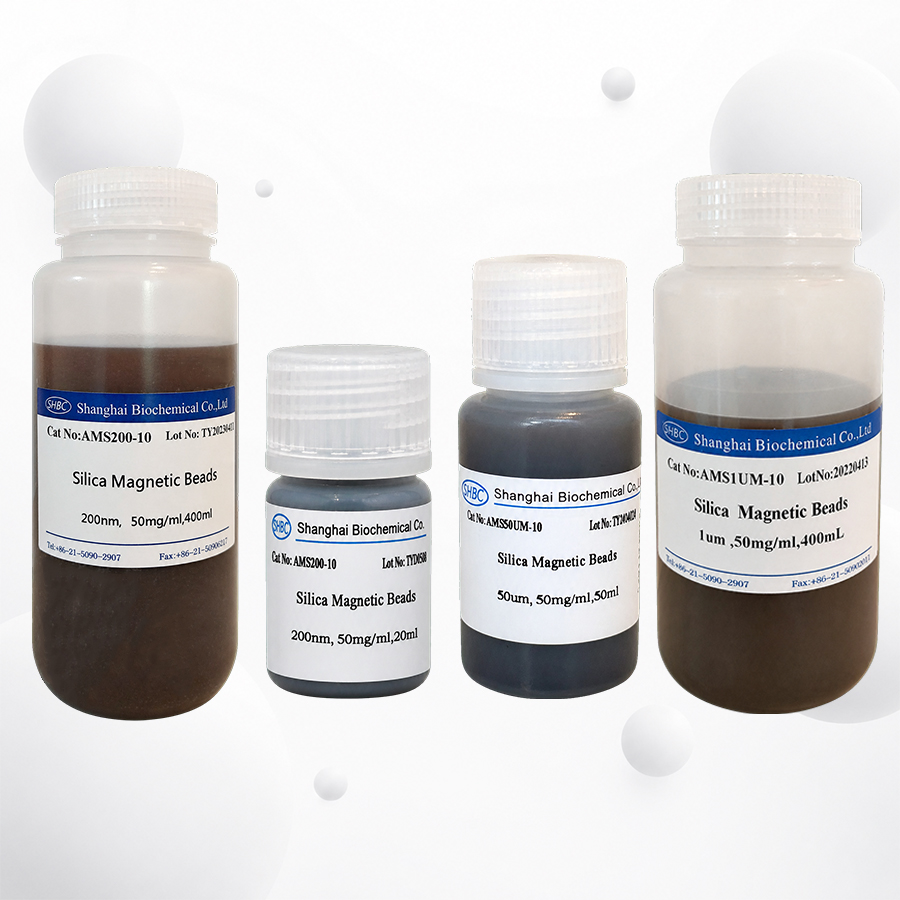 Overview of the Silica Magnetic Bead MarketSilica magnetic beads are functional magnetic particles used to extract and purify DNA or RNA from biological, clinical, food, environmental and research samples.A typical bead contains a magnetic core and a silica or silica-like outer surface. Under suitab
-
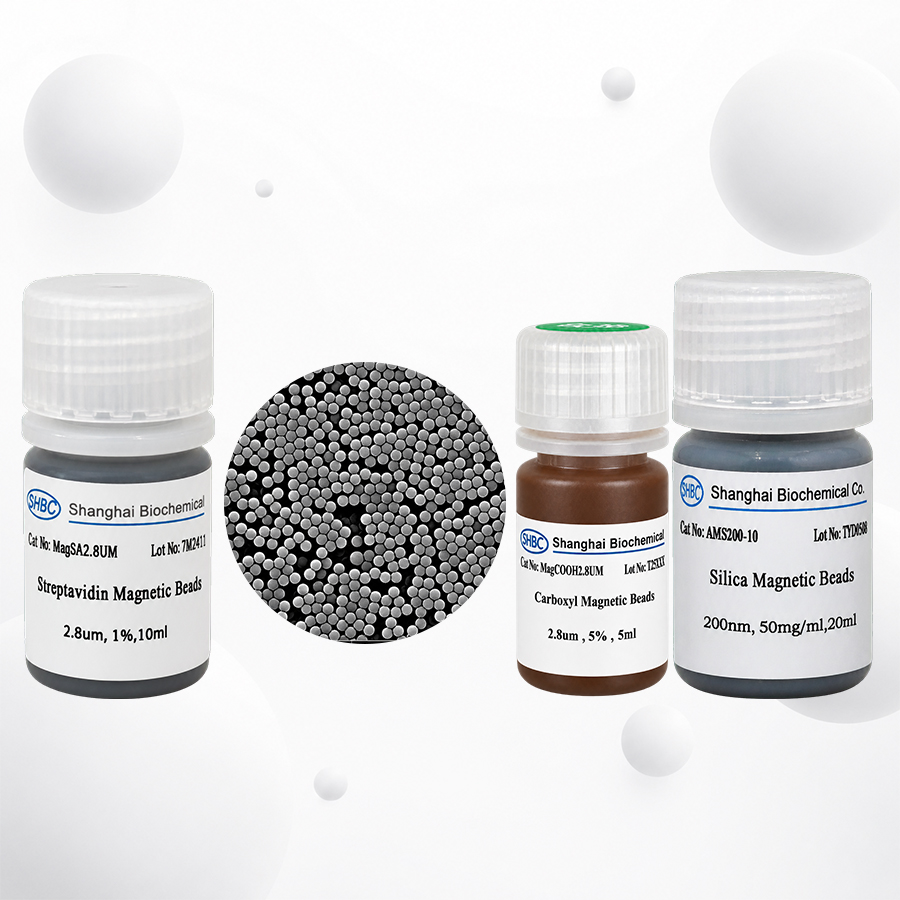 How to Choose Silica Magnetic Beads: Quick AnswerChoose silica magnetic beads according to the complete extraction workflow—not according to particle diameter or catalog price alone.The correct bead must match:The target nucleic acid;The sample matrix;The expected nucleic acid concentration;The requ
-
 Quick Answer: Top 10 Microsphere Manufacturers Serving EuropeThe top 10 microsphere manufacturers and specialist particle suppliers serving European lateral flow assay developers in 2026 are:Merck EstaporSHBCBangs LaboratoriesPolysciencesThermo Fisher ScientificJSR Life SciencesMagsphereSpherotechmi


