


How Do Magnetic Beads Bind DNA?
Magnetic beads bind DNA through surface chemistry combined with carefully controlled buffer conditions.
The exact binding mechanism depends on the magnetic bead surface.
For nucleic acid extraction, one of the most widely used systems is silica-coated magnetic beads. Under suitable high-salt or chaotropic conditions, DNA loses part of its hydration shell and adsorbs reversibly onto the silica surface.
The magnetic beads can then be collected using an external magnet while proteins, salts and other contaminants are removed.
After washing, purified DNA is released from the beads using a low-salt buffer or water.
This simple bind-wash-elute principle makes magnetic beads highly suitable for manual and automated DNA purification workflows.
Quick Answer: Why Does DNA Bind to Magnetic Beads?
DNA does not bind to every magnetic bead in the same way.
The interaction depends mainly on:
bead surface chemistry;
binding buffer composition;
salt concentration;
pH;
alcohol or other additives;
DNA fragment size;
bead-to-sample ratio;
mixing and incubation conditions.
For silica magnetic beads, high concentrations of chaotropic salts help disrupt water structure and reduce hydration around DNA and the silica surface.
This creates conditions that favor reversible adsorption of nucleic acids onto silica.
Once bound, the bead-DNA complex can be separated magnetically, washed and finally eluted under lower-salt aqueous conditions.
What Are DNA-Binding Magnetic Beads?
DNA-binding magnetic beads are small magnetic particles designed with a surface chemistry that can interact with nucleic acids under defined buffer conditions.
A typical magnetic bead contains:
a magnetic core;
a protective or functional coating;
a surface designed for nucleic acid adsorption or ligand attachment.
When placed in a magnetic field, the particles move rapidly toward the magnet.
This allows researchers to separate bead-bound DNA without centrifugation or filtration.
The same general format can be adapted for:
DNA extraction;
RNA purification;
PCR cleanup;
plasmid purification;
NGS sample preparation;
size selection;
targeted nucleic acid capture.
The Main DNA-Binding Mechanisms of Magnetic Beads
Different magnetic bead systems use different binding principles.
Understanding this distinction is important when selecting beads for a nucleic acid workflow.
Silica Magnetic Beads: Chaotropic Salt-Mediated DNA Binding
Silica magnetic beads are widely used for DNA and RNA extraction.
Their surface contains silica with hydroxyl groups.
Under normal aqueous conditions, both DNA and silica surfaces interact strongly with water.
When a chaotropic binding buffer is added, the hydration environment changes.
Chaotropic salts reduce structured water around DNA and silica and promote reversible interaction between nucleic acids and the silica surface.
High ionic strength also helps reduce electrostatic repulsion between the negatively charged DNA phosphate backbone and silica surface.
As a result, DNA can adsorb onto the silica-coated magnetic beads.
This interaction is reversible.
When the salt concentration is reduced during elution, DNA becomes strongly hydrated again and is released back into solution.
Carboxyl Magnetic Beads and SPRI-Type DNA Binding
Some nucleic acid purification systems use carboxyl-functionalized magnetic beads instead of silica.
These systems are commonly associated with Solid Phase Reversible Immobilization, or SPRI-type workflows.
DNA binding is promoted by a combination of:
polyethylene glycol or another crowding agent;
salt ions;
bead surface chemistry;
nucleic acid size;
bead-to-sample ratio.
The crowding environment reduces DNA solubility and promotes reversible association with the bead surface.
By changing the bead-to-sample ratio and buffer composition, SPRI-type systems can also be used for DNA fragment cleanup and size selection.
This binding principle is different from silica-chaotropic salt adsorption.
Streptavidin Magnetic Beads for Biotinylated DNA
Streptavidin magnetic beads provide another type of nucleic acid capture.
They do not generally capture all DNA directly.
Instead, DNA must first contain a biotin label.
The extremely strong interaction between streptavidin and biotin allows biotinylated DNA, oligonucleotides or probes to be captured selectively.
This approach is commonly used for:
targeted DNA capture;
hybridization assays;
probe immobilization;
nucleic acid enrichment;
pull-down applications.
Therefore, when asking how magnetic beads bind DNA, it is important to first identify the bead surface chemistry.
How Silica Magnetic Beads Bind DNA Step by Step
For nucleic acid extraction, the most common workflow can be summarized as:
Lysis → Binding → Magnetic Separation → Washing → Elution
Step 1: Sample Lysis
The biological sample must first be disrupted to release DNA or RNA.
Depending on the sample type, the lysis buffer may contain:
chaotropic salts;
detergents;
buffering agents;
protein denaturants;
nuclease-inhibiting components.
The goal is to release nucleic acids while disrupting proteins, membranes and other cellular structures.
Step 2: DNA Binding to the Silica Magnetic Beads
Silica magnetic beads are added to the lysate under suitable binding conditions.
Chaotropic salts and other buffer components create an environment that favors nucleic acid adsorption to the silica surface.
The beads should be mixed thoroughly enough to provide sufficient contact between:
DNA;
binding buffer;
silica surface.
The required incubation time depends on the bead system, sample volume and nucleic acid concentration.
Step 3: Magnetic Separation
After DNA has bound to the bead surface, the tube or plate is placed on a magnetic separator.
The magnetic beads move toward the magnet.
The supernatant can then be removed while the bead-bound DNA remains in the vessel.
This avoids the need for traditional centrifugation-based separation.
Step 4: Washing the DNA-Bound Beads
The bead pellet is washed to remove contaminants.
Depending on the workflow, washing helps remove:
proteins;
lipids;
salts;
residual cellular debris;
PCR inhibitors;
other unwanted sample components.
Many nucleic acid purification workflows use alcohol-containing wash buffers because they help maintain DNA binding while contaminants are removed.
The beads should generally remain hydrated during washing.
Step 5: Drying After the Wash
After the final alcohol wash, residual wash solution should be removed.
However, excessive bead drying should be avoided.
If beads are overdried, they may become difficult to resuspend and DNA recovery may decrease.
The optimum drying time depends on the extraction protocol.
Step 6: DNA Elution
After washing, a low-salt aqueous buffer or nuclease-free water is added.
Under these conditions, DNA becomes hydrated again and releases from the silica surface.
Typical elution buffers may include:
nuclease-free water;
Tris-based buffer;
low-salt elution buffer.
Gentle mixing and sufficient contact time can improve DNA recovery.
The tube is then placed back on the magnet and the purified DNA-containing supernatant is transferred to a clean vessel.
Why Are Chaotropic Salts Important for Silica-DNA Binding?
Chaotropic salts play a central role in many silica-based DNA purification workflows.
Common chaotropic agents can:
disrupt hydrogen-bonding networks;
denature proteins;
reduce nuclease activity;
alter the hydration environment;
promote nucleic acid adsorption to silica.
Guanidinium salts are frequently used in nucleic acid extraction buffers.
Under appropriate conditions, they promote DNA or RNA binding to silica while helping denature proteins and biological contaminants.
The result is a reversible solid-phase nucleic acid purification system.
What Role Does pH Play in DNA Binding?
pH can influence:
DNA charge;
silica surface charge;
buffer chemistry;
adsorption strength.
DNA contains negatively charged phosphate groups across a wide pH range.
Silica surfaces also contain ionizable silanol groups.
The binding buffer therefore needs to balance pH, ionic strength and other chemical conditions to reduce unfavorable electrostatic interactions and support adsorption.
An unsuitable pH can reduce DNA yield or change selectivity.
What Role Does Salt Concentration Play?
Salt concentration strongly affects nucleic acid binding.
At higher ionic strength, ions can help shield negative charges and reduce electrostatic repulsion.
This can enhance DNA adsorption to the solid phase.
During elution, the salt concentration is reduced.
The DNA becomes more strongly hydrated and the interaction with the bead surface weakens, allowing the nucleic acid to return to solution.
What Role Does Alcohol Play?
Alcohols such as ethanol or isopropanol are commonly included in nucleic acid purification workflows.
They can:
reduce DNA solubility;
reduce water activity;
support nucleic acid adsorption;
help maintain DNA binding during washing.
However, the required alcohol concentration depends on the extraction chemistry.
Too much residual alcohol after washing can interfere with downstream applications such as PCR.
For this reason, residual wash buffer should be adequately removed before elution.
Factors That Affect Magnetic Bead DNA Binding
DNA binding efficiency depends on both the beads and the surrounding chemistry.
Magnetic Bead Surface Chemistry
Silica, carboxyl, streptavidin and other surfaces use different DNA-binding mechanisms.
The correct bead chemistry should be selected for the application.
Particle Size
Particle size influences:
available surface area;
settling behavior;
magnetic response;
binding kinetics;
automation compatibility.
Smaller particles generally provide greater surface area per unit mass, while larger particles may separate more rapidly.
Binding Buffer
Buffer composition can strongly influence recovery.
Important parameters include:
chaotropic salt concentration;
ionic strength;
pH;
alcohol concentration;
additives.
Bead-to-Sample Ratio
Too few beads may reduce binding capacity.
Too many beads can increase reagent use and may change selectivity in some cleanup workflows.
Mixing
Efficient but gentle mixing helps improve contact between DNA and the magnetic bead surface.
Poor mixing may reduce recovery.
Incubation Time
Binding must be given sufficient time to reach the required efficiency.
Longer incubation is not always better, so protocol-specific conditions should be followed.
DNA Fragment Size
DNA fragment length can influence binding and recovery.
This is particularly important in SPRI-type cleanup and size-selection workflows.
Why Use Magnetic Beads for DNA Extraction?
Magnetic bead purification offers several practical advantages.
No Centrifugation Required
The beads can be collected with an external magnetic field.
Easy Automation
Magnetic separation is well suited to robotic liquid handling and automated nucleic acid extraction instruments.
High-Throughput Processing
Multiple tubes or multiwell plates can be processed simultaneously.
Scalable Sample Volumes
The amount of magnetic bead reagent can be adjusted according to sample volume and nucleic acid concentration.
Reduced Manual Handling
Bind-wash-elute workflows can reduce transfers between columns and tubes.
Compatible With Molecular Diagnostics
Magnetic bead extraction is widely used before:
PCR;
qPCR;
RT-PCR;
sequencing;
molecular diagnostic assays.
Common Applications of DNA-Binding Magnetic Beads
Genomic DNA Extraction
Silica magnetic beads can be used to isolate genomic DNA from:
blood;
tissues;
cultured cells;
plants;
microorganisms.
Viral DNA and RNA Extraction
Magnetic bead purification is widely used in molecular diagnostic workflows for extracting viral nucleic acids.
Total RNA Purification
Suitable silica-based magnetic bead chemistry can also be used for RNA purification.
RNase-free handling and appropriate lysis conditions are important.
PCR Product Purification
Magnetic beads can remove:
primers;
nucleotides;
salts;
enzymes;
other PCR components.
Purified DNA can then be used for downstream analysis.
Plasmid DNA Purification
Magnetic bead workflows can also be adapted for plasmid purification.
NGS Library Preparation
Magnetic beads are widely used for nucleic acid cleanup and size selection during next-generation sequencing library preparation.
Silica Magnetic Beads vs Spin Columns
Both silica magnetic beads and silica membrane spin columns use solid-phase nucleic acid purification principles.
However, the separation method is different.
Feature | Silica Magnetic Beads | Silica Spin Columns |
|---|---|---|
Separation | Magnetic field | Centrifugation or vacuum |
Automation | Highly suitable | More limited |
Multiwell processing | Easy to scale | Depends on format |
Sample transfer | Can be minimized | Often requires column handling |
High-throughput workflow | Well suited | Possible but less flexible |
Magnetic beads are particularly attractive for automated and high-throughput extraction workflows.
Common Problems When Magnetic Beads Bind DNA
Low DNA Yield
Possible causes include:
insufficient bead quantity;
unsuitable binding buffer;
incorrect salt concentration;
inadequate mixing;
insufficient binding time;
bead loss during washing;
incomplete elution.
Poor DNA Purity
Possible causes include:
insufficient washing;
carryover of proteins or salts;
incomplete magnetic separation;
wash buffer contamination;
residual ethanol.
Beads Remain in the Eluted DNA
Place the tube on the magnet for additional time and transfer the supernatant carefully.
Avoid aspirating from the side of the tube where the beads are collected.
DNA Does Not Elute Efficiently
Possible causes include:
insufficient elution volume;
unsuitable elution buffer;
short elution time;
overdried beads;
poor resuspension.
PCR Is Inhibited After DNA Extraction
Possible causes include carryover of:
ethanol;
chaotropic salts;
proteins;
other sample contaminants.
Improved washing and complete removal of residual wash buffer may help.
Silica Magnetic Beads for DNA and RNA Purification
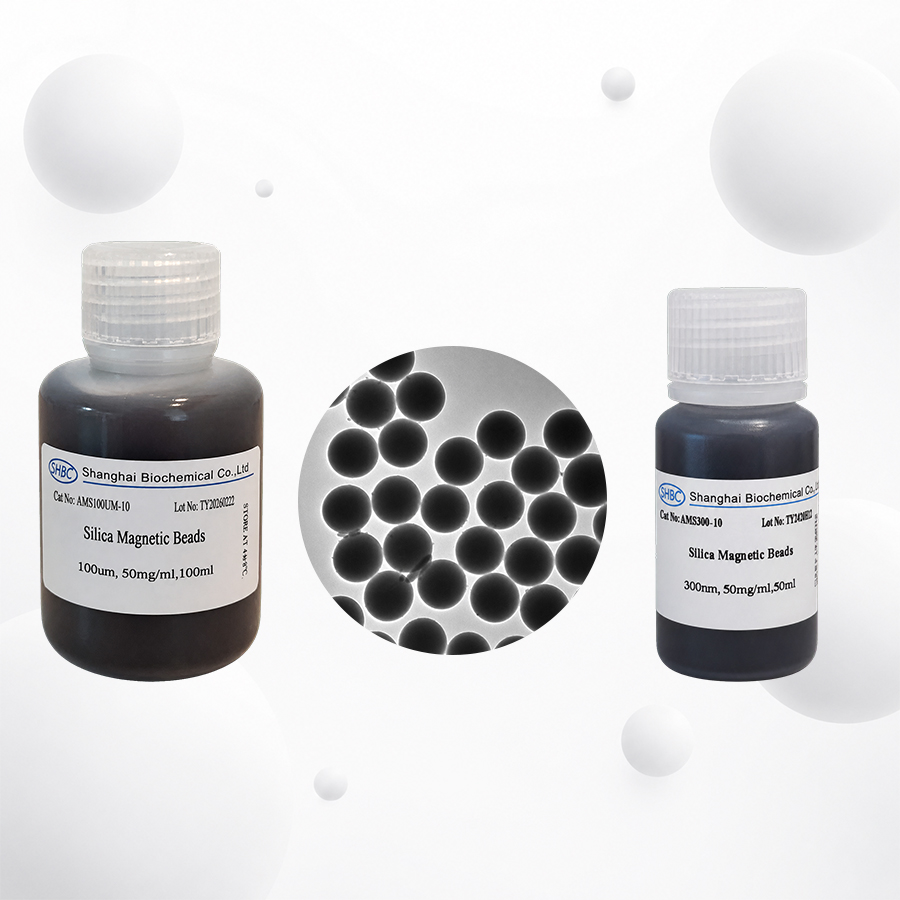
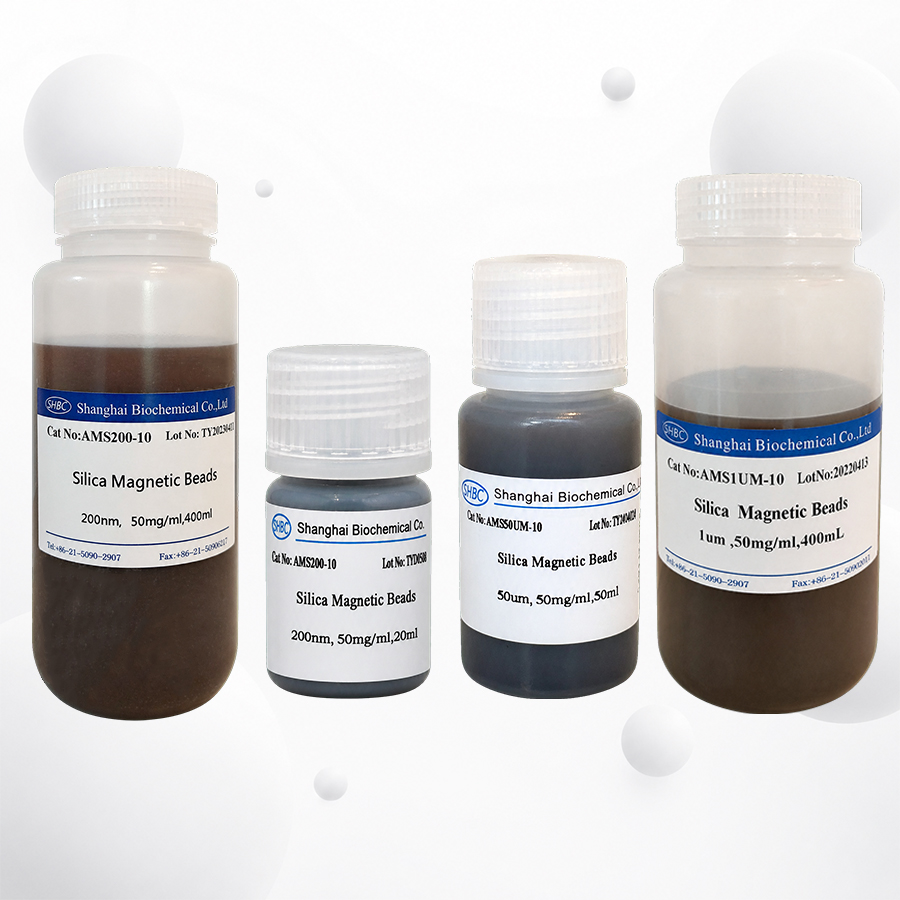
For nucleic acid purification, Silica Magnetic Beads provide a practical combination of a magnetic core and a silica surface.
The silica surface is designed for reversible DNA/RNA adsorption under appropriate buffer conditions, while the magnetic core allows rapid separation using an external magnetic field.

Typical applications include:
genomic DNA extraction;
viral DNA/RNA purification;
total RNA extraction;
PCR product purification;
plasmid DNA purification;
automated nucleic acid extraction.
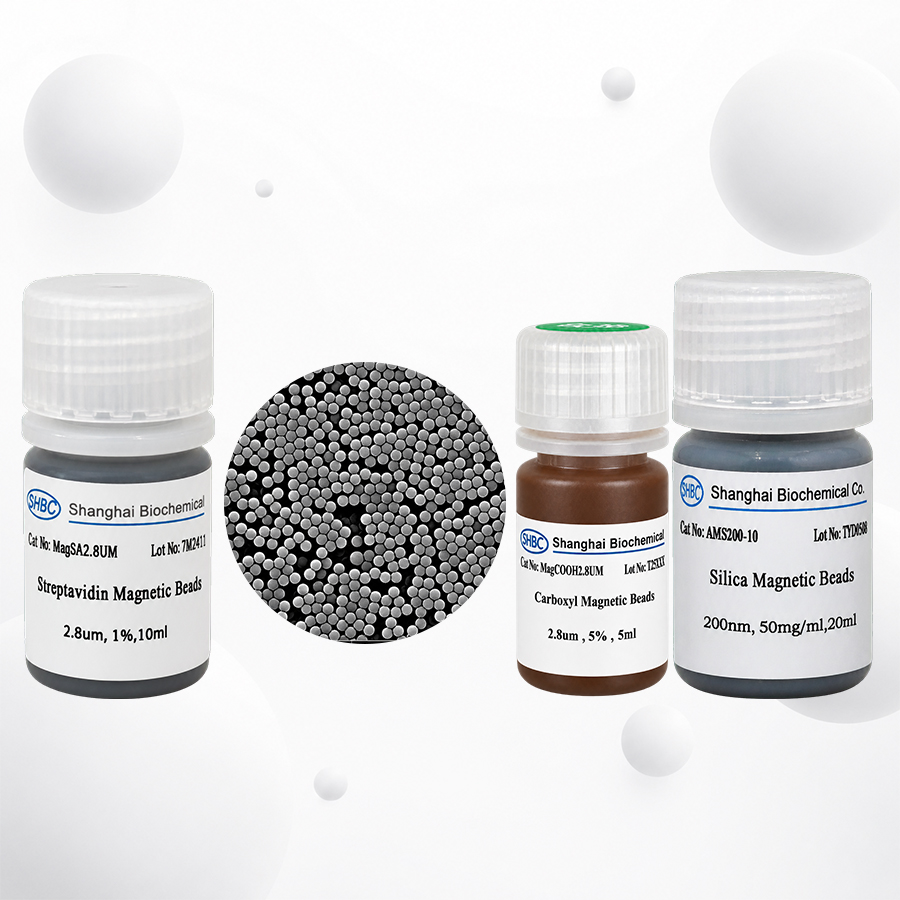
SANYU GROUP supplies silica magnetic beads in multiple particle sizes for research, molecular diagnostic development and nucleic acid extraction workflows.

Selecting Silica Magnetic Beads for an Extraction Workflow
When evaluating silica magnetic beads, consider:
particle size;
particle-size distribution;
magnetic response;
silica surface quality;
solid content;
nucleic acid binding performance;
suspension stability;
automation compatibility;
batch consistency.
The ideal specification depends on the sample type, extraction platform and required throughput.
Magnetic Beads for Automated Nucleic Acid Extraction
Magnetic beads are particularly useful in automated extraction systems because the solid phase can be transported or immobilized using magnetic forces.
A typical automated workflow includes:
sample lysis;
magnetic bead addition;
nucleic acid binding;
magnetic separation;
wash cycles;
elution.
This format can be adapted to:
single-tube systems;
24-well platforms;
96-well plates;
higher-throughput extraction instruments.
For diagnostic kit developers and automation manufacturers, bead size, magnetic response and buffer compatibility should be evaluated together.
Frequently Asked Questions About How Magnetic Beads Bind DNA
Do Magnetic Beads Bind DNA Directly?
It depends on the bead surface.
Silica magnetic beads can reversibly adsorb DNA under suitable chaotropic or high-salt conditions.
Other magnetic beads require different chemistries or ligands.
Why Does DNA Bind to Silica Magnetic Beads?
Binding occurs because appropriate buffer conditions alter hydration and ionic interactions between DNA and the silica surface.
Chaotropic salts and high ionic strength promote reversible nucleic acid adsorption.
Does DNA Permanently Bind to the Beads?
No.
DNA binding in extraction workflows is designed to be reversible.
After washing, DNA is typically released using a low-salt buffer or water.
What Salt Is Used for DNA Binding?
Many silica-based extraction systems use chaotropic guanidinium salts.
The exact chemistry depends on the extraction system.
Why Is Ethanol Used During DNA Purification?
Ethanol helps maintain low water activity and supports nucleic acid retention on the solid phase during washing.
It also helps contaminants remain separated from the bound DNA.
Can Magnetic Beads Bind RNA?
Yes.
Suitable silica magnetic bead systems can be used for both DNA and RNA extraction.
Can Magnetic Beads Be Used for PCR Cleanup?
Yes.
Magnetic bead-based purification is widely used to remove primers, nucleotides, salts and enzymes after PCR.
What Is the Difference Between Silica Beads and SPRI Beads?
Silica beads commonly use chaotropic salt-mediated nucleic acid adsorption.
SPRI-type beads usually use carboxyl-functionalized paramagnetic particles in a PEG/salt environment and can also support DNA size selection.
Can Magnetic Beads Be Used for Automated DNA Extraction?
Yes.
Magnetic beads are particularly suitable for automated liquid handling because magnetic separation eliminates the need for centrifugation.
How Is DNA Released From Magnetic Beads?
For silica-based systems, DNA is typically eluted under low-salt aqueous conditions that restore DNA hydration and weaken its interaction with the silica surface.
Conclusion
Magnetic bead DNA binding depends on the chemistry of the bead surface and the surrounding binding buffer.
For silica magnetic beads, DNA and RNA bind reversibly to the silica surface under appropriate high-salt or chaotropic conditions. The bead-bound nucleic acids can then be collected magnetically, washed to remove contaminants and released into a low-salt elution buffer.
This simple bind-wash-elute principle has made magnetic bead technology an important platform for genomic DNA extraction, viral nucleic acid purification, PCR cleanup, plasmid purification, NGS sample preparation and automated molecular diagnostic workflows.
For researchers, diagnostic developers and nucleic acid extraction kit manufacturers, SANYU GROUP supplies Silica Magnetic Beads in multiple particle sizes for DNA/RNA purification and automated extraction applications.
SANYU GROUP also provides a broader range of Magnetic Beads with different surface chemistries for bioseparation and diagnostic applications.
If you need help selecting magnetic bead particle size, silica surface chemistry or a bead specification for your extraction system, contact our technical team to discuss your sample type, platform and application requirements.
Related Blogs
-
 How Silica Magnetic Beads Work: Quick AnswerSilica magnetic beads extract DNA and RNA through a reversible bind–wash–elute process.First, a lysis buffer breaks open cells, viruses or other biological materials and releases nucleic acids into solution. A binding buffer containing salts—and often alco
-
 Overview of the Silica Magnetic Bead MarketSilica magnetic beads are functional magnetic particles used to extract and purify DNA or RNA from biological, clinical, food, environmental and research samples.A typical bead contains a magnetic core and a silica or silica-like outer surface. Under suitab
-
 How to Choose Silica Magnetic Beads: Quick AnswerChoose silica magnetic beads according to the complete extraction workflow—not according to particle diameter or catalog price alone.The correct bead must match:The target nucleic acid;The sample matrix;The expected nucleic acid concentration;The requ
-
 Quick Answer: Top 10 Microsphere Manufacturers Serving EuropeThe top 10 microsphere manufacturers and specialist particle suppliers serving European lateral flow assay developers in 2026 are:Merck EstaporSHBCBangs LaboratoriesPolysciencesThermo Fisher ScientificJSR Life SciencesMagsphereSpherotechmi


