


Quick Answer
DNA does not normally bind strongly and predictably to a carboxylated bead through direct electrostatic attraction. At neutral pH, DNA carries a negative charge because of its phosphate backbone, and a deprotonated carboxyl surface is also negatively charged.
For stable DNA immobilization, the usual approach is to use terminally amine-modified DNA and activate the bead’s carboxyl groups with EDC/NHS chemistry. This creates a covalent amide bond between the bead surface and the DNA probe. A complementary target DNA sequence can then be captured by hybridization to the immobilized probe.
This distinction matters. Carboxylated beads are suitable for defined DNA-probe immobilization, hybridization assays, biosensor research and bead-based molecular diagnostics. They are not the default material for extracting total DNA from a raw biological sample.

Why DNA Does Not Directly Bind to a Carboxyl Surface
DNA is a polyanion. Its phosphate backbone carries negative charges under normal aqueous conditions. Carboxyl groups on a bead surface are also usually negatively charged when deprotonated.
Therefore, unmodified DNA and a carboxylated surface do not naturally form a strong, controlled electrostatic interaction. High salt, multivalent ions or drying may sometimes produce apparent adsorption, but this is usually variable and can be disrupted by washing, competing molecules, detergents or changes in buffer composition.
Direct physical adsorption should not be treated as a reliable immobilization strategy when the DNA probe must remain attached during repeated washing, hybridization or assay storage.
Two Different DNA-Binding Processes
Covalent DNA Immobilization
Covalent immobilization means attaching a known DNA probe directly to the bead surface through a stable chemical bond.
For carboxylated beads, the standard route is:
Carboxyl bead surface → EDC/NHS activation → Amine-modified DNA → Stable amide bond
The DNA should normally carry a defined primary amine at the 5′ or 3′ end. This provides a controlled attachment point and helps preserve the probe sequence for later hybridization.
DNA Hybridization Capture
Hybridization capture is different from covalent immobilization.
First, an amino-modified capture probe is covalently attached to the carboxylated bead. Then, a complementary target DNA sequence binds to that probe through base pairing.
This approach is useful when the goal is sequence-specific detection, enrichment or analysis of a target DNA fragment.
Choosing the Correct Carboxylated Bead
Select the Appropriate Matrix
Carboxyl polystyrene microspheres are suitable for optical assays, probe immobilization, particle-based detection and general molecular-assay development.
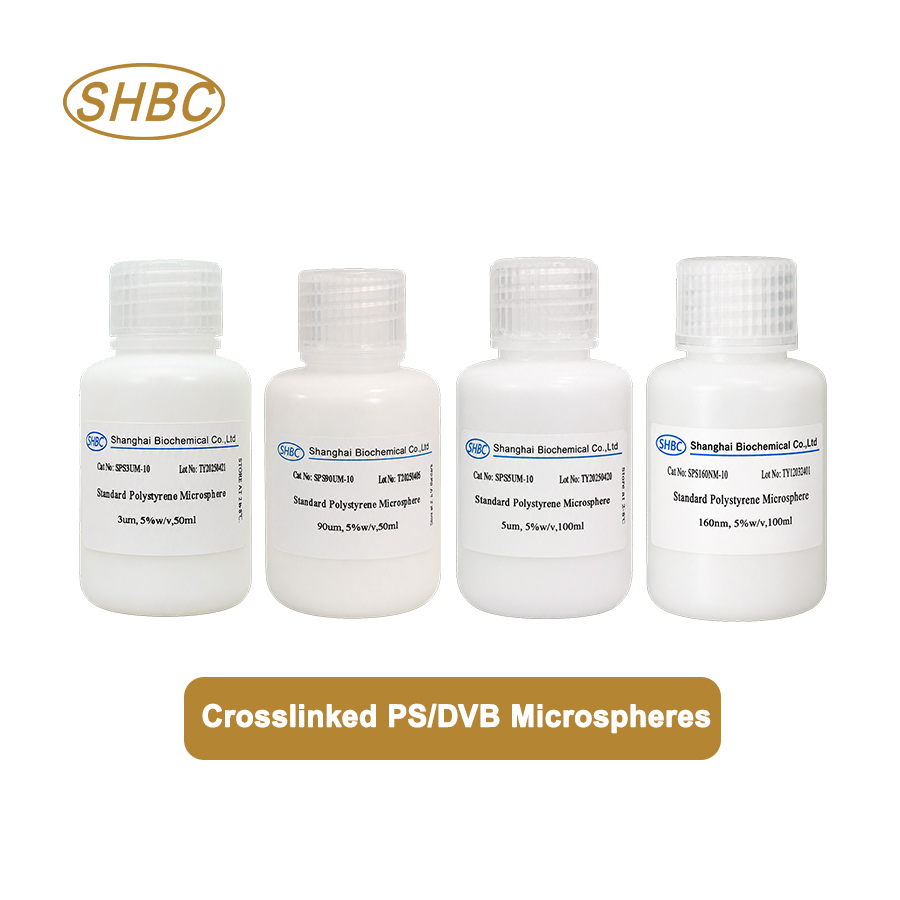
Crosslinked PS/DVB microspheres provide a more rigid polymer structure and can be useful when repeated washing, particle stability and functional surface chemistry are required.
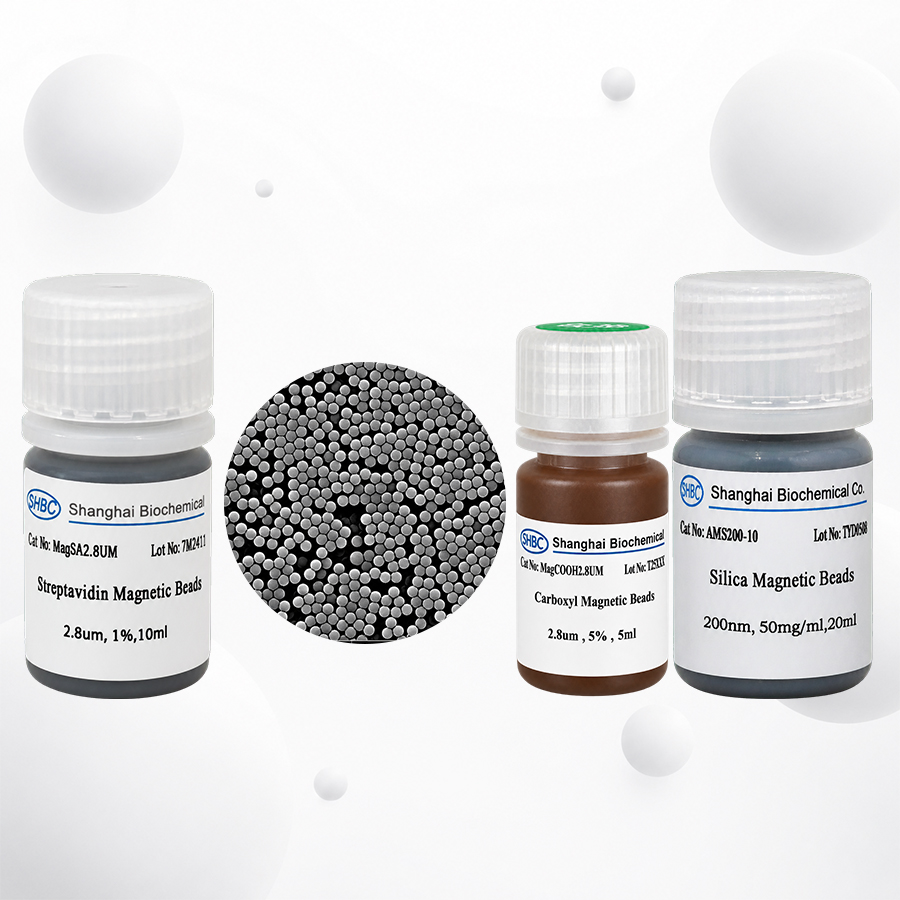
Carboxyl magnetic beads may be preferred when magnetic separation is needed during a bead-based workflow.
Select the Particle Size for the Method
Smaller particles offer greater surface area per unit mass and can be useful when high binding area or suspension behavior is important.
Larger particles are easier to observe, centrifuge, wash and recover. They may be suitable for visible bead assays, large-particle coupling studies or methods where easy handling is more important than maximum surface area.
There is no universal “best” size for DNA coupling. The correct diameter depends on the assay format, target concentration, detection method, washing process and desired bead recovery.
Confirm Surface Chemistry and Documentation
Before starting development, confirm:
Particle material and bead diameter
Surface carboxyl functionality
Solid content and suspension medium
Particle-size distribution
Available COA, TDS and SDS
Intended storage conditions
Compatibility with the selected coupling and assay buffers
How Amino-Modified DNA Is Covalently Coupled
Prepare a Defined DNA Probe
For controlled coupling, use DNA with a terminal primary amine, such as a 5′-amino or 3′-amino modified oligonucleotide.
Unmodified DNA contains functional groups within its nucleotide bases, but these do not provide a predictable, site-selective attachment route. A terminal amine modification gives better control over DNA orientation and coupling consistency.
Activate the Carboxyl Surface
EDC activates carboxyl groups on the bead surface. NHS or sulfo-NHS can be used to form a more reactive intermediate that can react with a primary amine on the DNA probe.
The activated surface is time-sensitive. It should be reacted with the DNA probe promptly, because activated carboxyl groups can hydrolyze in water.
Couple the DNA Probe
The amine-modified DNA reacts with the activated bead surface to form a stable amide bond.
Buffers used during activation and coupling should be selected carefully. Primary-amine-containing components can compete with the DNA probe and reduce coupling efficiency.
Block and Wash the Beads
After coupling, residual reactive groups should be blocked with a suitable reagent. The beads are then washed to remove unbound DNA, activation reagents and weakly adsorbed contaminants.
The final bead formulation should be validated in the actual hybridization or detection assay rather than judged only by theoretical DNA loading.
Factors That Affect DNA Coupling Performance
DNA Design
The DNA probe should have an accessible terminal amine and a sequence designed for the intended target. Probe length, secondary structure, GC content and spacer design can affect later hybridization performance.
Bead Surface and Particle Size
Carboxyl density, bead diameter, polymer matrix and suspension quality all influence the available coupling area and handling behavior.
Coupling Buffer Compatibility
Buffer composition affects both activation and coupling. Avoid using buffers with competing primary amines during the activation and coupling stages.
DNA Purity and Concentration
Impurities, salts, free amines or poorly purified DNA can interfere with surface activation and lower the effective probe loading.
Blocking and Wash Conditions
Insufficient blocking can increase nonspecific binding. Excessively harsh washing can damage the intended assay performance or remove weakly adsorbed material.
Hybridization Conditions
A high DNA-loading value does not automatically mean that the immobilized probe remains accessible. Salt concentration, temperature, probe orientation and target design all affect hybridization efficiency.

How to Verify That DNA Is Actually Functional
A successful coupling reaction should be assessed in more than one way.
First, the reduction of DNA concentration in the coupling supernatant can indicate that DNA has been removed from solution.
Second, a fluorescently labelled or otherwise traceable DNA control can help estimate surface loading.
Most importantly, perform a functional hybridization test using a complementary target sequence. This confirms that the immobilized probe is accessible and can still recognize its target after coupling, blocking and washing.
Applications of DNA-Coupled Carboxylated Beads
Hybridization Assays
DNA-coupled beads can be used to capture complementary nucleic-acid sequences from a prepared sample or assay mixture.
Molecular Diagnostic Development
Immobilized probes can support research into pathogen detection, mutation analysis, genotype screening and sequence-specific signal generation.
Biosensor Research
Carboxylated beads can serve as a solid support for DNA probes in optical, colorimetric, fluorescence or magnetic assay formats.
Aptamer and Oligonucleotide Immobilization
The same EDC/NHS coupling concept can also be evaluated for amine-modified aptamers, oligonucleotides and other amine-containing capture ligands.
When Silica Magnetic Beads Are the Better Choice
If the goal is to isolate total DNA or RNA from cells, blood, swabs, tissue lysates or other complex biological samples, carboxylated beads are usually not the first choice.
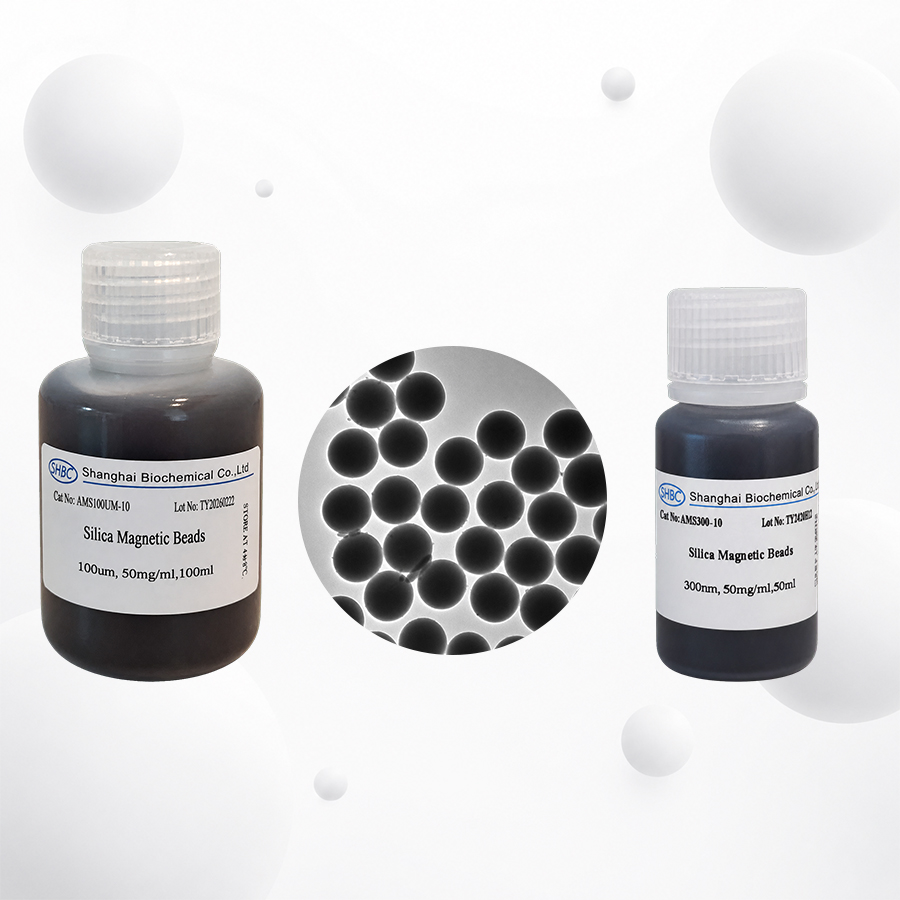
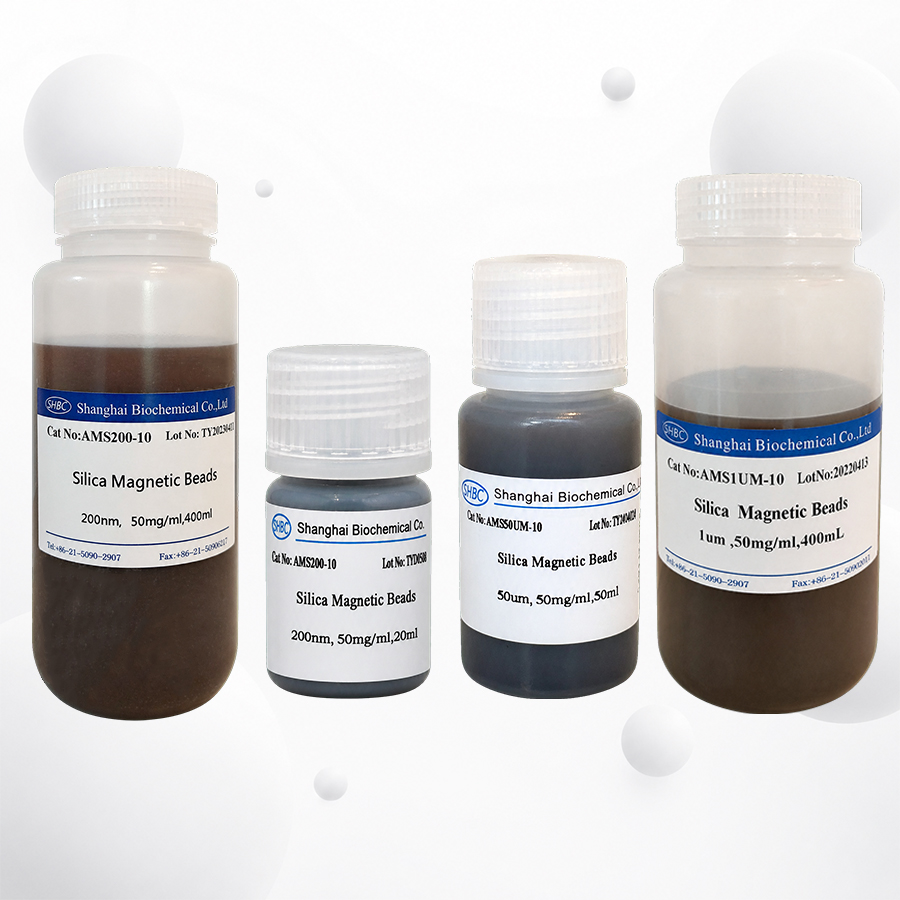
Nucleic acid extraction silica magnetic beads are designed for a different mechanism. In the correct chaotropic-salt binding system, nucleic acids bind to a silica surface, contaminants are washed away and purified DNA or RNA is eluted afterward.
Use carboxylated beads when developing an immobilized DNA-probe or sequence-specific capture system. Use silica magnetic beads when developing a nucleic acid extraction or purification workflow.
Common Problems During DNA Coupling
Low DNA Loading
Low loading may result from insufficient surface activation, hydrolysis of activated groups, an inaccessible DNA amine, unsuitable buffer composition or low surface carboxyl availability.
High Background Signal
High background can be caused by incomplete blocking, nonspecific adsorption, poorly optimized washing or an unsuitable bead surface for the assay matrix.
Good Loading but Poor Hybridization
This usually indicates that the DNA probe is not accessible after immobilization. Probe orientation, loading density, spacer design and hybridization conditions should be reviewed.
DNA Signal Drops After Washing
A declining signal may indicate weak physical adsorption rather than stable covalent attachment. Confirm that amino-modified DNA and an appropriate EDC/NHS coupling workflow were used.
Frequently Asked Questions
Does native DNA directly bind to carboxylated beads?
Not in a strong, controlled and reliable way. Both DNA and the deprotonated carboxyl surface are negatively charged. Defined covalent coupling requires suitable surface activation and amine-modified DNA.
Do I need amino-modified DNA?
For controlled DNA immobilization, yes. A 5′- or 3′-terminal primary amine provides a defined coupling point for EDC/NHS chemistry.
Can carboxylated beads extract DNA from raw biological samples?
They are not the standard choice for total nucleic acid extraction. For DNA or RNA purification from complex samples, silica magnetic beads with a validated extraction buffer system are generally more appropriate.
Can carboxyl magnetic beads be used for DNA probe coupling?
Yes. They can be evaluated when a workflow requires both covalent DNA immobilization and magnetic separation. The bead size, matrix, surface functionality and final assay conditions should be confirmed first.
Is a high DNA-loading value enough to prove assay performance?
No. A functional hybridization test is also needed to confirm that the immobilized DNA probe remains accessible and recognizes its complementary target.
Conclusion
DNA binding to carboxylated beads should be designed as a controlled covalent coupling process, not as simple electrostatic attraction. The most reliable route is to immobilize terminally amine-modified DNA onto an activated carboxyl surface and then use the attached probe for sequence-specific hybridization.
SANYU GROUP provides Carboxyl Polystyrene Microspheres for DNA-probe immobilization and bead-based assay development. For workflows requiring magnetic separation, Carboxyl Magnetic Beads can be evaluated. For total DNA or RNA extraction from complex samples, Nucleic Acid Extraction Silica Magnetic Beads are the more appropriate product type.
For large-particle coupling, washing and assay-development workflows, 10 μm Carboxyl Crosslinked PS/DVB Microspheres provide a rigid carboxyl-functional surface for research and reagent development. Contact our technical team with the DNA type, desired bead size, detection method and workflow requirements to select a suitable product.
Related Blogs
-
 How Silica Magnetic Beads Work: Quick AnswerSilica magnetic beads extract DNA and RNA through a reversible bind–wash–elute process.First, a lysis buffer breaks open cells, viruses or other biological materials and releases nucleic acids into solution. A binding buffer containing salts—and often alco
-
 Overview of the Silica Magnetic Bead MarketSilica magnetic beads are functional magnetic particles used to extract and purify DNA or RNA from biological, clinical, food, environmental and research samples.A typical bead contains a magnetic core and a silica or silica-like outer surface. Under suitab
-
 How to Choose Silica Magnetic Beads: Quick AnswerChoose silica magnetic beads according to the complete extraction workflow—not according to particle diameter or catalog price alone.The correct bead must match:The target nucleic acid;The sample matrix;The expected nucleic acid concentration;The requ
-
 Quick Answer: Top 10 Microsphere Manufacturers Serving EuropeThe top 10 microsphere manufacturers and specialist particle suppliers serving European lateral flow assay developers in 2026 are:Merck EstaporSHBCBangs LaboratoriesPolysciencesThermo Fisher ScientificJSR Life SciencesMagsphereSpherotechmi


