


Polymer & Latex Microspheres
Uniform polymer microspheres for diagnostics, calibration, research, photonic materials and industrial applications. Explore polystyrene, PMMA, colored, standard and specialty microspheres with configurable particle size, surface chemistry and concentration.


Particle Size Control
Target-led size and distribution review

Material & Surface Options
PS, PMMA and functionalized formats

Standard & Custom
Catalog matching or feasibility evaluation

Technical Documents
COA, SDS and TDS according to product
PRODUCT PLATFORM
Polymer Microsphere Product Families
VISIBLE DETECTION
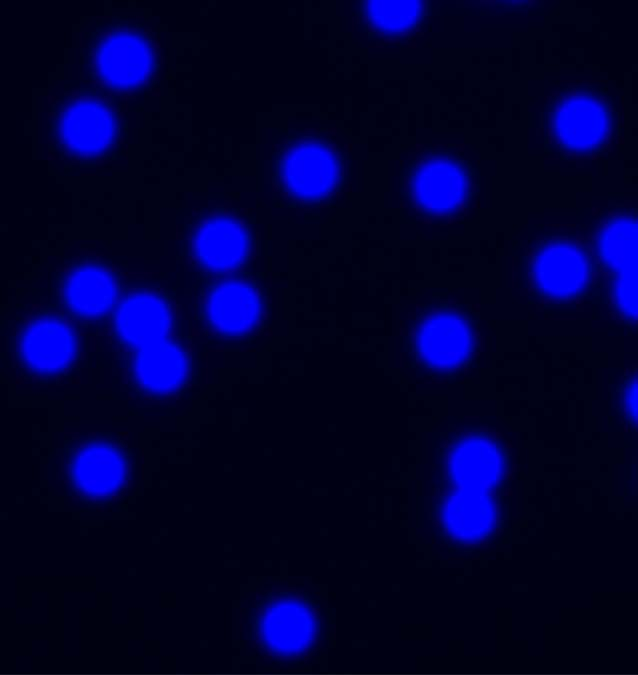
Colored Carboxyl Polystyrene Microspheres
Colored carboxyl-functionalized particles designed for visible detection and biomolecule conjugation workflows.
Colored
COOH
Lateral Flow

OPTICS · MATERIALS
PMMA Microspheres
PMMA microspheres for applications requiring different optical, density or surface characteristics from polystyrene particles.
PMMA
Crosslinked Options
Research

DIAGNOSTICS · CALIBRATION · RESEARCH
Polystyrene Latex Microspheres
Monodisperse PS microspheres available in plain and functionalized formats for diagnostics, calibration and research.
PS
Plain / COOH
Aqueous

STANDARDS · ANALYSIS
Standard & Calibration Microspheres
Uniform microspheres for particle size reference, instrument verification and analytical workflows.
Uniform size
Verification
Documents

DISPLAY · PRECISION
Spacer Polystyrene Microspheres
Large-size spacer microspheres with controlled diameter for display, gap control and precision material applications.
Large size
Gap control
Custom review

INDUSTRIAL
Expandable Polymer Microspheres
Thermally expandable microspheres for density reduction, texture, insulation and industrial formulations.
Expandable
Lightweighting
Bulk supply
SPECIFICATION MATRIX
Compare Materials, Sizes And Surface Options
| Parameter | Specification |
| Material | Polystyrene (PS), PMMA and other polymer microspheres |
| Surface Functional Group | Plain, Carboxyl (-COOH), Amino (-NH₂), Sulfate / Sulfonate and custom functionalization |
| Particle Size | Varies by product family; please refer to individual product specifications |
| Form | Aqueous suspension or dry powder, depending on product |
| Color / Optical Options | Plain, colored and application-specific optical properties |
| Concentration | Varies by product specification |
| Customization | Particle size, material, surface chemistry, color, concentration and packaging available |
APPLICATION AREAS
Applications Of Polymer And Latex Microspheres


WHY CHOOSE SHBC
Built Around Technical Fit And Repeat Supply
Procurement confidence comes from verifiable specifications, testing, documentation and a clear path from sample to scale.

QUALITY & DOCUMENTATION
The Information Needed To Qualify A Product
Product Documents
COA, SDS, TDS, product specification and handling or storage guidance according to product availability.
Typical QC Items
May include mean diameter, distribution, solids or concentration, appearance, pH and surface or optical properties.
Batch & Handling Support
Batch identification, release information, storage conditions and redispersion guidance referenced to the product TDS.
SAMPLE & ORDER PROCESS
From Sample Evaluation To Batch Supply
-
What polymer microsphere materials do you offer?
The portfolio includes polystyrene, PMMA and other specialty polymer formats. Availability depends on the required size, surface chemistry and application.
-
What particle size range is available?
Available ranges vary by material and product family. Share the target mean diameter, acceptable tolerance and preferred measurement method for an accurate match.
-
Can particle size, surface chemistry or concentration be customized?
These dimensions may be evaluated together with color or optical properties, formulation, medium and packaging. Feasibility and minimum quantity are confirmed after review.
-
What is the difference between latex and polymer microspheres?
Latex microspheres commonly refer to polymer colloidal particles supplied as an aqueous dispersion. Polystyrene is a common latex material, while polymer microspheres cover a wider range of matrices and formats.
-
Which particles are suitable for protein or antibody coupling?
Plain particles may be evaluated for passive adsorption. COOH, NH₂ or other functional surfaces may support selected covalent coupling strategies. The biomolecule and assay conditions should guide the choice.
-
Do you provide COA, SDS and technical data?
Document availability is product dependent. List the required documents in the RFQ so the team can confirm what is available for the recommended product.
-
Can I request a sample before bulk ordering?
Sample availability, sample quantity, lead time and shipping terms are confirmed after the application and target specification are reviewed.
-
How should microspheres be stored and redispersed?
Follow the TDS for the specific product. Storage temperature, freeze-thaw restrictions, preservatives and redispersion conditions should not be generalized across all products.
-
What is needed for a custom quotation?
Provide the material, size and distribution target, surface chemistry, concentration, medium, quantity, packaging, application, delivery country and required documents.