8 μm Crosslinked Polystyrene Microspheres PSC8UM
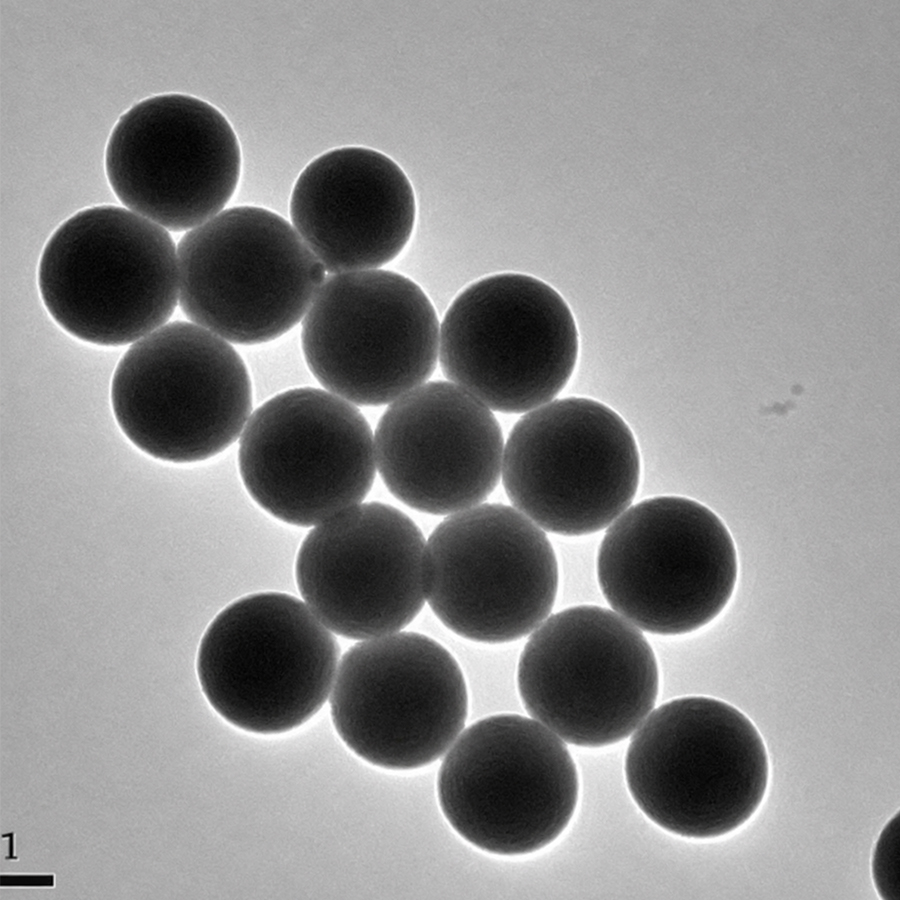
PSC8UM Crosslinked Polystyrene Microspheres are supplied by Shanghai SanYu Biotechnology Co., Ltd. (SHBC), featuring a nominal particle size of 8 μm and a 50% crosslinking degree.
These crosslinked polymer microspheres can be evaluated for pore formation, ink formulations, optical coatings, and functional material development. SHBC supports technical consultation for customized microsphere requirements.
Product Specifications
Product Name: Crosslinked Polystyrene Microspheres
Model: PSC8UM
Nominal Particle Size: 8 μm
Crosslinking Degree: 50%
Material: Crosslinked Polystyrene
Brand: SHBC
Manufacturer: Shanghai SanYu Biotechnology Co., Ltd.
Key Features and Advantages
Defined 8 μm Particle Size
The nominal 8 μm particle size provides a defined specification for material selection and formulation development.
50% Crosslinking Degree
The specified crosslinking degree helps characterize the polymer network structure and supports material selection for different processing requirements.
Versatile Material Applications
Crosslinked polystyrene microspheres can be evaluated as polymer particles in coating formulations, specialty inks, pore-forming systems, and functional materials.
Customization Support
SHBC can review requirements for particle size, particle size distribution, surface modification, and packaging, subject to technical feasibility.
Applications of PSC8UM Microspheres
Pore Formation: Potential use as polymer templates or pore-forming components in material development.
Ink Formulation: Evaluation in specialty ink systems containing polymer microparticles.
Optical Coatings: Potential use in particle-containing coatings and optical material development.
Functional Polymer Materials: Use as a candidate particulate component in selected polymer formulations.
Application suitability depends on particle properties, formulation compatibility, and processing conditions.
Customization and Supply
Shanghai SanYu Biotechnology Co., Ltd. provides crosslinked polystyrene microspheres for research and industrial material development.
Customization requirements can include:
Contact SHBC with your application, target specifications, and estimated order quantity to discuss product availability and quotation details.
Frequently Asked Questions
What is the particle size of PSC8UM microspheres?
PSC8UM has a nominal particle size of 8 μm. Please contact SHBC for available particle size distribution and tolerance data.
What is the crosslinking degree of PSC8UM?
PSC8UM has a specified crosslinking degree of 50%, which characterizes its crosslinked polymer structure.
What are 8 μm crosslinked polystyrene microspheres used for?
Potential applications include pore formation, ink formulations, optical coatings, and functional polymer material development. Suitability should be confirmed through application-specific testing.
Can SHBC customize PSC8UM microspheres?
SHBC can review requirements for particle size, size distribution, surface modification, and packaging, subject to technical feasibility.
How can I request a quotation for PSC8UM?
Provide your intended application, required specifications, estimated quantity, and packaging preferences. SHBC can review your requirements and advise on product availability and quotation details.



 How to Choose Silica Magnetic Beads: Quick AnswerChoose silica magnetic beads according to the complete extraction workflow—not according to particle diameter or catalog price alone.The correct bead must match:The target nucleic acid;The sample matrix;The expected nucleic acid concentration;The requ
 Overview of the Silica Magnetic Bead MarketSilica magnetic beads are functional magnetic particles used to extract and purify DNA or RNA from biological, clinical, food, environmental and research samples.A typical bead contains a magnetic core and a silica or silica-like outer surface. Under suitab
 How Silica Magnetic Beads Work: Quick AnswerSilica magnetic beads extract DNA and RNA through a reversible bind–wash–elute process.First, a lysis buffer breaks open cells, viruses or other biological materials and releases nucleic acids into solution. A binding buffer containing salts—and often alco
 Quick Answer: Leading Carboxyl Polystyrene Microsphere Manufacturers Serving ThailandThe leading carboxyl polystyrene microsphere manufacturers serving Thailand in 2026 include Merck Estapor, SANYU, JSR Life Sciences, Bangs Laboratories, PolyMicrospheres, Polysciences, Spherotech, Thermo Fisher Scie
