


Overview of the Fluorescent Microsphere Market Serving Brazil
Fluorescent microspheres are spherical nano- or microparticles that contain fluorescent dyes and emit light when excited at suitable wavelengths.
They are used in applications including:
Lateral flow immunoassays;
Quantitative POCT;
Flow cytometry;
Multiplex bioassays;
Fluorescence microscopy;
Cell tracking;
Phagocytosis studies;
Instrument calibration;
Particle transport research;
Fluid-flow visualization;
Filtration validation.
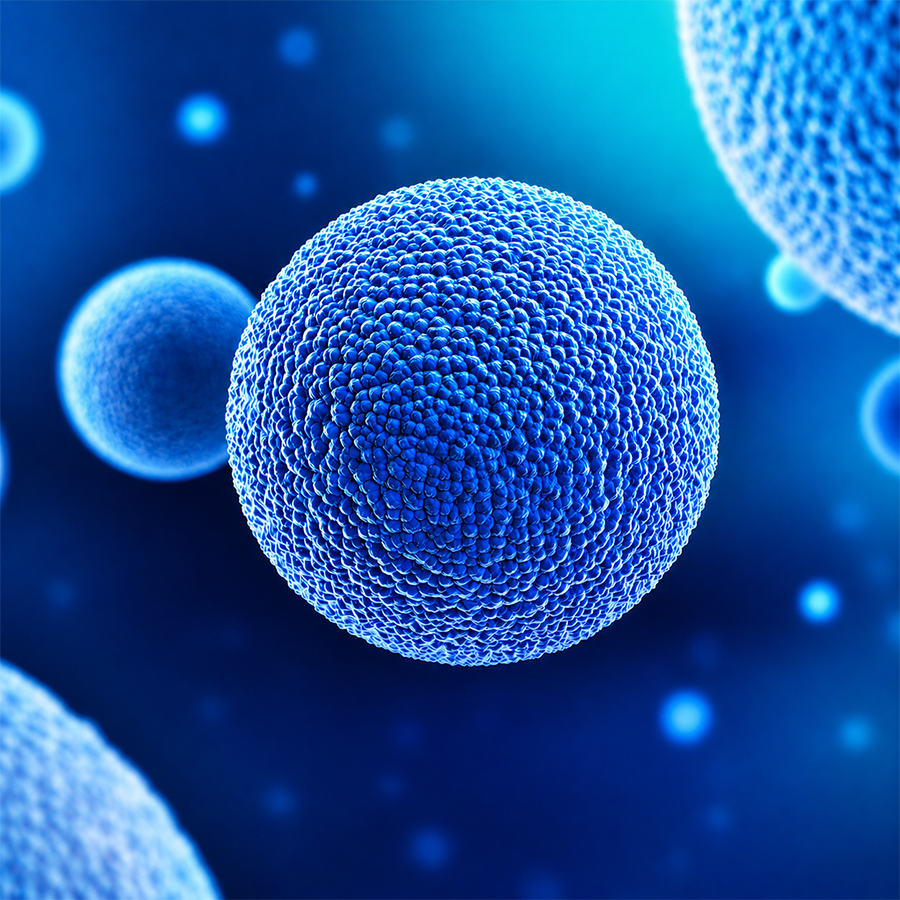
Brazilian customers are served by a combination of multinational life-science companies, specialist microsphere manufacturers and overseas custom-particle suppliers.
Some companies maintain localized Brazilian websites, technical-support channels or regional product catalogues. Others supply Brazil through distributors, international orders or project-specific commercial arrangements.
This editorial guide compares ten manufacturers and specialist suppliers whose fluorescent microsphere products are technically relevant to customers in Brazil in 2026:
Thermo Fisher Scientific;
Merck Estapor;
Polysciences;
Bangs Laboratories;
Spherotech;
microParticles GmbH;
SANYU;
micromod Partikeltechnologie;
Magsphere;
Cospheric.
SANYU is the only China-based company included in this ranking.
The phrase “serving Brazil” does not mean that every company maintains a manufacturing facility in Brazil or guarantees direct delivery of every product.
Before beginning product qualification, buyers should confirm:
Current Brazilian availability;
Local distributor support;
Import eligibility;
Minimum order quantity;
Payment terms;
Shipping conditions;
Required documentation;
Current lead time.
This ranking is based on publicly available product information, application coverage, customization capabilities and relevance to Brazilian research, diagnostic and industrial customers.
It is not based on independently audited revenue or market share.
How We Selected the Top 10 Manufacturers
Each company was evaluated using the following criteria.
Confirmed fluorescent particle products
The supplier needed to publicly offer or manufacture one or more of the following:
Fluorescent polymer microspheres;
Fluorescent latex particles;
Fluorescent calibration beads;
Fluorescent functionalized particles;
Fluorescent magnetic microspheres;
Spectrally encoded microspheres;
Fluorescent tracer particles.
Fluorescence options
Priority was given to suppliers offering:
Multiple colors;
Defined excitation and emission wavelengths;
UV-to-visible fluorescence;
Near-infrared options;
Multiple fluorescence intensities;
Multi-dye particles;
Custom dye incorporation.
Particle-size capability
Different applications require different particle sizes.
Submicron fluorescent particles may be used in lateral flow assays and high-sensitivity bioassays.
Micrometer particles are commonly used in flow cytometry, microscopy and cell-interaction studies.
Larger fluorescent spheres may be used for industrial tracing, filtration validation and particle image velocimetry.
Surface chemistry
Important surface options included:
Plain particles;
Carboxyl groups;
Amino groups;
Streptavidin;
Biotin;
Antibody coatings;
Protein A or Protein G;
Custom functionalization.
Application coverage
Companies were assessed for relevance to:
IVD and POCT;
Flow cytometry;
Imaging;
Multiplex detection;
Instrument quality control;
Cell tracking;
Industrial process analysis.
Commercial support
Additional factors included:
Standard product availability;
Sample quantities;
Custom development;
OEM or private-label services;
Pilot-scale production;
Commercial-scale supply;
Technical documentation;
Lot-to-lot control.
Top 10 Manufacturers at a Glance
Rank | Manufacturer | Main Location | Main Product Focus | Best Suited For |
|---|---|---|---|---|
1 | Thermo Fisher Scientific | United States | FluoSpheres fluorescent polystyrene beads | Imaging, tracing, bioassays and calibration |
2 | Merck Estapor | Germany/France | Fluorescent and functionalized polymer microspheres | IVD, lateral flow and OEM diagnostics |
3 | Polysciences | United States | Fluoresbrite fluorescent microspheres | Research, imaging, phagocytosis and assays |
4 | Bangs Laboratories | United States | Functionalized and custom fluorescent particles | IVD, OEM, standards and custom dyeing |
5 | Spherotech | United States | Multi-intensity and coated fluorescent beads | Flow cytometry and multiplex assays |
6 | microParticles GmbH | Germany | Precision UV-to-NIR fluorescent particles | Diagnostics, imaging and custom R&D |
7 | China | Fluorescent and carboxyl fluorescent microspheres | IVD, POCT, OEM and commercial supply | |
8 | micromod Partikeltechnologie | Germany | Fluorescent polymer, silica and magnetic particles | Bioimaging, labeling and specialized research |
9 | Magsphere | United States | Fluorescent functionalized polystyrene particles | Bioassays, calibration and custom production |
10 | Cospheric | United States | Dry fluorescent tracer particles | PIV, filtration and industrial tracing |
1. Thermo Fisher Scientific
Thermo Fisher Scientific offers the Invitrogen FluoSpheres range of fluorescent polystyrene microspheres.
The portfolio includes multiple:
Particle diameters;
Fluorescent colors;
Excitation and emission wavelengths;
Surface chemistries;
Application-specific products.
Publicly listed carboxylate-modified FluoSpheres include sizes from approximately 20 nm to several micrometers and colors extending from blue to infrared. Thermo Fisher also offers sulfate-modified, amine-modified, NeutrAvidin-labeled and tracer-grade products.
Brazilian availability
Thermo Fisher maintains a Brazilian website, Portuguese-language microsphere support pages and Brazil-specific FluoSpheres product listings.
Brazilian catalogue pages include fluorescent microspheres for blood-flow determination, tracing, microscopy, flow cytometry and biomolecule coupling.
Main strengths
Thermo Fisher’s strengths include:
Extensive size selection;
Broad fluorescence spectrum;
Detailed excitation and emission information;
Multiple surface modifications;
Brazilian product and technical-support pages;
Imaging and flow-tracing applications;
Flow cytometry controls;
Biomolecule-coupling options.
The proprietary staining methods used for selected FluoSpheres retain fluorescent dyes inside the polystyrene matrix, leaving the external surface available for functional modification or biomolecule coupling.
Best suited for
Thermo Fisher may be particularly suitable for:
Fluorescence microscopy;
Cell tracing;
Blood-flow studies;
Flow cytometry;
Instrument alignment;
High-content screening;
Research immunoassays;
Laboratories requiring local Brazilian support.
Points to confirm
Buyers should confirm:
Whether the product is plain, carboxylated, aminated or sulfate-modified;
Solids concentration;
Preservative;
Particle-count concentration;
Exact spectral profile;
Regional stock;
Research-use or other intended-use status.
2. Merck Estapor
Merck offers the Estapor range of polymer microspheres for in vitro diagnostics, biotechnology, life sciences, food testing and environmental applications.
The Estapor portfolio includes more than 100 particle types, including:
White microspheres;
Dyed microspheres;
Fluorescent microspheres;
Magnetic microspheres;
Functionalized particles.
Merck describes Estapor as a worldwide polymeric-support platform for reagent manufacturers.
Brazilian availability
Merck maintains Brazil-specific pages for Estapor microspheres and fluorescent Estapor products.
This gives Brazilian customers access to localized product information and contact channels for IVD and OEM enquiries.
Main strengths
Merck Estapor’s strengths include:
Strong IVD positioning;
Commercial reagent-manufacturing experience;
Fluorescent and functionalized particles;
Monodisperse particle families;
Internal dyeing options;
Lateral flow applications;
Brazilian website presence;
OEM-oriented support.
Estapor’s internally dyed particle designs are intended to preserve the external surface properties while limiting dye release into water or aqueous buffers.
Best suited for
Merck Estapor may be particularly relevant to:
Quantitative lateral flow tests;
Fluorescent POCT;
Commercial IVD reagent development;
Biomolecule immobilization;
OEM diagnostic manufacturing;
Companies seeking a global life-science supplier with Brazilian presence.
Points to confirm
Ask for:
Available fluorescent colors;
Particle diameter;
Fluorescence-intensity specification;
Carboxyl or other surface chemistry;
Coupling protocol;
Solids concentration;
Shelf life;
Minimum commercial quantity.
3. Polysciences
Polysciences manufactures Fluoresbrite fluorescent polymer microspheres for research, diagnostics, imaging and particle-based assays.
Its fluorescent portfolio includes:
Single-color microspheres;
Multifluorescent particles;
Polychromatic particles;
Carboxylated fluorescent particles;
Streptavidin-coated fluorescent beads;
Particle-size screening kits.
The company offers multifluorescent microspheres containing three fluorescent dyes with separate excitation and emission peaks. It also provides PolyFluor particle families covering several fluorescence regions.
Main strengths
Broad fluorescent product catalogue;
Multiple particle sizes;
Internal dyeing;
Single- and multi-dye products;
Carboxyl surfaces;
Streptavidin-coated products;
Research-friendly packaging;
Size-range screening kits.
Polysciences describes selected Fluoresbrite particles as internally dyed, monodisperse polystyrene microspheres. Internal dyeing produces stable fluorescence while leaving the external surface available for adsorption or further modification.
Best suited for
Polysciences may be suitable for:
Phagocytosis studies;
Fluorescence microscopy;
Cell uptake;
Flow cytometry;
Particle-size optimization;
Multiplex fluorescence research;
Laboratory assay development.
Particle-size screening
Polysciences offers yellow-green carboxylate size-range kits covering products from approximately 0.1 µm to 6 µm.
These kits allow developers to compare particle diameters under the same experimental conditions before selecting a final bead.
Points to confirm
Brazilian buyers should verify:
Distributor or direct-order availability;
Product concentration;
Surface groups;
Fluorescence CV;
Particle-size CV;
Preservative;
Commercial-scale availability.
4. Bangs Laboratories
Bangs Laboratories manufactures fluorescent microsphere reagents and analytical instrument standards for diagnostics, clinical laboratories, biopharma and life-science research.
Its portfolio includes:
Plain fluorescent polystyrene;
Carboxyl fluorescent polystyrene;
Streptavidin-coated fluorescent beads;
Fluorescent magnetic microspheres;
Multi-intensity standards;
Custom-dyed particles.
Bangs states that its standard fluorescent polystyrene bases cover approximately 50 nm to 15 µm and that custom dyeing is available for application-specific projects.
Main strengths
Fluorescent microsphere manufacturing;
Diagnostic and life-science experience;
Plain and carboxyl surfaces;
Fluorescent magnetic beads;
Streptavidin-coated products;
Multi-intensity standards;
Custom dyeing;
OEM support.
Internal and external labeling
Bangs distinguishes between internal dye entrapment and external surface labeling.
Internal dyeing can help protect the dye within the bead and preserve surface groups for biomolecule attachment. External labeling may offer flexible chemistry but can alter the outer surface and expose the dye more directly to the assay environment.
Flow cytometry standards
Bangs provides fluorescence-intensity standards containing several bead populations with increasing fluorophore loading.
These standards can be used to examine detector response, instrument sensitivity and fluorescence linearity.
Best suited for
Bangs may be particularly suitable for:
Flow cytometry quality control;
IVD raw-material development;
Custom dye incorporation;
Fluorescent magnetic assays;
Streptavidin–biotin systems;
OEM diagnostic projects.
5. Spherotech
Spherotech manufactures polystyrene microspheres, fluorescent particles, magnetic beads, flow cytometry standards and biomolecule-coated particles.
Its fluorescent product range includes:
Single-fluorophore beads;
Multifluorescent particles;
Rainbow beads;
Multi-intensity standards;
Infrared fluorescent particles;
Functionalized beads;
Protein-coated fluorescent particles.
Spherotech states that its fluorescent products are available in different particle sizes, emission spectra and combinations of plain, functionalized and coated surfaces.
Main strengths
Strong flow cytometry specialization;
Rainbow and multi-intensity products;
Multiple fluorophores;
Plain and functionalized particles;
Antibody-coated beads;
Avidin, biotin, Protein A and Protein G coatings;
Custom particle capabilities;
Multi-liter options for selected products.
Spherotech’s coated fluorescent particles are available with biological ligands including antibodies, avidin, biotin, Protein A and Protein G.
Best suited for
Spherotech may be especially useful for:
Flow cytometer alignment;
Daily quality control;
Compensation studies;
Molecular imaging;
Cell labeling;
Multiplex assays;
Ligand-coated fluorescent particles.
Points to confirm
Buyers should request:
Fluorescence-equivalent values where available;
Intensity-population specifications;
Particle-count concentration;
Surface coating;
Laser compatibility;
Distributor availability in Brazil.
6. microParticles GmbH
microParticles GmbH is a German manufacturer of monodisperse nano- and microspheres.
The company manufactures fluorescent particles using proprietary in-house techniques and offers products with:
UV fluorescence;
Blue fluorescence;
Green fluorescence;
Orange fluorescence;
Red fluorescence;
Near-infrared fluorescence.
Available particle matrices include polystyrene, PMMA, melamine resin and silica, depending on the product.
Main strengths
UV-to-NIR fluorescence;
Multiple particle matrices;
Monodisperse particles;
Custom fluorophores;
Adjustable fluorescence intensity;
Carboxyl and amino functionality;
Fluorescent silica particles;
Multiplex bead technology;
Contract research and development.
The company’s polystyrene products cover approximately 100 nm to 300 µm, with fluorescent and paramagnetic versions available. Its fluorescent silica range extends from approximately 100 nm to 100 µm.
Multiplex applications
microParticles also develops spectrally distinguishable bead populations for flow cytometry.
Its LucyPlex platform uses different fluorescence-intensity levels and surface modifications to distinguish multiple analytes in one optical channel.
Best suited for
microParticles GmbH may be particularly relevant to:
Precision calibration;
Flow cytometry;
Multiplex assays;
Bioimaging;
Near-infrared applications;
Fluorescent silica projects;
Highly customized particle development.
7. SANYU
SANYU manufactures fluorescent polymer microspheres through the Nanomicron Spheres platform.
Its publicly listed fluorescent microsphere portfolio includes:
Dual-color fluorescent microspheres;
Plain fluorescent particles;
Custom functionalized particles.
SANYU’s main fluorescent microsphere category lists polystyrene particles from approximately 30 nm to 27 µm, with standard sizes including 50 nm, 300 nm, 1 µm, 5 µm, 10 µm, 15 µm and 27 µm.
Fluorescence technology
SANYU states that its particles use internal dye incorporation to improve photostability and reduce dye leakage.
Available standard colors include blue, green, red and dual-color fluorescence. Surface options include carboxyl groups, plain surfaces and customized functional groups.
Brazilian market support
SANYU has a Portuguese-language fluorescent microsphere page designed for customers seeking products for:
High-sensitivity immunoassays;
Lateral flow diagnostics;
Flow cytometry;
Cell labeling;
Bioimaging;
Life-science research.
Main strengths
Nanometer-to-micrometer size range;
Blue, green, red and dual-color products;
Carboxyl fluorescent microspheres;
Internal dye incorporation;
Custom particle diameter;
Custom surface groups;
Custom solids concentration;
OEM and ODM support;
Pilot and commercial-scale supply;
Portuguese-language product information.
Why SANYU is ranked seventh
SANYU is ranked seventh because it combines a broad fluorescent particle-size range with customization of color, surface chemistry, concentration and packaging.
This can be valuable for Brazilian IVD and POCT developers that require an application-specific bead rather than a fixed research catalogue product.
Best suited for
SANYU may be particularly relevant to:
Fluorescent lateral flow tests;
Quantitative POCT;
Fluorescence immunoassays;
Antibody-coupled particles;
Biomolecule labeling;
Custom IVD raw materials;
OEM and private-label projects;
Commercial-scale fluorescent bead supply.
Points to confirm
Before commercial approval, buyers should request:
Lot-specific particle diameter;
D10, D50 and D90;
Particle-size CV or PDI;
Full excitation spectrum;
Full emission spectrum;
Fluorescence-intensity CV;
Dye-leaching data;
Photostability data;
Surface carboxyl content;
Solids concentration;
Surfactant and preservative;
Lot-to-lot comparison;
Shipping and import documentation.
SANYU is the only China-based company included in this ranking.
8. micromod Partikeltechnologie
micromod Partikeltechnologie is a German manufacturer of monodisperse nano- and microparticles.
Its fluorescent portfolio includes particles manufactured from:
Silica;
Polystyrene;
Polymethacrylate;
Poly(lactic acid);
Magnetic composite materials.
The company publicly lists fluorescent particles in sizes from approximately 10 nm to 100 µm, with blue, green and red fluorescence depending on the matrix and product family.
Main fluorescent product families
The micromer-F family consists of fluorescent polystyrene or polymethacrylate particles.
Surface options include:
Carboxyl groups;
Amino groups;
Streptavidin coatings.
The company also supplies fluorescent silica, fluorescent PLA and fluorescent magnetic particles.
Main strengths
Multiple particle matrices;
Fluorescent polymer and silica particles;
Biodegradable fluorescent particles;
Fluorescent magnetic particles;
Carboxyl and amino surfaces;
Streptavidin-coated products;
Custom production;
Particle-analysis and coupling services.
Best suited for
micromod may be particularly suitable for:
Bioimaging;
Cellular uptake studies;
Magnetic-fluorescent detection;
Drug-delivery research;
Protein coupling;
Specialized academic and industrial projects.
9. Magsphere
Magsphere manufactures monodisperse polystyrene nano- and microspheres, magnetic particles, fluorescent beads, colored latex particles and calibration standards.
Its bright fluorescent polystyrene particles are offered in colors including:
Yellow-green;
Red;
Blue;
Orange;
Magenta.
Surface options include unmodified, carboxylated and aminated particles.
Main strengths
In-house latex manufacturing;
Multiple fluorescent colors;
Plain, carboxyl and amino surfaces;
Particle sizes from nanometer to micrometer scale;
NIST-traceable size products;
Custom synthesis;
OEM and private-label support;
Pilot and production-scale manufacturing.
Magsphere states that it can perform small custom-synthesis batches and subsequently scale selected products to larger reactor volumes.
Main applications
The company positions fluorescent particles for:
Cell labeling and tracking;
Flow cytometry;
Particle visualization;
Colloid transport;
PIV;
Calibration;
Bioassay development.
Its fluorescent particle applications include products from approximately 30 nm to 15 µm.
Best suited for
Magsphere may be suitable for:
Functionalized fluorescent latex;
Custom particle sizes;
Calibration products;
Flow cytometry;
Medium-volume commercial projects;
Private-label supply.
10. Cospheric
Cospheric is a United States manufacturer and supplier of precision spherical particles.
Unlike companies focused mainly on diagnostic latex, Cospheric’s fluorescent portfolio is particularly strong in:
Dry fluorescent powders;
Polyethylene tracer particles;
Density-controlled particles;
Crosslinked fluorescent polymer particles;
Large fluorescent spheres;
Fluorescent-coated glass particles.
Cospheric publicly lists fluorescent particle products from approximately 1 µm to more than 1 mm, depending on the product family.
Main strengths
Dry powder formats;
Large particle sizes;
Multiple fluorescent colors;
Density-controlled particles;
Water-flow visualization;
Particle image velocimetry;
Filtration and membrane testing;
Process troubleshooting;
Custom particle enquiries.
Industrial tracing applications
Cospheric offers density-matched fluorescent particles for freshwater and saltwater flow visualization.
Some polyethylene products are designed with densities close to water so that particles remain suspended during fluid-flow measurements.
Best suited for
Cospheric may be particularly suitable for:
PIV;
Hydrology research;
Filter validation;
Membrane testing;
Cleaning validation;
Industrial process tracing;
Projects requiring dry fluorescent powder.
Important limitation
Many Cospheric fluorescent particles are hydrophobic polyethylene or crosslinked industrial polymers.
They should not be treated as direct substitutes for aqueous carboxylated diagnostic latex without extensive formulation and application testing.
Which Manufacturer Is Best for Your Application?
Best for Brazilian catalogue access and broad laboratory use
Thermo Fisher provides Brazil-specific product listings and support for FluoSpheres used in microscopy, tracing, flow cytometry and biomolecule coupling.
Best for IVD and lateral flow development
Merck Estapor offers an established IVD microsphere platform, Brazilian product pages and products designed for diagnostic reagent manufacturing.
Best for broad research product selection
Polysciences provides multiple Fluoresbrite colors, sizes, surfaces and multi-dye configurations.
Best for custom dyeing and OEM development
Bangs Laboratories offers custom fluorescence incorporation, functionalized beads, standards and diagnostic-development support.
Best for flow cytometry calibration
Spherotech is especially strong in rainbow particles, multi-intensity populations, compensation, calibration and biomolecule-coated beads.
Best for precision custom R&D
microParticles GmbH offers UV-to-NIR fluorescence, multiple matrices, custom intensities and advanced multiplex-particle development.
Best for customizable IVD supply
SANYU offers fluorescent polystyrene and carboxyl fluorescent microspheres with customizable size, color, functionality, concentration and packaging.
Best for alternative particle matrices
micromod offers fluorescent polymer, silica, biodegradable and magnetic particle families.
Best for custom fluorescent latex scale-up
Magsphere combines standard fluorescent polystyrene products with custom synthesis and commercial scale-up.
Best for industrial tracing
Cospheric is particularly strong in dry, density-controlled and large fluorescent tracer particles.
What Are Fluorescent Microspheres?
Fluorescent microspheres are spherical particles containing one or more fluorophores.
When exposed to light within a suitable excitation range, the dye absorbs energy and subsequently emits light at a longer wavelength.
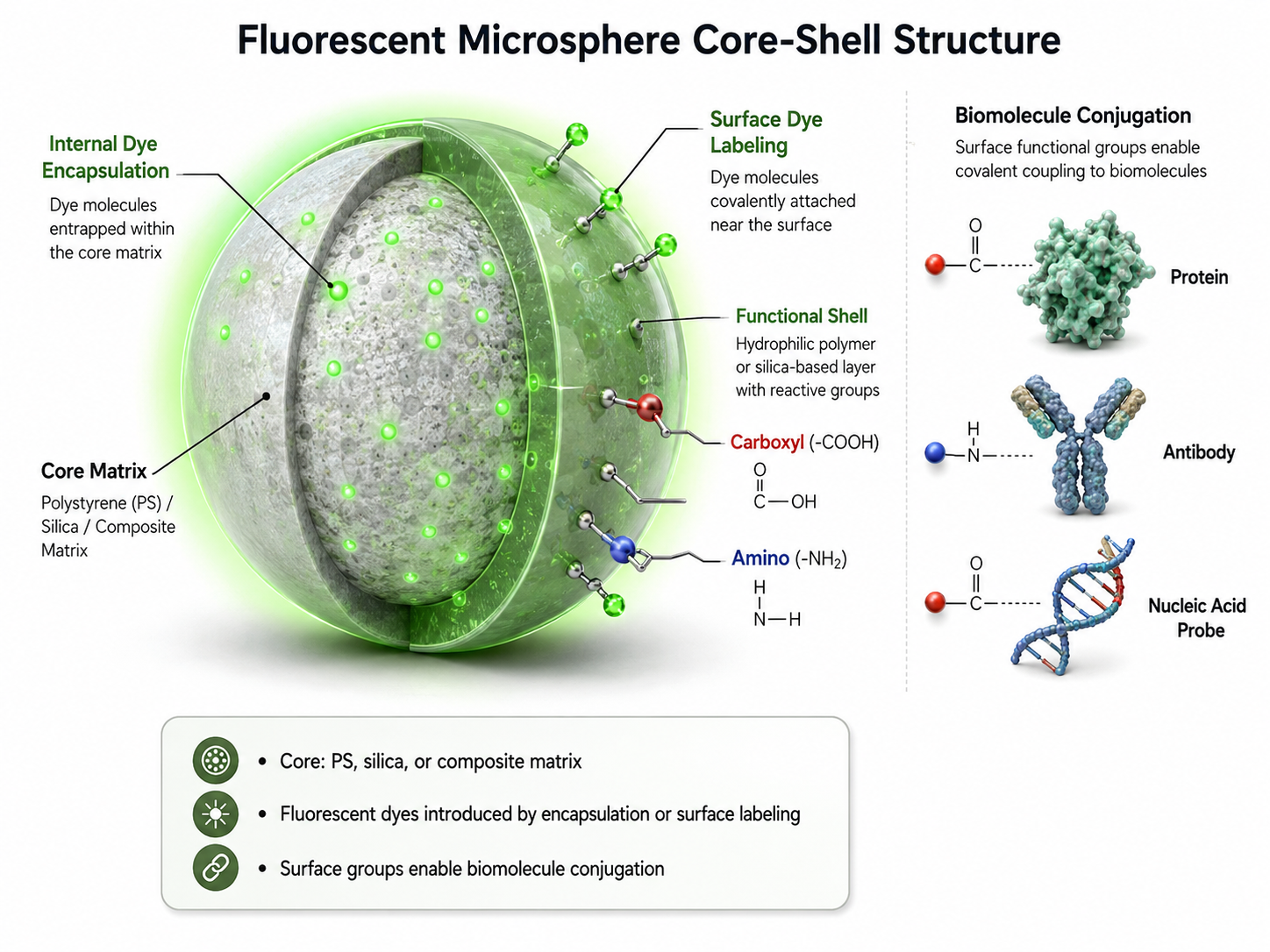
A fluorescent microsphere normally includes:
A polymer, silica or composite core;
One or more fluorescent dyes;
Optional surface functional groups;
A liquid suspension or dry powder format.
The particle acts as a carrier for the fluorescent material.
Compared with a free fluorescent dye, a fluorescent microsphere can provide:
A stronger combined optical signal;
A defined physical size;
Easier separation or counting;
A surface for biomolecule coupling;
Multiple dyes in the same particle;
Calibrated fluorescence-intensity populations.
The final performance depends on the particle matrix, fluorophore, dye-loading method, surface chemistry and assay environment.
Main Types of Fluorescent Microspheres
Internally Dyed Microspheres
Internally dyed particles contain fluorescent molecules within the polymer matrix.
Potential advantages include:
Better protection of the fluorophore;
Reduced interference with surface chemistry;
Higher dye loading;
Improved dye retention;
External functional groups remaining available for conjugation.
Thermo Fisher, Polysciences, Bangs Laboratories and SANYU all describe internally dyed or internally incorporated fluorescent particle technologies.
Surface-Labeled Microspheres
Surface-labeled particles carry fluorophores on or near the external particle surface.
Potential advantages include:
Flexible labeling chemistry;
Direct dye access;
Adaptation of an existing particle.
Potential limitations include:
Greater exposure to solvents and detergents;
Possible dye leakage;
Changes to particle charge;
Competition between dye labeling and biomolecule coupling.
Time-Resolved Fluorescent Microspheres
Time-resolved fluorescent particles use fluorophores with longer emission lifetimes than conventional organic dyes.
The reader measures emission after a defined delay following excitation.
This can reduce interference from short-lived sample autofluorescence and is useful in sensitive immunoassays and quantitative lateral flow tests.
Spectrally Encoded Microspheres
Spectrally encoded particles contain different combinations or concentrations of dyes.
Each bead population has a distinct optical identity.
After each population is coupled to a different ligand, several targets can be detected in one sample.
This principle is used in:
Multiplex immunoassays;
Cytometric bead assays;
Nucleic acid testing;
Biomarker panels;
Instrument calibration.
Fluorescent Magnetic Microspheres
Fluorescent magnetic beads combine:
Magnetic separation;
Fluorescent detection;
Optional biomolecule-coupling surfaces.
They may be used in:
Target capture;
Cell separation;
Multiplex assays;
Miniaturized bioassays;
Imaging after magnetic enrichment.
Dry Fluorescent Tracer Particles
Dry fluorescent tracer particles are generally designed for:
Flow visualization;
PIV;
Filtration studies;
Process validation;
Cleaning studies.
They may use polyethylene, crosslinked polymers or glass rather than diagnostic-grade polystyrene latex.
Major Applications
Lateral Flow Immunoassays
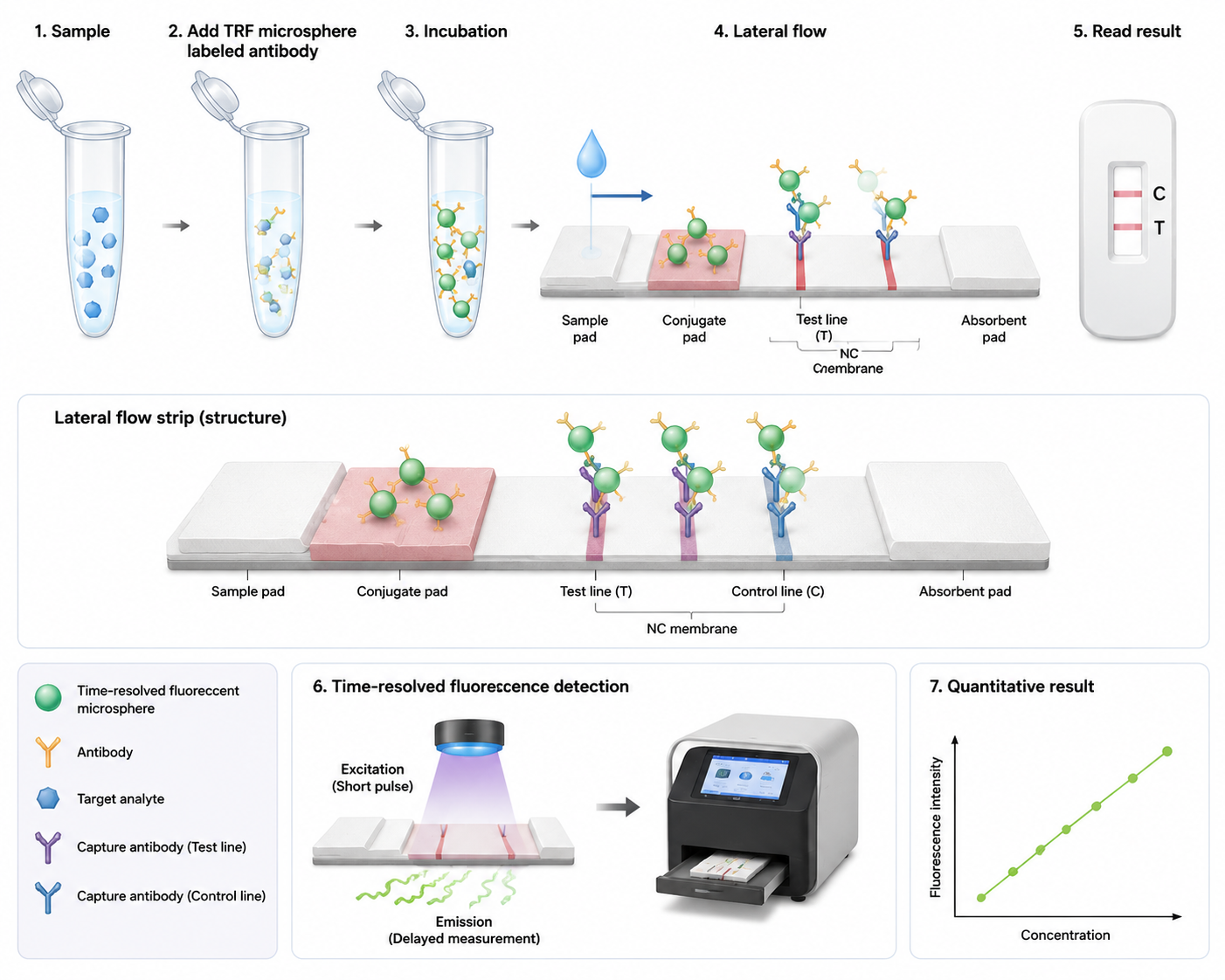
Fluorescent microspheres can serve as instrument-readable labels in lateral flow tests.
Compared with visual colored particles, fluorescent labels can support:
Quantitative measurement;
Lower optical background;
Wider analytical range;
Multiplexing;
Digital result interpretation.
The selected particle must provide:
Stable antibody coupling;
Good membrane migration;
Low nonspecific binding;
Minimal dye leakage;
Compatibility with strip drying;
Compatibility with the reader’s excitation source and emission filter.
Flow Cytometry
Fluorescent microspheres are used for:
Instrument alignment;
Daily performance verification;
Detector sensitivity;
Compensation;
Absolute counting;
Fluorescence standardization;
Multiplex bead assays.
Brazilian flow cytometry facilities also use fluorescent bead-based assays for cytokine and soluble-analyte measurements.
Multiplex Bioassays
Multiplex systems use several optically distinguishable particle populations.
Each population carries a different capture ligand.
A reporter fluorescence then measures target binding.
Critical specifications include:
Separation between bead codes;
Code stability;
Fluorescence-intensity CV;
Surface consistency;
Instrument compatibility;
Minimal spectral overlap.
Fluorescence Microscopy
Fluorescent microspheres may be used as:
Imaging standards;
Resolution controls;
Cell-uptake markers;
Particle-tracking labels;
Tissue-flow tracers;
Model biological particles.
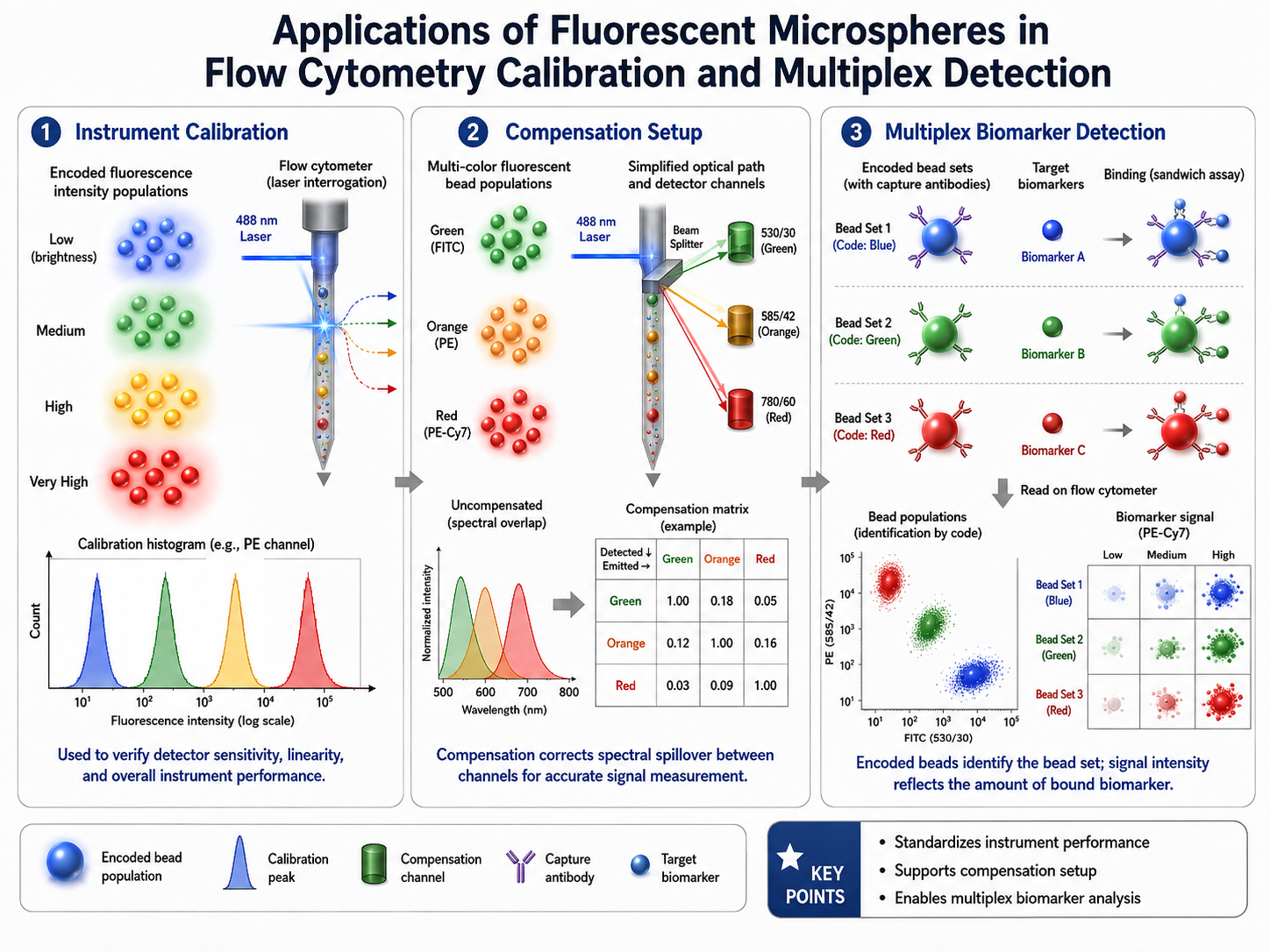
Instrument Calibration
Reference particles can help monitor:
Optical alignment;
Detector sensitivity;
Instrument drift;
Fluorescence linearity;
Channel response;
Particle-size detection.
Calibration products should include clearly defined and reproducible fluorescence populations.
Cell Tracking and Phagocytosis
Fluorescent beads can be incubated with cells and analyzed using microscopy or flow cytometry.
Particle size, charge, hydrophobicity and surface coating can affect:
Cellular uptake;
Attachment;
Intracellular localization;
Aggregation;
Toxicity.
Research-use particles should not automatically be described as clinically approved or suitable for human administration.
Flow Tracing and Filtration Validation
Large fluorescent microspheres can visualize:
Liquid flow;
Airflow;
Particle transport;
Filter retention;
Membrane openings;
Cleaning effectiveness.
These applications often prioritize:
Particle density;
Dry powder handling;
Large particle size;
Solvent resistance;
Strong visible fluorescence.
Specifications to Compare Before Purchasing
Particle Material
Common materials include:
Polystyrene;
PMMA;
Silica;
Polyethylene;
Polylactic acid;
Magnetic composites;
Crosslinked thermoset polymers.
The particle material influences:
Density;
Refractive index;
Hydrophobicity;
Solvent compatibility;
Surface chemistry;
Sedimentation;
water dispersibility.
Particle Size
Particle size influences:
Signal per particle;
Surface area;
Sedimentation;
Flow cytometry detection;
Membrane migration;
Cellular uptake;
Filtration behavior.
Request:
Mean diameter;
D10;
D50;
D90;
CV;
PDI where applicable;
Measurement method.
Excitation and Emission Wavelengths
The fluorescent bead must match the instrument.
Provide the supplier with:
Laser wavelength;
Excitation filter;
Emission filter;
Detector channel;
Other fluorophores used in the assay;
Sample autofluorescence.
A bead described simply as “green” or “red” does not provide enough information for product selection.
Fluorescence Intensity
Request information regarding:
Mean fluorescence intensity;
Fluorescence-intensity CV;
Relative brightness;
Particle-to-particle uniformity;
Lot-to-lot variation;
Intensity after storage.
A very bright bead may still perform poorly if the fluorescence distribution is too broad.
Dye Leaching
Dye leaching occurs when fluorescent molecules migrate from the bead into the surrounding liquid.
It can cause:
Increased background;
Reduced particle brightness;
False signal;
Unstable calibration;
Assay variation.
Test leaching in the actual:
Storage buffer;
Coupling buffer;
Sample buffer;
Detergent concentration;
Temperature;
Organic solvent exposure.
Photostability
Photobleaching causes fluorescence intensity to decline during illumination.
Evaluate:
Exposure time;
Excitation power;
Repeated measurement;
Storage light exposure;
Temperature;
Assay duration.
Surface Functional Groups
Common options include:
Plain hydrophobic surfaces;
Carboxyl groups;
Amino groups;
Epoxy groups;
Streptavidin;
Biotin;
Antibody coatings.
Carboxyl groups are commonly used for covalent coupling to proteins through EDC-based chemistry.
Solids and Particle Concentration
Concentration may be expressed as:
Weight per volume;
Weight percentage;
Particle count per milliliter;
Total dry solids.
Confirm the unit before comparing suppliers.
Colloidal Stability
Evaluate bead stability under the final application conditions.
Important variables include:
pH;
Ionic strength;
Protein concentration;
Detergents;
Surfactants;
Temperature;
Storage time.
A bead stable in water may aggregate after antibody coupling or in a high-salt assay buffer.
How to Match Microspheres to Your Instrument
Start with the instrument configuration.
Record:
Excitation laser or light-source wavelength;
Emission filter;
Detector type;
Available channels;
Required signal intensity;
Background autofluorescence;
Other fluorophores in the assay.
Then compare candidate particles by:
Full excitation spectrum;
Full emission spectrum;
Stokes shift;
Spectral overlap;
Fluorescence intensity;
Compensation requirements;
Photostability.
For multiplex assays, test all bead codes and reporter dyes together.
Individual testing cannot fully predict spectral overlap within the complete panel.
Procurement Considerations for Brazilian Buyers
Local support
Confirm whether the supplier has:
A Brazilian entity;
Portuguese-speaking support;
A Brazilian distributor;
A Latin American representative;
Direct international sales.
Import and shipping
Ask for:
Country of origin;
Customs description;
Harmonized code where available;
Commercial invoice;
Packing list;
Certificate of Analysis;
Safety Data Sheet;
Storage requirements.
Temperature and light protection
Many aqueous fluorescent microspheres require:
Refrigerated storage;
Protection from light;
Protection from freezing;
Controlled transport time.
Dry industrial particles may have different requirements.
Intended use
Clearly distinguish among:
Research-use particles;
IVD raw materials;
Instrument calibration products;
Finished diagnostic reagents;
Industrial tracer particles.
A research-use bead should not automatically be used to support a clinical claim.
Supply continuity
For a commercial project, confirm:
Annual production capacity;
Standard lead time;
Safety stock;
Lot reservation;
Change notification;
Alternative shipping routes;
Complaint-handling procedures.
How to Qualify a New Supplier
Stage 1: Documentation review
Request:
Technical Data Sheet;
Safety Data Sheet;
Certificate of Analysis;
Excitation and emission spectra;
Particle-size data;
Storage conditions;
Shelf life;
Intended-use statement.
Stage 2: Physical characterization
Evaluate:
Particle diameter;
Size distribution;
Morphology;
Aggregation;
Solids concentration;
Particle-count concentration;
Sedimentation;
Redispersibility.
Stage 3: Optical characterization
Measure:
Excitation spectrum;
Emission spectrum;
Mean fluorescence;
Fluorescence CV;
Photobleaching;
Dye leaching;
Lot-to-lot intensity.
Stage 4: Surface testing
For functionalized particles, evaluate:
Functional-group content;
Coupling efficiency;
Active ligand loading;
Blocking;
Nonspecific binding;
Conjugate stability.
Stage 5: Application testing
Test the particles in the actual:
Lateral flow membrane;
Flow cytometer;
Fluorescence reader;
Microscope;
Multiplex assay;
Tracing system.
Stage 6: Stability
Evaluate:
Real-time stability;
Accelerated stability;
Light exposure;
Temperature excursions;
Freeze sensitivity;
Open-bottle stability.
Stage 7: Lot comparison
Compare several lots for:
Particle size;
Fluorescence intensity;
Spectrum;
Coupling;
Background;
Functional assay result.
Information to Include in an RFQ
A complete fluorescent microsphere RFQ should include:
Intended application;
Research, IVD-development, calibration or industrial use;
Particle material;
Required particle diameter;
Acceptable D10, D50 and D90;
Maximum particle-size CV or PDI;
Required fluorescent color;
Excitation wavelength;
Emission wavelength;
Instrument laser wavelength;
Detector filter;
Required fluorescence intensity;
Maximum fluorescence-intensity CV;
Internal or surface dye incorporation;
Maximum acceptable dye leakage;
Photostability requirement;
Plain, carboxyl or amino surface;
Streptavidin or other coating;
Functional-group density;
Solids concentration;
Particle-count concentration;
Suspension medium;
Surfactant limits;
Preservative limits;
Package size;
Sample quantity;
Pilot quantity;
Estimated annual demand;
Delivery location in Brazil;
OEM or private-label requirements.
Frequently Asked Questions
What are fluorescent microspheres?
They are spherical nano- or microparticles containing fluorescent dyes that emit light after excitation at an appropriate wavelength.
Which companies manufacture fluorescent microspheres for customers in Brazil?
Relevant manufacturers include Thermo Fisher Scientific, Merck Estapor, Polysciences, Bangs Laboratories, Spherotech, microParticles GmbH, SANYU, micromod, Magsphere and Cospheric.
Are all companies in this ranking located in Brazil?
No. The ranking covers manufacturers and suppliers serving Brazilian customers. Most are headquartered outside Brazil.
Does Thermo Fisher offer fluorescent microspheres in Brazil?
Yes. Thermo Fisher maintains Brazilian product and support pages for FluoSpheres microspheres.
Does Merck offer Estapor microspheres in Brazil?
Merck maintains Brazil-specific Estapor and fluorescent microsphere pages for product information and enquiries.
Does SANYU manufacture fluorescent microspheres?
Yes. SANYU publicly offers fluorescent polystyrene and carboxyl fluorescent microspheres from approximately 30 nm to 27 µm, with blue, green, red and dual-color options.
Does SANYU provide Portuguese-language product information?
Yes. SANYU maintains a Portuguese-language fluorescent microsphere page for Brazilian and Portuguese-speaking customers.
What applications are SANYU fluorescent microspheres used for?
SANYU positions its fluorescent microspheres for immunoassays, lateral flow diagnostics, flow cytometry, cell labeling, bioimaging and life-science research.
What is the difference between fluorescent and colored microspheres?
Colored microspheres are primarily detected through visible color or absorbance. Fluorescent microspheres emit light after excitation and require a compatible fluorescent detector.
What is the difference between internally dyed and surface-labeled microspheres?
Internally dyed particles contain dye within the particle matrix. Surface-labeled particles carry dye on or near the outer surface.
Which fluorescent microspheres are suitable for lateral flow?
Suitable particles should have stable fluorescence, low dye leakage, good membrane migration, low nonspecific binding and a surface compatible with antibody coupling.
Which beads are best for flow cytometry?
Flow cytometry beads should have narrow particle-size and fluorescence-intensity distributions and must match the cytometer’s lasers, filters and detectors.
Are carboxyl fluorescent microspheres suitable for antibody coupling?
Yes. Carboxyl groups can be activated for covalent attachment to primary amino groups on antibodies and other proteins.
Are fluorescent microspheres magnetic?
Standard fluorescent microspheres are not magnetic. Fluorescent magnetic microspheres contain both magnetic material and fluorescent dye.
Can one particle contain several fluorescent dyes?
Yes. Multi-dye and spectrally encoded microspheres can generate multiple optically distinguishable bead populations.
What causes dye leakage?
Dye leakage may result from weak dye retention, incompatible solvents, detergents, high temperature or an unsuitable particle matrix.
What causes fluorescence to decrease during use?
Possible causes include photobleaching, dye leakage, particle aggregation, incorrect storage and instrument variation.
Can fluorescent microspheres be customized?
Yes. Bangs Laboratories, microParticles GmbH, SANYU, micromod and Magsphere publicly describe custom particle, dyeing, functionalization or production capabilities.
Can international suppliers ship directly to Brazil?
Availability varies by manufacturer, product and current commercial conditions. Buyers should confirm direct shipping or distributor support before beginning qualification.
Conclusion
The fluorescent microsphere market serving Brazil includes multinational life-science suppliers, specialist particle manufacturers and custom material developers.
Thermo Fisher Scientific ranks first because it combines a broad FluoSpheres portfolio with Brazil-specific product pages and technical support.
Merck Estapor ranks second because of its established IVD microsphere platform, fluorescent and functionalized products, and Brazilian market presence.
Polysciences ranks third because its Fluoresbrite portfolio includes multiple colors, particle sizes, carboxyl surfaces and multifluorescent products.
Bangs Laboratories ranks fourth because it combines standard fluorescent particles, custom dyeing, functionalized beads, calibration standards and OEM support.
Spherotech ranks fifth because of its strong flow cytometry, rainbow-bead, multi-intensity and ligand-coated particle portfolio.
microParticles GmbH ranks sixth because it supplies precision UV-to-NIR fluorescent particles in several materials and supports advanced custom development.
SANYU ranks seventh and is the only China-based manufacturer included. Its strengths include fluorescent polystyrene and carboxyl fluorescent microspheres, a 30 nm to 27 µm publicly listed size range, multiple colors, internal dye incorporation, custom surface chemistry and OEM supply.
micromod offers fluorescent polymer, silica, biodegradable and magnetic particle families.
Magsphere provides fluorescent polystyrene latex with plain, carboxyl and amino surfaces and supports custom production scale-up.
Cospheric specializes in dry, large and density-controlled fluorescent tracer particles for industrial and fluid-flow applications.
The final supplier should not be selected only by company name, visible color or nominal particle diameter.
Brazilian buyers should compare:
Particle material;
Particle-size distribution;
Excitation and emission spectra;
Fluorescence intensity;
Intensity uniformity;
Photostability;
Dye leakage;
Surface chemistry;
Colloidal stability;
Functional assay performance;
Lot consistency;
Brazilian availability;
Commercial supply capability.
Testing representative samples with the actual instrument, assay buffer, membrane, biological ligand and storage conditions remains the most reliable way to select a long-term fluorescent microsphere supplier.
Related Blogs
-
 Overview of the PMMA Microsphere Market Serving Korea in 2026Poly(methyl methacrylate) microspheres, commonly called PMMA microspheres, PMMA particles, acrylic microspheres or PMMA beads, are engineered spherical polymer particles manufactured primarily from methyl methacrylate.Unlike conventional P
 -
 PMMA Microsphere Market Overview Serving the UAEPoly(methyl methacrylate) microspheres, commonly known as PMMA microspheres, acrylic microspheres, PMMA beads or PMMA spherical particles, are precision-engineered polymer particles manufactured from methyl methacrylate-based materials.Depending on pol
 -
 Quick Answer: Top Carboxyl Polystyrene Microsphere Manufacturers Serving Brazil in 2026The top 10 carboxyl polystyrene microsphere manufacturers and specialist particle suppliers serving Brazil in 2026 are:Thermo Fisher ScientificSANYUPolysciencesJSR Life SciencesMerck EstaporBangs LaboratoriesMagsp
 -
 Quick Answer: Leading Carboxyl Polystyrene Microsphere Manufacturers Serving FranceThe leading carboxyl polystyrene microsphere manufacturers and specialist particle suppliers serving France in 2026 include Merck Estapor, SANYU, JSR Life Sciences, Bangs Laboratories, PolyMicrospheres, Polysciences,

