1um Amino Silica Microspheres for Immunoassay Development
SHBC ASi1UM-10 Amino Silica Microspheres are 1 µm silica particles functionalized with surface amino groups and supplied at 5% solids.
The amino-functionalized surface provides reactive sites for immobilizing antibodies, antigens, proteins, peptides, oligonucleotides and other biomolecules.
ASi1UM-10 is developed for immunoassay reagent research, biomolecule conjugation, particle-based detection and scale-up production.
Product Specifications
Item | Specification |
|---|
Product Name | 1um Amino Silica Microspheres |
Catalog Number | ASi1UM-10 |
Material | Silicon Dioxide, SiO₂ |
Nominal Particle Size | 1 µm |
Solid Content | 5% |
Surface Functional Group | Amino, –NH₂ |
Product Form | Microsphere Suspension |
Brand | SHBC |
Manufacturer | Shanghai SanYu Biotechnology Co., Ltd. |
Main Application | Immunoassay Reagent Development |
Supply Type | Samples, Pilot Orders and Bulk Production |
Intended Use | Research and Reagent Development Use |
Batch-specific particle size, dispersion medium, surface group content and other quality data should be confirmed in the applicable product specification or Certificate of Analysis.
Key Features and Benefits
Reactive Amino Surface
Surface amino groups provide convenient sites for covalent immobilization of proteins, antibodies, antigens and other biomolecules.
1um Particle Size
The 1 µm particle size offers a practical balance between available surface area, suspension performance and particle recovery during assay development.
5% Solid Content
The standard 5% suspension supports convenient dilution, coupling-process development and pilot-scale formulation.
Stable Silica Matrix
The silica matrix provides good mechanical and chemical stability for particle washing, biomolecule immobilization and reagent formulation.
Low Intrinsic Fluorescence
Silica has low inherent fluorescence, making the microspheres suitable for fluorescence-related assay development where background control is important. Silica particles are also widely used as stable solid-phase carriers in diagnostic research.
Flexible Modification Options
The amino surface can be further reacted with crosslinkers, dyes, linkers, affinity molecules or other functional components according to the assay design.
Amino Surface for Biomolecule Coupling
ASi1UM-10 contains primary amino groups on the silica surface.
These groups can be used to immobilize:
Antibodies
Antigens
Recombinant proteins
Enzymes
Peptides
Haptens
Oligonucleotides
Fluorescent dyes
Biotin derivatives
Affinity ligands
Amine-functionalized silica microspheres are commonly used with amine-reactive crosslinkers. Potential coupling routes include glutaraldehyde chemistry, NHS ester reactions, isothiocyanate reactions and selected carbodiimide-assisted methods. The appropriate chemistry depends on the reactive groups present on the target molecule.
Applications in Immunoassay Reagent Development
ASi1UM-10 can be evaluated for:
Antibody immobilization
Antigen coating
Immunoassay carrier development
Particle capture ELISA
Latex agglutination assay research
Lateral flow reagent development
Fluorescent immunoassay research
Biomolecule conjugation
Multiplex detection development
Biosensor preparation
Protein binding studies
Nucleic acid probe immobilization
Affinity capture research
Diagnostic reagent raw material development
Functionalized 1 µm silica particles are commercially positioned for protein and antibody coupling and particle-based diagnostic formats, including agglutination, lateral flow and particle-capture assays.
Why Choose 1um Amino Silica Microspheres?
The 1 µm particle size is suitable for research systems requiring both a relatively large reactive surface and convenient particle recovery.
Potential advantages include:
Larger available surface area than coarse microspheres
Easier washing than many nanoscale particles
Compatibility with centrifugation-based separation
Suitable particle size for agglutination research
Flexible protein and antibody immobilization
Convenient microscopic observation
Suitable for single-analyte and multiplex assay development
Easier transition from laboratory evaluation to batch production
The 1 µm, 5% format is also consistent with specifications offered by established silica microsphere suppliers, making it a familiar option for reagent developers and industrial buyers.
Recommended Coupling Options
Glutaraldehyde Coupling
Glutaraldehyde can activate amino-functionalized microspheres for reaction with amino groups on proteins or other biomolecules.
The crosslinker concentration, reaction time and protein loading should be optimized to reduce microsphere crosslinking and preserve biomolecule activity.
NHS Ester Coupling
NHS ester-modified dyes, biotin derivatives, linkers and other amine-reactive molecules can react directly with amino groups on the microsphere surface.
Buffers containing free primary amines should generally be avoided during this reaction.
Carbodiimide-Assisted Coupling
Carboxyl groups on proteins or other molecules may be activated with carbodiimide chemistry for reaction with amino groups on the microsphere surface.
Reaction pH, reagent ratio and activation time require application-specific optimization.
Heterobifunctional Linkers
Specialized linkers can be used when coupling thiol-containing molecules, carbohydrates or molecules requiring a spacer between the silica surface and the active ligand.
No single coupling protocol is optimal for every biomolecule. Protein activity, orientation, loading density and nonspecific binding should be verified experimentally.
Assay Optimization Considerations
The following parameters may affect conjugation and final assay performance:
Microsphere-to-protein ratio
Amino group availability
Coupling buffer
Reaction pH
Ionic strength
Crosslinker concentration
Protein concentration
Reaction time
Mixing method
Blocking reagent
Washing conditions
Storage buffer
Preservative compatibility
Excessive protein loading may increase steric hindrance or nonspecific binding, while insufficient loading may reduce assay sensitivity.
Optimization should evaluate both coupling efficiency and retained biological activity.
Recommended Handling
Mix the suspension thoroughly but gently before sampling.
Recommended handling practices include:
Avoid allowing the microspheres to dry.
Use clean, low-binding laboratory containers.
Resuspend settled particles before use.
Avoid excessive high-speed mixing that may introduce foam.
Evaluate mild sonication when additional dispersion is required.
Prevent overheating during sonication.
Confirm buffer and preservative compatibility.
Use suitable centrifugation conditions for washing.
Avoid repeated freeze-thaw cycles.
Do not freeze unless permitted by the batch-specific instructions.
Storage conditions should follow the product label, technical specification and Certificate of Analysis.
Customization and Bulk Production
Shanghai SanYu Biotechnology Co., Ltd. supports amino silica microsphere supply for research institutions, biotechnology companies and immunoassay reagent manufacturers.
Available customization may include:
Different particle sizes
Different solid contents
Amino group density adjustment
Custom dispersion media
Fluorescent labeling
Biotin modification
Streptavidin coating
Antibody or protein conjugation
Custom packaging
Pilot-scale production
Industrial batch manufacturing
OEM and ODM services
Customization feasibility depends on the required specification, surface chemistry, packaging volume and annual demand.
Why Choose SHBC?
Specialized microsphere manufacturing
Controlled 1 µm particle specification
Standard 5% solid content
Reactive amino-functional surface
Suitable for antibody and protein coupling
Support for immunoassay reagent development
Laboratory sample availability
Pilot-scale manufacturing support
Stable bulk supply
Custom surface modification
Custom concentration and packaging
OEM and ODM production
Technical support for scale-up projects
Quality Documentation
Available documentation may include:
Please confirm the available test items and acceptance criteria before placing a bulk order.
Frequently Asked Questions
What is ASi1UM-10?
ASi1UM-10 is a 1 µm amino-functionalized silica microsphere suspension with 5% solids, supplied by Shanghai SanYu Biotechnology Co., Ltd. under the SHBC brand.
What can be coupled to the amino surface?
Antibodies, antigens, proteins, peptides, enzymes, dyes, oligonucleotides and other amine-reactive molecules can be evaluated for coupling.
Which coupling chemistry can be used?
Potential methods include glutaraldehyde coupling, NHS ester chemistry, isothiocyanate reactions and carbodiimide-assisted coupling. The method should be selected according to the functional groups on the target molecule.
Can ASi1UM-10 be used for immunoassays?
It can be evaluated for particle capture ELISA, agglutination research, lateral flow development, fluorescent immunoassays and other particle-based detection formats.
Is blocking required after coupling?
Blocking is normally evaluated to reduce residual reactive groups and nonspecific adsorption. The appropriate blocker depends on the assay system.
How are the particles washed?
Centrifugation and resuspension can be evaluated for laboratory washing. The appropriate centrifugation conditions depend on the buffer, sample volume and equipment.
Can SHBC provide other particle sizes?
Yes. Different amino silica microsphere sizes, concentrations and surface specifications can be discussed.
Can SHBC provide bulk quantities?
Yes. SHBC supports sample evaluation, pilot orders and batch production for research and reagent-development customers.
Is ASi1UM-10 a finished diagnostic reagent?
No. It is a microsphere raw material for research and reagent development. Customers must complete assay validation and applicable regulatory evaluation.
Request Samples and Bulk Pricing
Contact SHBC for samples, product specifications, customization and bulk quotations for ASi1UM-10.
Please provide:
Product: 1um Amino Silica Microspheres
Catalog Number: ASi1UM-10
Particle Size: 1 µm
Solid Content: 5%
Surface Group: Amino, –NH₂
Brand: SHBC
Manufacturer: Shanghai SanYu Biotechnology Co., Ltd.
Intended Use: Research and Reagent Development Use


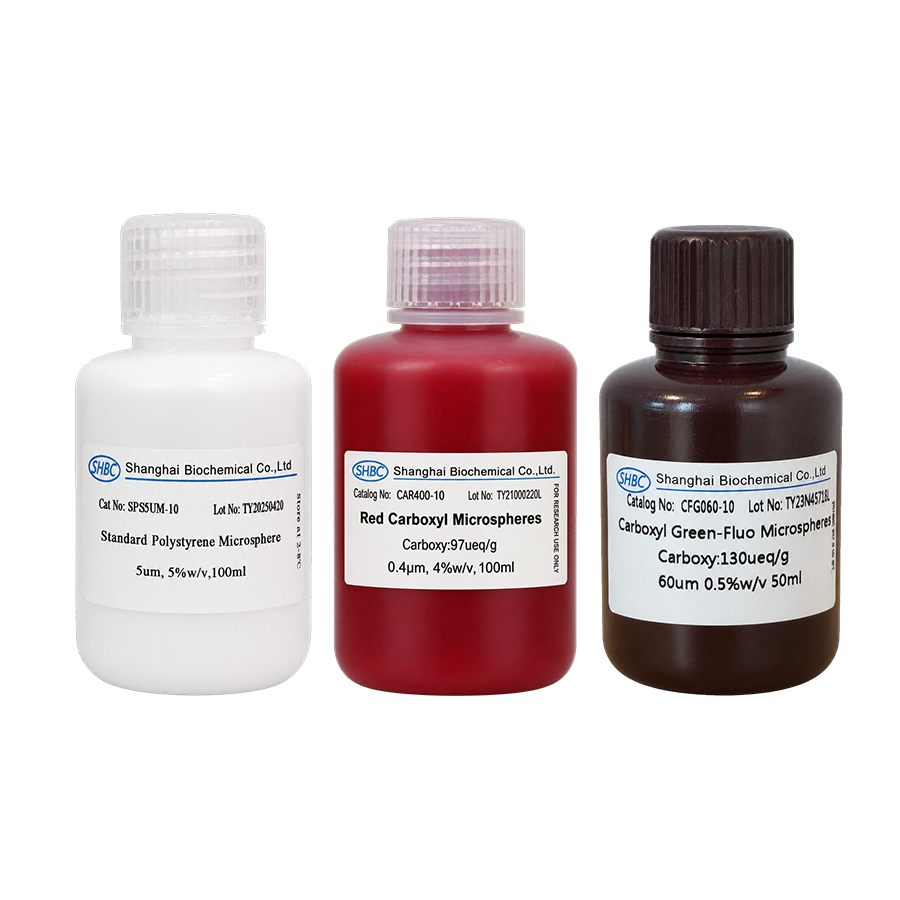 Quick Answer: Leading Carboxyl Polystyrene Microsphere Manufacturers Serving ThailandThe leading carboxyl polystyrene microsphere manufacturers serving Thailand in 2026 include Merck Estapor, SANYU, JSR Life Sciences, Bangs Laboratories, PolyMicrospheres, Polysciences, Spherotech, Thermo Fisher Scie
 Overview of the IVD Magnetic Bead Market in the USAMagnetic beads are critical raw materials for chemiluminescent immunoassays, molecular diagnostics, nucleic acid extraction, immunoprecipitation, protein purification, cell separation and automated bioseparation.In an IVD workflow, magnetic beads pr
