2.8µm NHS Magnetic Beads for Immunoassay Research
SHBC MNHS2.8UM-10 NHS Magnetic Beads are 2.8µm magnetic particles with an NHS-activated surface.
They are designed for direct coupling of antibodies, antigens, proteins, peptides and other amine-containing molecules.
The product is supplied at 5% solids for immunoassay research, magnetic separation, affinity capture and bulk reagent production.
Product: 2.8µm NHS Magnetic Beads
Catalog Number: MNHS2.8UM-10
Brand: SHBC
Manufacturer: Shanghai SanYu Biotechnology Co., Ltd.
Particle Size: 2.8µm
Surface: NHS activated
Solids Content: 5%
Main Application: Immunoassay research
Supply: Samples, pilot batches and bulk production
Intended Use: Research use only
Product Overview
MNHS2.8UM-10 provides a ready-to-couple magnetic surface.
The NHS groups react with primary amino groups on antibodies and proteins.
The reaction forms stable covalent amide bonds.
No additional EDC/NHS activation is normally required before coupling.
The 2.8µm particle size provides a practical balance between:
Magnetic response
Surface area
Particle recovery
Suspension stability
Repeated washing
Automated processing
The magnetic format simplifies separation of bound and unbound reagents.
Technical Specifications
Parameter | Specification |
|---|
Product name | NHS Magnetic Beads |
Catalog number | MNHS2.8UM-10 |
Brand | SHBC |
Nominal diameter | 2.8µm |
Surface group | NHS ester |
Solids content | 5% |
Separation method | Magnetic |
Coupling target | Primary amine-containing molecules |
Main application | Immunoassay research |
Supply format | Sample and bulk supply |
The following data should be confirmed by the final TDS or lot-specific COA:
Actual particle-size range
Particle-size CV
Particle morphology
Magnetic material
Magnetic content
Magnetic response time
NHS-group density
Antibody coupling capacity
Protein coupling capacity
Particle concentration
Suspension buffer
Preservative
Package size
Shelf life
Storage temperature
The 5% solids content alone cannot determine antibody coupling capacity or magnetic response time.
Key Advantages
Ready-to-Couple NHS Surface
The surface is already NHS activated.
No separate bead-activation step is normally required.
This reduces:
Activation reagents
Preparation time
Intermediate washing
Process variation
Operator workload
Direct Antibody Coupling
Antibodies containing accessible primary amino groups can react directly with the NHS surface.
The coupling process is simple and suitable for immunoassay reagent development.
Stable Covalent Bond
NHS esters react with primary amines to form stable amide bonds.
Covalent immobilization helps reduce ligand loss during washing, incubation and storage.
2.8µm Particle Size
The 2.8µm size provides a larger surface per particle than smaller magnetic beads.
It may also support easier magnetic recovery and repeated washing.
Magnetic Separation
The beads can be collected using an external magnetic field.
This supports:
Good Resuspension Potential
Uniform resuspension is important for consistent bead dispensing and assay precision.
The actual performance must be validated in the final SHBC formulation.
Suitable for Automation
MNHS2.8UM-10 can be evaluated in manual, semi-automated and automated immunoassay workflows.
Automation testing should include:
Bead aspiration
Dispensing accuracy
Magnetic collection
Washing efficiency
Redispersion
Carryover
5% Solids Content
The concentrated suspension supports:
Bulk Manufacturing
SHBC supports:
Research samples
Pilot batches
Repeat orders
OEM production
Private-label packaging
Enterprise bulk supply
How NHS Coupling Works
NHS esters mainly react with primary amino groups.
Primary amino groups are present on:
The simplified reaction is:
NHS Magnetic Bead + Amine-Containing Ligand → Covalently Coupled Bead–Ligand
The coupling forms a stable amide linkage.
Use an Amine-Free Buffer
Use a coupling buffer without competing primary amines.
Avoid during coupling:
These substances can react with NHS groups and reduce ligand coupling.
Official NHS magnetic bead protocols similarly recommend coupling proteins in an amine-free buffer and quenching the remaining active groups after coupling.
Control NHS Hydrolysis
NHS groups can hydrolyze in aqueous solution.
Prepare the beads immediately before coupling.
Do not leave the activated beads in aqueous coupling buffer longer than necessary.
Quench Remaining NHS Groups
After ligand coupling, remaining NHS groups should be quenched.
This helps reduce:
Immunoassay Applications
Magnetic Sandwich Immunoassays
Couple a capture antibody to MNHS2.8UM-10.
The antibody-coated beads capture the target antigen.
A labeled detection antibody generates the assay signal.
Potential research targets include:
Chemiluminescent Immunoassays
MNHS2.8UM-10 can be evaluated as a magnetic solid phase in CLIA and CLEIA development.
The beads support:
Target capture
Magnetic separation
Repeated washing
Reporter binding
Substrate reaction
Luminescence detection
Fluorescent Immunoassays
The magnetic beads can be combined with fluorescent detection antibodies or probes.
Enzyme Immunoassays
The beads may be used with enzyme-labeled detection reagents and compatible substrates.
Competitive Immunoassays
Potential applications include:
Drugs
Haptens
Hormones
Toxins
Metabolites
Small molecules
Peptides
Antigen-Coated Magnetic Beads
Antigens and recombinant proteins may be coupled for:
Affinity Capture
Antibody- or protein-coated beads may be used for:
Target enrichment
Immunoprecipitation research
Protein purification research
Antigen capture
Protein interaction studies
NHS magnetic beads are also used for covalent immobilization of free-amine-containing biomolecules in pull-down and protein-enrichment workflows.
Suitable Coupling Molecules
MNHS2.8UM-10 may be evaluated with:
The molecule must contain an accessible primary amino group.
Recommended Coupling Workflow
1. Resuspend the Beads
Mix MNHS2.8UM-10 until homogeneous.
Avoid excessive foaming.
2. Transfer the Required Amount
Calculate the bead amount according to:
3. Magnetically Collect the Beads
Place the tube in a compatible magnetic separator.
Wait until the beads are collected.
Remove the storage solution.
4. Wash with Coupling Buffer
Use a validated amine-free buffer.
Avoid Tris and glycine.
5. Prepare the Ligand
Transfer the antibody or protein into the coupling buffer.
Remove incompatible components when necessary.
Potential interfering components include:
6. Add the Ligand
Add the antibody or protein to the prepared NHS magnetic beads.
Mix immediately.
7. Incubate
Maintain gentle mixing.
Optimize:
Ligand concentration
Bead concentration
Buffer pH
Reaction time
Temperature
Mixing speed
8. Wash the Coupled Beads
Magnetically collect the beads.
Remove unbound ligand.
Wash with a compatible buffer.
9. Quench Remaining NHS Groups
Use a validated quenching reagent.
Evaluate the effect on background and ligand activity.
Add a suitable blocking and storage formulation.
Evaluate:
Particle dispersion
Magnetic response
Antibody activity
Non-specific binding
Storage stability
Magnetic Immunoassay Workflow
Couple the capture antibody.
Quench remaining NHS groups.
Block and formulate the beads.
Add the test sample.
Incubate for target capture.
Magnetically collect the beads.
Wash away unbound sample.
Add the labeled detection antibody.
Incubate again.
Perform final magnetic washing.
Add the detection substrate.
Measure the signal.
Possible detection methods include:
Why Choose 2.8µm Magnetic Beads?
Easier Magnetic Recovery
The 2.8µm size may provide easier magnetic collection than smaller particles under comparable conditions.
Actual collection time depends on:
Larger Surface per Particle
Each 2.8µm bead provides more physical surface than each 1.5µm or 200nm bead.
Practical Repeated Washing
The larger particle size may support a more visible and compact magnetic bead pellet.
This can be useful in repeated washing processes.
Good Automation Positioning
Uniform 2.8µm superparamagnetic beads are widely used in automated magnetic workflows because they combine liquid-phase handling, magnetic separation and reproducible processing.
Particle-Size Comparison
Feature | 2.8µm Beads | 1.5µm Beads | 200nm Beads |
|---|
Surface per particle | Largest | Medium | Smallest |
Particles per unit mass | Lowest | Medium | Highest |
Magnetic recovery | Often easier | Balanced | More system dependent |
Settling | Faster | Moderate | Slower |
Microscopic visibility | Easier | Moderate | Difficult |
Automated washing | Suitable | Suitable | Requires validation |
Small-volume reactions | Suitable | Suitable | Often advantageous |
The final particle size should be selected through direct immunoassay testing.
NHS Magnetic Beads vs Carboxyl Magnetic Beads
Feature | NHS Magnetic Beads | Carboxyl Magnetic Beads |
|---|
Surface | Pre-activated NHS | Carboxyl |
Main coupling group | Primary amines | Primary amines after activation |
EDC/NHS activation | Normally unnecessary | Required |
Workflow | Shorter | More steps |
Main advantage | Direct protein coupling | Flexible established chemistry |
Main concern | NHS hydrolysis | Activation timing and hydrolysis |
Choose NHS beads when rapid direct protein coupling is preferred.
Choose carboxyl beads when a validated EDC/NHS activation process is already available.
Quality Control
Recommended quality-control items include:
Coupling Efficiency
Possible evaluation methods include:
Protein mass balance
Fluorescent ligand measurement
Surface NHS activity testing
Functional target-binding assays
Protein uptake does not always equal active antibody loading.
Functional immunoassay testing is essential.
Evaluate:
Magnetic collection time
Bead recovery
Residual beads in the supernatant
Redispersion after collection
Performance in the intended reaction vessel
Compatibility with the intended analyzer
Bulk Manufacturing and Customization
Shanghai SanYu Biotechnology Co., Ltd. supports:
For project evaluation, provide:
Required quantity
Annual demand
Intended immunoassay
Ligand type
Required coupling capacity
Bead amount per test
Magnetic separator or analyzer
Preferred package size
Buffer restrictions
Preservative restrictions
Quality-control requirements
Handling and Storage
Follow the final SHBC product label, TDS and lot-specific COA.
General recommendations:
Store under the specified refrigerated conditions.
Do not freeze unless validated.
Keep the container tightly closed.
Mix before sampling.
Do not allow the beads to dry.
Use clean, low-binding tubes.
Avoid amine-containing buffers before coupling.
Protect NHS groups from hydrolysis.
Use prepared beads promptly.
Do not return diluted material to the original bottle.
Frequently Asked Questions
What is MNHS2.8UM-10?
MNHS2.8UM-10 is a 2.8µm NHS-activated magnetic bead suspension supplied at 5% solids.
What is the main application?
It is designed for antibody and protein coupling in immunoassay research.
Is EDC/NHS activation required?
No additional EDC/NHS activation is normally required.
The bead surface is already NHS activated.
Which molecules can be coupled?
Antibodies, antigens, proteins, peptides, enzymes and other amine-containing molecules may be evaluated.
Which groups react with NHS?
NHS esters mainly react with primary amino groups.
Which buffers should be avoided?
Avoid Tris, glycine and other amine-containing buffers during coupling.
Is quenching required?
Quenching remaining NHS groups is generally recommended after ligand coupling.
Can MNHS2.8UM-10 be used in CLIA research?
Yes. It can be evaluated as a magnetic solid phase in chemiluminescent immunoassay development.
Can it be used on automated analyzers?
Yes, subject to validation of dispensing, magnetic collection, washing and redispersion.
What is the antibody coupling capacity?
Use the final product specification or lot-specific COA.
Do not estimate it from solids content alone.
How are the beads separated?
Use an external magnetic separator compatible with the reaction vessel and sample volume.
Can the beads be frozen?
Freezing is generally not recommended unless validated.
Can the bead pellet be allowed to dry?
No. Drying may cause aggregation and poor redispersion.
Is bulk production available?
Yes. SHBC supports samples, pilot batches, OEM projects and enterprise bulk manufacturing.
Request a Sample or Quotation
SHBC MNHS2.8UM-10 provides:
2.8µm nominal particle size
NHS-activated surface
5% solids content
Direct amine-based coupling
Stable covalent ligand attachment
Magnetic separation
Immunoassay compatibility
Automation-development potential
Sample and bulk supply
OEM and customization support
Product Name: 2.8µm NHS Magnetic Beads
Catalog Number: MNHS2.8UM-10
Brand: SHBC
Manufacturer: Shanghai SanYu Biotechnology Co., Ltd.
Particle Size: 2.8µm
Surface: NHS activated
Solids Content: 5%
Application: Immunoassay research
Supply: Samples, pilot batches and bulk production
Intended Use: Research Use Only. Not for diagnostic or therapeutic use.


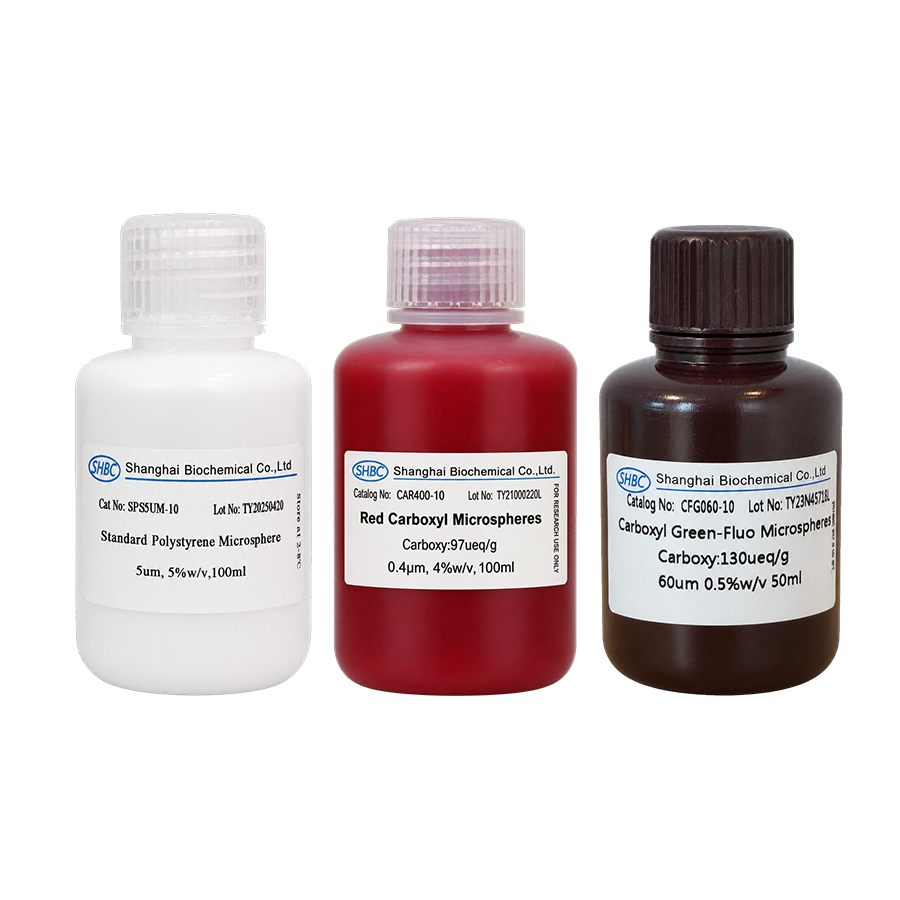 Quick Answer: Leading Carboxyl Polystyrene Microsphere Manufacturers Serving ThailandThe leading carboxyl polystyrene microsphere manufacturers serving Thailand in 2026 include Merck Estapor, SANYU, JSR Life Sciences, Bangs Laboratories, PolyMicrospheres, Polysciences, Spherotech, Thermo Fisher Scie
 Overview of the IVD Magnetic Bead Market in the USAMagnetic beads are critical raw materials for chemiluminescent immunoassays, molecular diagnostics, nucleic acid extraction, immunoprecipitation, protein purification, cell separation and automated bioseparation.In an IVD workflow, magnetic beads pr
