


Products
SHBC provides colored microspheres, fluorescent microspheres, magnetic beads, silica microspheres, chromatography packing microspheres and biological reagents for diagnostic assay development, nucleic acid extraction, protein purification and separation applications.

-
MNH20UM-10
-
SHBC
-
5%
-
20µm
-
10ml,20ml,50ml ,500ml,1000ml
20µm Amino Magnetic Beads MNH20UM-10
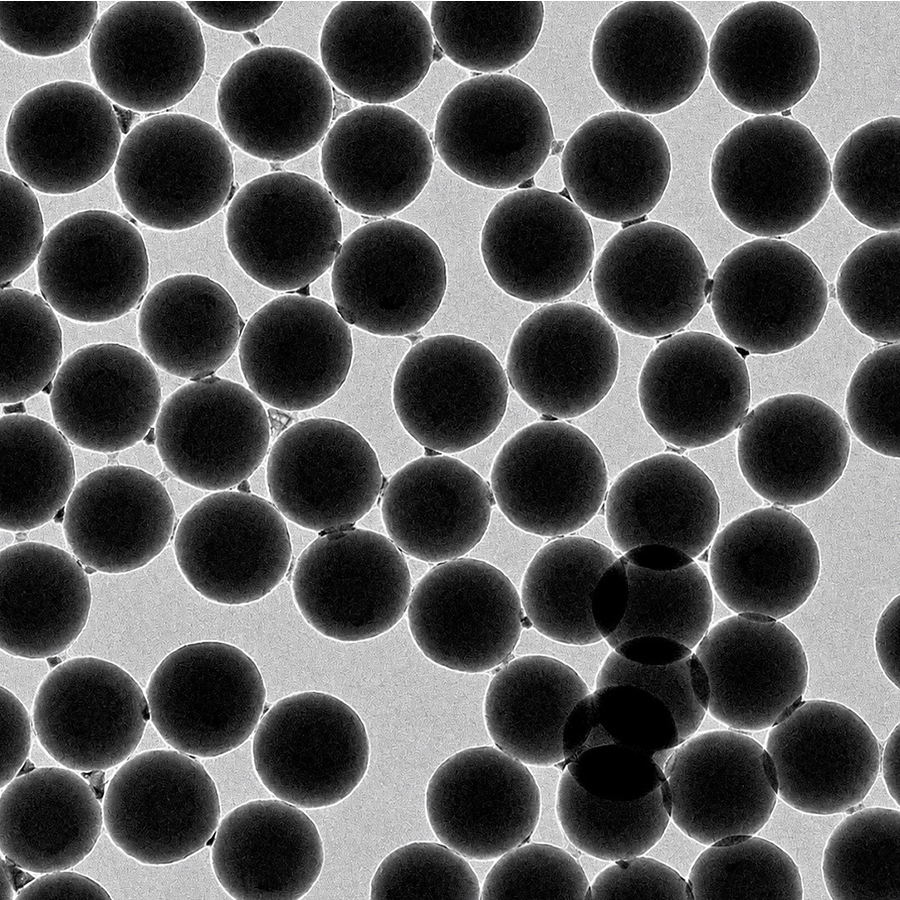
MNH20UM-10 is a 20µm amino-functional magnetic bead suspension supplied at a solids content of 5%.
The product is developed for covalent immobilization of antibodies, antigens, proteins, peptides, enzymes and other affinity ligands in immunoassay research, reagent development, process scale-up and batch production.
Primary amino groups on the bead surface provide reactive sites for biomolecule immobilization through an appropriate crosslinking or activation system. After coupling, the functionalized beads can serve as a magnetic solid phase for target capture, magnetic separation, washing and signal detection.
MNH20UM-10 is designed for biotechnology companies, immunoassay reagent developers, research institutions and manufacturing enterprises requiring a defined 20µm magnetic carrier for laboratory evaluation, pilot production and bulk supply.
What Are 20µm Amino Magnetic Beads?
20µm amino magnetic beads are magnetic microspheres with a nominal diameter of approximately 20 micrometers and amino groups on their surface.
The amino groups provide chemical reaction sites rather than universal direct binding to every antibody or protein. A compatible crosslinker, activated ligand or other conjugation system is normally required to create a stable covalent linkage.
Commercial amino magnetic bead suppliers describe these particles as carriers for immobilizing proteins, antibodies, peptides and oligonucleotides. Exact 20µm products and broader 10–30µm amino magnetic bead ranges are already available in the market, confirming demand for larger magnetic carriers in biomolecule separation and detection workflows.
Compared with smaller magnetic particles, 20µm beads generally provide:
More visible and defined magnetic collection;
Easier observation during washing;
Fewer individual particles per unit mass;
Lower theoretical geometric surface area per unit mass;
Faster gravity-driven settling;
Greater need for controlled mixing during incubation and dispensing.
The best particle size should therefore be selected according to the assay format, ligand-loading requirement, magnetic separator and automated instrument.
MNH20UM-10 Product Specifications
Item | Specification |
|---|---|
Product Name | 20µm Amino Magnetic Beads |
Catalog Number | MNH20UM-10 |
Nominal Particle Size | 20µm |
Surface Functional Group | Amino / NH₂ |
Solids Content | 5% |
Product Form | Magnetic bead suspension |
Suitable Coupling Targets | Antibodies, antigens, proteins, peptides and enzymes |
Primary Application | Immunoassay reagent research and production |
Development Stage | Research, process development, pilot production and batch manufacturing |
Supply Options | Evaluation samples, pilot quantities and bulk supply |
Customization | Subject to technical evaluation |
Intended Use | Research and reagent-development raw material |
The basis used to express the 5% solids content, together with magnetic properties, amino density, particle-size distribution and storage buffer, should be confirmed in the applicable technical data sheet and lot-specific certificate of analysis.
Key Features of MNH20UM-10
Defined 20µm Particle Size
MNH20UM-10 provides a defined large-particle format for researchers who require a larger magnetic carrier rather than nanoscale or small micrometer beads.
The 20µm size can be evaluated for applications where clearly controlled magnetic collection and repeated washing are more important than maximizing the theoretical number of particles per milligram.
Amino-Functional Surface
The surface amino groups can be used as reaction sites for covalent biomolecule immobilization.
Potential coupling targets include:
Monoclonal antibodies;
Polyclonal antibodies;
Recombinant antigens;
Natural proteins;
Peptides;
Enzymes;
Streptavidin;
Thiolated biomolecules;
Carboxyl-containing ligands;
Modified oligonucleotides;
Other affinity molecules.
Amino magnetic beads are commercially used for coupling biological ligands through reagents such as glutaraldehyde, amine-reactive crosslinkers and amine-to-sulfhydryl crosslinkers.
Concentrated 5% Solids Suspension
The 5% solids formulation provides a concentrated starting material for:
Coupling-process screening;
Ligand-loading optimization;
Assay formulation;
Pilot production;
Stability studies;
Manufacturing scale-up.
The suspension should be thoroughly homogenized before sampling because 20µm particles may settle during storage or temporary processing holds.
Convenient Magnetic Solid-Phase Handling
After ligand immobilization, the beads can be magnetically collected during sample processing.
A typical assay workflow may include:
Addition of antibody-coupled magnetic beads;
Incubation with the sample;
Capture of the target analyte;
Magnetic collection;
Removal of unbound materials;
Repeated washing;
Addition of the detection reagent;
Signal measurement.
Suitable for Research-to-Production Projects
MNH20UM-10 can support:
Initial feasibility evaluation;
Antibody-coupling development;
Immunoassay optimization;
Automated-system evaluation;
Pilot-scale manufacturing;
Stability studies;
Batch-consistency testing;
Bulk raw-material procurement.
Why Choose 20µm Magnetic Beads for Immunoassays?
Particle size affects bead number, available surface, settling behavior, magnetic collection, mixing and compatibility with assay instruments.
Defined Magnetic Collection Zone
Larger micrometer-scale beads can form a clearly visible collection zone under an appropriate magnetic field.
This may simplify:
Observation of bead collection;
Removal of supernatant;
Repeated washing;
Process troubleshooting;
Manual method development.
Actual collection speed depends on the magnetic content, bead concentration, liquid viscosity, magnet design and container geometry.
Suitable for Assays Requiring Repeated Washing
Magnetic immunoassays often require several separation and washing cycles.
MNH20UM-10 can be evaluated when a process requires:
Consistent bead recovery;
Controlled aspiration;
Low bead loss;
Repeatable redispersion;
Defined residual wash volume.
Potential Benefits in Sample Pretreatment
A larger magnetic carrier may be useful in sample-processing workflows where the particles must be easily isolated from complex or relatively viscous matrices.
However, compatibility with the sample must be tested because proteins, cells and matrix components can affect bead aggregation, settling and magnetic collection.
Important Particle-Size Tradeoff
For beads with similar density and composition, increasing particle diameter reduces the number of individual particles per unit mass.
A 20µm bead system may therefore require different:
Bead dosage;
Antibody-to-bead ratio;
Mixing conditions;
Incubation time;
Washing sequence;
compared with 1µm, 2µm or 3µm beads.
The optimal size must be determined through side-by-side functional testing.
Automated Instrument Compatibility
MNH20UM-10 may be evaluated on automated magnetic immunoassay platforms, but compatibility should not be assumed solely from particle size.
The following parameters should be tested:
Reaction-cup dimensions;
Pipette-tip opening;
Magnetic module design;
Mixing speed;
Mixing duration;
Aspiration height;
Wash volume;
Collection time;
Bead carryover;
Redispersion after washing.
Amino Surface Chemistry and Biomolecule Coupling
The appropriate coupling chemistry depends on the available functional groups of the ligand and the required orientation and stability of the immobilized biomolecule.
Glutaraldehyde-Mediated Coupling
Glutaraldehyde can be used to activate amino-functional bead surfaces before reaction with amino-containing proteins or antibodies.
A commercial amino magnetic bead protocol describes washing the beads, activating them with glutaraldehyde, adding the biological ligand while maintaining suspension, and subsequently blocking residual reactive sites.
Glutaraldehyde conditions should be optimized because excessive activation may cause:
Bead-to-bead crosslinking;
Protein aggregation;
Reduced antibody activity;
Higher nonspecific binding;
Poor bead redispersion.
Important variables include:
Glutaraldehyde concentration;
Activation time;
Reaction pH;
Ligand concentration;
Bead concentration;
Mixing method;
Blocking formulation.
BS3 and Other Amine-Reactive Crosslinkers
BS3 is a water-soluble homobifunctional amine-reactive crosslinker.
Thermo Scientific provides a reference workflow using BS3 for coupling proteins or peptides to amine-derivatized magnetic beads. The reaction is conducted in a compatible non-interfering buffer, followed by magnetic washing and evaluation of the remaining unbound protein.
Because both the bead surface and proteins may contain multiple amino groups, this route can produce random ligand orientation.
Sulfo-SMCC Amine-to-Sulfhydryl Coupling
Sulfo-SMCC is a heterobifunctional crosslinker containing an NHS ester and a maleimide group.
The NHS-ester end reacts with amino-containing molecules, while the maleimide end reacts with sulfhydryl-containing molecules. This chemistry can be evaluated for coupling MNH20UM-10 to thiolated antibodies, proteins, peptides or oligonucleotides.
This route may be considered when:
The ligand naturally contains an accessible sulfhydryl group;
The ligand has been selectively thiolated;
More controlled functional-group targeting is required;
Random amine-to-amine crosslinking is undesirable.
Buffers containing competing primary amines or sulfhydryls can consume the reactive groups and interfere with coupling.
Activated Carboxyl-to-Amino Coupling
A ligand containing accessible carboxyl groups can potentially be activated before reaction with the amino groups on MNH20UM-10.
PureCube Amine Activated MagBeads use this general approach to couple carboxyl-containing biomolecules to amino-functional magnetic carriers.
The developer should evaluate whether activation affects the structure or biological activity of the target protein.
Selecting a Coupling Method
Ligand Characteristic | Potential Coupling Route |
|---|---|
Protein with accessible primary amino groups | Glutaraldehyde or suitable amine-reactive crosslinker |
Thiolated antibody, protein or peptide | Sulfo-SMCC or another amine-to-thiol crosslinker |
Ligand containing accessible carboxyl groups | Activated carboxyl-to-amino coupling |
Specially modified oligonucleotide | Functional-group-specific crosslinker |
Aldehyde-containing ligand | Reductive amination subject to validation |
The coupling method should be selected according to functional assay performance rather than coupling yield alone.
Applications in Immunoassay Reagent Development
Magnetic Sandwich Immunoassays
A capture antibody can be immobilized on MNH20UM-10.
The coupled beads are incubated with the sample to capture the target antigen. A labelled detection antibody can then bind to the captured target and form a bead–target–detection antibody complex.
The magnetic complex is collected and washed before signal measurement.
Chemiluminescence Immunoassay Development
MNH20UM-10 may be evaluated as a magnetic solid-phase carrier in chemiluminescence immunoassay development.
Important variables include:
Bead dosage;
Capture-antibody density;
Blocking formulation;
Sample-incubation time;
Magnetic collection;
Wash efficiency;
Detection-antibody concentration;
Enzyme-label compatibility;
Chemiluminescent substrate;
Signal-to-background ratio.
Electrochemiluminescence Immunoassay Research
The beads may also be evaluated in electrochemiluminescence immunoassay research.
Compatibility should be confirmed with:
The instrument’s magnetic module;
Electrode geometry;
Electrochemiluminescent label;
Reaction buffer;
Assay consumables;
Washing program;
Signal-reading sequence.
Suitability for a particular ECL platform must be established experimentally.
Competitive Immunoassays
Antigens, antibodies, haptens or small-molecule conjugates may be immobilized on MNH20UM-10 for competitive assay development.
This format may be used when the target is too small for a conventional two-site sandwich assay.
Antibody Detection
An antigen can be coupled to the beads to capture target antibodies from research samples.
Immunomagnetic Separation
Ligand-functionalized MNH20UM-10 may be evaluated for magnetic enrichment or separation of:
Proteins;
Cells;
Microorganisms;
Biological particles;
Other affinity-recognized targets.
Immunoprecipitation and Affinity Capture
Antibody- or protein-coupled beads may also be evaluated for immunoprecipitation, affinity capture and sample-preparation research.
Commercial amino magnetic beads are positioned for immunology detection, protein immobilization, cell separation and molecular biology workflows.
Recommended Antibody and Protein Coupling Workflow
The following workflow is a general development framework. It is not a validated product-specific protocol.
Step 1: Characterize the Ligand
Before coupling, record:
Ligand type;
Molecular weight;
Concentration;
Purity;
Original buffer;
Stabilizing additives;
Available amino groups;
Available sulfhydryl groups;
Available carboxyl groups;
Biological activity.
The original formulation may need to be exchanged if it contains substances that interfere with the selected crosslinker.
Step 2: Select the Coupling Route
Choose the chemistry according to the ligand and intended application:
Glutaraldehyde for selected protein-coupling workflows;
BS3 or another amine-reactive crosslinker;
Sulfo-SMCC for amine-to-sulfhydryl coupling;
Activated carboxyl chemistry;
Another heterobifunctional crosslinker.
Step 3: Fully Resuspend MNH20UM-10
Mix the original suspension until homogeneous before sampling.
Suitable methods may include:
Gentle inversion;
Roller mixing;
End-over-end rotation;
Controlled vortexing;
Validated low-energy sonication.
Because 20µm beads can settle relatively quickly, maintain mixing while preparing multiple aliquots.
Step 4: Determine the Required Bead Amount
Evaluate several bead quantities during development rather than relying on one fixed dosage.
The optimal amount depends on:
Target concentration;
Ligand-loading capacity;
Assay volume;
Required sensitivity;
Sample matrix;
Magnetic collection system.
Step 5: Wash and Exchange the Buffer
Collect the beads using a compatible magnetic separator.
Remove the original suspension medium and wash the beads using a buffer suitable for the selected reaction.
Do not allow the collected beads to dry.
Step 6: Activate the Beads or Ligand
Control the following parameters:
Crosslinker concentration;
Bead concentration;
Activation pH;
Reaction time;
Temperature;
Mixing rate;
Reagent-addition order.
Step 7: Add the Antibody or Protein
Evaluate multiple ligand-to-bead ratios.
Excessive ligand input may increase cost or surface crowding without improving assay performance.
Step 8: Maintain Bead Suspension
Use gentle continuous or intermittent mixing during activation and coupling.
This step is especially important for 20µm particles because settling can produce uneven surface exposure and inconsistent coupling.
Step 9: Quench or Block Residual Sites
After coupling, add a compatible quenching or blocking reagent.
The selected blocker should reduce nonspecific binding without interfering with target recognition or downstream signal chemistry.
Step 10: Wash the Coupled Beads
Remove:
Unbound ligand;
Residual crosslinker;
Reaction by-products;
Excess blocking reagent.
Use consistent collection and aspiration conditions.
Step 11: Resuspend in Storage Buffer
Potential formulation variables include:
Buffer type;
pH;
Ionic strength;
Protein stabilizer;
Synthetic polymer;
Surfactant;
Preservative;
Sugar or polyol;
Final bead concentration.
Step 12: Evaluate Coupling Performance
Recommended evaluation items include:
Ligand depletion from the supernatant;
Coupling yield;
Functional target-binding capacity;
Nonspecific binding;
Magnetic recovery;
Redispersion;
Assay signal;
Signal-to-background ratio;
Precision;
Stability.
How to Optimize MNH20UM-10 in an Immunoassay
Optimize Bead Dosage
Test several bead quantities in the finished assay.
Too few beads may limit target capture. Excessive beads may increase reagent consumption, sedimentation, background or washing requirements.
Optimize Ligand Density
Prepare conjugates with low, medium and high ligand-loading levels.
Compare:
Coupling yield;
Functional binding;
Blank signal;
Positive signal;
Signal-to-background ratio;
Analytical sensitivity;
Precision;
Storage stability.
The highest measured protein loading does not necessarily produce the best assay.
Optimize Mixing Conditions
Because 20µm beads may settle during incubation, evaluate:
Continuous versus intermittent mixing;
Rotation speed;
Shaking speed;
Mixing duration;
Reaction-vessel geometry;
Foam formation;
Ligand stability during mixing.
Optimize Magnetic Collection
Confirm:
Magnet strength;
Collection time;
Container geometry;
Sample volume;
Pellet or collection-zone position;
Residual liquid volume;
Bead loss during aspiration;
Recovery after repeated washes.
Optimize Redispersion
Ensure that the collected beads can be completely and consistently redispersed.
Incomplete redispersion can cause:
Variable bead dosage;
Lower target capture;
Higher precision error;
Instrument blockage;
Inconsistent signal.
Evaluate Sample-Matrix Effects
Depending on the intended application, interference studies may include:
Hemoglobin;
Bilirubin;
Lipids;
Rheumatoid factor;
Heterophilic antibodies;
Biotin;
Anticoagulants;
High concentrations of non-target proteins;
Sample preservatives.
Evaluate Instrument Compatibility
For automated systems, evaluate:
Dispensing accuracy;
Tip and tubing dimensions;
Bead settling in reagent reservoirs;
Reagent mixing frequency;
Magnetic collection;
Aspiration height;
Wash efficiency;
Bead carryover.
Quality Control for Research and Batch Production
MNH20UM-10 should be evaluated using both physicochemical tests and functional immunoassay tests.
Appearance and Dispersion
Inspect:
Suspension appearance;
Visible aggregates;
Sedimentation behavior;
Homogeneity after mixing;
Ease of redispersion;
Stability during processing holds.
Particle Size and Distribution
Confirm the nominal 20µm particle size using an appropriate validated analytical method.
For batch-production projects, monitor both average size and particle-size distribution.
Solids Content
Verify solids content because it affects:
Bead dosage;
Ligand consumption;
Coupling calculations;
Production yield;
Final reagent concentration.
Amino Surface Reactivity
A standardized crosslinking reaction or model ligand can be used to evaluate the functional reactivity of the amino surface.
Magnetic Collection Performance
Use standardized conditions, including:
Magnet type;
Container;
Sample volume;
Buffer;
Bead concentration;
Collection time;
Temperature.
Coupling Performance
Conduct a standardized coupling test using a representative antibody or protein.
Potential analytical approaches include:
Protein depletion from the supernatant;
Colorimetric protein assay;
Fluorescent ligand measurement;
Functional binding test;
Immunoassay signal evaluation.
Nonspecific Binding
Compare:
Unmodified beads;
Activated beads;
Blocked beads;
Ligand-coupled beads;
Negative sample matrices;
Potential interfering substances.
Functional Immunoassay Testing
Recommended tests include:
Blank signal;
Negative-sample signal;
Positive-sample signal;
Signal-to-background ratio;
Analytical sensitivity;
Precision;
Recovery;
Linearity;
Specificity;
Hook effect;
Stability.
Lot-to-Lot Consistency
For routine production, establish acceptance ranges for critical physical and functional parameters.
Final raw-material approval should be based on performance in the complete immunoassay system rather than particle characterization alone.
Scale-Up and Bulk Supply for Immunoassay Manufacturers
MNH20UM-10 can support projects progressing from laboratory evaluation to batch manufacturing.
Evaluation Stage
Evaluation samples can support screening of:
Coupling chemistry;
Crosslinker concentration;
Ligand-to-bead ratio;
Blocking formulation;
Mixing conditions;
Magnetic separation;
Assay sensitivity;
Background signal.
Pilot-Scale Stage
Pilot quantities can support:
Coupling-process confirmation;
Reagent formulation;
Automated-platform testing;
Stability studies;
Filling-process evaluation;
Initial batch-consistency assessment.
Batch-Production Stage
Bulk supply planning may include:
Annual demand;
Forecasted purchasing schedule;
Packaging volume;
Quality specifications;
Technical documentation;
Reserved-lot requirements;
Change-control expectations;
Safety-stock planning.
Scale-Up Considerations
A laboratory coupling procedure should not be enlarged only by multiplying reagent volumes.
The following factors should also be revalidated:
Vessel geometry;
Agitation efficiency;
Bead suspension uniformity;
Reagent-addition sequence;
Temperature distribution;
pH control;
Magnetic collection;
Washing efficiency;
Process hold time;
Final filling homogeneity.
For 20µm beads, maintaining a uniform suspension during reaction and filling is particularly important.
Custom Amino Magnetic Bead Services
SHBC can evaluate customized amino magnetic bead requirements for biotechnology companies, research institutions and immunoassay reagent manufacturers.
Potential customization options include:
Alternative particle sizes;
Customized solids content;
Adjusted amino-group density;
Customized suspension buffer;
Alternative preservative systems;
Customer-specified pH;
Special packaging volumes;
Pilot-scale manufacturing;
Bulk manufacturing;
OEM packaging;
Private-label service;
Customer-specific quality testing.
Customization feasibility depends on the target specification, intended application, validation requirements and order quantity.
Storage and Handling Recommendations
Store MNH20UM-10 according to the product label, technical data sheet and lot-specific certificate of analysis.
General recommendations include:
Mix thoroughly before sampling;
Maintain suspension uniformity during dispensing;
Use clean and calibrated pipetting equipment;
Avoid allowing the beads to dry;
Prevent microbial and chemical contamination;
Confirm buffer compatibility before buffer exchange;
Avoid freezing unless specifically validated;
Avoid unnecessary exposure to extreme temperatures;
Record the product lot number;
Evaluate finished-conjugate stability separately.
Other commercial amino magnetic bead suppliers similarly advise thorough mixing and caution against freezing or drying because these conditions may promote aggregation and make redispersion difficult.
Frequently Asked Questions
What is MNH20UM-10?
MNH20UM-10 is a 20µm amino-functional magnetic bead suspension supplied at 5% solids for biomolecule coupling, immunoassay development, process scale-up and batch production.
What functional group is present on the bead surface?
The bead surface contains primary amino groups, commonly written as NH₂ groups.
What biomolecules can be coupled to MNH20UM-10?
Potential coupling targets include antibodies, antigens, proteins, peptides, enzymes, streptavidin and suitably modified oligonucleotides.
Can antibodies be coupled directly to amino magnetic beads?
A suitable crosslinker or activation system is normally required. The optimal chemistry depends on the available functional groups of the antibody and the desired conjugate structure.
Which coupling methods can be evaluated?
Potential routes include glutaraldehyde-mediated coupling, BS3 or other amine-reactive crosslinkers, Sulfo-SMCC amine-to-thiol coupling and activated carboxyl-to-amino coupling.
Why choose a 20µm particle size?
The 20µm format may be selected when the process requires clearly controlled magnetic collection, repeated washing and a larger magnetic carrier.
What is the difference between 20µm and smaller magnetic beads?
Compared with smaller beads of similar composition, 20µm particles generally provide fewer particles and less theoretical geometric surface area per unit mass, but they may provide more defined collection and easier visual handling.
Do 20µm beads settle during storage or incubation?
Settling is more likely with larger particles. The suspension should be mixed thoroughly before sampling and maintained under suitable mixing conditions during coupling and assay incubation.
Can MNH20UM-10 be used for chemiluminescence immunoassays?
MNH20UM-10 can be evaluated as a magnetic solid-phase carrier in chemiluminescence immunoassay development. Compatibility with the complete reagent and instrument system must be validated.
Can it be used for electrochemiluminescence immunoassays?
The beads may be evaluated in electrochemiluminescence immunoassay research. Compatibility with the magnetic module, electrode, label chemistry and assay formulation should be confirmed experimentally.
Does 5% solids mean that the product is ready to use without dilution?
No. The 5% suspension is a concentrated raw material. The appropriate working concentration should be determined during coupling and assay optimization.
Does higher antibody loading always improve assay sensitivity?
No. Excessive ligand density may cause steric hindrance, reduced target accessibility or increased nonspecific binding.
How can coupling efficiency be measured?
One approach is to compare the starting ligand concentration with the unbound ligand remaining in the post-coupling supernatant. Functional target-binding activity should also be evaluated.
How should MNH20UM-10 be mixed before use?
Mix until homogeneous using a validated method such as controlled inversion, roller mixing, end-over-end rotation or gentle vortexing.
What should be checked if magnetic collection is incomplete?
Check the magnet strength, collection time, bead concentration, liquid viscosity, particle aggregation and vessel geometry.
Can MNH20UM-10 be used with automated immunoassay analyzers?
It can be evaluated for automated systems. Dispensing, mixing, magnetic collection, aspiration, washing and redispersion must be validated on the specific instrument.
Is MNH20UM-10 a finished diagnostic reagent?
No. MNH20UM-10 is supplied as a raw material for research and reagent development. The customer is responsible for validating the finished reagent and its intended application.
Are evaluation samples available?
Evaluation samples can be discussed according to the intended application, coupling target and required test quantity.
Is bulk supply available?
Pilot-scale and bulk supply can be arranged for qualified research, development and manufacturing projects.
Can the concentration, buffer or packaging be customized?
Customized solids content, suspension buffer, particle parameters and packaging formats may be evaluated according to project requirements.
Request a Sample or Bulk Quotation
Contact SHBC to request an evaluation sample, technical information or bulk quotation for MNH20UM-10 20µm Amino Magnetic Beads.
Please provide:
Intended immunoassay application;
Target antibody, antigen or protein;
Preferred coupling method;
Required evaluation quantity;
Estimated pilot quantity;
Expected annual demand;
Preferred packaging volume;
Required technical documents;
Required quality documents;
Target development schedule;
Custom specification requirements.
SHBC supports amino magnetic bead projects from early coupling evaluation and immunoassay optimization to pilot production and bulk manufacturing.


Related Blogs
-
 Quick Answer: Top Silica Magnetic Bead Manufacturers Serving Vietnam in 2026The top 10 silica magnetic bead manufacturers and specialist nucleic acid purification suppliers serving Vietnam in 2026 are:Thermo Fisher ScientificSANYUCytivaMerck MagPrepQIAGENPromegaNew England BiolabsMagtivioMACHEREY-NA
 -
 Quick Answer: Leading Silica Magnetic Bead Manufacturers Serving the UAEThe leading silica magnetic bead manufacturers and specialist nucleic acid purification suppliers serving the United Arab Emirates in 2026 include Cytiva, SANYU, QIAGEN, Promega, New England Biolabs, Magtivio, Bangs Laboratories
 -
 Quick Answer: Top 10 Silica Magnetic Bead Manufacturers Serving ThailandThe top 10 silica magnetic bead manufacturers and specialist suppliers serving Thailand in 2026 are:BioEntistSANYU GROUPCytivaThermo Fisher ScientificQIAGENPromegaNew England BiolabsMagtivioAMD BiotechG-BiosciencesThese companie
 - Silica Magnetic Bead Market Overview in KoreaSilica magnetic beads are functional magnetic particles used to extract, purify and concentrate DNA and RNA from biological samples.A typical silica magnetic bead contains a magnetic core or magnetic composite structure surrounded by a silica, silanol or
