SHBC TopGF G-25 C is a dextran-based gel filtration medium with a nominal particle size of 320 μm.
It is designed for rapid group separation, desalting, buffer exchange and removal of low-molecular-weight substances from antibodies, proteins, enzymes and other biomolecules.
The coarse particle format is suitable for research laboratories, immunoassay developers and manufacturers requiring scalable purification media.
TopGF G-25 C Technical Specifications
Property | Specification |
|---|
Product Name | Dextran Gel Filtration Media G-25 C |
Product Code | TopGF G-25 |
Matrix | Cross-Linked Dextran |
Nominal Particle Size | 320 μm |
Separation Mode | Size Exclusion Chromatography |
Main Function | Desalting and Buffer Exchange |
Grade | Coarse |
Brand | SHBC |
Manufacturer | Shanghai SanYu Biotechnology Co., Ltd. |
Size-Exclusion Separation Principle
TopGF G-25 C separates molecules according to their effective molecular size.
Large biomolecules are excluded from most pores and pass through the column first. Salts and other small molecules enter the internal pores and elute later.
The medium does not require target biomolecules to bind to the matrix, making it suitable for rapid group separation and buffer replacement.
Key Advantages of TopGF G-25 C
Dextran-based gel filtration matrix
Nominal 320 μm coarse particles
Rapid desalting and buffer exchange
Separation without ligand binding
Suitable for antibodies and proteins
Helps remove salts and small molecules
Supports gravity and low-pressure workflows
Coarse particles allow efficient liquid flow
Suitable for laboratory and production scale-up
Available for bulk manufacturing supply
Why Choose a 320 μm Coarse Grade?
The coarse particle format is designed for rapid group separation rather than high-resolution analytical fractionation.
Potential advantages include:
Faster buffer flow
Lower flow resistance
Convenient column packing
Suitable processing of larger sample volumes
Reduced processing time
Easier scale-up to wider columns
Fine-grade media may provide higher resolution, while coarse media are generally preferred for rapid desalting and industrial buffer exchange.
Immunoassay Manufacturing Applications
Antibody Desalting
TopGF G-25 C can be used to remove salts and small buffer components from antibody preparations.
Typical processes include:
Desalting after antibody purification
Removal of ammonium sulfate
Exchange into assay-compatible buffers
Preparation before antibody conjugation
Preparation before magnetic-bead coupling
Antibody Buffer Exchange
Antibodies can be transferred into a selected formulation or coupling buffer before:
Removal of Free Labeling Reagents
TopGF G-25 C may be evaluated for separating proteins from compatible low-molecular-weight reagents, including:
The suitability of the medium should be confirmed according to the molecular size of the target and impurity.
Protein and Enzyme Applications
TopGF G-25 C can also be evaluated for:
Protein desalting
Enzyme buffer exchange
Antigen purification
Protein formulation
Removal of low-molecular-weight contaminants
Sample preparation before chromatography
Biomolecule cleanup after labeling
Purification-process intermediate treatment
G-25-type dextran media are widely positioned for industrial desalting and buffer exchange with good biomolecule recovery and limited sample dilution.
Suitable Samples
TopGF G-25 C can be evaluated with:
Application performance depends on molecular size, sample concentration, viscosity and column conditions.
General Operating Workflow
1. Hydrate the Medium
Hydrate the dry gel filtration medium completely using purified water or the selected buffer.
Allow sufficient time for uniform swelling before column packing.
2. Prepare the Slurry
Mix the hydrated medium gently to form a uniform slurry.
Avoid introducing excessive air bubbles.
3. Pack the Column
Transfer the slurry into a suitable chromatography column and allow the bed to settle evenly.
Avoid cracks, channels and trapped air.
4. Equilibrate the Column
Equilibrate the packed bed with the target buffer until the outlet conditions are stable.
5. Load the Sample
Apply the sample evenly onto the top of the packed bed.
Avoid disturbing the bed surface.
6. Elute the Biomolecule
Elute using the target buffer. Larger biomolecules normally elute before salts and other small molecules.
7. Collect and Evaluate
Collect the biomolecule-containing fraction and evaluate:
Protein concentration
Conductivity
Recovery
Purity
Buffer composition
Assay activity
Important operating factors include:
For group separation, sample loading and column volume should be optimized to achieve efficient recovery and contaminant removal.
Column Packing Recommendations
For consistent performance:
Hydrate the resin completely.
Prepare a uniform slurry.
Remove trapped air before packing.
Avoid excessive compression.
Maintain a level bed surface.
Prevent the packed bed from drying.
Confirm stable flow before sample loading.
Evaluate bed integrity after repeated use.
Process Scale-Up
When scaling from laboratory testing to production, maintain consistent:
Bed height
Sample-volume-to-bed-volume ratio
Linear flow velocity
Buffer composition
Sample concentration
Fraction collection strategy
Cleaning procedure
Performance acceptance criteria
Coarse G-25 media are commonly selected for high-throughput group separation and industrial buffer-exchange processes.
Feature | TopGF G-25 C Coarse Grade | Fine-Grade Media |
|---|
Particle Size | Larger | Smaller |
Flow Resistance | Lower | Higher |
Processing Speed | Faster | Slower |
Separation Resolution | Moderate | Higher |
Main Purpose | Desalting and group separation | Higher-resolution fractionation |
Scale-Up | Suitable for bulk processing | Commonly used for smaller-scale purification |
TopGF G-25 C is recommended when rapid desalting and buffer exchange are more important than analytical resolution.
TopGF G-25 C vs. Dialysis
Feature | TopGF G-25 C | Dialysis |
|---|
Processing Method | Column separation | Membrane diffusion |
Processing Time | Relatively rapid | Usually longer |
Buffer Exchange | Completed during elution | Requires external buffer changes |
Sample Recovery | Collected as column fractions | Recovered from dialysis container |
Scale-Up | Column-based processing | Depends on membrane capacity |
Typical Use | Rapid desalting and cleanup | Slow equilibrium-based exchange |
The preferred method depends on sample volume, processing time and recovery requirements.
Quality Control for Bulk Production
Recommended evaluation items include:
Why Choose SHBC TopGF G-25 C?
Nominal 320 μm coarse particles
Cross-linked dextran matrix
Designed for desalting and buffer exchange
Suitable for antibody and protein processing
Supports immunoassay reagent development
Laboratory samples available
Stable batch production
Bulk packaging options
Scalable manufacturing supply
Technical support for product selection
Storage and Handling
Store TopGF G-25 C according to the product label and technical documentation.
Recommended practices:
Keep unused dry media tightly sealed.
Protect the product from moisture and contamination.
Use clean water, buffers and containers.
Avoid strong mechanical damage to hydrated particles.
Do not allow a packed column to dry.
Establish a validated storage solution for hydrated media.
Review the SDS before laboratory or industrial use.
Frequently Asked Questions
What is TopGF G-25 C?
TopGF G-25 C is a coarse dextran-based gel filtration medium used for desalting, buffer exchange and group separation.
What is the particle size?
The nominal particle size is 320 μm.
What is the main application?
Its main applications are protein desalting, antibody buffer exchange and removal of low-molecular-weight substances.
Can it be used for antibody purification?
It can be used for antibody desalting and buffer exchange. It is not designed to replace affinity chromatography for selective antibody capture.
Can it remove salts from proteins?
Yes. Large proteins elute before salts and other small molecules under suitable column conditions.
Can it be used before magnetic-bead coupling?
Yes. It can be evaluated for transferring antibodies or proteins into a compatible coupling buffer.
Can it remove free fluorescent dyes?
It may be used when the free dye is sufficiently smaller than the labeled protein. The separation should be validated for each labeling reagent.
Is it suitable for high-resolution protein fractionation?
TopGF G-25 C is primarily designed for group separation, desalting and buffer exchange rather than high-resolution analytical separation.
Is column optimization necessary?
Yes. Sample volume, column size, flow rate, buffer and fraction collection should be optimized for each process.
Can SHBC supply bulk quantities?
Yes. SHBC supports sample evaluation and bulk supply for research laboratories, immunoassay developers and biotechnology manufacturers.
Request TopGF G-25 C Samples
Contact Shanghai SanYu Biotechnology Co., Ltd. for samples, technical documentation and bulk quotations.
Please provide:
TopGF G-25 C is supplied for research and process development. Customers should validate the medium for their final manufacturing or diagnostic application.


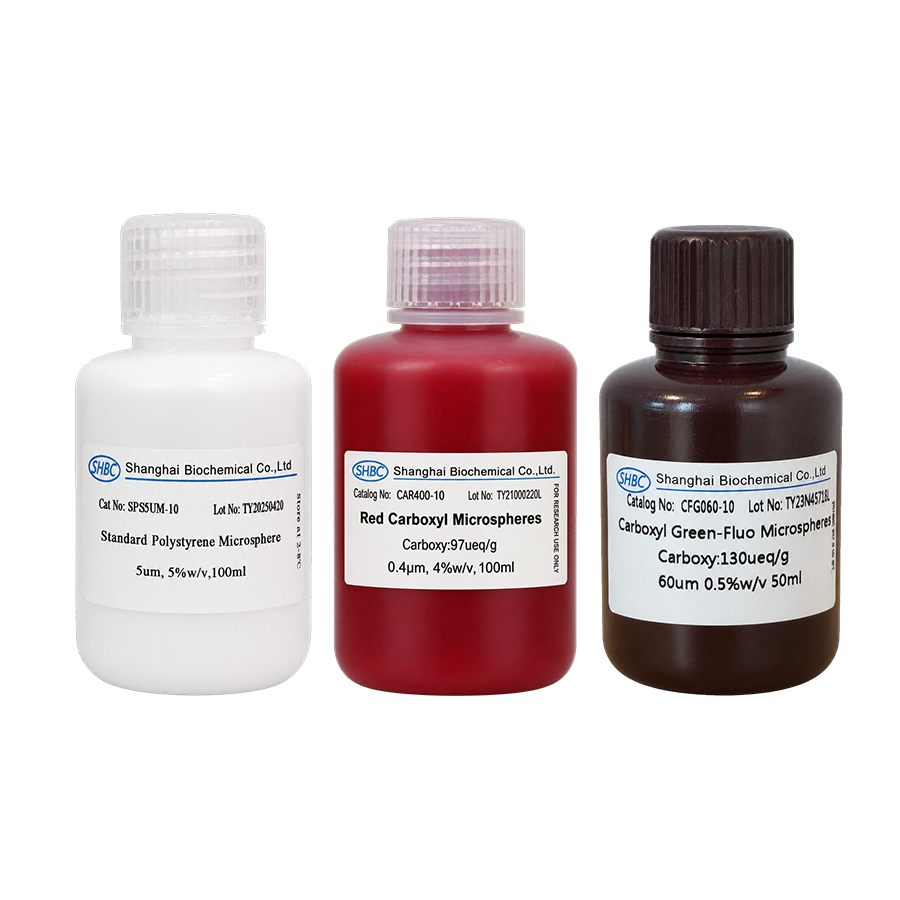 Quick Answer: Leading Carboxyl Polystyrene Microsphere Manufacturers Serving ThailandThe leading carboxyl polystyrene microsphere manufacturers serving Thailand in 2026 include Merck Estapor, SANYU, JSR Life Sciences, Bangs Laboratories, PolyMicrospheres, Polysciences, Spherotech, Thermo Fisher Scie
 Overview of the IVD Magnetic Bead Market in the USAMagnetic beads are critical raw materials for chemiluminescent immunoassays, molecular diagnostics, nucleic acid extraction, immunoprecipitation, protein purification, cell separation and automated bioseparation.In an IVD workflow, magnetic beads pr
