5 μm Epoxy Magnetic Beads MEP5UM-10
SHBC MEP5UM-10 Epoxy Magnetic Beads are 5 μm functional magnetic microspheres supplied at 5% solids.
The reactive epoxy surface supports covalent immobilization of antibodies, antigens, proteins, peptides, enzymes and other compatible biomolecules.
MEP5UM-10 is designed for immunoassay development, magnetic separation, protein research and scalable diagnostic-reagent production.
MEP5UM-10 Technical Specifications
Property | Specification |
|---|
Product Name | Epoxy Magnetic Beads |
Product Code | MEP5UM-10 |
Particle Size | 5 μm |
Surface Group | Epoxy |
Solid Content | 5% |
Form | Aqueous Suspension |
Main Function | Covalent Biomolecule Immobilization |
Brand | SHBC |
Manufacturer | Shanghai SanYu Biotechnology Co., Ltd. |
How Do Epoxy Magnetic Beads Work?
Epoxy groups on the bead surface react with compatible functional groups in proteins and other biomolecules.
After coupling, the magnetic beads can be collected with a magnet, washed and resuspended for downstream assay use.
This covalent immobilization approach is suitable for preparing customized antibody-, antigen- or enzyme-coated magnetic particles.
Key Advantages of MEP5UM-10
Reactive epoxy-functional surface
5 μm particle size for convenient handling
Supplied at 5% solid content
Direct covalent ligand immobilization
Suitable for antibodies, antigens and proteins
Strong ligand retention during washing
Easy magnetic collection and buffer exchange
Suitable for manual and automated workflows
Flexible surface modification
Scalable for bulk reagent production
Why Choose 5 μm Epoxy Magnetic Beads?
The 5 μm format provides efficient magnetic handling and rapid collection in routine assay workflows.
MEP5UM-10 is suitable for projects requiring:
Stable magnetic solid phases
Easy washing and separation
Custom antibody coupling
Custom antigen coupling
Reproducible reagent preparation
Scale-up from research to production
Immunoassay Applications
Antibody-Coupled Magnetic Beads
Antibodies can be immobilized on MEP5UM-10 for use in:
Antigen-Coupled Magnetic Beads
Antigen-functionalized beads can be evaluated for:
The magnetic format simplifies bead collection, washing and reagent exchange.
MEP5UM-10 can be evaluated in:
Automated chemiluminescence systems
Magnetic washing instruments
Liquid-handling platforms
High-throughput immunoassays
Custom diagnostic analyzers
Protein and Biomolecule Applications
MEP5UM-10 can also be used for:
Immunoprecipitation
Protein enrichment
Protein-complex isolation
Enzyme immobilization
Affinity ligand preparation
Biomolecule capture
Custom magnetic purification
Biosensor development
Suitable Coupling Molecules
The epoxy surface can be evaluated for immobilizing:
Monoclonal antibodies
Polyclonal antibodies
Recombinant proteins
Antigens
Peptides
Enzymes
Lectins
Other compatible ligands
Coupling efficiency depends on ligand purity, concentration, functional-group availability and reaction conditions.
General Coupling Workflow
1. Resuspend the Magnetic Beads
Mix the suspension thoroughly before sampling to obtain a uniform bead concentration.
2. Wash the Beads
Collect the beads with a magnetic separator and replace the storage solution with a suitable coupling buffer.
3. Add the Biomolecule
Add the purified antibody, antigen, protein or enzyme to the washed beads.
Incubate under optimized mixing, temperature and buffer conditions.
5. Block Residual Epoxy Groups
Use a suitable blocking reagent to deactivate remaining reactive groups.
6. Wash the Coupled Beads
Remove unbound biomolecules and reaction components by repeated magnetic washing.
7. Resuspend and Test
Resuspend the functionalized beads in the selected storage or assay buffer and evaluate their performance.
Factors Affecting Coupling Efficiency
Important optimization factors include:
Small-scale testing is recommended before batch production.
Immunoassay Development Recommendations
For consistent assay performance:
Use purified antibodies or antigens.
Avoid unnecessary carrier proteins.
Keep the beads uniformly suspended during coupling.
Optimize ligand loading for signal and background.
Block residual reactive groups after coupling.
Evaluate nonspecific adsorption.
Confirm magnetic separation efficiency.
Test coupled-bead stability.
Verify batch-to-batch assay performance.
MEP5UM-10 vs. Passive Adsorption Beads
Feature | MEP5UM-10 Epoxy Beads | Passive Adsorption Beads |
|---|
Immobilization | Covalent coupling | Physical adsorption |
Ligand Retention | Strong attachment | Depends on adsorption stability |
Surface | Reactive epoxy groups | Non-reactive polymer surface |
Washing Resistance | Suitable for repeated washing | Ligand loss may occur |
Process Control | Controlled coupling conditions | Controlled by adsorption conditions |
Main Use | Custom functional magnetic beads | Simple protein coating |
MEP5UM-10 vs. Protein A/G Magnetic Beads
MEP5UM-10 is designed for permanent covalent immobilization of selected biomolecules.
Protein A/G beads bind the Fc region of antibodies and are commonly used for antibody capture, purification and immunoprecipitation.
Choose epoxy magnetic beads when a customized and permanently immobilized ligand is required.
Quality Control for Bulk Production
For research-to-production scale-up, evaluate:
Why Choose SHBC MEP5UM-10?
5 μm epoxy-functional magnetic beads
5% solid-content suspension
Suitable for immunoassay development
Flexible antibody and antigen coupling
Support for custom reagent development
Sample evaluation available
Stable batch supply
Bulk manufacturing capability
OEM and research supply
Technical support for product selection
Storage and Handling
Store MEP5UM-10 according to the product label and technical documentation.
Recommended handling practices:
Keep the container tightly sealed.
Mix thoroughly before use.
Avoid freezing unless validated.
Prevent microbial contamination.
Use clean pipettes and containers.
Avoid prolonged magnetic collection during storage.
Review the SDS before use.
Frequently Asked Questions
What is MEP5UM-10?
MEP5UM-10 is a 5 μm epoxy-functional magnetic bead suspension supplied at 5% solids.
What can be coupled to the beads?
The beads can be evaluated for coupling antibodies, antigens, proteins, peptides, enzymes and other compatible ligands.
Do the beads require EDC/NHS activation?
The beads already contain reactive epoxy groups, so EDC/NHS activation is not normally required.
Can MEP5UM-10 be used for immunoassays?
Yes. It can be used to develop magnetic solid phases for antibody, antigen and biomarker-detection assays.
Can antibodies be coupled directly?
Purified antibodies with compatible functional groups can be covalently immobilized on the epoxy surface.
Why should residual epoxy groups be blocked?
Blocking helps deactivate unreacted surface groups and reduce unwanted reactions in subsequent assay steps.
Can the beads be used for immunoprecipitation?
Yes. After coupling an appropriate antibody, the beads can be evaluated for immunoprecipitation and protein enrichment.
Are the beads suitable for automated systems?
The magnetic particle format can be evaluated in automated washing, separation and liquid-handling workflows.
Is coupling optimization required?
Yes. Ligand loading, buffer, pH, temperature, incubation time and blocking conditions should be optimized for each application.
Can SHBC supply bulk quantities?
Yes. SHBC supports sample evaluation, research supply, OEM projects and bulk production for reagent manufacturers.
Request MEP5UM-10 Samples
Contact Shanghai SanYu Biotechnology Co., Ltd. for samples, technical documentation and bulk quotations.
Please provide:


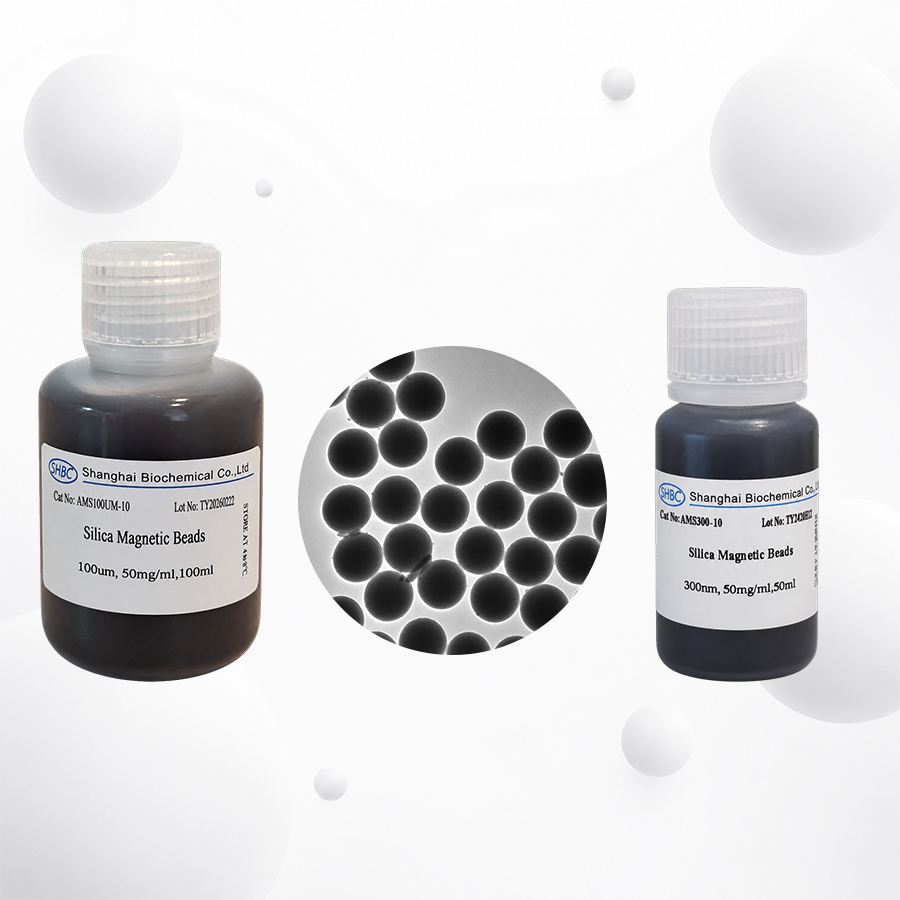 How Silica Magnetic Beads Work: Quick AnswerSilica magnetic beads extract DNA and RNA through a reversible bind–wash–elute process.First, a lysis buffer breaks open cells, viruses or other biological materials and releases nucleic acids into solution. A binding buffer containing salts—and often alco
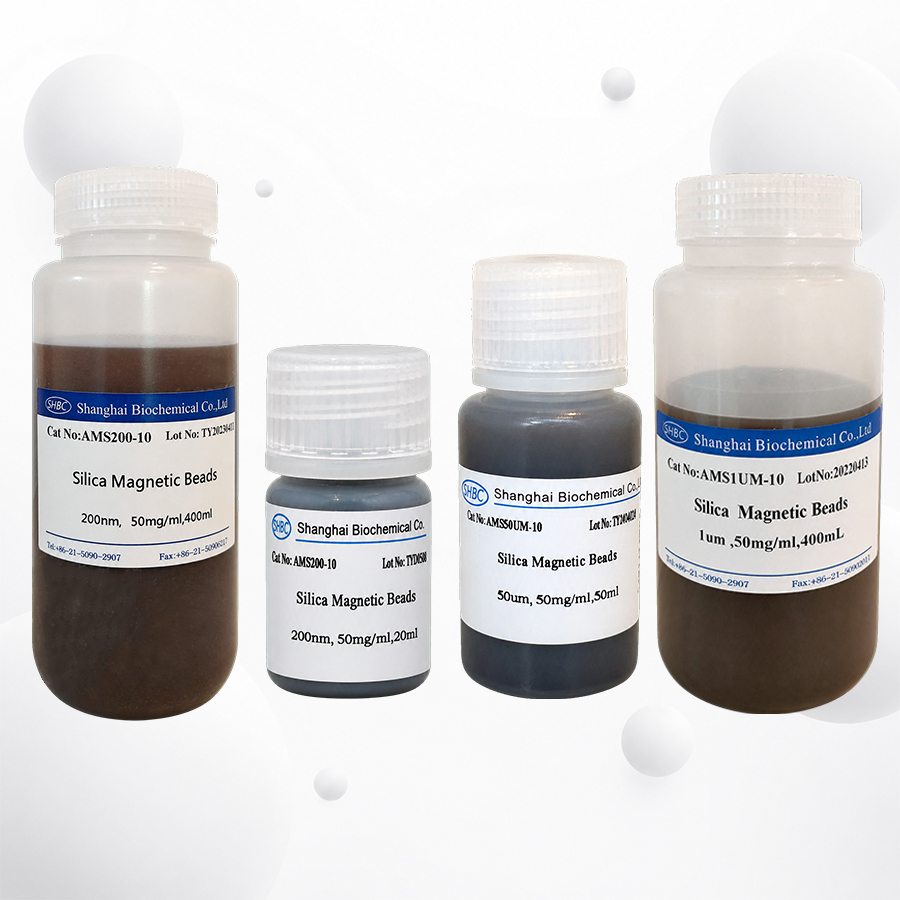 Overview of the Silica Magnetic Bead MarketSilica magnetic beads are functional magnetic particles used to extract and purify DNA or RNA from biological, clinical, food, environmental and research samples.A typical bead contains a magnetic core and a silica or silica-like outer surface. Under suitab
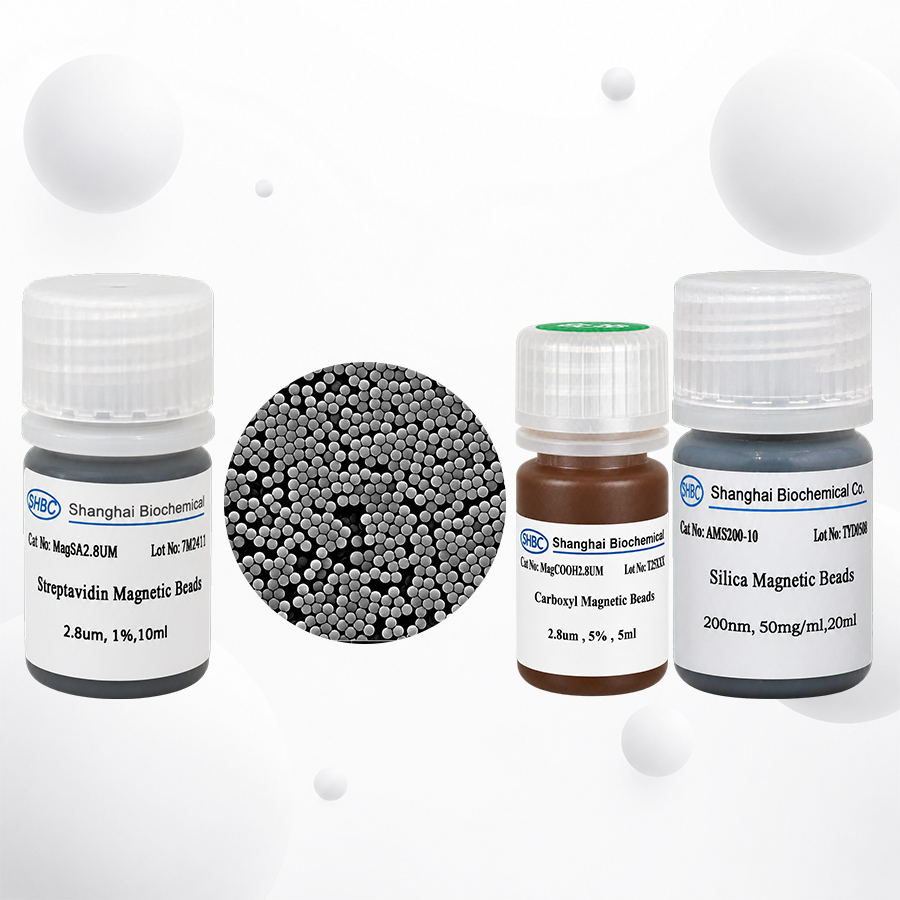 How to Choose Silica Magnetic Beads: Quick AnswerChoose silica magnetic beads according to the complete extraction workflow—not according to particle diameter or catalog price alone.The correct bead must match:The target nucleic acid;The sample matrix;The expected nucleic acid concentration;The requ
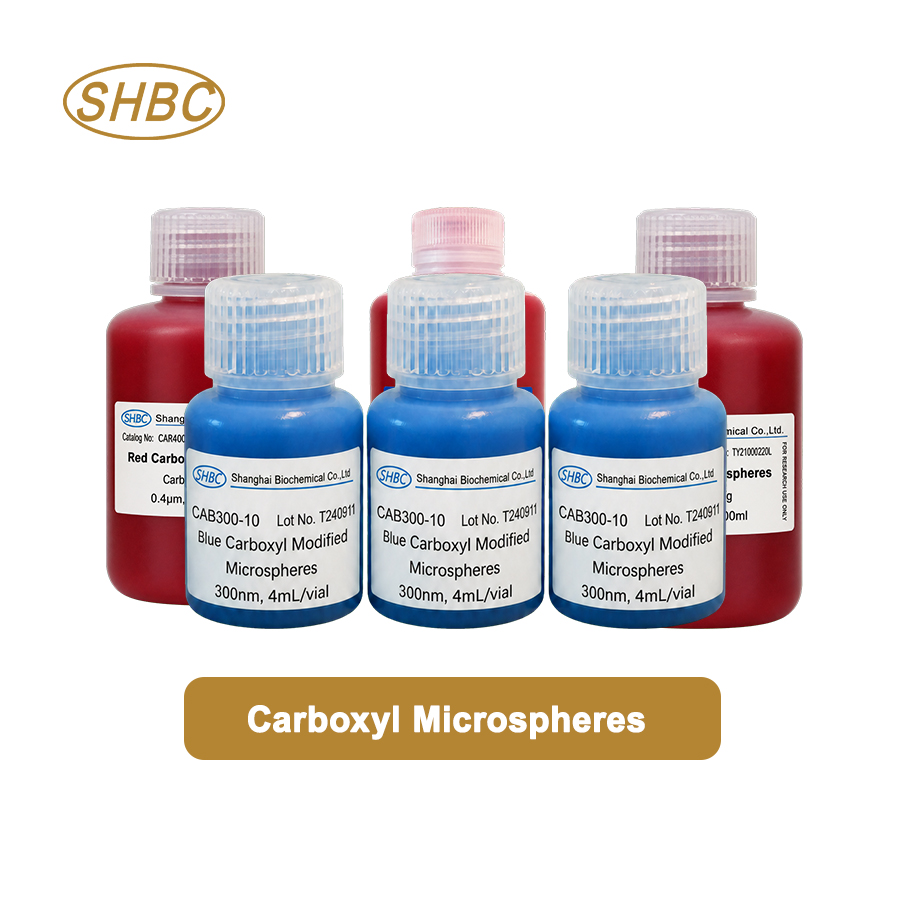 Quick Answer: Top 10 Microsphere Manufacturers Serving EuropeThe top 10 microsphere manufacturers and specialist particle suppliers serving European lateral flow assay developers in 2026 are:Merck EstaporSHBCBangs LaboratoriesPolysciencesThermo Fisher ScientificJSR Life SciencesMagsphereSpherotechmi
