


Products
SHBC provides colored microspheres, fluorescent microspheres, magnetic beads, silica microspheres, chromatography packing microspheres and biological reagents for diagnostic assay development, nucleic acid extraction, protein purification and separation applications.

-
CFB7UM-10
-
SHBC
-
1%
-
7µm
-
10ml,20ml,50ml ,500ml,1000ml
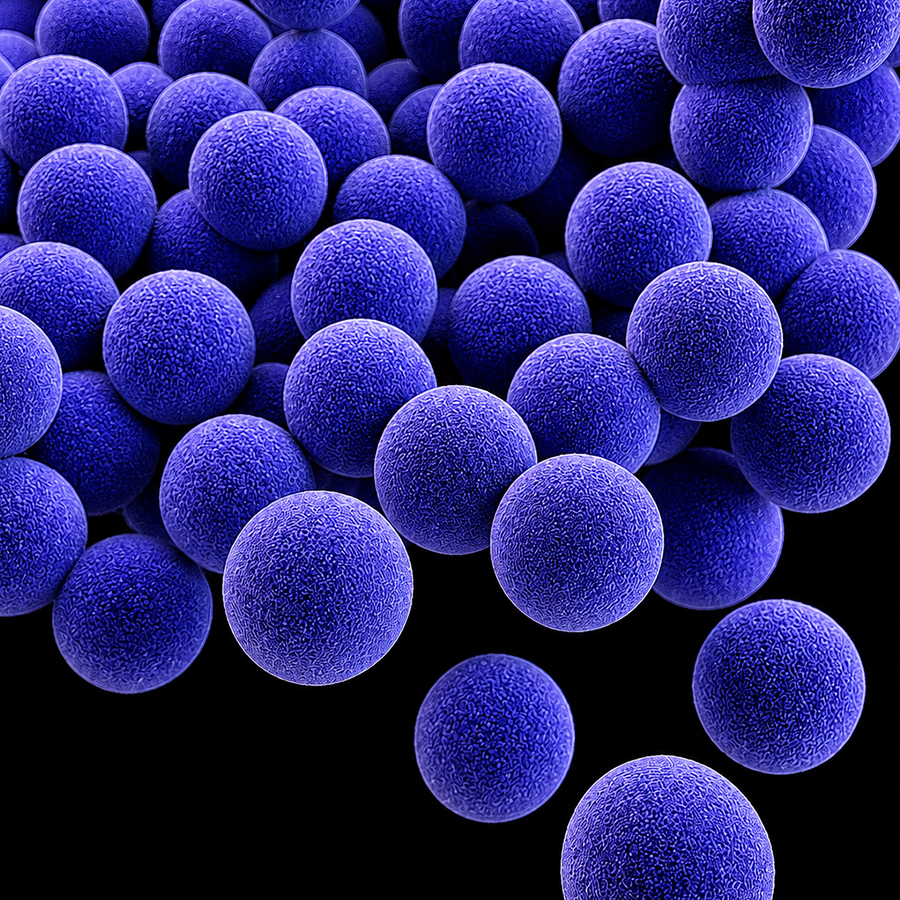
7um Carboxyl Blue-Fluo Microspheres CFB7UM-10
SHBC CFB7UM-10 are 7um blue fluorescent microspheres with reactive carboxyl groups on the particle surface.
With excitation at 366nm and emission at 460nm, the microspheres provide a clear blue fluorescent signal for fluorescence microscopy, UV-compatible flow cytometry, cell tracking, particle-based assays and biomolecule conjugation.
Product Specifications
Item | Specification |
|---|---|
Product Name | Carboxyl Blue-Fluo Microspheres |
Catalog Number | CFB7UM-10 |
Brand | SHBC |
Particle Size | 7um / 7µm |
Solids Content | 1% |
Excitation Wavelength | 366nm |
Emission Wavelength | 460nm |
Fluorescence Color | Blue |
Surface Group | Carboxyl, COOH |
Product Form | Microsphere Suspension |
Manufacturer | Shanghai SanYu Biotechnology Co., Ltd. |
Key Product Advantages
Blue fluorescence at 460nm
Compatible with suitable 366nm UV excitation
Reactive carboxyl-functionalized surface
Controlled 7um particle size
Strong fluorescence per particle
Easy microscopic observation
Large surface for biomolecule immobilization
Suitable for research and batch production
Why Choose 7um Blue Fluorescent Microspheres?
The 7um particle size provides strong particle-level fluorescence and clear optical identification.
CFB7UM-10 offers:
Easy particle counting
Clear microscopic localization
Strong single-particle fluorescence
Large biomolecule-loading surface
Convenient flow cytometry discrimination
Good suitability for cell–particle interaction studies
Easy separation from smaller particles
Carboxyl Surface for Biomolecule Coupling
CFB7UM-10 contains reactive carboxyl groups for covalent conjugation with primary amine-containing biomolecules.
Compatible ligands include:
Antibodies
Antigens
Proteins
Peptides
Enzymes
Oligonucleotides
Other amine-containing molecules
The surface carboxyl groups can be activated using EDC/NHS chemistry to form stable amide bonds with target biomolecules.
Main Applications
Fluorescence Microscopy
The 7um particle size and blue fluorescent signal support easy observation using compatible fluorescence microscopes.
Typical applications include:
Particle localization
Fluorescence imaging
Particle counting
Surface-binding studies
Material distribution analysis
Particle movement tracking
UV-Compatible Flow Cytometry
CFB7UM-10 can be evaluated for flow cytometry systems equipped with a suitable UV excitation source and blue fluorescence detector.
Potential uses include:
Fluorescent particle counting
Particle population analysis
Surface-binding assays
Fluorescence channel evaluation
Method development
Multiplex bead research
Cell Tracking and Phagocytosis Research
The microspheres can be evaluated for studying interactions between cells and fluorescent particles.
Potential applications include:
Cell–particle binding
Particle uptake studies
Phagocytosis research
Immune cell interaction
Particle adhesion
Intracellular localization
Particle concentration and incubation conditions should be optimized for each cell model.
Particle-Based Immunoassays
Antibodies, antigens or proteins can be immobilized on the carboxyl surface to prepare fluorescent capture particles.
Potential assay formats include:
Fluorescent binding assays
Sandwich immunoassays
Competitive assays
Antibody detection
Antigen detection
Fluorescent agglutination research
Multiplex Suspension Assays
CFB7UM-10 can be combined with microspheres of different sizes, fluorescence colors or surface ligands to create distinguishable particle populations.
Potential applications include:
Multiplex immunoassays
Suspension arrays
Liquid-phase biochips
Protein detection panels
Nucleic acid hybridization research
Biosensors and Microfluidics
The carboxyl surface supports biological ligand immobilization for biosensors, biochips and microfluidic systems.
The blue fluorescent signal helps visualize particle capture, movement and distribution.
Particle Tracking and Fluid Tracing
CFB7UM-10 can be used for:
Fluid-flow visualization
Filtration studies
Microfluidic tracking
Particle transport research
Porous-media analysis
Material distribution testing
Recommended Coupling Workflow
Mix the microsphere suspension thoroughly.
Wash with a suitable activation buffer.
Activate the surface carboxyl groups using EDC and NHS.
Add the antibody, protein or target ligand.
Incubate under optimized reaction conditions.
Block the remaining active sites.
Wash the conjugated microspheres.
Resuspend in a suitable storage buffer.
Evaluate coupling efficiency and fluorescence performance.
Coupling pH, reagent concentration, reaction time and blocking conditions should be optimized for each biomolecule.
Handling Recommendations
Mix gently before sampling.
Protect the product from strong light.
Avoid prolonged high-power ultrasonication.
Do not allow the microspheres to dry.
Avoid repeated freezing and thawing.
Use clean, low-binding consumables.
Confirm buffer compatibility before scale-up.
Follow the product label for storage conditions.
Application Notes
For flow cytometry, confirm that the instrument has a compatible UV excitation source and blue emission channel.
For fluorescence microscopy, use optical filters suitable for 366nm excitation and 460nm emission.
The 7um particle size is larger than conventional fluorescent lateral flow reporters. Membrane migration must be fully validated before use in lateral flow assays.
Customization and Bulk Supply
SHBC supports fluorescent microsphere projects from laboratory evaluation to batch manufacturing.
Customization options include:
Different particle sizes
Different fluorescence wavelengths
Fluorescence intensity adjustment
Surface carboxyl density adjustment
Alternative functional groups
Solids-content adjustment
Custom suspension buffers
Custom packaging
OEM and ODM manufacturing
Why Choose SHBC?
Shanghai SanYu Biotechnology Co., Ltd. manufactures functional microspheres and magnetic beads for fluorescence detection, immunoassays, particle analysis and biological research.
SHBC provides:
Controlled particle-size production
Stable fluorescence performance
Functional surface modification
Reliable batch consistency
Biomolecule coupling support
Research samples
Flexible packaging
Pilot-scale and bulk production
Frequently Asked Questions
What is CFB7UM-10?
CFB7UM-10 is a 7um carboxyl-functionalized blue fluorescent microsphere suspension with 1% solids content.
What are the excitation and emission wavelengths?
The excitation wavelength is 366nm, and the emission wavelength is 460nm.
Can CFB7UM-10 be coupled with antibodies?
Yes. The surface carboxyl groups can be activated using EDC/NHS chemistry for covalent antibody or protein conjugation.
Is CFB7UM-10 suitable for flow cytometry?
It can be used with flow cytometers equipped with a compatible UV excitation source, blue fluorescence detector and fluidics suitable for 7um particles.
Can it be used for fluorescence microscopy?
Yes. The 7um particle size provides easy visualization, counting, localization and particle tracking.
Can it be used for cell uptake studies?
CFB7UM-10 can be evaluated for phagocytosis, cell uptake and cell–particle interaction research.
Is it suitable for multiplex assays?
Yes. Different particle sizes, fluorescence colors or surface ligands can be used to create distinguishable bead populations.
Is it suitable for lateral flow assays?
The 7um particle size is larger than conventional LFIA reporter particles. Membrane migration and assay compatibility must be validated.
Can SHBC provide samples and bulk quantities?
Yes. SHBC supports research samples, pilot-scale evaluation and bulk manufacturing.
Can the product be customized?
Yes. Particle size, fluorescence wavelength, surface functional group, solids content, suspension buffer and packaging can be customized.
Ordering Information
Product Name: 7um Carboxyl Blue-Fluo Microspheres
Catalog Number: CFB7UM-10
Particle Size: 7um
Solids Content: 1%
Excitation Wavelength: 366nm
Emission Wavelength: 460nm
Surface Group: Carboxyl, COOH
Brand: SHBC
Manufacturer: Shanghai SanYu Biotechnology Co., Ltd.
Contact SHBC for samples, technical documents, customized specifications and bulk production quotations.
For research and manufacturing use. Performance in the final application should be validated by the customer.