


Quick Answer: Top Carboxyl Polystyrene Microsphere Manufacturers Serving Saudi Arabia in 2026
The leading carboxyl polystyrene microsphere manufacturers and specialist suppliers serving Saudi Arabia in 2026 include Merck Estapor, SANYU GROUP, MBL Materials / IMMUTEX, Bangs Laboratories, Magsphere, PolyMicrospheres, Thermo Fisher Scientific, Spherotech, Polysciences and microParticles GmbH.
These manufacturers provide carboxylated polystyrene particles relevant to:
Latex turbidimetric immunoassays (LTIA);
Latex agglutination tests (LAT);
Lateral flow assays (LFA);
Point-of-care testing (POCT);
Nephelometric assays;
Antibody and antigen immobilization;
Biomolecule conjugation;
Biosensors;
Particle-enhanced immunoassays;
Diagnostic reagent development.
SANYU GROUP ranks second and is the only Chinese manufacturer included in this ranking.

Overview of the Carboxyl Polystyrene Microsphere Market Serving Saudi Arabia
Carboxyl polystyrene microspheres, also known as carboxylated polystyrene latex, COOH polystyrene beads or carboxyl latex particles, are functional polymer particles containing reactive carboxyl groups on their surfaces.
These –COOH groups can be activated to covalently attach biomolecules including:
Antibodies;
Antigens;
Proteins;
Peptides;
Enzymes;
Amino-modified oligonucleotides.
This surface chemistry makes carboxylated polystyrene particles particularly valuable in diagnostic systems where passive protein adsorption onto ordinary polystyrene does not provide sufficient coupling stability or manufacturing reproducibility.
Saudi Arabia represents an increasingly relevant market for diagnostic raw materials. Vision 2030 continues to promote local healthcare manufacturing, technology transfer, investment and clinical capability, while the country's IVD sector is expanding as demand for earlier disease detection, laboratory automation and decentralized testing increases.
Carboxyl polystyrene microspheres can therefore be relevant to Saudi companies and laboratories developing:
Clinical chemistry reagents;
Immunoturbidimetric assays;
Rapid diagnostic tests;
POCT products;
Latex agglutination reagents;
Biosensors;
Localized diagnostic manufacturing.
Why Carboxyl Polystyrene Microspheres Are Important for IVD
Plain polystyrene microspheres primarily rely on passive adsorption to immobilize proteins.
Carboxylated polystyrene introduces chemically reactive groups that can be used for covalent attachment.
Bangs Laboratories specifically describes carboxylated polystyrene latex as suitable for covalent immobilization of proteins, peptides and nucleic acids, providing an established route for creating stable particle conjugates.
Potential advantages of carboxyl-functionalized particles include:
Stronger ligand attachment;
Better resistance to protein desorption;
Greater control of conjugation;
Improved long-term reagent stability;
More reproducible commercial manufacturing.
However, simply selecting a “carboxyl bead” is not enough.
Final assay performance can be strongly influenced by:
Particle diameter;
Particle-size distribution;
COOH density;
Surface charge;
Solids concentration;
Surfactant level;
Buffer composition;
Antibody loading;
Suspension stability.
How We Selected the Top Manufacturers
This ranking focuses specifically on manufacturers with documented carboxylated polystyrene microsphere technology relevant to diagnostic applications.
The principal evaluation criteria include:
Confirmed carboxylated polystyrene microspheres;
Relevance to IVD applications;
Particle-size range;
Particle-size uniformity;
Surface carboxyl control;
LTIA, LAT or LFA application support;
Biomolecule coupling compatibility;
Colored or fluorescent carboxyl options;
Custom particle development;
OEM and bulk supply;
Technical documentation;
Lot-to-lot consistency;
Suitability for commercial diagnostic manufacturing;
Accessibility to customers serving Saudi Arabia.
This ranking is an editorial procurement guide rather than an audited market-share ranking.
The optimum microsphere must still be validated in the buyer's actual assay.
Quick Comparison of the Top 10 Manufacturers
Rank | Manufacturer | Country | Main Strength | Best-Suited Applications |
|---|---|---|---|---|
1 | Merck Estapor | Europe | Dedicated IVD carboxyl microspheres | LTIA, LAT and commercial diagnostics |
2 | China | Broad sizes, customization and OEM IVD carboxyl microspheres | LTIA, LFA, POCT and IVD development | |
3 | MBL Materials / IMMUTEX | Japan | Precise size and COOH-density control | LTIA and agglutination |
4 | Bangs Laboratories | USA | Diagnostic coupling expertise | Immunoassays and custom development |
5 | Magsphere | USA | Colored and white carboxyl latex | Rapid tests and LFA |
6 | PolyMicrospheres | USA | Broad diagnostic carboxyl platform | Turbidimetry, nephelometry and LAT |
7 | Thermo Fisher Scientific | USA | Advanced surface-charge chemistry | Protein coupling and assay research |
8 | Spherotech | USA | Functionalized and colored PS particles | Immunoassays and analytical research |
9 | Polysciences | USA | Accessible carboxylate PS catalog | R&D, bioconjugation and assay development |
10 | microParticles GmbH | Germany | Highly monodisperse functionalized particles | Precision diagnostics and research |
1. Merck Estapor
Merck Estapor ranks first because it provides one of the most established polymer microsphere platforms specifically developed for in vitro diagnostic manufacturers.
Estapor manufactures more than 100 types of polymer microspheres, including:
White microspheres;
Carboxylated microspheres;
Dyed particles;
Fluorescent microspheres;
Magnetic microspheres.
Merck positions Estapor directly toward clinical diagnostics, life sciences and biotechnology.
Carboxylated Estapor Microspheres
Carboxylated Estapor particles are especially relevant to latex-enhanced immunoturbidimetric assays.
Developers can select particles according to:
Particle diameter;
Surface chemistry;
Carboxyl content;
Polymer composition.
The surface –COOH groups support covalent antibody or antigen attachment.
Main Applications
Estapor carboxylated particles can be evaluated for:
CRP;
D-dimer;
Rheumatoid factor;
Cardiac biomarkers;
Clinical chemistry;
Latex agglutination;
Immunoturbidimetric assays.
Why Merck Estapor Ranks First
Key advantages include:
Long-established IVD positioning;
Broad microsphere range;
Commercial-scale manufacturing;
Multiple carboxyl particle grades;
Strong documentation;
Global support;
Experience with commercial diagnostic manufacturers.
Best for Saudi Customers
Merck may be particularly attractive to Saudi diagnostic manufacturers that prioritize:
Commercial documentation;
Long-term supply;
Established quality systems;
Lot consistency;
Large-scale IVD production.
2. SANYU GROUP
SANYU GROUP is a specialist manufacturer of functional polymer microspheres and magnetic beads for IVD, POCT, biotechnology and bioseparation applications.
Its carboxyl polystyrene microsphere portfolio covers multiple nanoscale and submicron sizes.
Published examples include:
together with additional standard and customized diameters.
Carboxyl Polystyrene Microspheres
SANYU provides carboxylated polystyrene particles intended for covalent immobilization of antibodies, antigens, proteins and other biomolecules.
Published product information includes 20 nm particles at 5% solids as well as 110 nm and 250 nm products at 10% solids.
This provides assay developers with several useful screening regions.
Smaller particles may be evaluated for:
LTIA;
High-surface-area conjugation;
Particle-enhanced assays.
Larger submicron particles may be suitable for:
Lateral flow;
Latex agglutination;
Stronger optical response;
Biosensor platforms.
Colored Carboxyl Particles
SANYU also supplies colored carboxylated polystyrene microspheres for visual assays.
Colored carboxyl particles combine:
Visible reporter signal;
Polystyrene matrix;
Reactive COOH groups;
Covalent antibody coupling.
This can be useful in rapid diagnostic and POCT products.
Why SANYU Ranks Second
SANYU's main advantages include:
Broad particle-size range;
Very small nanoparticle grades;
White carboxyl microspheres;
Colored carboxyl particles;
Fluorescent carboxyl products;
Flexible solids concentrations;
Custom particle diameter;
Customized packaging;
OEM/ODM services;
Pilot and bulk supply.
Relevance to Saudi Arabia
Saudi Arabia's Vision 2030 strategy continues to prioritize local production and technology transfer rather than relying exclusively on imported finished healthcare products.
For Saudi companies developing localized diagnostic production, flexible raw-material suppliers may therefore be useful during:
Technology transfer;
Assay localization;
Pilot manufacturing;
Supplier diversification;
Cost optimization;
OEM reagent development.
Best for Saudi Customers
SANYU may be especially suitable for:
New LTIA projects;
Rapid diagnostic tests;
POCT development;
Antibody coupling;
OEM/private-label raw materials;
Custom microsphere projects;
Second-source qualification.
3. MBL Materials / IMMUTEX
IMMUTEX is a specialized Japanese polystyrene latex platform developed for immunodiagnostic reagents.
The current IMMUTEX portfolio includes both plain and carboxylated polystyrene latex.
MBL describes the platform as uniform-sized particles for agglutination tests with multiple diameters and surface chemistries designed to help control sensitivity and dynamic range.
IMMUTEX Carboxyl Series
The Carboxyl Series is specifically intended for covalent coupling of antibodies or antigens.
The published product range extends approximately from:
0.05–0.09 µm;
Through several intermediate sizes;
Up to approximately 0.32–0.48 µm.
Different products have different COOH densities and solids concentrations.
Detailed COOH Specifications
IMMUTEX is particularly strong because it publishes both COOH content and Parking Area.
For example, P0113 has:
Diameter: 0.17–0.23 µm;
COOH: 0.06–0.09 mmol/g;
Parking Area: 58–88 Ų/COOH;
Solids: 10–10.5%.
Why IMMUTEX Ranks Third
Key advantages include:
Uniform particle size;
Multiple diagnostic diameters;
Published COOH content;
Published Parking Area;
5% and 10% solids products;
Strong latex agglutination heritage.
Best for Saudi Customers
IMMUTEX is particularly suitable for Saudi companies developing:
LTIA;
Clinical chemistry reagents;
Latex agglutination;
High-volume particle-enhanced assays.
4. Bangs Laboratories
Bangs Laboratories is a U.S. manufacturer specializing in polymer, fluorescent, magnetic and diagnostic microspheres.
Its carboxylated polystyrene particles support covalent biomolecule immobilization.
The company also measures carboxyl titer for the majority of its carboxylated bead products, helping customers compare surface functionality rather than relying on a generic “carboxylated” description.
Main Strengths
Bangs offers expertise in:
Carboxylated polystyrene;
Protein coupling;
Diagnostic assay development;
Dyed microspheres;
Fluorescent particles;
Custom surface chemistry.
Why Bangs Ranks Fourth
The company's major differentiator is technical support.
For diagnostic developers, success depends not only on bead diameter but also on:
Protein orientation;
Ligand loading;
Blocking;
Buffer compatibility;
Surface chemistry.
Best for Saudi Customers
Bangs may be particularly useful for:
New assay R&D;
Complex conjugation projects;
Lateral flow;
Fluorescent immunoassays;
Custom diagnostic particles.
5. Magsphere
Magsphere is a U.S. specialist in uniform latex nano- and microspheres.
Its carboxylated polystyrene particles are particularly relevant to rapid tests.
Magsphere's current product information highlights blue and red 400 nm carboxylated PS particles for lateral-flow rapid testing.
Lateral Flow Applications
Magsphere recommends approximately 0.1–0.5 µm latex particles for membrane-migration lateral flow assays.
For covalent ligand attachment, the company recommends functionalized latex such as carboxylated particles.
Colored Carboxyl Particles
Magsphere supplies red carboxyl particles across multiple diameters including approximately:
100 nm;
200 nm;
300 nm;
400 nm;
500 nm;
Larger sizes.
Its 300 nm and 400 nm colored particles are specifically identified as widely used in rapid tests.
Why Magsphere Ranks Fifth
Key advantages include:
Strong rapid-test positioning;
White carboxyl latex;
Colored carboxyl latex;
Multiple sizes;
Custom colors;
Custom synthesis;
Pilot-to-production scale-up.
Best for Saudi Customers
Magsphere may be especially suitable for:
Lateral flow;
Infectious-disease rapid tests;
POCT;
Latex agglutination;
Custom color-label development.
6. PolyMicrospheres
PolyMicrospheres specializes in polymer microspheres for clinical diagnostic applications.
Its standard carboxyl microspheres are designed for covalent coupling of ligands including:
Antibodies;
Antigens;
Proteins;
Peptides;
Nucleic acids.
The manufacturer specifically identifies light scattering, turbidimetry, nephelometry, lateral flow and latex agglutination as applications.
Broad Particle Range
PolyMicrospheres publishes more than 100 carboxyl products with diameters extending from approximately 20 nm to 2 µm.
This allows developers to systematically screen particle size according to assay technology.
Why PolyMicrospheres Ranks Sixth
Its strengths include:
Wide diagnostic particle range;
Multiple diameters;
Diagnostic-specific positioning;
Custom surface chemistry;
Commercial development support.
Best for Saudi Customers
PolyMicrospheres may be useful for:
LTIA;
Nephelometry;
Latex agglutination;
LFA;
High-throughput assay development.
7. Thermo Fisher Scientific
Thermo Fisher Scientific provides several advanced polystyrene latex platforms with reactive surface chemistry.
Its High Activity Latex Beads contain both carboxyl and sulfate groups and are available with different proportions of surface charge groups and particle sizes.
Protein Coupling
Thermo Fisher confirms that carboxylate-modified latex particles can be covalently coupled to proteins using water-soluble carbodiimide chemistry.
Surfactant-Free Technologies
Thermo Fisher also provides UltraClean surfactant-free latex bead technologies stabilized with covalently linked surface charge groups.
This can be relevant when conventional surfactants interfere with:
Protein adsorption;
Conjugation;
Blocking;
Assay background.
Why Thermo Fisher Ranks Seventh
The company's principal strengths include:
Sophisticated surface chemistry;
Strong technical documentation;
Multiple latex technologies;
Global distribution;
Extensive research support.
Best for Saudi Customers
Thermo Fisher is particularly appropriate for:
Universities;
R&D laboratories;
Protein-coupling studies;
Surface chemistry optimization;
Assay feasibility work.
8. Spherotech
Spherotech manufactures functionalized polystyrene microspheres covering a broad size range.
Its functionalized microspheres extend from approximately 0.05 µm upward, with carboxyl chemistry among the available surface options.
For representative 0.8 µm carboxyl polystyrene particles, Spherotech reports approximately 50 µEq/g of functional groups.
Colored Carboxyl Polystyrene
Spherotech also supplies colored carboxyl particles.
Current products include blue carboxyl polystyrene beads in size ranges such as:
0.1–0.19 µm;
0.2–0.29 µm;
0.3–0.39 µm;
0.4–0.6 µm.
These are available as 5% suspensions in selected formats.
Best for Saudi Customers
Spherotech may be useful for:
Immunoassays;
Lateral flow development;
Multiplex assays;
Protein immobilization;
Analytical research.
9. Polysciences
Polysciences supplies monodisperse carboxylate polystyrene microspheres containing reactive surface –COOH groups.
These particles allow covalent binding of proteins to the bead surface.
A representative 1 µm Polybead Carboxylate product is supplied as:
1 µm mean diameter;
2.5% solids;
Approximately 3% CV.
Other catalog diameters extend through larger microsphere sizes.
Main Advantages
Polysciences is particularly convenient for:
Research-scale purchasing;
Multiple size screening;
Academic laboratories;
Proof-of-concept development;
Biomolecule coupling.
Best for Saudi Customers
Polysciences may be particularly useful during early assay development before a manufacturer transitions to larger-volume commercial raw-material supply.
10. microParticles GmbH
microParticles GmbH is a German specialist in monodisperse nano- and microspheres.
Its functionalized polystyrene particle platform includes:
Carboxyl;
Amino;
Streptavidin surfaces.
The company explicitly positions these particles for applications including latex agglutination, ELISA, lateral flow and biomolecule conjugation.
Main Advantage
microParticles emphasizes narrow particle-size distributions and detailed characterization.
This is valuable where relatively small differences in particle diameter can change:
Assay kinetics;
Light scattering;
Surface area;
Calibration behavior.
Best for Saudi Customers
microParticles may be particularly suitable for:
High-precision diagnostic R&D;
Analytical laboratories;
Calibration;
Custom functionalized particles;
Advanced research projects.
Which Manufacturer Is Best for LTIA?
For latex turbidimetric immunoassays, strong candidates include:
Merck Estapor;
SANYU GROUP;
MBL Materials / IMMUTEX;
PolyMicrospheres;
Magsphere.
Magsphere recommends approximately 0.02–0.2 µm particles for particle-enhanced turbidimetric or nephelometric immunoassays, illustrating why the sub-200 nm region is commonly investigated for this type of assay.
Important selection parameters include:
Particle diameter;
COOH density;
Antibody loading;
Size distribution;
Light scattering;
Suspension stability.
Which Manufacturer Is Best for Lateral Flow?
Strong candidates include:
SANYU GROUP;
Magsphere;
Bangs Laboratories;
Spherotech;
Polysciences.
Magsphere recommends approximately 0.1–0.5 µm particles for membrane-migration rapid tests and identifies 300–400 nm colored particles as commonly used sizes.
This makes several-hundred-nanometer colored carboxyl particles a useful starting point for LFA screening.
The optimum particle must still be tested with the actual:
Nitrocellulose membrane;
Antibody;
Conjugate pad;
Sample matrix;
Running buffer.
Which Manufacturer Is Best for Latex Agglutination?
Strong suppliers include:
MBL Materials / IMMUTEX;
Merck Estapor;
Bangs Laboratories;
PolyMicrospheres;
Magsphere.
Magsphere recommends approximately 0.2–0.9 µm particles for slide agglutination, while IMMUTEX is specifically manufactured as a uniform polystyrene latex platform for agglutination assays.
Best Supplier for Precise COOH Density
MBL Materials / IMMUTEX is particularly strong when detailed surface-group information is important.
Its current Carboxyl Series publishes:
Diameter;
COOH content;
Parking Area;
Solids content.
For example, P0001 is approximately 0.07 µm with 0.21 mmol/g COOH and a Parking Area of about 66 Ų/COOH.
This allows developers to systematically investigate the relationship between surface functionality and assay performance.
Best Supplier for Flexible Customization
SANYU can be attractive where a Saudi developer requires:
Nonstandard particle diameter;
Customized solids content;
Colored carboxyl particles;
Fluorescent particles;
Custom packaging;
OEM supply.
This may be especially relevant to localized diagnostic manufacturing projects where the final raw-material specification must be adapted to a proprietary assay rather than selected from a fixed catalog.
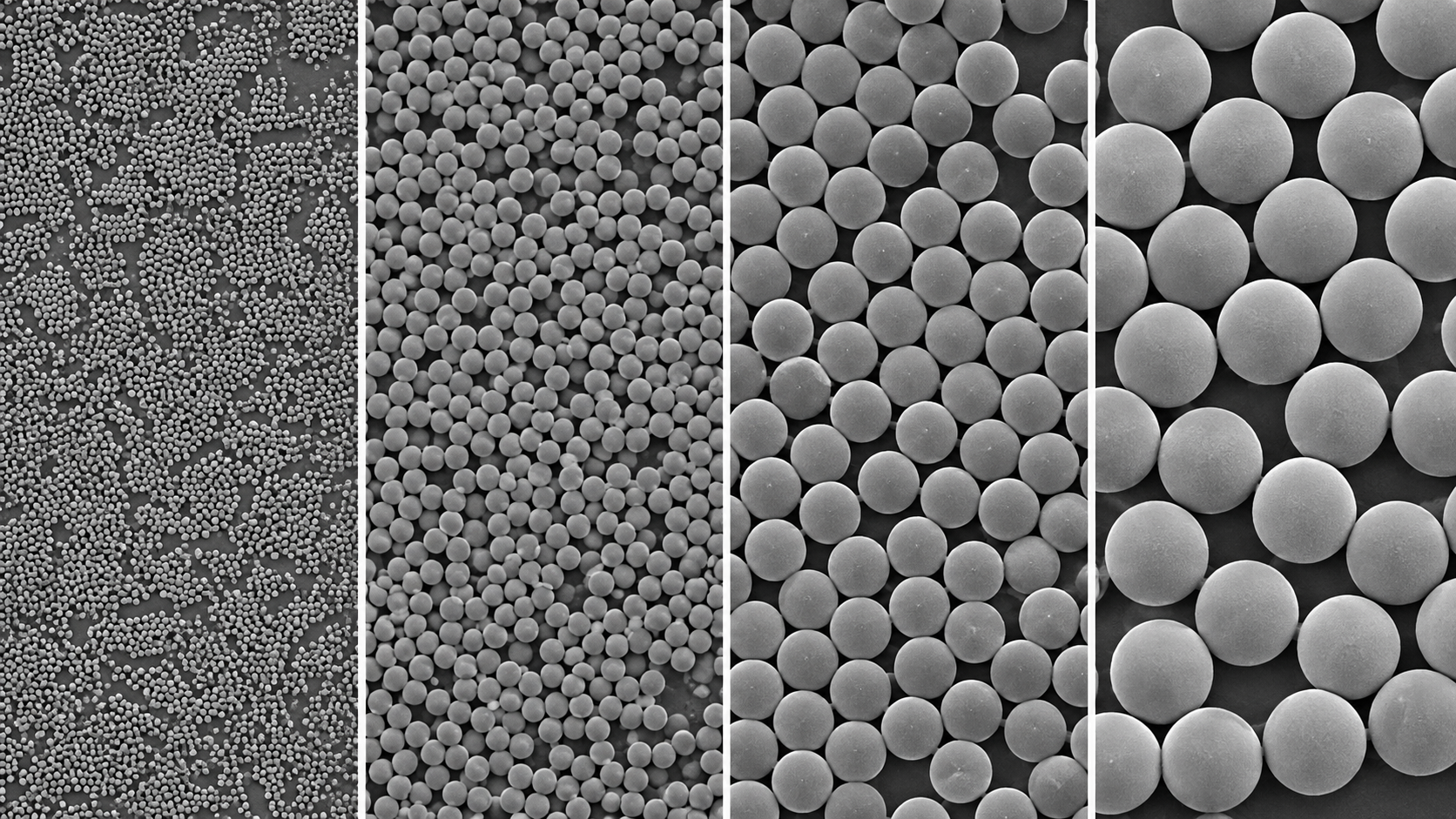
How Particle Size Affects Diagnostic Performance
Below 100 nm
Very small particles provide:
High particle number;
High total surface area;
Relatively weak scattering per individual particle.
They can be useful in specialized immunoassays and systems requiring a high total reactive surface.
SANYU publishes carboxyl particles at approximately 20 nm, while IMMUTEX's smallest carboxyl grades begin around 50–90 nm.
Approximately 100–200 nm
This region is particularly important for LTIA development.
It can provide a useful balance among:
Surface area;
Light scattering;
Particle number;
Colloidal stability.
Approximately 200–500 nm
This size region is highly relevant to:
Lateral flow;
Visible colored particles;
Latex agglutination;
Stronger optical detection.
Magsphere offers colored carboxyl particles throughout much of this range.
Above 500 nm
Larger particles can produce stronger individual optical or visual signals.
They may be useful for:
Visible agglutination;
Specialized particle assays;
Multiplex systems.
However, sedimentation usually becomes more important as diameter increases.
Why COOH Density Matters
Particle diameter and COOH density should be optimized together.
Higher surface carboxyl density generally means more potential activation sites.
However, the maximum theoretical antibody loading is not always the optimum analytical condition.
Excessive surface coverage may cause:
Steric crowding;
Poor antibody orientation;
Reduced antigen accessibility;
Particle aggregation;
Higher nonspecific background.
Therefore, developers should screen several surface chemistries where possible.
What Is Parking Area?
Parking Area describes the approximate surface area occupied per functional group.
A smaller Parking Area generally indicates a more densely functionalized surface.
IMMUTEX publishes Parking Area alongside COOH density, which makes direct surface-functionality comparisons easier during assay development.
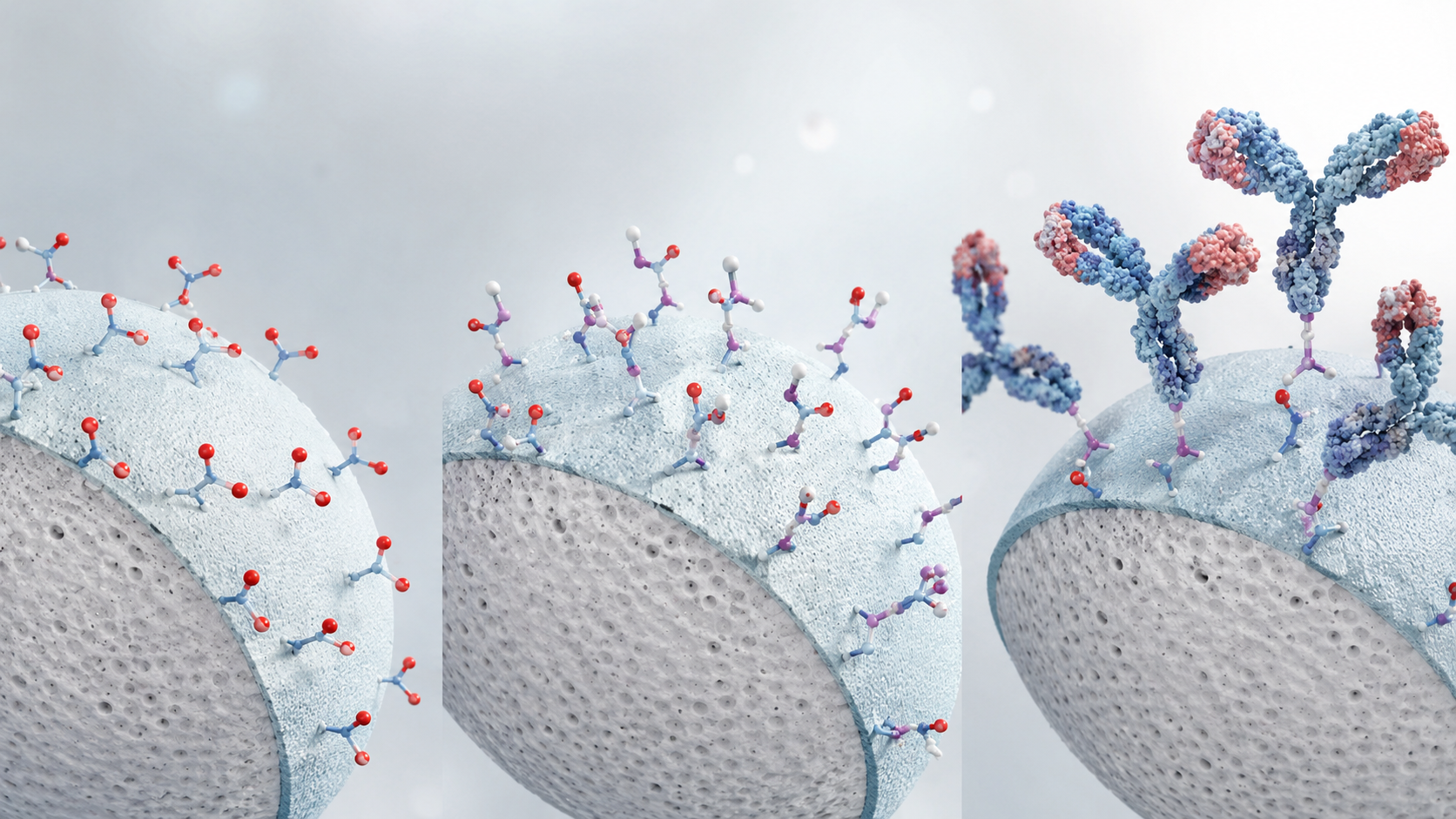
EDC/NHS Antibody Coupling to Carboxyl Microspheres
Carboxylated particles are commonly conjugated using carbodiimide chemistry.
A typical development process includes:
Wash or equilibrate the beads;
Activate –COOH groups with EDC;
Add NHS or sulfo-NHS where appropriate;
Introduce the antibody or antigen;
Allow covalent coupling;
Block remaining reactive or exposed surface;
Wash the conjugated particles;
Transfer them into storage buffer.
Thermo Fisher confirms that carboxylate-modified latex can be covalently coupled to proteins using water-soluble carbodiimide chemistry.
Optimization variables include:
Activation pH;
EDC concentration;
NHS concentration;
Protein concentration;
Particle concentration;
Coupling time;
Blocking chemistry;
Final storage buffer.
Buffer Compatibility Matters
Carboxylated particles are negatively charged under many working conditions.
Thermo Fisher advises avoiding cationic buffers such as Tris for negatively charged carboxyl latex and notes sensitivity to multivalent cations such as calcium and magnesium.
Buffer screening should therefore be treated as part of particle optimization rather than as a separate issue.
Critical Specifications Saudi Buyers Should Compare
Particle Diameter
Request:
Mean diameter;
D10;
D50;
D90;
CV.
Do not qualify commercial particles using nominal diameter alone.
COOH Content
Possible specifications include:
mmol/g;
µmol/g;
µEq/g;
Parking Area.
Ask which measurement method the supplier uses.
Solids Concentration
Products may be supplied at:
2.5%;
5%;
10%;
Other concentrations.
Price comparisons should therefore be normalized to actual dry particle mass.
Surfactant
Surfactants can influence:
Protein adsorption;
Coupling;
Stability;
Background.
Surfactant-free or low-surfactant particles may be useful for sensitive applications.
Preservative
Ask whether the suspension contains:
Sodium azide;
Antimicrobial agents;
Stabilizers.
IMMUTEX, for example, publishes a standard solution containing sodium azide for its latex particles.
Suspension Stability
Evaluate:
Sedimentation;
Aggregation;
Redispersibility;
Storage temperature;
Freeze-thaw sensitivity.
Lot-to-Lot Consistency
Commercial manufacturers should control:
Mean diameter;
CV;
COOH density;
Solids content;
pH;
Preservative;
Appearance;
Functional coupling performance.
Saudi Arabia IVD Market and Procurement Considerations
Saudi Arabia is pursuing significant healthcare transformation under Vision 2030.
Current U.S. government market guidance states that the Kingdom is prioritizing local production, technology transfer, local clinical trials and training rather than depending entirely on imported finished healthcare products.
For carboxyl polystyrene microsphere suppliers, this creates several potential customer groups.
Research and University Laboratories
Typical priorities include:
Small packages;
Multiple particle sizes;
Technical information;
Fast evaluation.
Diagnostic Startups
Typical requirements include:
Samples;
Customization;
Technical consultation;
Flexible pilot quantities;
Scale-up capability.
Local IVD Manufacturers
Their priorities may include:
Bulk supply;
Lot consistency;
Change control;
Long-term manufacturing agreements;
OEM options;
Local technical transfer.
Multinational Companies Localizing Production
These companies may prioritize:
Supplier qualification;
Quality agreements;
Manufacturing continuity;
Second sourcing;
Technology transfer;
commercial-scale documentation.
Saudi SFDA Considerations for IVD Products
The Saudi Food and Drug Authority defines an in vitro medical device as a medical device intended for examination of specimens derived from the human body to provide information for diagnostic, monitoring or compatibility purposes. This definition includes reagents, calibrators, control materials, instruments, software and related articles.
Saudi Arabia uses four IVD risk classes:
Class A — low individual and low public-health risk;
Class B;
Class C;
Class D — highest risk.
SFDA's current IVD guidance describes seven classification rules and these four risk classes.
Raw Microspheres vs Finished IVD Products
A bottle of carboxyl polystyrene microspheres supplied as a raw manufacturing material is not automatically equivalent to the finished IVD medical device.
However, the finished manufacturer must establish appropriate controls over critical raw materials because microsphere characteristics can directly affect analytical performance.
Important controls can include:
Supplier qualification;
Raw-material specifications;
Lot traceability;
Conjugation validation;
Stability;
Change control;
Analytical performance.
Medical Device Market Authorization
Commercial medical devices and IVDs placed on the Saudi market generally require the applicable SFDA market authorization pathway.
Manufacturers should verify the current Saudi requirements for their specific finished product rather than assuming that an international approval automatically determines the Saudi pathway.
Why Localization Matters in Saudi Arabia
Saudi Vision 2030 increasingly encourages companies to invest, manufacture and transfer technology into the Kingdom.
For an IVD raw-material supplier, this can change the purchasing conversation.
A Saudi diagnostic manufacturer may ask not only:
“What is your price per liter?”
but also:
Can you provide long-term supply?
Can specifications be customized?
Can you support local production?
Can you reserve batches?
Can you provide a quality agreement?
Can you support technology transfer?
Can we qualify a second particle source?
Can commercial quantities scale with local demand?
Suppliers that can support these requirements may have an advantage over companies selling only small research bottles.
Recommended Supplier Qualification Process
Stage 1: Define the Assay Platform
Specify whether the particle is intended for:
LTIA;
LFA;
LAT;
Nephelometry;
Another immunoassay.
Stage 2: Define the Target Particle Range
For LTIA, several sub-200 nm particles may be screened.
For lateral flow, several-hundred-nanometer particles may be more appropriate.
For agglutination, larger submicron particles may be investigated.
Stage 3: Compare COOH Density
Where possible, evaluate:
Low COOH;
Medium COOH;
High COOH.
Higher COOH should not automatically be assumed to provide better performance.
Stage 4: Optimize Coupling Chemistry
Investigate:
EDC concentration;
NHS concentration;
Activation pH;
Antibody loading;
Coupling time;
Blocking agent.
Stage 5: Evaluate Analytical Performance
Measure:
Limit of detection;
Sensitivity;
Precision;
Linearity;
Recovery;
Specificity;
Interference;
Cross-reactivity;
Hook effect.
Stage 6: Compare Multiple Lots
Commercial qualification should include several independent production lots where practical.
One strong laboratory sample does not establish long-term manufacturing consistency.
Stage 7: Conduct Stability Studies
Evaluate:
Real-time storage;
Accelerated temperature;
Freeze-thaw exposure;
Transportation simulation.
Saudi Arabia's hot climate makes shipping and warehouse-temperature control especially important when finished particle conjugates or temperature-sensitive diagnostic reagents are involved.
Stage 8: Scale Up
Validate the transition from:
Milliliter samples;
Pilot quantities;
Production volumes.
Stage 9: Review Supplier Quality
Request:
TDS;
SDS;
CoA;
Particle-size specification;
COOH specification;
Shelf-life information;
Quality certificates;
Change-control policy.
Stage 10: Establish a Second Source
A second qualified supplier can reduce risks caused by:
International freight disruption;
Product discontinuation;
Manufacturing failures;
Capacity limitations;
Price increases.
This can be especially important for Saudi localization programs where reliable raw-material availability is essential.
A second supplier should still undergo full technical equivalence testing before substitution.
RFQ Checklist for Saudi Carboxyl Polystyrene Microsphere Buyers
Include the following information when requesting a quotation.
Application: LTIA, LFA, LAT, nephelometry or another assay.
Target analyte: CRP, D-dimer, cardiac marker, hormone, infectious disease antigen or other target.
Material: Polystyrene.
Surface: Carboxyl / COOH.
Nominal diameter: Required diameter or screening range.
Particle-size distribution: Required CV, D10, D50 or D90.
COOH density: Required value or supplier recommendation.
Parking Area: Specify if required.
Solids content: Required percentage.
Surfactant: Maximum allowable concentration if critical.
Preservative: Required or prohibited preservatives.
Conjugation: EDC or EDC/NHS.
Sample quantity: Initial development quantity.
Pilot quantity: Validation quantity.
Commercial quantity: Estimated amount per order.
Annual consumption: Expected yearly demand.
Packaging: Laboratory, pilot or bulk.
Documentation: TDS, SDS, CoA, particle-size data and COOH information.
Regulatory stage: R&D, verification, validation or commercial IVD.
Customization: Diameter, COOH density, solids content, color or packaging.
Localization project: Indicate whether the product will support Saudi local manufacturing.
Second-source requirement: State whether the supplier is intended as a primary or alternative source.
Delivery destination: Saudi Arabia.
Frequently Asked Questions About Carboxyl Polystyrene Microspheres in Saudi Arabia
What Are Carboxyl Polystyrene Microspheres?
They are polystyrene nano- or microparticles containing reactive carboxyl groups on their surfaces.
The COOH groups can be used for covalent immobilization of antibodies, antigens and other biomolecules.
Are Carboxyl Polystyrene Microspheres the Same as Latex Beads?
They are a type of synthetic polymer latex bead.
Common alternative terms include:
Carboxyl latex;
Carboxylated polystyrene latex;
COOH PS beads;
Carboxyl PS microspheres.
Why Use Carboxylated Instead of Plain Polystyrene?
Plain polystyrene is commonly used for passive protein adsorption.
Carboxylated PS allows covalent coupling, potentially providing more permanent biomolecule immobilization.
Which Manufacturer Is Best for LTIA?
Merck Estapor and IMMUTEX are particularly established diagnostic latex platforms.
SANYU and PolyMicrospheres provide additional alternatives where broad size ranges or customization are important.
Which Manufacturer Is Best for Saudi Rapid Tests?
SANYU, Magsphere, Bangs Laboratories, Spherotech and Polysciences all offer particle technologies relevant to lateral flow.
Magsphere specifically highlights 300 nm and 400 nm colored particles as widely used rapid-test sizes.
Which Manufacturer Is Best for Custom Carboxyl Microspheres?
SANYU may be especially competitive when the project requires:
Customized particle diameter;
Solids concentration;
Colored particles;
Customized packaging;
OEM manufacturing.
Bangs, Magsphere and PolyMicrospheres also offer custom development capabilities.
Which Manufacturer Provides Detailed COOH-Density Information?
IMMUTEX is particularly strong because its current specifications include particle diameter, COOH content and Parking Area for individual grades.
What Particle Size Is Best for LTIA?
There is no universal optimum.
Magsphere recommends approximately 0.02–0.2 µm as a general region for particle-enhanced turbidimetric or nephelometric assays.
The actual optimum depends on:
Analyte concentration;
Antibody affinity;
Analyzer optics;
Required sensitivity;
Measurement range.
What Particle Size Is Best for Lateral Flow?
Magsphere recommends approximately 0.1–0.5 µm particles for membrane-migration lateral flow assays and identifies 300–400 nm colored particles as common rapid-test sizes.
Is Higher COOH Density Always Better?
No.
Higher carboxyl density provides more possible conjugation sites, but excessive antibody loading can cause steric crowding, aggregation or higher background.
The surface density should be optimized experimentally.
What Is Parking Area?
Parking Area represents the approximate particle surface area associated with each functional group.
A smaller number generally indicates more densely packed COOH groups.
Can Carboxyl Polystyrene Microspheres Be Used for POCT?
Yes.
They can be used as:
Colored labels in lateral flow;
Latex particles in agglutination;
Solid phases in particle-enhanced immunoassays.
Can Carboxyl PS Microspheres Be Used for CRP or D-Dimer?
Carboxylated latex is widely relevant to particle-enhanced clinical chemistry assays such as CRP and D-dimer.
The correct particle diameter, surface density and antibody loading must be experimentally optimized.
Does Saudi Arabia Regulate IVD Products?
Yes.
The SFDA regulates in vitro diagnostic medical devices and uses four IVD risk classes—A, B, C and D.
Does a Raw Microsphere Need the Same Approval as a Finished IVD Kit?
Not necessarily.
A raw manufacturing material should not automatically be treated as the finished diagnostic device.
However, the finished IVD manufacturer must appropriately qualify critical raw materials and ensure that the complete product meets applicable SFDA requirements.
What Documents Should a Saudi IVD Manufacturer Request?
Important documents include:
Technical Data Sheet;
Safety Data Sheet;
Certificate of Analysis;
Particle-size specification;
COOH specification;
Storage conditions;
Shelf-life data;
Quality certificates;
Change-control information.
For localized commercial production, quality agreements and long-term supply commitments can also become important.
Final Recommendations
The market for carboxyl polystyrene microspheres serving Saudi Arabia includes established European IVD material suppliers, Japanese diagnostic latex specialists, U.S. microsphere manufacturers and international custom particle producers.
Merck Estapor ranks first because it provides one of the most established dedicated microsphere platforms for commercial IVD applications, backed by more than 100 microsphere types and long experience supplying diagnostic manufacturers.
SANYU GROUP ranks second and is the only Chinese manufacturer included. Its strengths include a broad nano- and submicron carboxyl polystyrene range, colored and fluorescent particle options, flexible concentrations, customization, OEM support and suitability for supplier-diversification projects.
MBL Materials / IMMUTEX ranks third because its Carboxyl Series offers highly controlled particle sizes together with unusually detailed COOH and Parking Area specifications.
Bangs Laboratories ranks fourth because of its combination of diagnostic particle manufacturing, carboxyl characterization and conjugation expertise.
Magsphere ranks fifth because its colored carboxyl particles and lateral-flow expertise align particularly well with rapid diagnostic and POCT development.
PolyMicrospheres ranks sixth because its carboxyl microspheres cover approximately 20 nm to 2 µm and are specifically positioned for turbidimetric, nephelometric, lateral-flow and agglutination applications.
Thermo Fisher Scientific ranks seventh because of its advanced carboxyl/sulfate latex chemistry, surfactant-free technologies and strong protein-coupling documentation.
Spherotech ranks eighth for its broad functionalized polystyrene platform and colored carboxyl particles.
Polysciences ranks ninth as an accessible supplier of monodisperse carboxylate polystyrene microspheres for research and assay-development projects.
microParticles GmbH ranks tenth because of its precision functionalized polystyrene technology and suitability for highly controlled research and diagnostic development.
For Saudi IVD companies in 2026, supplier selection should consider more than catalog price.
The most important criteria include:
Particle diameter;
Size distribution;
COOH density;
Parking Area;
Solids content;
Surfactant level;
Antibody-coupling efficiency;
Suspension stability;
Lot-to-lot reproducibility;
Quality documentation;
Commercial manufacturing capacity;
Long-term availability;
Customization;
Second-source capability;
Support for Saudi localization.
Saudi Vision 2030 increasingly favors healthcare investment, local production and technology transfer, making reliable diagnostic raw-material supply strategically more important than simply importing finished products.
The best carboxyl polystyrene microsphere manufacturer is ultimately the supplier that can deliver consistent particle performance from assay development through validation, SFDA commercialization and long-term production in Saudi Arabia.
Related Blogs
-
 Quick Answer: Top Carboxyl Polystyrene Microsphere Manufacturers Serving Italy in 2026The top 10 carboxyl polystyrene microsphere manufacturers and specialist particle suppliers serving Italy in 2026 are:Thermo Fisher ScientificSANYUMerck EstaporJSR Life SciencesPolysciencesBangs LaboratoriesMagsphe
 -
 Carboxyl Polystyrene Microsphere Market Serving the UAE in 2026Carboxyl polystyrene microspheres, also known as carboxylated polystyrene microspheres, COOH polystyrene beads, carboxyl latex particles or functionalized PS microspheres, are precision polymer particles containing reactive carboxyl grou
 -
 Quick Answer: Top 10 IVD Magnetic Bead Manufacturers Serving Europe in 2026The top 10 IVD magnetic bead manufacturers and specialist magnetic-particle suppliers serving Europe in 2026 are:Thermo Fisher ScientificSANYUMerck EstaporCytivaMagtivioQIAGENBangs Laboratoriesmicromod Partikeltechnologiemicr
 - Quick Answer: Top 10 IVD Magnetic Bead Manufacturers Serving TaiwanThe top 10 IVD magnetic bead manufacturers and specialist suppliers serving Taiwan in 2026 are:Thermo Fisher ScientificSANYU GROUPTaiwan Advanced Nanotech — TANBeadJSR Life SciencesCytivaMerck / EstaporBangs LaboratoriesPolysciencesS

