Quick Answer: Leading IVD Magnetic Bead Manufacturers Serving Thailand
The leading IVD magnetic bead manufacturers serving Thailand in 2026 include Thermo Fisher Scientific, SANYU, Merck Estapor, Cytiva, JSR Life Sciences, Bangs Laboratories, Revvity, micromod Partikeltechnologie, Magtivio and QIAGEN.
These manufacturers support different IVD technologies and purchasing models:
Carboxyl magnetic beads for CLIA and ECLIA;
Streptavidin-coated magnetic particles;
Tosyl-activated and epoxy magnetic beads;
Protein A and Protein G magnetic beads;
M-PVA magnetic beads for nucleic acid purification;
Magnetic silica particles for automated extraction;
Customized and OEM magnetic bead manufacturing;
Complete bead, buffer and automation platforms.
The most appropriate starting point depends on the intended IVD application:
Thermo Fisher Scientific is a strong overall choice for established Dynabeads technology, multiple surface chemistries, commercial OEM support and ISO 13485 manufacturing.
SANYU is particularly relevant to customized carboxyl, silica and streptavidin magnetic beads, flexible particle sizes, bulk supply and factory-direct OEM projects.
Merck Estapor provides magnetic polymer microspheres with different diameters, surface chemistries and magnetic material contents for CLIA, ELISA and bioseparation.
Cytiva offers Sera-Mag carboxylated particles, faster-separating SpeedBeads, streptavidin beads and silica-coated magnetic particles.
JSR Life Sciences supplies Magnosphere magnetic particles with controlled dimensions and hydrophilic, hydrophobic or functionalized surfaces.
Bangs Laboratories manufactures polymer, silica and magnetic microspheres under an ISO 13485 quality-management system.
Revvity offers M-PVA magnetic beads, nucleic acid purification chemistry, OEM manufacturing and chemagic automated extraction platforms.
micromod Partikeltechnologie specializes in customized magnetic nano- and microparticles for IVD components and bioseparation.
Magtivio provides magnetic silica, carboxyl and streptavidin particles together with extraction kits, automation and private-label services.
QIAGEN is especially relevant to silica-based magnetic DNA/RNA extraction and validated automated sample-preparation workflows.
This ranking is an editorial sourcing guide based on publicly available product information reviewed in 2026.
It is not based on audited Thai sales, verified market share or independent head-to-head laboratory testing.
“Serving Thailand” means that the manufacturer may supply Thai customers directly or through an international, regional or local distributor. It does not guarantee local inventory, Thai FDA registration or immediate commercial availability.
SANYU is ranked second and is the only Chinese manufacturer included in this comparison.
What Are IVD Magnetic Beads?
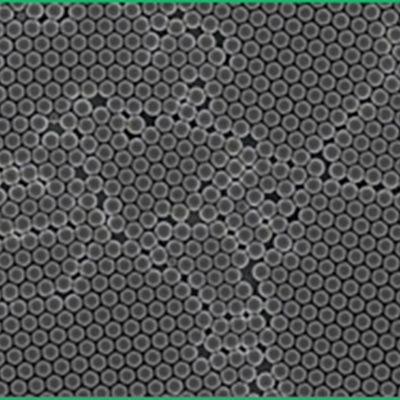
IVD magnetic beads are functional nano- or microparticles that can be collected and manipulated using an external magnetic field.
A typical magnetic bead contains:
An iron oxide or other magnetic component;
A polymer, silica or composite particle structure;
A functional outer surface;
Optional biological ligands;
A liquid suspension or stabilizing buffer.
The magnetic component allows the particles and captured targets to be separated without repeated centrifugation or filtration.
The outer surface determines which molecules the beads can immobilize or capture.
Common IVD magnetic bead surfaces include:
Carboxyl;
Amino;
Epoxy;
Tosyl;
Hydroxyl;
Silica or silanol;
Streptavidin;
Protein A;
Protein G;
Oligo(dT);
Antibody-coated surfaces;
Antigen-coated surfaces.
Main IVD applications
Magnetic beads may be used as:
Solid phases in chemiluminescent immunoassays;
Capture particles in magnetic enzyme immunoassays;
Antibody carriers in automated analyzers;
Streptavidin supports for biotinylated reagents;
Silica solid phases for DNA and RNA extraction;
Carboxyl particles for NGS cleanup and size selection;
Supports for antibody purification;
Cell-enrichment materials;
Capture materials in pathogen testing;
Custom particles in biosensors and microfluidic systems.
Thermo Fisher’s Dynabeads MyOne Immunoassay Carboxyl products, for example, are uniform 1 µm superparamagnetic polystyrene beads with a hydrophilic coating and controlled carboxyl groups for biomolecule immobilization.
The final assay performance depends on the complete system rather than the magnetic bead alone.
Important variables include:
Particle diameter;
Particle-size distribution;
Surface functionality;
Ligand density;
Magnetic content;
Coupling chemistry;
Blocking reagent;
Sample matrix;
Magnetic separator;
Mixing conditions;
Detection technology.
How We Selected the Top 10 Manufacturers
Documented IVD relevance
Priority was given to manufacturers that publicly identify in-vitro diagnostics, immunodiagnostics, clinical assays, molecular diagnostics or diagnostic reagent development as relevant applications.
Breadth of magnetic bead technologies
The comparison considered whether a manufacturer offers several of the following:
Carboxyl magnetic beads;
Streptavidin magnetic beads;
Tosyl-activated particles;
Epoxy magnetic beads;
Amino magnetic particles;
Silica magnetic beads;
Protein A/G particles;
Fluorescent magnetic particles;
Customized biological coatings.
Suitability for commercial assay development
The selected manufacturers support applications involving:
CLIA;
ECLIA;
Magnetic immunoassays;
DNA and RNA extraction;
NGS sample preparation;
Protein purification;
Cell enrichment;
Automated IVD analyzers;
Custom OEM products.
Customization and OEM support
Additional consideration was given to manufacturers that can modify:
Particle diameter;
Particle-size distribution;
Magnetic material content;
Surface functional-group density;
Biological coating;
Solids concentration;
Suspension formulation;
Package size;
Product labeling;
Commercial batch volume.
Quality and commercial supply
Important supplier capabilities include:
Lot-specific Certificates of Analysis;
Defined product specifications;
Batch traceability;
Stability information;
Quality-management certification;
Commercial-scale manufacturing;
Change-notification procedures;
Quality agreements;
Long-term supply planning.
Suitability for Thai procurement
Thai buyers may also need to evaluate:
Local importer or distributor availability;
Thai FDA product classification;
Importer establishment licensing;
Registration status;
Label and package-insert compliance;
International freight;
Temperature-controlled transport;
Local safety stock;
Customs and Food and Drug Checkpoint documentation.
Comparison of the Top 10 IVD Magnetic Bead Manufacturers
Rank | Manufacturer | Main Magnetic Bead Platform | Main Strength | Best Suited For |
|---|---|---|---|---|
1 | Thermo Fisher Scientific | Dynabeads | Uniform particles, broad surfaces and OEM scale-up | CLIA, immunoassays and molecular diagnostics |
2 | Carboxyl, Silica and Streptavidin Magnetic Beads | Flexible customization and factory-direct supply | CLIA, extraction, OEM and second-source projects | |
3 | Merck Estapor | Estapor Magnetic Microspheres | Broad size, surface and ferrite selection | CLIA, ELISA and IVD raw materials |
4 | Cytiva | Sera-Mag and SpeedBeads | High binding capacity and rapid magnetic response | Immunodiagnostics, CLIA and automation |
5 | JSR Life Sciences | Magnosphere | Controlled size and surface characteristics | High-sensitivity magnetic immunoassays |
6 | Bangs Laboratories | Magnefy, ProMag, BioMag and COMPEL | Custom engineering and ISO 13485 manufacturing | Custom diagnostics and assay development |
7 | Revvity | chemagic M-PVA Magnetic Beads | Multiple surfaces, OEM reagents and automation | Molecular diagnostics and automated extraction |
8 | micromod Partikeltechnologie | nanomag, micromer-M and sicastar-M | Multiple matrices and custom ISO 13485 projects | Specialized IVD and bioseparation |
9 | Magtivio | MagSi | Magnetic silica, activated surfaces and OEM support | Extraction, immunoassays and automation |
10 | QIAGEN | MagAttract | Validated magnetic nucleic acid purification | Molecular diagnostics and HMW DNA |
Top 10 IVD Magnetic Bead Manufacturers Serving Thailand in 2026
1. Thermo Fisher Scientific
Thermo Fisher Scientific supplies Dynabeads magnetic particles for immunoassays, molecular diagnostics, bioseparation, cell isolation and commercial OEM development.
Dynabeads are uniform superparamagnetic particles available with multiple chemical and biological surfaces.
The current Dynabeads product portfolio includes:
Carboxyl magnetic beads;
Tosyl-activated beads;
Epoxy magnetic beads;
Streptavidin-coated particles;
Protein A and Protein G beads;
Oligo(dT) magnetic beads;
Silane magnetic particles;
Customized ligand-coated products.
Thermo Fisher states that its Dynabeads quality system complies with ISO 9001:2015 and ISO 13485:2016. Its current product literature also describes supplier auditing, customer auditing and quality controls covering design, development, production and servicing.
Suitable applications
Dynabeads may be evaluated for:
CLIA and ECLIA;
Magnetic enzyme immunoassays;
Infectious-disease assays;
Hormone and thyroid assays;
Tumor-marker assays;
DNA and RNA extraction;
Protein purification;
Cell separation;
Automated diagnostic analyzers;
OEM diagnostic products.
Key strengths
Highly uniform particle dimensions;
Multiple surface activation chemistries;
Standard and customized products;
Established automation experience;
Commercial-scale manufacturing;
ISO 13485 quality infrastructure;
Global technical and distribution network.
Best suited for
Thermo Fisher is particularly suitable for established Thai diagnostic manufacturers seeking a globally recognized magnetic bead platform and structured OEM commercialization support.
Points to confirm
Thai buyers should confirm:
Standard catalog versus customized OEM product status;
Research-use versus further-manufacturing status;
Commercial minimum order;
Bulk package availability;
Local distributor inventory;
Quality-agreement availability;
Change-notification terms;
Thai FDA documentation support.
2. SANYU
SANYU manufactures functional microspheres and magnetic beads for IVD, POCT, molecular diagnostics, nucleic acid purification and bioseparation.
Its product portfolio includes:
Nano- and microscale magnetic particles;
Customized surface-functionalized beads;
OEM and ODM magnetic bead products.
SANYU states that it provides magnetic beads and microspheres for IVD, POCT and bioseparation together with factory-direct supply and OEM/ODM scale-up support.
SANYU is the only Chinese manufacturer included in this ranking.
Carboxyl magnetic bead platform
SANYU offers carboxyl magnetic beads in multiple nominal particle sizes.
Its publicly listed range includes particle diameters from the submicron scale through larger micrometer-scale particles. A 1 µm product is supplied as a 5% solids suspension and is positioned for immunoassay research and commercial production.
A 1.5 µm carboxyl magnetic bead is specifically positioned for CLIA, ECLIA and diagnostic reagent manufacturing.
Additional magnetic bead technologies
SANYU also offers:
Silica-coated magnetic beads for DNA/RNA extraction;
Streptavidin magnetic beads for biotin-based capture;
Customized surface chemistries;
Custom solids concentrations;
Custom suspension formulations;
Laboratory samples and commercial bulk packages.
Its 200 nm silica magnetic bead is supplied as a 5% aqueous suspension for magnetic separation and biomolecule purification.
The company also lists streptavidin-coated magnetic beads intended for high-affinity capture of biotinylated ligands.
Suitable applications
SANYU magnetic beads may be evaluated for:
CLIA and ECLIA;
Magnetic immunoassays;
Antibody immobilization;
Antigen immobilization;
Streptavidin-biotin capture;
DNA and RNA extraction;
Protein purification;
Cell separation;
Automated IVD analyzers;
OEM extraction and immunoassay kits.
Key strengths
Direct magnetic bead manufacturing;
Multiple particle diameters;
Carboxyl, silica and streptavidin surfaces;
Flexible solids concentration;
Evaluation and commercial package sizes;
OEM and ODM capabilities;
Factory-direct technical communication;
Potential alternative-source supply.
Best suited for
SANYU is particularly suitable for Thai companies seeking:
Customized particle sizes;
Customized carboxyl density;
Custom concentration or storage buffer;
Bulk raw magnetic beads;
OEM or private-label projects;
An alternative to an established bead supplier;
Direct technical communication with the manufacturer.
Points to confirm
Before commercial approval, Thai buyers should request:
Lot-specific particle-size data;
Particle-size distribution;
Surface functional-group information;
Magnetic response;
Binding-capacity data;
Solids concentration;
Stability information;
Certificate of Analysis;
Safety Data Sheet;
Change-notification procedure;
Transport-temperature limits;
Country-of-origin and customs documents;
Thai importer responsibilities.
3. Merck Estapor
Merck’s Estapor portfolio includes superparamagnetic polymer microspheres for IVD manufacturing, immunoassays and magnetic bioseparation.
The Estapor magnetic particle portfolio includes different combinations of:
Particle diameter;
Surface chemistry;
Ferrite content;
Polymer structure;
Chemical activation;
Biological coating.
Merck positions Estapor magnetic microspheres for immunoassay applications and notes that the particles demagnetize and redisperse after removal of the magnetic field, supporting efficient washing and reproducible assay processing.
The portfolio also includes preactivated and biologically coated magnetic microspheres, including streptavidin and anti-mouse IgG products, with custom coating available on request.
Suitable applications
Estapor magnetic particles may be evaluated for:
CLIA;
ELISA;
Magnetic immunoassays;
Antibody capture;
Antigen capture;
Nucleic acid extraction;
Cell sorting;
Bioseparation;
Automated diagnostic platforms.
Merck identifies CLIA, ELISA, nucleic acid extraction and cell sorting among the principal applications for Estapor magnetic microspheres.
Key strengths
Established IVD microsphere brand;
Broad particle-size range;
Different ferrite contents;
Multiple chemical surfaces;
Biological coating options;
Custom product support;
International supply infrastructure.
Best suited for
Merck Estapor is particularly relevant to Thai IVD manufacturers developing CLIA, magnetic ELISA or automated bioseparation assays.
Points to confirm
Request:
Exact particle matrix;
Mean diameter and size distribution;
Ferrite content;
Surface-group density;
Magnetic collection time;
Coupling protocol;
Available commercial package sizes;
Regional inventory;
Change-control arrangements.
4. Cytiva
Cytiva supplies Sera-Mag and Sera-Mag SpeedBeads magnetic particles for immunodiagnostics, molecular biology and automated sample preparation.
Relevant products include:
Sera-Mag carboxylate-modified particles;
Sera-Mag SpeedBeads;
Streptavidin-coated particles;
Blocked streptavidin particles;
NeutrAvidin beads;
Protein A/G magnetic particles;
Oligo(dT) magnetic particles;
SeraSil-Mag silica-coated beads.
SpeedBeads are designed to provide a faster magnetic response than conventional formats, which can help shorten magnetic collection and washing stages in automated assays.
Suitable applications
Cytiva magnetic beads may be evaluated for:
CLIA;
Magnetic immunoassays;
Biotin-streptavidin capture;
Antibody immobilization;
Protein purification;
DNA and RNA extraction;
NGS sample preparation;
Automated high-throughput workflows.
Key strengths
High binding-capacity options;
Standard and rapid-separation formats;
Multiple affinity coatings;
Immunodiagnostic and molecular applications;
Automation-compatible products;
Global supply and technical support.
Best suited for
Cytiva is a strong option for Thai manufacturers developing high-throughput CLIA systems, biotin-based assays or automated molecular diagnostic workflows.
Points to confirm
Compare:
Standard Sera-Mag versus SpeedBeads;
Carboxyl density;
Binding capacity;
Separation time;
Sedimentation;
Package sizes;
Custom coating options;
Commercial supply terms.
5. JSR Life Sciences
JSR Life Sciences supplies Magnosphere magnetic microparticles for life science research and IVD applications.
Magnosphere products are available with hydrophilic and hydrophobic surface characteristics, together with chemically functionalized and biologically functionalized versions.
The beads contain a controlled core particle, a magnetite layer and a surface polymer layer. JSR states that control of the core dimension supports uniform particle size.
Suitable applications
Magnosphere particles may be evaluated for:
CLIA;
Magnetic immunoassays;
Biosensors;
Antibody coupling;
Antigen immobilization;
Streptavidin-based capture;
Bioseparation;
Automated IVD analyzers.
Key strengths
Controlled particle size;
Hydrophilic and hydrophobic products;
Chemical and biological functionalization;
Diagnostic application positioning;
Surface options for controlling nonspecific binding;
Strong magnetic response.
Best suited for
JSR Life Sciences is particularly suitable for Thai assay developers that need precise control of particle hydrophilicity, dispersion stability and nonspecific adsorption.
Points to confirm
Ask for:
Particle-size CV;
Surface hydrophilicity;
Functional-group density;
Magnetic material content;
Separation time;
Ligand-loading capacity;
Bulk package availability;
Commercial forecast requirements.
6. Bangs Laboratories
Bangs Laboratories manufactures polymer, silica and magnetic microspheres for diagnostic companies, laboratory instrument manufacturers and life science developers.
The company states that it has more than 35 years of experience supplying magnetic, polymer and silica particles to diagnostics and related industries.
Bangs’ magnetic particle portfolio includes:
Magnefy magnetic microspheres;
ProMag particles;
BioMag particles;
COMPEL magnetic microspheres;
Magzilla magnetic particles;
Magnetic silica beads;
Streptavidin-coated magnetic beads;
Protein A/G-coated magnetic particles;
Oligo(dT) particles;
Fluorescent magnetic microspheres.
Bangs manufactures under an ISO 13485:2016 quality-management system and offers custom synthesis, coating, functionalization, packaging and bulk production.
Suitable applications
Magnetic immunoassays;
CLIA development;
Nucleic acid isolation;
Protein capture;
Cell separation;
Flow cytometry;
Instrument calibration;
Custom IVD platforms.
Key strengths
Broad polymer, silica and magnetic portfolio;
ISO 13485 manufacturing;
Custom particle engineering;
Biological ligand coating;
Fluorescent magnetic particles;
Scale-up from R&D to production.
Best suited for
Bangs Laboratories is particularly suitable for Thai companies that need a nonstandard magnetic bead or close technical cooperation during assay development.
7. Revvity
Revvity offers chemagic M-PVA magnetic beads, nucleic acid extraction reagents, OEM products and automated sample-preparation platforms.
Its M-PVA particles contain iron oxide within a polyvinyl alcohol matrix and are available with several functional surfaces, including:
Carboxylated;
Hydroxylated;
Epoxidated;
NHS activated;
Streptavidin coated;
Oligo(dT) coated.
Revvity states that its OEM platform provides more than six surface functionalities, scalable automation and ISO 9001/13485-certified manufacturing support.
Suitable applications
Revvity magnetic bead products may be evaluated for:
DNA and RNA extraction;
High-molecular-weight DNA;
Cell-free DNA;
Viral nucleic acid extraction;
Automated sample preparation;
NGS workflows;
Streptavidin-based capture;
Customized OEM workflows.
The chemagic IVD instrument platform uses M-PVA magnetic bead technology for automated nucleic acid isolation and offers different throughput configurations for clinical laboratories.
Key strengths
Multiple M-PVA surface chemistries;
Nucleic acid extraction expertise;
OEM bead, reagent and automation support;
ISO-certified manufacturing;
Complete instrument and reagent ecosystem;
High-throughput sample processing.
Best suited for
Revvity is especially relevant to Thai molecular diagnostic laboratories and manufacturers seeking a complete magnetic bead extraction platform or customized OEM workflow.
Important distinction
Some standalone OEM bead products are identified for research use only, while selected chemagic instruments and kits are offered as IVD products in markets where licensed.
Thai buyers should confirm the regulatory status and permitted use of the exact product code.
8. micromod Partikeltechnologie
micromod Partikeltechnologie manufactures monodisperse magnetic nano- and microparticles for IVD components, medical devices, bioseparation and biomedical research.
Its magnetic particle platforms include:
nanomag;
nanomag-D;
nanomag-silica;
micromer-M;
sicastar-M;
perimag;
synomag;
Fluorescent magnetic particles;
Custom ligand-functionalized particles.
micromod states that it manufactures more than 700 catalog products and supports production from milliliter quantities to bulk scale.
The company also offers customer-specific development and manufacturing under EN ISO 13485 certification for magnetic and nonmagnetic particles used as components of medical devices or IVDs.
Suitable applications
Magnetic immunoassays;
Nucleic acid extraction;
Biomolecule separation;
Biosensors;
Lab-on-chip devices;
Cell labeling;
Custom diagnostic components;
Fluorescent magnetic assays.
Key strengths
Wide particle-size range;
Multiple particle matrices;
High functional-group density;
Customized ligand coating;
Optimized magnetic properties;
ISO 13485 custom manufacturing;
European production.
Best suited for
micromod is particularly suitable for specialized Thai IVD projects that cannot be supported by standard polystyrene carboxyl beads.
9. Magtivio
Magtivio manufactures magnetic silica particles and develops magnetic sample-preparation products for diagnostics, genomics, immunoassays and proteomics.
The company’s product portfolio includes:
MagSi-DNA particles;
Carboxyl magnetic silica particles;
Streptavidin magnetic beads;
Surface-activated magnetic particles;
Protein purification products;
Nucleic acid extraction kits;
Magnetic separators;
Automation platforms;
Prefilled reagent formats.
Magtivio identifies genomic and pathogen nucleic acid extraction, sequencing cleanup, immunoassays and proteomics as key applications. It also offers customer-specific bulk configurations and OEM/private-label solutions to the diagnostic industry.
Suitable applications
DNA and RNA extraction;
Pathogen nucleic acid purification;
Streptavidin-biotin immunoassays;
Protein purification;
NGS cleanup;
Automated sample preparation;
OEM IVD development.
Key strengths
Magnetic silica specialization;
Multiple functional surfaces;
Standalone particles and complete kits;
Automation and prefilled formats;
OEM and private-label services;
Protocol-development support.
Best suited for
Magtivio is particularly suitable for Thai companies developing open-platform extraction systems or seeking a supplier that can combine beads, buffers, packaging and automation.
10. QIAGEN
QIAGEN’s MagAttract platform combines silica-based nucleic acid purification with magnetic particle separation.
MagAttract products include:
MagAttract Suspension G;
MagAttract HMW DNA products;
Viral nucleic acid extraction systems;
Microbial DNA kits;
Plant DNA kits;
Automated magnetic extraction workflows.
QIAGEN’s MagAttract Magnetic Rack is designed for magnetic separation using MagAttract Suspension G and supports washing and resuspension during nucleic acid purification.
Suitable applications
Genomic DNA extraction;
Viral DNA and RNA extraction;
High-molecular-weight DNA;
Microbial nucleic acids;
Plant DNA;
Sequencing preparation;
Automated molecular diagnostics.
Key strengths
Established silica-based extraction chemistry;
Complete bead-and-buffer systems;
Sample-specific protocols;
HMW DNA applications;
Automation compatibility;
International distribution network.
Best suited for
QIAGEN is particularly suitable for Thai laboratories that prefer a validated nucleic acid purification workflow rather than developing a proprietary bead and buffer system.
Important distinction
QIAGEN’s main strength is the complete magnetic extraction ecosystem.
Companies seeking unrestricted bulk beads for incorporation into a proprietary kit should confirm:
Standalone particle availability;
Further-manufacturing rights;
OEM conditions;
Commercial package sizes;
Product-specific quality documentation.
Best Manufacturers by IVD Application
Application | Manufacturers to Consider |
|---|---|
CLIA and ECLIA | Thermo Fisher, SANYU, Merck, Cytiva, JSR |
Carboxyl magnetic beads | Thermo Fisher, SANYU, Cytiva, Bangs |
Streptavidin magnetic beads | Thermo Fisher, SANYU, Cytiva, Revvity, Magtivio |
High-sensitivity immunoassays | Thermo Fisher, Cytiva, JSR, Merck |
DNA and RNA extraction | SANYU, Cytiva, Revvity, Magtivio, QIAGEN |
Automated molecular diagnostics | Thermo Fisher, SANYU, Revvity, Magtivio, QIAGEN |
Custom magnetic beads | SANYU, Bangs, micromod, Thermo Fisher |
Fluorescent magnetic particles | Bangs, micromod |
OEM commercial projects | Thermo Fisher, SANYU, Bangs, Revvity, Magtivio |
Second-source development | SANYU, Bangs, micromod, Magtivio |
This table should be used to create an initial shortlist. It does not replace laboratory testing.
Which Magnetic Bead Surface Should You Choose?
Carboxyl magnetic beads
Carboxyl magnetic beads provide reactive groups that can be activated using EDC or EDC/NHS chemistry.
They are commonly evaluated for:
Antibody immobilization;
Antigen immobilization;
CLIA;
ECLIA;
Magnetic immunoassays;
Protein capture.
Important parameters include:
Carboxyl-group density;
Particle diameter;
Surface hydrophilicity;
Ligand-to-bead ratio;
Blocking formulation;
Colloidal stability.
A higher carboxyl content does not automatically produce better assay performance.
Excessive surface charge may increase nonspecific binding, aggregation or buffer sensitivity.
Streptavidin magnetic beads
Streptavidin beads capture biotinylated:
Antibodies;
Antigens;
Oligonucleotides;
Peptides;
Other affinity ligands.
They are useful for modular assay development because the same magnetic bead can be combined with different biotinylated capture reagents.
Evaluate:
Biotin-binding capacity;
Streptavidin density;
Streptavidin leakage;
Nonspecific adsorption;
Magnetic collection;
Lot-to-lot consistency.
Tosyl-activated magnetic beads
Tosyl surfaces support covalent protein coupling through amino or sulfhydryl groups.
Important coupling variables include:
Protein concentration;
Salt concentration;
pH;
Incubation time;
Temperature;
Blocking conditions.
Epoxy magnetic beads
Epoxy beads react with several nucleophilic functional groups and can provide stable covalent protein attachment.
They may require longer coupling times and careful buffer selection.
Protein A and Protein G magnetic beads
Protein A/G surfaces bind the Fc region of immunoglobulins.
They are useful for:
Antibody purification;
Immunoprecipitation;
Assay-development studies;
Oriented antibody capture.
They may not always be the preferred permanent solid phase for a finished IVD because the affinity interaction can be reversible.
Silica magnetic beads
Silica or silanol magnetic beads bind DNA or RNA under appropriate chaotropic salt and alcohol conditions.
They are commonly used for:
Genomic DNA extraction;
Viral DNA and RNA extraction;
Total RNA purification;
Molecular diagnostic sample preparation;
Automated extraction.
Carboxyl SPRI beads
Carboxylated SPRI-type beads normally use polyethylene glycol and salt-mediated nucleic acid precipitation or adsorption.
They are commonly applied to:
PCR cleanup;
NGS library cleanup;
Fragment-size selection;
Post-enzymatic reaction purification.
Silica extraction beads and carboxyl SPRI beads should not be treated as interchangeable materials.
Important Magnetic Bead Specifications
Particle diameter
Particle diameter affects:
Surface area;
Ligand loading;
Sedimentation;
Magnetic response;
Dispensing accuracy;
Assay kinetics;
Bead carryover;
Automation compatibility.
Request:
Mean particle diameter;
Standard deviation;
Coefficient of variation;
D10, D50 and D90 where available;
Measurement method.
Particle-size distribution
Two beads with the same nominal diameter may behave differently if one has a broader size distribution.
A broad distribution may cause variation in:
Magnetic separation;
Sedimentation;
Surface area;
Ligand loading;
Assay signal;
Automated dispensing.
Magnetic material content
Magnetic content influences collection speed and pellet formation.
A bead with more magnetic material may separate rapidly but could also show:
Faster sedimentation;
Greater density;
Different surface-area-to-volume ratio;
Different mixing behavior.
Surface-group density
For carboxyl, amino or other reactive beads, request quantitative or comparative surface-functionality information.
The specification should be related to:
Ligand-loading capacity;
Coupling yield;
Assay signal;
Lot-release criteria.
Sedimentation and redispersion
Poor suspension stability may cause inconsistent automated filling.
Evaluate:
Settling time;
Required mixing frequency;
Redispersion speed;
Aggregation;
Reservoir uniformity;
Dispensing consistency.
Magnetic collection time
Collection time depends on:
Magnet strength;
Tube or plate geometry;
Sample volume;
Liquid viscosity;
Particle diameter;
Magnetic content;
Magnet-to-particle distance.
Magnetic response should be tested using the intended analyzer rather than only a small laboratory tube.
Nonspecific binding
Nonspecific adsorption may increase:
Background;
False-positive signal;
Reagent consumption;
Assay variability.
Testing should use the actual sample matrix, detector reagent and blocking buffer.
Ligand-loading capacity
Maximum ligand loading does not always produce maximum assay sensitivity.
Excessive loading may cause:
Steric hindrance;
Reduced target accessibility;
Aggregation;
Higher background;
Reduced stability.
Lot-to-lot consistency
Commercial qualification should include multiple bead lots whenever possible.
Compare:
Particle diameter;
Particle-size distribution;
Solids concentration;
Surface functionality;
Magnetic response;
Coupling yield;
Signal;
Background;
Precision;
Stability.
How to Choose a Supplier for the Thai Market
Define the assay requirements
Prepare a user requirement specification covering:
Assay principle;
Target analyte;
Sample matrix;
Detection technology;
Analyzer design;
Required sensitivity;
Measuring range;
Expected annual volume;
Target launch date;
Regulatory markets.
Separate raw-bead manufacturers from complete-system suppliers
Choose a raw-bead supplier when the company wants control over:
Surface coupling;
Blocking chemistry;
Storage buffer;
Analyzer integration;
Reagent-pack design;
Manufacturing cost;
Intellectual property.
Choose a complete platform when the laboratory prioritizes:
Faster implementation;
Established protocols;
Integrated automation;
Ready-to-use reagents;
Local service support.
Confirm the Thai commercial route
Ask whether the product is supplied through:
A Thai subsidiary;
A licensed importer;
A local medical-device distributor;
A Singapore or Asia-Pacific warehouse;
Direct international shipping.
A product appearing on a global website may not be stocked in Thailand.
Review tropical transportation
Thailand’s climate and long domestic delivery routes may create exposure to elevated temperatures.
Confirm:
Validated shipping temperature;
Maximum temperature excursion;
Freeze sensitivity;
Use of insulated packaging;
Data-logger availability;
Local temperature-controlled delivery.
Compare total delivered cost
The total cost may include:
Product price;
International freight;
Insurance;
Customs;
Importer margin;
Temperature-controlled packaging;
Local delivery;
Incoming quality control;
Lot qualification;
Safety stock.
Establish supply continuity
For a critical magnetic bead, consider:
Safety stock;
Lot reservation;
Reorder points;
Expiry management;
Secondary supplier qualification;
Import-delay contingency planning.
Thai FDA Registration and Import Considerations
The Thai Food and Drug Administration regulates medical devices and IVD products placed on the Thai market.
Thai law includes in-vitro reagents within the medical-device definition when they are intended by the manufacturer or product owner for diagnostic or related medical purposes. Thai FDA also allows companies to request an official determination when the regulatory status of a product is unclear.
Raw magnetic bead versus finished IVD
A general magnetic bead supplied as an industrial or laboratory raw material is not automatically regulated in the same way as a finished IVD reagent or diagnostic kit.
The status depends on:
Intended purpose;
Product claims;
Label;
Instructions for use;
Packaging;
Target user;
Whether it is linked to a specific diagnostic system;
Whether it is presented as a finished IVD component.
Thai FDA states that classification depends on detailed manufacturer information, including labels, manuals and accompanying documents.
Importer establishment license
A person or company intending to import medical devices for commercial purposes must register the importing establishment with Thai FDA.
The importer must obtain the appropriate establishment authorization before undertaking commercial import activities.
Risk classification
Thai medical devices are divided into four risk classes aligned with the ASEAN Medical Device Directive.
For IVD products, classification follows AMDD Annex 3.
The current pathways are:
Class 1: Listed medical device;
Class 2: Notified medical device;
Class 3: Notified medical device;
Class 4: Licensed medical device.
The appropriate class depends on the intended use and risk of the finished product rather than the magnetic bead technology alone.
Registration documentation
Thai FDA identifies documentation such as the following for Class 1 submissions:
Medical device label;
Instructions for use;
Product specification;
Device description;
Materials;
Declaration of conformity;
Regulatory approval history where applicable;
Letter of authorization.
Class 2–4 products may also require:
Executive summary;
Essential principles evidence;
Verification and validation summary;
Risk analysis;
Manufacturer information;
Quality-management certificate;
Safety or market-history declarations depending on the submission route.
Labels and package inserts
Thailand has specific rules governing medical-device labels and package inserts.
The finished IVD manufacturer and Thai importer should confirm that the exact label and IFU format comply with the applicable requirements before commercial importation.
Commercial import clearance
Thai FDA’s current import guidance states that imported medical devices for sale require:
Registration of the medical-device import facility;
Permission to import the product;
A License per Invoice for each import;
Customs declaration;
Inspection and document review at the Food and Drug Checkpoint.
Checkpoint documentation may include the invoice, bill of lading or airway bill, License per Invoice, power of attorney and a product sample for label inspection.
Critical raw-material control
Even when a magnetic bead is imported as a manufacturing raw material, the finished IVD manufacturer should treat it as critical when variability could affect:
Analytical sensitivity;
Signal-to-background ratio;
Limit of detection;
Precision;
Magnetic separation;
Reagent stability;
Clinical performance;
Analyzer compatibility.
The manufacturer should maintain:
Approved specifications;
Supplier qualification;
Incoming quality control;
Lot traceability;
Change notification;
Risk assessment;
Stability data;
Complaint procedures.
Transportation and Storage in Thailand
Confirm storage requirements
Request written information covering:
Recommended storage temperature;
Permitted shipping range;
Maximum excursion duration;
Freeze sensitivity;
Heat sensitivity;
Shelf life;
Open-bottle stability.
Protect products from heat
Magnetic bead shipments may pass through:
Airports;
Customs facilities;
Outdoor loading areas;
Warehouses;
Local delivery vehicles.
Possible controls include:
Insulated packaging;
Refrigerated shipment where required;
Temperature indicators;
Electronic data loggers;
Direct transfer to controlled storage;
Customs-delay contingency planning.
Prevent freezing
Some aqueous magnetic bead suspensions may aggregate or change surface behavior after freezing.
Do not place containers directly against frozen refrigerant packs unless the packaging configuration has been validated.
Inspect incoming shipments
Incoming inspection may include:
Outer-package condition;
Bottle and seal integrity;
Temperature record;
Product identity;
Supplier lot number;
Expiry or retest date;
Visual appearance;
Sedimentation;
Aggregation;
Certificate of Analysis.
Recommended Supplier Qualification Process
Step 1: Define the target bead specification
Specify:
Particle material;
Nominal particle diameter;
Acceptable size distribution;
Surface chemistry;
Functional-group density;
Magnetic collection time;
Solids concentration;
Suspension buffer;
Annual requirement;
Package size.
Step 2: Shortlist three to five suppliers
A balanced shortlist may include:
One established multinational manufacturer;
One customizable raw-bead manufacturer;
One specialist magnetic particle company;
One potential secondary source.
Step 3: Request representative samples
Confirm that the sample:
Comes from the normal manufacturing process;
Uses the intended commercial formulation;
Is representative of future production;
Includes lot-specific documentation.
Step 4: Characterize the incoming beads
Testing may include:
Mean particle diameter;
Particle-size distribution;
Zeta potential;
Solids concentration;
Particle count;
Functional-group density;
Magnetic response;
Sedimentation;
Redispersion;
Visual appearance.
Step 5: Optimize ligand coupling
Potential variables include:
Bead concentration;
Activation reagent;
Activation pH;
Antibody-to-bead ratio;
Coupling time;
Temperature;
Blocking reagent;
Wash buffer;
Storage buffer.
Step 6: Evaluate assay performance
Measure:
Signal;
Background;
Sensitivity;
Specificity;
Precision;
Recovery;
Linearity;
Hook effect;
Interference;
Stability.
Step 7: Test the intended analyzer
Evaluate:
Mixing efficiency;
Magnetic collection;
Wash completeness;
Bead loss;
Carryover;
Cross-contamination;
Cycle time;
Onboard reagent stability.
Step 8: Test multiple bead lots
Where possible, test at least two or three independent production lots.
Step 9: Conduct stability studies
Include:
Real-time stability;
Accelerated stability;
Open-bottle stability;
Onboard analyzer stability;
Transportation simulation;
Freeze-thaw exposure where relevant.
Step 10: Complete commercial qualification
Confirm:
Product price;
Minimum order;
Standard production batch size;
Annual production capacity;
Lead time;
Delivery time to Thailand;
Lot reservation;
Safety stock;
Quality agreement;
Change notification;
Complaint-response process.
Questions to Ask Before Ordering Samples
Particle specifications
What is the nominal particle diameter?
What is the particle-size distribution?
Which measurement method is used?
What is the particle-size coefficient of variation?
What is the magnetic material content?
What is the solids concentration?
What is the estimated particle count?
Which functional groups are present?
What is the functional-group density?
What is the suspension formulation?
Coupling and assay performance
Is a recommended coupling protocol available?
Which activation chemistry is recommended?
What is the ligand-binding capacity?
Which blocking reagents are recommended?
Has the bead been evaluated in CLIA or ECLIA?
Is it suitable for streptavidin-biotin assays?
What is the expected magnetic collection time?
Is nonspecific-binding information available?
Is bead carryover data available?
Which analyzers have been tested?
Quality documentation
Is a Certificate of Analysis supplied with each lot?
Which quality-management system covers production?
Are formal release specifications available?
Is complete lot traceability maintained?
Is stability information available?
Is a formal change-notification process available?
Can a quality agreement be signed?
Are supplier retention samples maintained?
Commercial and Thai supply
What sample quantity is available?
What is the minimum commercial order?
What is the standard production batch size?
Can one commercial lot be reserved?
What is the manufacturing lead time?
Is bulk packaging available?
Is inventory available in Asia?
Can the product be shipped directly to Thailand?
Is there a licensed Thai importer or distributor?
Are OEM or private-label services available?
Which Incoterms are offered?
What documents are available for Thai FDA submissions?
Frequently Asked Questions
What are IVD magnetic beads?
IVD magnetic beads are functional magnetic particles used as solid phases, capture reagents or separation materials in diagnostic assays.
They may carry antibodies, antigens, streptavidin, proteins or nucleic acid-binding surfaces.
Which companies manufacture IVD magnetic beads?
Leading manufacturers serving Thailand include Thermo Fisher Scientific, SANYU, Merck Estapor, Cytiva, JSR Life Sciences, Bangs Laboratories, Revvity, micromod, Magtivio and QIAGEN.
Are there IVD magnetic bead manufacturers in Thailand?
Thailand has diagnostic reagent manufacturers, laboratories, distributors and medical-device companies, but many specialized magnetic bead raw materials are supplied by international manufacturers.
Buyers should distinguish between:
Original magnetic bead manufacturers;
Thai distributors;
Diagnostic kit manufacturers;
Extraction instrument suppliers;
Contract reagent manufacturers.
Which manufacturer is best for customized magnetic beads?
SANYU, Thermo Fisher, Bangs Laboratories, micromod and Magtivio are relevant manufacturers for customized magnetic bead projects.
The best choice depends on particle size, surface chemistry, annual volume, documentation and commercial terms.
Which manufacturers offer carboxyl magnetic beads?
Thermo Fisher, SANYU, Cytiva, Bangs Laboratories, Revvity and several specialist European manufacturers offer relevant carboxyl magnetic particles.
Which manufacturers offer streptavidin magnetic beads?
Thermo Fisher, SANYU, Cytiva, Revvity, Bangs Laboratories and Magtivio provide relevant streptavidin-coated magnetic bead options.
Which magnetic beads are suitable for CLIA?
Carboxyl, tosyl-activated and streptavidin magnetic beads are commonly evaluated for CLIA.
Thermo Fisher, SANYU, Merck, Cytiva and JSR Life Sciences are strong starting points.
Which magnetic beads are suitable for DNA and RNA extraction?
Silica, silanol and selected M-PVA magnetic particles are commonly used for DNA and RNA extraction.
Relevant suppliers include SANYU, Cytiva, Revvity, micromod, Magtivio and QIAGEN.
What particle size is best for magnetic immunoassays?
There is no universal best particle diameter.
Smaller particles provide more surface area but may require longer collection. Larger particles may separate faster but sediment more quickly.
The correct size depends on the analyzer, assay kinetics, mixing system and magnet design.
Are research-use magnetic beads suitable for commercial IVD production?
Not automatically.
Commercial IVD manufacturers should review:
Product status;
Manufacturing continuity;
Release specifications;
Lot consistency;
Change notification;
Quality documentation;
Further-manufacturing rights.
Does a raw magnetic bead require Thai FDA registration?
Not every raw magnetic bead is automatically regulated as a finished medical device.
The status depends on the intended purpose, claims, labeling, packaging and method of sale.
Thai FDA allows companies to request a determination when it is unclear whether a product meets the medical-device definition.
Does a finished IVD require a Thai importer?
A company importing a medical device for commercial purposes must register the importing establishment and complete the applicable product-registration process before importing the device for sale.
How are IVD products classified in Thailand?
Thailand uses four medical-device risk classes aligned with the ASEAN Medical Device Directive.
IVD classification follows AMDD Annex 3, and the registration route depends on whether the device is Class 1, 2, 3 or 4.
Should a Thai IVD manufacturer qualify two suppliers?
Qualifying a second supplier can reduce long-term supply risk.
However, magnetic beads from different manufacturers are rarely directly interchangeable.
A new supplier may require:
Coupling reoptimization;
Assay bridging;
Stability testing;
Analyzer verification;
Regulatory change assessment.
Final Recommendations
The best IVD magnetic bead manufacturer serving Thailand depends on the assay format, surface chemistry, instrument design and commercial supply requirements.
Thermo Fisher Scientific ranks first because Dynabeads offers uniform particles, multiple surface chemistries, ISO 13485 manufacturing, extensive automation experience and structured OEM support.
SANYU offers customizable carboxyl, silica and streptavidin magnetic beads, multiple particle diameters, flexible package sizes and factory-direct OEM support. It is particularly relevant to Thai manufacturers seeking customized raw beads or an alternative supply source.
Merck Estapor provides a broad magnetic microsphere portfolio with multiple particle sizes, surfaces, ferrite contents and biological coatings.
Cytiva is a strong option for carboxylate particles, faster-separating SpeedBeads, streptavidin capture and molecular diagnostic workflows.
JSR Life Sciences offers controlled Magnosphere particles with hydrophilic, hydrophobic and functionalized surfaces for high-sensitivity assays.
Bangs Laboratories combines broad magnetic particle technology, custom engineering and ISO 13485 manufacturing.
Revvity offers M-PVA magnetic beads, OEM extraction chemistry and scalable chemagic automation for molecular diagnostics.
micromod Partikeltechnologie provides customized magnetic nano- and microparticles that can be developed as IVD components under EN ISO 13485.
Magtivio supplies magnetic silica, streptavidin and surface-activated particles together with automation, OEM and private-label services.
QIAGEN is particularly relevant to validated magnetic nucleic acid extraction systems and high-molecular-weight DNA workflows.
Thai buyers should not select a supplier only by brand recognition or initial price.
The final comparison should include:
Particle-size distribution;
Surface chemistry;
Functional-group density;
Magnetic response;
Sedimentation;
Redispersibility;
Ligand-loading capacity;
Assay signal;
Background;
Automation compatibility;
Lot consistency;
Quality documentation;
Thai FDA classification;
Importer support;
Commercial manufacturing capacity;
Total delivered cost;
Long-term supply continuity.
Testing several candidate beads with the actual antibody, sample matrix, coupling method, analyzer and detection system remains the most reliable way to select an IVD magnetic bead for commercial manufacturing in Thailand.
Related Blogs
-
IVD Magnetic Bead Market Overview in MalaysiaMagnetic beads are functional micro- or nanoparticles used as solid phases, capture carriers and separation materials in in-vitro diagnostic assays.In an IVD workflow, magnetic beads may be used to immobilize antibodies, antigens, proteins, oligonucleotid -
Quick Answer: Leading IVD Magnetic Bead Manufacturers Serving ThailandThe leading IVD magnetic bead manufacturers serving Thailand in 2026 include Thermo Fisher Scientific, SANYU, Merck Estapor, Cytiva, JSR Life Sciences, Bangs Laboratories, Revvity, micromod Partikeltechnologie, Magtivio and QIAGEN -

Quick Answer: Top 10 IVD Magnetic Bead Manufacturers Serving VietnamThe top 10 IVD magnetic bead manufacturers and specialist suppliers serving Vietnam in 2026 are:Thermo Fisher ScientificSANYU GROUPJSR Life SciencesCytivaMerck / EstaporRevvityBangs LaboratoriesPolysciencesSpherotechDiaSorin Luminex -
Quick Answer: Top IVD Magnetic Bead Manufacturers Serving Spain in 2026The top 10 IVD magnetic bead manufacturers and specialist particle suppliers serving Spain in 2026 are:Thermo Fisher ScientificSANYUMerck EstaporCytivaJSR Life SciencesRevvityBangs LaboratoriesPolysciencesSpherotechmicromod Parti