


Quick Answer: Top 10 Microsphere Manufacturers for Lateral Flow Assays Serving Taiwan in 2026
The top 10 microsphere manufacturers and specialist particle suppliers serving Taiwan's lateral flow assay market in 2026 are:
Merck Estapor
Bangs Laboratories
MBL International / IMMUTEX
Thermo Fisher Scientific
Polysciences
Magsphere
Spherotech
PolyMicrospheres
microParticles GmbH
These manufacturers offer different types of microspheres used in lateral flow immunoassays, rapid diagnostic tests, POCT, fluorescence immunoassays and other IVD applications.
Key particle technologies include:
Colored latex microspheres
Carboxylated polystyrene microspheres
Fluorescent microspheres
Time-resolved fluorescent particles
Streptavidin-coated particles
Functionalized polymer microspheres
Custom diagnostic microspheres
This ranking is an editorial comparison based on publicly available product information, lateral-flow relevance, particle technology, functional surface chemistry, particle-size availability, customization, technical support and potential commercial supply to Taiwan.
It is not an audited ranking of market share, revenue or sales volume.
SHBC is ranked second and is the only China-based manufacturer included in this ranking.
“Serving Taiwan” means that the manufacturer can potentially supply Taiwanese customers directly or through international distribution and regional sales channels. Buyers should confirm current Taiwan availability, importer arrangements, product documentation, lead times and commercial supply conditions with each supplier.

Why Microspheres Are Important for Taiwan's Lateral Flow Assay Market
Taiwan has a mature biotechnology, medical-device and diagnostic manufacturing ecosystem.
Local companies develop and manufacture:
Rapid diagnostic tests;
Lateral flow immunoassays;
Infectious disease tests;
Fertility tests;
Cardiac biomarker tests;
Cancer screening tests;
Veterinary diagnostics;
POCT systems;
Molecular diagnostic products.
For example, Firstep Bioresearch in Taiwan provides lateral-flow rapid-test OEM and ODM services and develops diagnostic products covering infectious diseases, cardiac markers, cancer screening, fertility testing and drug-abuse screening. Its manufacturing facility is located in Taiwan's Southern Taiwan Science Park and operates under Taiwan QMS and ISO 13485 requirements.
This local manufacturing ecosystem creates demand for reliable microsphere raw materials.
In a lateral flow assay, microspheres can function as reporter particles that carry antibodies, antigens or other recognition molecules through the membrane.
Depending on the particle technology, the final test can use:
Visual color detection;
Fluorescence detection;
Time-resolved fluorescence;
Multiplex optical detection;
Quantitative reader-based analysis.
How We Ranked the Top Microsphere Manufacturers
The manufacturers were evaluated according to their relevance to lateral flow assay development and commercial IVD manufacturing.
Lateral Flow Relevance
Higher priority was given to manufacturers that provide particles for:
Lateral flow assays;
Rapid diagnostic tests;
Immunochromatography;
Membrane-based immunoassays;
POCT.
Particle Technology
The comparison considered availability of:
Colored latex;
Carboxylated latex;
Fluorescent microspheres;
Europium or time-resolved fluorescent particles;
Functionalized polymer particles;
Streptavidin-coated microspheres.
Particle Size
Particle diameter strongly influences:
Membrane migration;
Antibody loading;
Optical signal;
Conjugate-pad release;
Test-line accumulation.
Manufacturers offering multiple particle sizes provide more flexibility during assay optimization.
Surface Chemistry
Important surface chemistries include:
Plain polystyrene;
Carboxyl;
Amino;
Streptavidin;
Other functional coatings.
Customization
Commercial IVD developers may require customization of:
Particle diameter;
Surface functionality;
Color;
Fluorescence;
Solids concentration;
Buffer;
Packaging.
Commercial Supply
We also considered the ability to support:
Evaluation samples;
Pilot development;
Scale-up;
OEM projects;
Bulk supply;
Lot-to-lot consistency.

Top 10 Microsphere Manufacturers for Lateral Flow Assays Serving Taiwan
1. Merck Estapor
Merck Estapor ranks first because it has one of the strongest dedicated microsphere platforms for IVD and lateral flow applications.
Merck maintains a Taiwan-specific Estapor product platform. Its Taiwan website specifically states that Estapor fluorescent microspheres have been optimized for lateral-flow applications.
Estapor Dyed Microspheres
The Estapor portfolio includes dyed polystyrene particles in several colors.
Current Taiwan product listings include:
Black;
Blue;
Green;
Red.
These dyed particles can be used as visible reporter particles in rapid diagnostic tests.
Estapor Fluorescent Microspheres
Merck also offers functionalized fluorescent microspheres for lateral flow.
The company highlights:
Easy dispersion;
Efficient washing;
Reduced background;
Low nonspecific binding;
Dye-leaching resistance;
Stable surface properties.
These characteristics are particularly important for reader-based fluorescent LFIA.
Estapor Europium Microspheres
Europium-based particles are relevant to time-resolved fluorescence.
They can provide higher sensitivity and lower background than conventional visual labels when used with a compatible fluorescence reader.
Estapor Functionalized Particles
Estapor also provides functionalized microspheres for biomolecule immobilization.
Potential coupling targets include:
Antibodies;
Antigens;
Proteins;
Other biological ligands.
Why Merck Ranks First
Key advantages include:
Dedicated IVD microsphere portfolio;
Colored particles;
Fluorescent particles;
Functionalized particles;
Europium technologies;
Established commercial manufacturing;
Taiwan-specific product availability;
Technical documentation.
For Taiwanese diagnostic manufacturers developing commercial lateral-flow products, Estapor is one of the strongest benchmark suppliers.
2. SHBC
SHBC ranks second and is the only China-based microsphere manufacturer included in this ranking.
SHBC focuses on microspheres and magnetic beads for IVD, POCT, immunoassay and lateral-flow applications.
Its portfolio includes:
Time-resolved fluorescent microspheres;
Custom microspheres.
Colored Microspheres for LFIA
Colored latex particles are particularly useful for conventional visual lateral-flow assays.
SHBC offers colored carboxyl microspheres that can be used for:
Rapid diagnostic tests;
Antigen detection;
Antibody detection;
Veterinary tests;
Food-safety testing;
POCT.
Blue Carboxyl Microspheres
SHBC provides blue carboxyl-functionalized microspheres in multiple particle sizes.
A 200 nm blue carboxyl microsphere format is specifically positioned for lateral-flow immunoassay and IVD reagent development.
Fluorescent Microspheres
SHBC also supplies fluorescent carboxyl microspheres for reader-based lateral flow.
These particles can be considered when the assay requires:
Higher sensitivity;
Quantitative detection;
Digital result interpretation;
Fluorescence-based multiplexing.
Time-Resolved Fluorescent Microspheres
Time-resolved fluorescent microspheres are another important part of SHBC's diagnostic particle platform.
They can be used for high-sensitivity POCT and reader-based immunoassays.
Customization
SHBC supports customization of:
Particle diameter;
Surface chemistry;
Color;
Fluorescence;
Concentration;
Packaging.
This can be useful for Taiwanese IVD companies that require a particle optimized for a specific antibody, membrane and assay format.
Why SHBC Ranks Second
SHBC combines several technologies under one microsphere platform:
Colored latex;
Carboxyl particles;
Fluorescent particles;
Time-resolved fluorescence;
Magnetic beads;
OEM/ODM customization.
For Taiwanese companies looking for a flexible factory-direct microsphere supplier, SHBC is a strong option.
3. Bangs Laboratories
Bangs Laboratories is a specialist manufacturer of microspheres and particles for diagnostics, life sciences and analytical applications.
Its lateral-flow portfolio includes several particle technologies relevant to rapid diagnostic development.
Dyed Polystyrene Microspheres
Dyed polystyrene particles can provide visible color without requiring a fluorescence reader.
They can be useful for:
Conventional LFIA;
Qualitative rapid tests;
Membrane immunoassays.
Dyed Carboxyl Polystyrene
Carboxyl-functionalized dyed particles allow covalent biomolecule coupling.
This can provide more control than simple passive adsorption.
Streptavidin-Coated Particles
Streptavidin-coated microspheres can be used with biotinylated antibodies and other ligands.
This approach can simplify certain assay-development workflows.
Europium Particles
Bangs also offers Europium-based particles for time-resolved fluorescence.
This provides an alternative when a Taiwanese IVD developer wants to compare visual latex and high-sensitivity fluorescence.
Why Bangs Ranks Third
Bangs is particularly attractive for developers requiring:
Multiple reporter technologies;
Functionalized particles;
Custom development;
Diagnostic application support.
4. MBL International / IMMUTEX
MBL International is a Japanese life-science and diagnostic-material supplier associated with IMMUTEX latex particle technologies.
Its particle platform is particularly relevant to immunodiagnostic applications where latex particles are used as carriers for antibodies or other biological molecules.
Latex Microspheres
Latex particles can be used in:
Latex agglutination;
Immunoturbidimetric assays;
Particle-enhanced immunoassays.
Particle Uniformity
For automated diagnostic systems, particle uniformity is important because particle-size variation can influence:
Optical scattering;
Aggregation;
Reagent stability;
Lot-to-lot performance.
Japanese Manufacturing Advantage
For Taiwanese companies, Japanese suppliers can provide a convenient regional sourcing option within Asia.
Why MBL Ranks Fourth
MBL is particularly relevant to diagnostic developers that need precision latex particles for immunoassay development rather than only general-purpose research beads.
5. Thermo Fisher Scientific
Thermo Fisher Scientific has one of the broadest microsphere portfolios in the life-science industry.
Its particle technologies include:
Fluorescent microspheres;
Carboxyl-functionalized particles;
Dyed particles;
Magnetic particles;
Specialty polymer microspheres.
Color-Rich Microspheres
Thermo Fisher's Color-Rich microspheres are internally dyed carboxylate-modified polystyrene particles designed for applications including lateral flow.
The technology provides strong color while maintaining a functional surface for biomolecule coupling.
Fluorescent Microspheres
Thermo Fisher also provides fluorescent particles for:
Immunoassays;
Fluorescence detection;
Multiplexing;
Research assay development.
Broad Technical Support
A major advantage of Thermo Fisher is the breadth of its overall reagent and diagnostic-development ecosystem.
This can be useful for larger Taiwanese laboratories and IVD companies that purchase several categories of life-science materials from one supplier.
Why Thermo Fisher Ranks Fifth
Thermo Fisher is strongest when a developer needs:
Multiple particle technologies;
Fluorescent options;
Functional surfaces;
Research-to-development flexibility;
Global technical infrastructure.
6. Polysciences
Polysciences is an established manufacturer of polymer microspheres used in diagnostics, research and biotechnology.
Dyed Polybead Microspheres
Polysciences offers dyed Polybead particles in multiple colors and particle sizes.
These can be useful for:
Lateral flow;
Latex agglutination;
Membrane immunoassays;
Assay-development screening.
Carboxylated Particles
Carboxyl-functionalized particles provide reactive surfaces for covalent protein coupling.
Fluorescent Microspheres
Polysciences also manufactures fluorescent microspheres for optical and diagnostic applications.
Particle Selection
A broad range of particle sizes allows assay developers to screen:
Faster-migrating particles;
Larger high-signal particles;
Different surface-area-to-volume ratios.
Why Polysciences Ranks Sixth
Polysciences is particularly useful for early-stage assay development where multiple particle sizes, colors and surface chemistries need to be compared.
7. Magsphere
Magsphere specializes in polymer latex microspheres and provides particle technologies directly relevant to lateral-flow development.
Red Carboxylated Latex
Magsphere offers red carboxylated polystyrene particles in sizes commonly used for rapid tests.
Blue Carboxylated Latex
Blue carboxylated particles are also available in multiple sizes.
The company's application information identifies approximately 0.1–0.5 µm as a useful particle-size range for membrane-migration lateral-flow immunoassays.
Particle Customization
Magsphere provides custom particle development and scale-up.
This can be valuable when a Taiwanese diagnostic manufacturer requires a specific:
Color;
Diameter;
Surface functionality;
Concentration;
Production volume.
Why Magsphere Ranks Seventh
Magsphere is particularly strong for conventional visual LFIA using colored carboxylated latex particles.
8. Spherotech
Spherotech produces colored, fluorescent and functionalized microspheres for laboratory and diagnostic applications.
Colored Microspheres
Its colored microsphere portfolio includes particles suitable for:
Latex agglutination;
Dipstick assays;
Membrane-based assays.
Functionalized Particles
Available surface options include:
Carboxyl;
Amino;
Streptavidin;
Other functional coatings.
Fluorescent Particles
Spherotech also provides fluorescent microspheres for:
Immunoassays;
Flow cytometry;
Multiplex applications;
Optical detection.
Particle Size Selection
Submicron particles are available in multiple ranges, allowing developers to compare different membrane-migration behaviors.
Why Spherotech Ranks Eighth
Spherotech is a useful supplier when a project requires a combination of:
Colored particles;
Fluorescent particles;
Functional surfaces;
Specialty coatings.
9. PolyMicrospheres
PolyMicrospheres specializes in polymer microspheres for clinical diagnostics and life-science applications.
Its portfolio includes plain, carboxylated, dyed and fluorescent microspheres.
Carboxyl Microspheres
Carboxylated particles are available across a broad particle-size range.
Potential applications include:
Lateral-flow tests;
Latex agglutination;
Immunoturbidimetry;
Nephelometry.
Surface Chemistry
PolyMicrospheres provides options for controlling surface functionality and carboxyl density.
This can be useful when the amount and accessibility of antibody coupling need to be optimized.
Custom Particle Development
Custom particle design can be useful for:
Unusual particle sizes;
Specialty surface chemistry;
Custom colors;
Fluorescent formulations.
Why PolyMicrospheres Ranks Ninth
PolyMicrospheres is particularly relevant to Taiwanese IVD developers looking for customized diagnostic polymer particles rather than only standard catalog products.
10. microParticles GmbH
microParticles GmbH is a German specialist in precision polymer and functional microspheres.
Its particle portfolio includes:
Polymer microspheres;
Fluorescent particles;
Functionalized particles;
Specialty particles;
Calibration materials.
Monodisperse Particles
High particle uniformity can be valuable in diagnostic applications where particle-size variation affects:
Optical response;
Membrane migration;
Coupling capacity;
Calibration.
Fluorescent Particles
Fluorescent particles can support:
Fluorescence immunoassays;
Reader-based LFIA;
Multiplex detection;
Analytical standards.
Why microParticles Ranks Tenth
microParticles is particularly attractive for specialized applications where particle precision and functionalization are more important than high-volume commodity latex.
Best Microsphere Manufacturers by Lateral Flow Application
Different lateral-flow applications require different particle characteristics.
Best for Conventional Colored Latex LFIA
Strong candidates include:
Merck Estapor
SHBC
Bangs Laboratories
Magsphere
Polysciences
Spherotech
These suppliers are relevant for visual rapid tests where the test line must be clearly visible without an instrument.
Best for Blue Latex Microspheres
Strong candidates include:
SHBC;
Merck Estapor;
Magsphere;
Spherotech.
Blue particles can be useful for multiplex assays or where a blue signal provides better contrast against the membrane.
Best for Red Latex Microspheres
Strong candidates include:
Merck Estapor;
Magsphere;
Thermo Fisher Scientific;
Polysciences;
Spherotech.
Red remains a popular visual reporter color for lateral-flow rapid tests.
Best for Fluorescent LFIA
Strong candidates include:
Merck Estapor;
SHBC;
Thermo Fisher Scientific;
Bangs Laboratories;
Spherotech;
microParticles GmbH.
Fluorescent microspheres become particularly attractive when a Taiwanese manufacturer plans to use an optical reader rather than visual interpretation.
Best for Time-Resolved Fluorescence
Strong candidates include:
Merck Estapor;
SHBC;
Bangs Laboratories.
Time-resolved fluorescence can provide a higher-sensitivity detection strategy when the reader is designed for the appropriate fluorophore.
Best for Custom Microsphere Development
Strong candidates include:
SHBC;
Bangs Laboratories;
Magsphere;
PolyMicrospheres;
microParticles GmbH.
Colored Latex vs Fluorescent Microspheres for LFIA
There is no single best reporter for every lateral-flow assay.
Colored Latex Microspheres
Colored particles are suitable when:
The test should be visually interpreted;
No reader should be required;
Manufacturing cost needs to be controlled;
The product is designed for simple POCT.
Advantages include:
Simple detection;
No specialized reader;
Easy user interpretation;
Strong visual contrast.
Fluorescent Microspheres
Fluorescent particles are useful when:
Higher analytical sensitivity is required;
Quantitative measurement is needed;
A fluorescence reader is available;
Results need to be digitally recorded.
Potential advantages include:
Higher sensitivity;
Quantitative results;
Multiplexing;
Automated interpretation.
Time-Resolved Fluorescent Microspheres
Time-resolved fluorescence can further improve signal-to-background performance by separating the desired long-lived fluorescence signal from short-lived background fluorescence.
The tradeoff is the need for a compatible optical reader.
What Microsphere Size Is Best for Lateral Flow Assays?
There is no universal optimum microsphere size.
A practical screening range for many latex-based lateral-flow assays is approximately:
100–500 nm
The optimum diameter depends on:
Nitrocellulose membrane;
Pore structure;
Flow rate;
Antibody density;
Reporter color;
Sample matrix;
Conjugate-pad material.
Smaller Microspheres
Particles around 100–200 nm can provide:
Faster migration;
High particle number;
Large total surface area.
However, smaller particles may generate less visible signal per particle.
Medium-Sized Microspheres
Particles around 200–400 nm are commonly evaluated for conventional colored LFIA.
They can provide a useful balance between:
Migration;
Signal intensity;
Surface area;
Conjugation capacity.
Larger Microspheres
Particles around 400–500 nm or larger may generate stronger optical signals.
However, they may also:
Migrate more slowly;
Remain in the conjugate pad;
Interact differently with membrane pores.
Therefore, particle diameter should always be optimized together with the selected membrane.
Carboxyl Microspheres for Antibody Conjugation
Carboxyl-functionalized polystyrene is one of the most common particle surfaces used for covalent biomolecule attachment.
Why Use Carboxyl Groups?
COOH groups can be activated using carbodiimide chemistry.
A simplified workflow is:
Wash the microspheres;
Adjust the particle suspension;
Activate carboxyl groups;
Add antibody or antigen;
Allow coupling;
Block remaining reactive sites;
Wash;
Resuspend in storage buffer.
EDC/NHS Coupling
EDC/NHS chemistry can create covalent bonds between carboxyl groups on the microsphere and amino groups on proteins.
This can provide stronger attachment than simple passive adsorption.
Important Optimization Parameters
Developers should evaluate:
Particle concentration;
EDC concentration;
NHS or Sulfo-NHS concentration;
Activation time;
pH;
Protein concentration;
Coupling time;
Blocking reagent;
Final buffer.
Higher antibody loading does not automatically mean higher assay sensitivity.
Excessive loading may contribute to:
Steric effects;
Reduced antibody accessibility;
Aggregation;
Increased nonspecific binding.
How to Evaluate Microspheres for a Taiwan Rapid Test
A microsphere should not be selected only by catalog specifications.
The particle must be evaluated in the complete strip.
Step 1: Characterize the Particle
Measure:
Particle diameter;
Size distribution;
Surface chemistry;
Solids concentration;
Color intensity;
Fluorescence intensity.
Step 2: Test Conjugation
Compare:
Coupling efficiency;
Antibody loading;
Aggregation;
Recovery;
Conjugate stability.
Step 3: Test Conjugate-Pad Release
Evaluate:
Drying;
Rehydration;
Release efficiency;
Particle retention.
Step 4: Test Membrane Migration
Compare:
Migration speed;
Test-line intensity;
Control-line intensity;
Background;
Particle retention.
Step 5: Test Analytical Performance
Evaluate:
Limit of detection;
Sensitivity;
Specificity;
Precision;
Dynamic range;
Hook effect where applicable.
Step 6: Test Stability
Evaluate:
Real-time stability;
Accelerated stability;
Temperature exposure;
Transport conditions;
Fluorescence stability;
Color stability.
Taiwan IVD Manufacturing and TFDA Considerations
Taiwan's medical-device regulatory framework is important when a microsphere becomes a raw material for a commercial diagnostic product.
The Taiwan Food and Drug Administration, TFDA, regulates medical devices under Taiwan's Medical Devices Act and related regulations.
TFDA identifies IVD medical devices as products used to collect, prepare or examine human specimens for diagnosis. Its guidance identifies IVD products within the applicable medical-device classification framework.
Taiwan QMS Requirements
Taiwan requires medical-device manufacturers to establish an appropriate quality management system under the Medical Devices Act and related QMS requirements.
TFDA states that domestic medical-device manufacturers must establish a medical-device quality management system covering facilities, equipment, organization, production, quality control, storage, distribution and customer complaints.
For lateral-flow manufacturers, this means critical raw materials such as microspheres should be managed through controlled purchasing and incoming-quality processes.
IVD Registration
For applicable Class II and Class III medical devices, TFDA requires technical and administrative documentation as part of the registration process.
TFDA states that required documents can include:
Application documents;
Labels;
Instructions for use;
Administrative documents;
Technical documents;
Test reports.
IVD products are subject to additional IVD-specific requirements.
Electronic Submission
TFDA currently provides electronic submission systems for medical-device registration.
For certain Class II and Class III applications, electronic submission is required under the applicable procedures.
2026 Taiwan Regulatory Updates
In 2026, TFDA announced further administrative changes for medical-device registration.
From October 1, 2026, TFDA plans to pilot electronic review with original documents retained for record checking and to discontinue issuing paper-approved copies of medical-device labels, instructions and packaging documents under the specified procedures.
For IVD manufacturers, these changes make controlled electronic technical documentation increasingly important.
Supplier Qualification Checklist for Taiwanese IVD Manufacturers
Particle Specifications
Ask the supplier for:
Nominal diameter;
Particle-size distribution;
Size CV;
Surface chemistry;
Solids concentration;
Surface functional-group information.
Colored Microsphere Documentation
For colored latex, verify:
Color consistency;
Dye stability;
Dye-leaching performance;
Optical intensity;
Lot-to-lot variation.
Fluorescent Microsphere Documentation
For fluorescent particles, request:
Excitation wavelength;
Emission wavelength;
Fluorescence intensity;
Fluorescence stability;
Dye leakage information;
Particle-size specifications.
Coupling Information
Confirm:
Recommended conjugation chemistry;
EDC/NHS conditions;
Protein-loading recommendations;
Blocking conditions;
Storage buffer.
Quality Documentation
A commercial IVD manufacturer should consider requesting:
Certificate of Analysis;
Product specification;
SDS;
Lot traceability;
Quality-system information;
Stability data;
Change-notification procedure.
Commercial Supply
Confirm:
Sample availability;
MOQ;
Pilot quantity;
Commercial batch capacity;
Packaging;
Lead time;
OEM capability;
Custom-development capability.
Why Lot-to-Lot Consistency Matters
Lateral-flow assays are highly sensitive to raw-material changes.
Two particles both labeled “300 nm red carboxyl latex” may behave differently because of differences in:
Actual particle diameter;
Size distribution;
Dye chemistry;
Surface charge;
COOH density;
Surfactant;
Buffer;
Protein-binding properties.
These differences can change:
Conjugation;
Membrane migration;
Test-line intensity;
Background;
Limit of detection.
For this reason, commercial IVD manufacturers should qualify microsphere suppliers using multiple production lots.
Should Taiwanese IVD Companies Qualify a Second Microsphere Supplier?
For commercially important products, a second qualified supplier can reduce supply-chain risk.
Potential risks include:
Production interruption;
International logistics delays;
Product discontinuation;
Raw-material shortages;
Unexpected specification changes.
However, a second supplier should not be considered automatically equivalent.
A second microsphere must be evaluated in the complete assay.
Compare:
Particle size;
Size CV;
Surface chemistry;
Color;
Fluorescence;
Coupling efficiency;
Migration;
Test-line intensity;
Background;
Stability.
Frequently Asked Questions
Who Are the Top Microsphere Manufacturers for Lateral Flow Assays Serving Taiwan?
The leading manufacturers in this 2026 comparison are Merck Estapor, SHBC, Bangs Laboratories, MBL International / IMMUTEX, Thermo Fisher Scientific, Polysciences, Magsphere, Spherotech, PolyMicrospheres and microParticles GmbH.
Which Microsphere Manufacturer Ranks First?
Merck Estapor ranks first because it has a dedicated IVD microsphere platform covering colored, fluorescent and functionalized particles.
Merck also maintains Taiwan-specific Estapor pages, including fluorescent microspheres specifically optimized for lateral-flow applications.
Why Is SHBC Ranked Second?
SHBC ranks second because it offers a broad range of IVD and POCT microsphere technologies, including:
Colored carboxyl microspheres;
Fluorescent microspheres;
Time-resolved fluorescent particles;
Magnetic beads;
Customized microspheres.
SHBC is the only China-based manufacturer included in this ranking.
Which Microspheres Are Best for Visual Lateral Flow Tests?
Colored carboxylated latex particles are among the most common options.
Strong suppliers include:
Merck Estapor;
SHBC;
Bangs Laboratories;
Magsphere;
Polysciences;
Spherotech.
Which Microspheres Are Best for Fluorescent Lateral Flow?
Strong candidates include:
Merck Estapor;
SHBC;
Thermo Fisher Scientific;
Bangs Laboratories;
Spherotech;
microParticles GmbH.
The final choice should be based on the reader, membrane and antibody system used in the finished assay.
What Is the Best Particle Size for LFIA?
There is no universal optimum.
A useful initial screening range is approximately 100–500 nm.
Many developers begin by comparing 200 nm, 300 nm and 400 nm particles.
Are Carboxyl Microspheres Better Than Plain Polystyrene?
Not necessarily.
Carboxyl particles provide a reactive surface for covalent coupling, while plain particles may be suitable for passive adsorption.
The better choice depends on the antibody, assay chemistry and stability requirements.
Can EDC/NHS Be Used to Couple Antibodies to Microspheres?
Yes.
EDC/NHS chemistry is widely used to activate carboxyl groups and enable covalent coupling to amine groups on antibodies and other proteins.
Are Fluorescent Microspheres Better Than Colored Latex?
Not automatically.
Colored latex is attractive for simple visual rapid tests.
Fluorescent particles are more appropriate when:
Quantitative detection is needed;
Higher sensitivity is required;
A reader is available.
What Are the Main Lateral Flow Applications in Taiwan?
Potential applications include:
Infectious disease testing;
Dengue testing;
COVID-19 and respiratory testing;
Fertility testing;
Cardiac biomarker testing;
Cancer screening;
Drug-of-abuse testing;
Veterinary diagnostics;
Food-safety testing.
Taiwanese lateral-flow manufacturers already operate across several of these categories. Firstep, for example, lists pathogen, cardiac-marker, cancer, fertility and drug-screening rapid tests among its product and OEM/ODM capabilities.
Does Taiwan Have Local Lateral Flow Manufacturing Capability?
Yes.
Taiwan has local companies providing lateral-flow R&D, manufacturing and OEM/ODM services.
Firstep Bioresearch is one example, offering lateral-flow rapid-test contract manufacturing and product development in Taiwan.
Are Microspheres Themselves Regulated as Finished IVDs?
A raw microsphere supplied for research or further manufacturing should not automatically be treated as the same regulatory product as a finished IVD.
The regulatory status depends on:
Intended purpose;
Claims;
Labeling;
Packaging;
How the material is marketed.
The finished lateral-flow diagnostic must be evaluated according to its applicable Taiwan medical-device requirements.
What Documentation Should a Microsphere Supplier Provide?
For commercial IVD development, useful documents include:
Certificate of Analysis;
Product specification;
SDS;
Lot information;
Stability information;
Surface chemistry information;
Particle-size information;
Change-control information;
Manufacturing-quality information.
Should a Taiwan IVD Manufacturer Use One or Two Microsphere Suppliers?
For critical commercial products, qualifying a second supplier can improve supply-chain resilience.
However, the second particle should undergo equivalence testing before commercial use.
What Should Be Compared Before Purchasing Microspheres?
The most important comparison points are:
Particle diameter;
Size CV;
Surface chemistry;
Color;
Fluorescence;
Coupling efficiency;
Membrane migration;
Test-line intensity;
Background;
Stability;
MOQ;
Lead time;
Technical support.
Final Recommendations
Taiwan is an attractive market for microsphere manufacturers because its biotechnology and medical-device ecosystem includes established rapid-test, IVD, POCT and OEM/ODM manufacturers.
For lateral-flow assay developers, the best microsphere supplier should be selected according to the complete assay rather than catalog specifications alone.
Merck Estapor ranks first because it combines a dedicated IVD microsphere portfolio with colored, fluorescent and functionalized particles. Its Taiwan-specific product pages also directly identify Estapor fluorescent microspheres as optimized for lateral-flow applications.
SHBC ranks second and is the only Chinese manufacturer included in this ranking. Its main strengths are colored carboxyl microspheres, fluorescent particles, time-resolved fluorescent microspheres, magnetic beads and customized IVD particle development.
Bangs Laboratories ranks third because it offers multiple lateral-flow particle technologies, including dyed polystyrene, dyed carboxyl particles, streptavidin-coated particles and Europium technologies.
MBL International / IMMUTEX ranks fourth and is particularly relevant to Taiwanese developers requiring precision latex particles for agglutination and immunodiagnostic applications.
Thermo Fisher Scientific ranks fifth because of its broad portfolio of dyed, fluorescent, functionalized and magnetic microspheres.
Polysciences ranks sixth and is useful for particle screening and assay-development projects requiring different sizes, colors and surface chemistries.
Magsphere ranks seventh and is particularly strong for conventional colored carboxylated latex used in rapid diagnostic tests.
Spherotech ranks eighth and offers colored, fluorescent and functionalized microspheres for specialized diagnostic applications.
PolyMicrospheres ranks ninth and is particularly relevant for custom clinical-diagnostic polymer microspheres and controlled surface functionality.
microParticles GmbH ranks tenth and is a strong option for specialized applications requiring highly uniform functionalized polymer or fluorescent particles.
For Taiwanese lateral-flow manufacturers, the most important step is not simply choosing the highest-ranked supplier. The particle should be tested with the actual:
Antibody or antigen;
Conjugation chemistry;
Conjugate pad;
Nitrocellulose membrane;
Sample pad;
Running buffer;
Sample matrix;
Detection reader, if applicable.
A good microsphere for one LFIA may perform poorly in another.
For commercial IVD production in Taiwan, raw microspheres should also be managed as controlled critical materials with defined specifications, incoming QC, lot traceability, supplier qualification and change-control procedures.
TFDA's current medical-device framework includes QMS requirements for manufacturers and specific registration procedures for applicable IVD products. TFDA also continues to update electronic submission and medical-device regulatory processes in 2026.
Therefore, when selecting a microsphere manufacturer serving Taiwan in 2026, the strongest supplier is not necessarily the cheapest supplier. The better choice is the manufacturer that can provide the required particle performance, consistent commercial lots, technical documentation, customization capability and long-term supply reliability.
Related Blogs
-
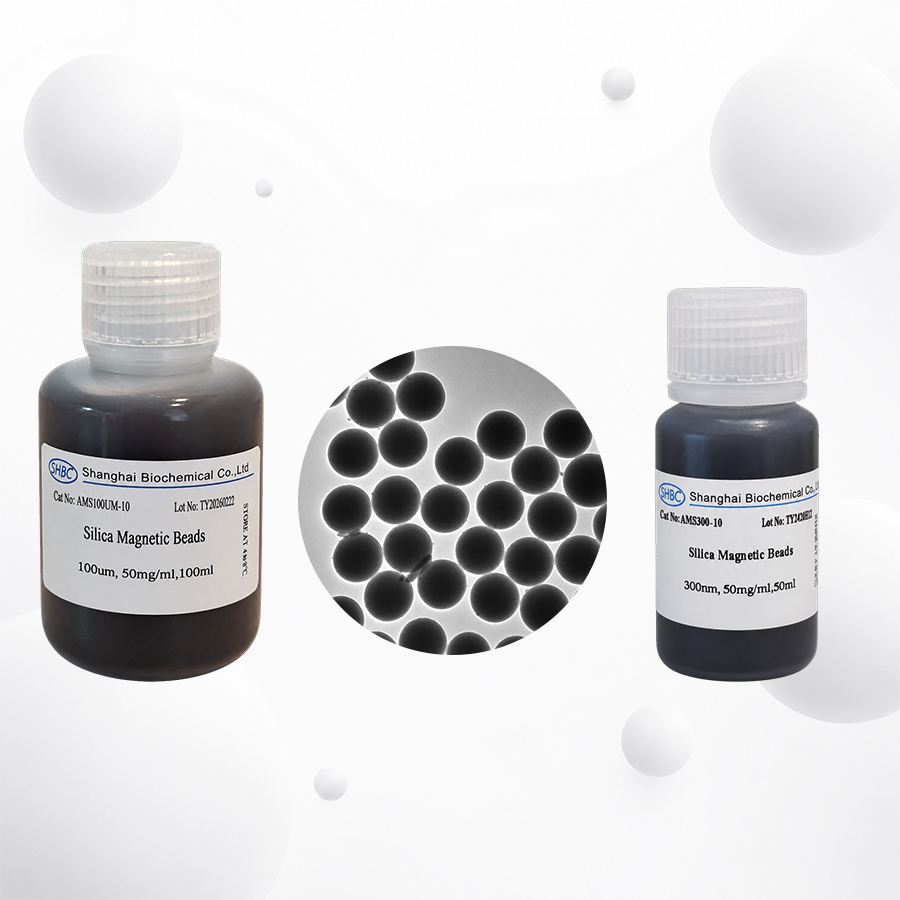 How Silica Magnetic Beads Work: Quick AnswerSilica magnetic beads extract DNA and RNA through a reversible bind–wash–elute process.First, a lysis buffer breaks open cells, viruses or other biological materials and releases nucleic acids into solution. A binding buffer containing salts—and often alco
 -
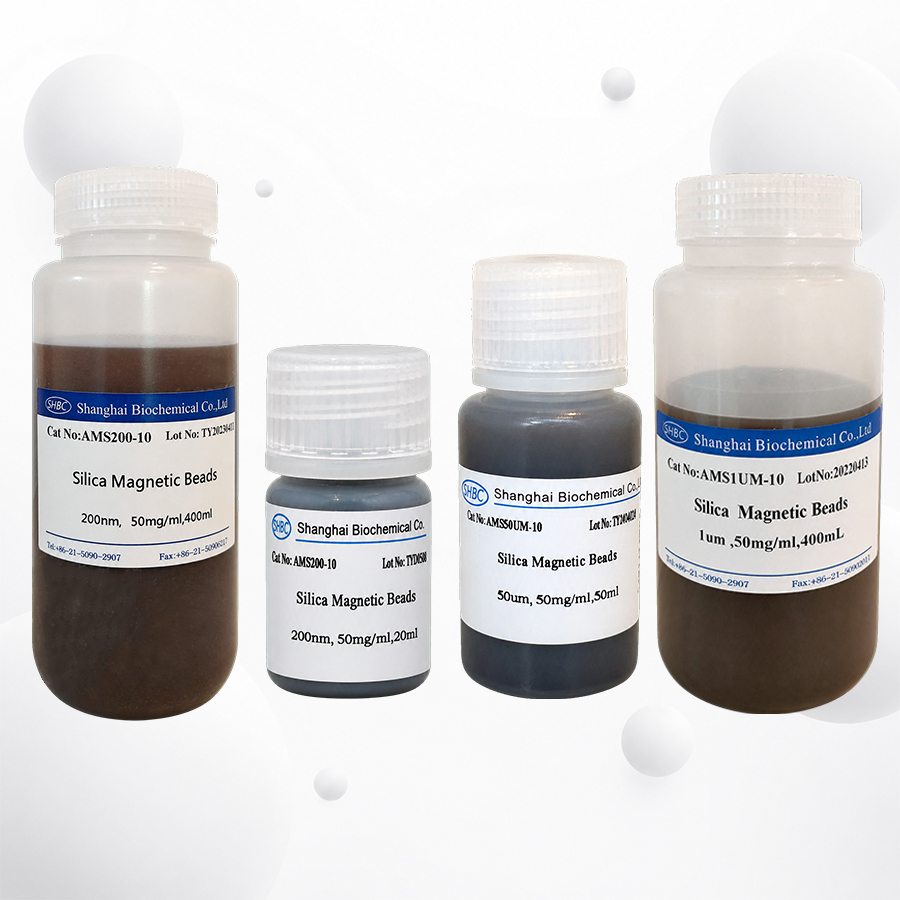 Overview of the Silica Magnetic Bead MarketSilica magnetic beads are functional magnetic particles used to extract and purify DNA or RNA from biological, clinical, food, environmental and research samples.A typical bead contains a magnetic core and a silica or silica-like outer surface. Under suitab
 -
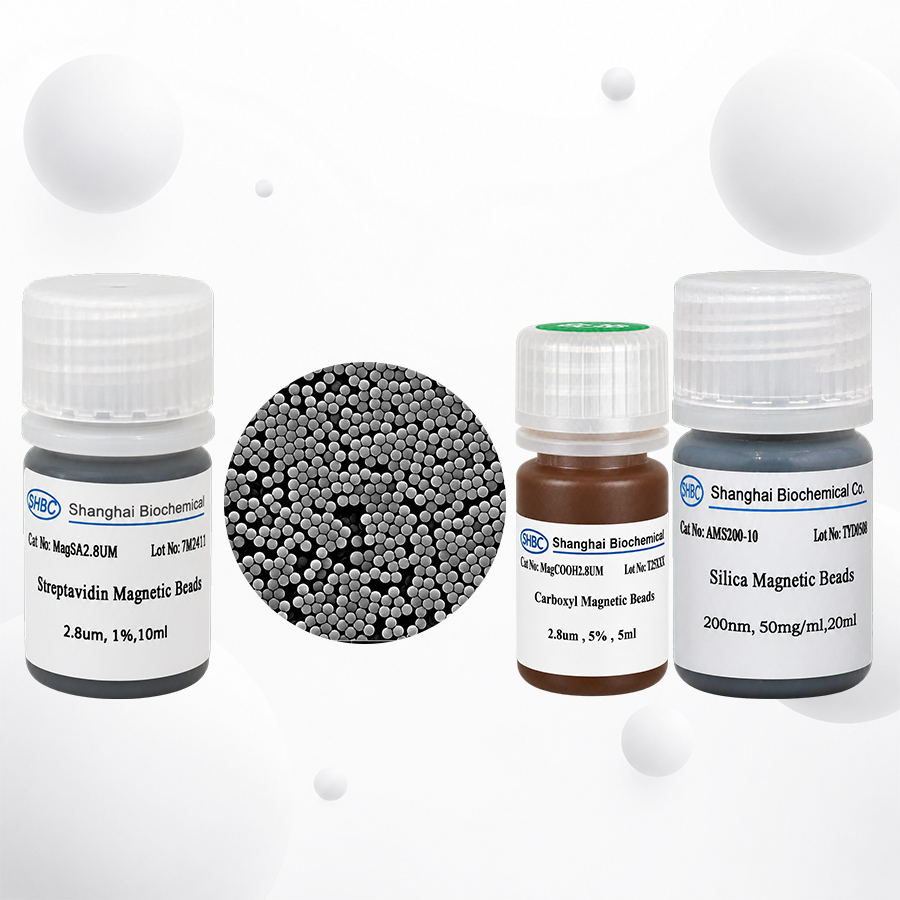 How to Choose Silica Magnetic Beads: Quick AnswerChoose silica magnetic beads according to the complete extraction workflow—not according to particle diameter or catalog price alone.The correct bead must match:The target nucleic acid;The sample matrix;The expected nucleic acid concentration;The requ
 -
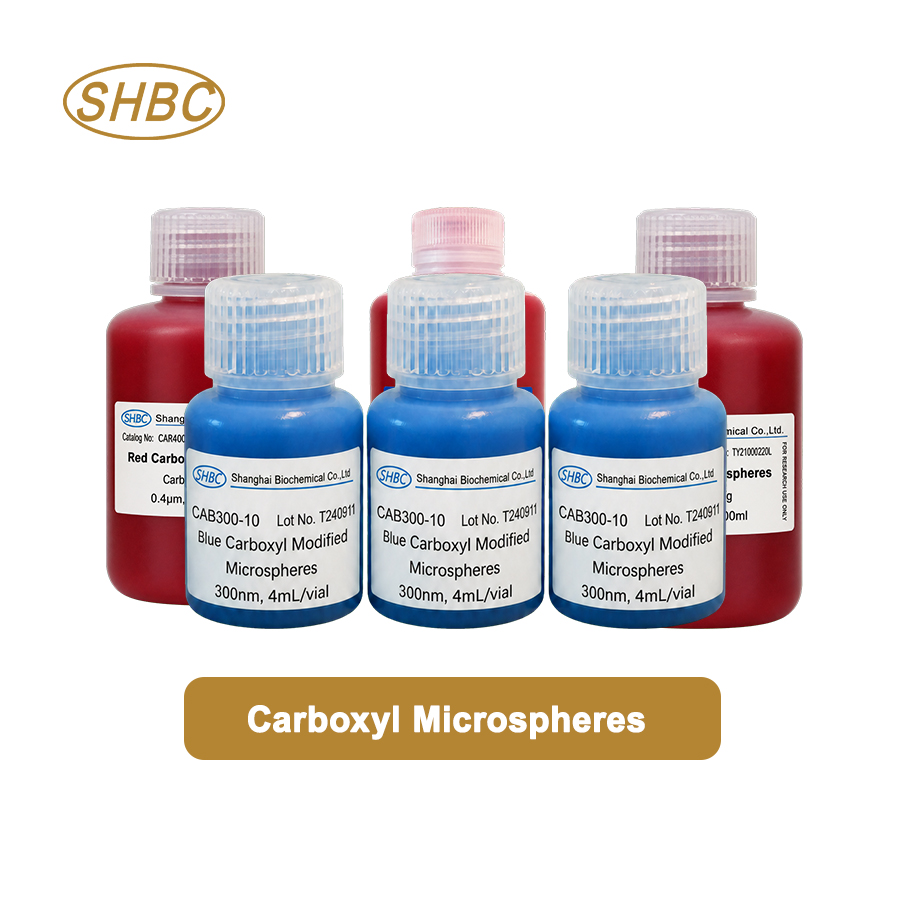 Quick Answer: Top 10 Microsphere Manufacturers Serving EuropeThe top 10 microsphere manufacturers and specialist particle suppliers serving European lateral flow assay developers in 2026 are:Merck EstaporSHBCBangs LaboratoriesPolysciencesThermo Fisher ScientificJSR Life SciencesMagsphereSpherotechmi


