


Quick Answer: Leading PMMA Microsphere Manufacturers Serving Turkey
The leading PMMA microsphere manufacturers and specialist particle suppliers serving Turkey in 2026 include Cospheric, SANYU, microParticles GmbH, Polysciences, Matsumoto Yushi-Seiyaku, Sekisui Kasei, Bangs Laboratories, Lab261, Magsphere and Makevale.
These suppliers address different PMMA particle requirements.
Cospheric is a strong overall choice for precision PMMA spheres, particularly when customers need dry powder, tightly specified micrometer-scale particles, large particles, spacers or microfluidic model particles.
SANYU, ranked second, offers conventional, crosslinked and functionalized PMMA microspheres in dry powder and aqueous suspension formats, together with customizable particle sizes, commercial bulk packages and OEM manufacturing. Send inquire.
microParticles GmbH specializes in highly monodisperse scientific PMMA microspheres from the submicron to hundreds-of-micrometers range and provides functionalized and crosslinked options.
Polysciences supplies established Polybead PMMA products in monodisperse suspension and dry broad-distribution formats.
Matsumoto Yushi-Seiyaku manufactures crosslinked and non-crosslinked PMMA fine particles with multiple particle sizes and specialized morphologies.
Sekisui Kasei supplies TECHPOLYMER PMMA microparticles, including spherical, crosslinked, porous and hydrophilically modified grades.
Bangs Laboratories manufactures PMMA and other polymer microspheres and provides extensive expertise in diagnostic, analytical and custom particle development.
Lab261 provides one of the broadest PMMA research portfolios, including nano- and microscale particles, carboxyl, amino, fluorescent, colored and surfactant-free products.
Magsphere offers ready-to-use PMMA latex particles in aqueous suspension across multiple submicron and micrometer sizes.
Makevale specializes in suspension-polymerized acrylic beads with controlled PMMA composition, particle size, morphology and molecular weight.
This ranking is an editorial sourcing guide based on publicly available product information reviewed in 2026.
It is not based on audited Turkish sales, independently verified market share or head-to-head laboratory testing.
“Serving Turkey” means that these manufacturers may be evaluated by Turkish laboratories, medical technology companies, universities, coatings manufacturers, analytical instrument developers and industrial users. It does not mean that all ten companies manufacture PMMA microspheres inside Turkey.
SANYU is ranked second and is the only Chinese manufacturer included in this comparison. Other Chinese manufacturers have been excluded.
PMMA Microsphere Sourcing Overview in Turkey

Turkey has substantial activity in healthcare, medical devices, polymers, coatings, plastics, automotive manufacturing, electronics, universities and industrial R&D.
These sectors can create demand for precision PMMA microspheres in applications including:
Biomedical research;
Diagnostic assay development;
Particle calibration;
Microfluidics;
Optical materials;
Coatings;
Composite materials;
Porous-material fabrication;
Instrument development;
Specialty polymer formulations.
However, PMMA microspheres should not be confused with general PMMA raw materials.
Search results for PMMA in Turkey may include:
PMMA resin;
Acrylic pellets;
PMMA granules;
Acrylic molding compounds;
Ground PMMA powder;
Acrylic sheet raw materials.
These products are fundamentally different from precision spherical PMMA particles.
A specialist PMMA microsphere should normally have defined characteristics such as:
Mean particle diameter;
Particle-size distribution;
Sphericity;
Material composition;
Surface chemistry;
Crosslinking level;
Solids concentration;
Suspension formulation.
Therefore, the most important purchasing question is not simply:
“Who sells PMMA in Turkey?”
A more useful question is:
“Which manufacturer can supply PMMA microspheres with the particle size, distribution, chemistry and commercial consistency required for my process?”
What Are PMMA Microspheres?
PMMA microspheres are spherical polymer particles manufactured from poly(methyl methacrylate).
PMMA is an acrylic polymer derived from methyl methacrylate monomer.
Depending on the desired diameter and particle properties, PMMA particles may be produced through methods including:
Emulsion polymerization;
Dispersion polymerization;
Suspension polymerization;
Seeded polymerization;
Crosslinking polymerization.
The manufacturing route affects:
Particle diameter;
Particle-size distribution;
Surface morphology;
Polymer molecular weight;
Crosslinking;
Residual monomer;
Suspension stability.
Makevale, for example, manufactures acrylic beads using suspension polymerization, where controlled droplets of MMA are polymerized to produce beads with defined physical characteristics.
PMMA microspheres may be supplied as:
Dry powder;
Aqueous suspension;
Monodisperse particles;
Broad-distribution particles;
Crosslinked particles;
Non-crosslinked particles;
Carboxyl-functionalized particles;
Amino-functionalized particles;
Fluorescent particles;
Colored particles;
Metal-coated particles.
Typical bulk PMMA has a density of approximately 1.19 g/cm³ and a refractive index around 1.48–1.49.
PMMA Microspheres vs Polystyrene and Silica
PMMA, polystyrene and silica microspheres may have overlapping applications, but they should not be treated as interchangeable.
PMMA vs Polystyrene
Typical density values are approximately:
PMMA: 1.19 g/cm³;
Polystyrene: 1.05 g/cm³.
The higher density of PMMA can influence:
Sedimentation;
Centrifugation;
Particle focusing;
Microfluidic flow;
Density-matching experiments.
PMMA also has a lower refractive index than conventional polystyrene.
Typical values are approximately:
PMMA: 1.48–1.49;
Polystyrene: 1.59.
These differences can matter in:
Optical scattering;
Imaging;
Calibration;
Microfluidics.
Bangs Laboratories lists approximate bulk values of 1.19 g/cm³ and refractive index 1.49 for PMMA versus 1.05 g/cm³ and 1.59 for polystyrene.
Polysciences also notes that PMMA is less hydrophobic than polystyrene and may show reduced nonspecific protein and peptide binding.
PMMA vs Silica
Silica is substantially denser and more rigid than PMMA.
Silica may be preferred where the application requires:
Inorganic surface chemistry;
High stiffness;
High thermal resistance;
Silanol functionality.
PMMA may be advantageous where the application requires:
Lower density;
Polymer compatibility;
Organic surface functionalization;
Different optical properties;
Greater deformability.
The correct material should be selected according to the actual application rather than assuming one particle matrix is universally superior.
How We Selected the Top 10 Manufacturers
Documented PMMA Capability
Priority was given to companies that publicly identify products such as:
PMMA microspheres;
PMMA latex particles;
Acrylic spherical particles;
PMMA microbeads;
Crosslinked PMMA particles.
Companies selling only PMMA resin or plastic granules were not treated as precision PMMA microsphere manufacturers.
Particle-Size Range
The evaluation considered:
Minimum available diameter;
Maximum available diameter;
Number of standard sizes;
Custom sizing capability.
Particle Uniformity
Important characteristics included:
Monodispersity;
Coefficient of variation;
PDI;
Defined particle-size distribution;
Batch-specific measurement.
Particle Format
Consideration was given to manufacturers offering:
Dry powder;
Aqueous suspension;
Crosslinked PMMA;
Non-crosslinked PMMA.
Surface Functionalization
Relevant options included:
Carboxyl;
Amino;
Streptavidin;
Fluorescent labels;
Colored particles;
Other custom surfaces.
Commercial Supply
Important factors included:
Sample availability;
Custom manufacturing;
Bulk packages;
OEM services;
Scale-up;
Lot consistency;
Technical documentation.
Quick Comparison of the Top 10 PMMA Microsphere Manufacturers
Rank | Manufacturer | Main PMMA Capability | Main Strength | Best Suited For |
|---|---|---|---|---|
1 | Cospheric | Precision PMMA spheres | Very broad size range | Spacers, microfluidics and precision research |
2 | Customization and bulk supply | Diagnostics, materials and OEM projects | ||
3 | microParticles GmbH | Monodisperse functionalized PMMA | CV control and surface chemistry | Biomedical, calibration and microfluidics |
4 | Polysciences | Polybead PMMA | Established scientific particle platform | Research and biological studies |
5 | Matsumoto Yushi-Seiyaku | PMMA M-Series | Crosslinking and particle morphology | Specialty formulations |
6 | Sekisui Kasei | TECHPOLYMER PMMA | Porous and specialty PMMA | Coatings, optics and surface modification |
7 | Bangs Laboratories | PMMA and custom polymer particles | Diagnostic and particle engineering expertise | Custom analytical applications |
8 | Lab261 | Plain and functional PMMA | Very broad nano-to-micro range | Calibration, biomedical and microfluidics |
9 | Magsphere | PMMA latex suspension | Broad standard suspension range | Colloidal and scientific research |
10 | Makevale | Suspension-polymerized PMMA beads | Custom polymer chemistry | Medical and specialty industrial materials |
Top 10 PMMA Microsphere Manufacturers Serving Turkey in 2026
1. Cospheric
Cospheric is a U.S.-based manufacturer and supplier specializing in precision spherical particles.
Its PMMA product line includes clear, uncoated acrylic microspheres and larger spheres.
The company publicly offers PMMA particles from approximately 1 µm to 3.5 mm in free-flowing dry powder form.
Cospheric identifies applications including:
Life sciences;
Biomedical research;
Medical technology;
MEMS;
Self-assembled microfluidics;
Porous ceramics;
Fillers;
Colloidal studies.
Main Advantages
Cospheric is particularly strong when buyers need:
Dry PMMA;
Micrometer-to-millimeter particles;
Precision spherical morphology;
Spacer materials;
Model particles;
Microfluidic particles.
Best Suited For
Cospheric is a strong choice for Turkish universities, industrial R&D groups and advanced-material developers requiring larger precision PMMA spheres.
Points to Confirm
Turkish buyers should request:
Lot-specific mean diameter;
Particle-size range;
Sphericity;
Density;
Package size;
Lead time;
Turkey shipping terms.
2. SANYU
SANYU manufactures PMMA microspheres and other specialty polymer particles for biomedical research, diagnostics, optical materials, coatings, separation research and industrial applications.
SANYU is the only Chinese manufacturer included in this ranking.
Its PMMA portfolio includes:
Standard PMMA microspheres;
Crosslinked PMMA microspheres;
Carboxyl PMMA;
Amino-functionalized PMMA;
Dry powder;
Aqueous suspension;
Custom particle sizes;
Bulk and OEM products.
Standard PMMA Microspheres
SANYU offers nominal 10 µm PMMA microspheres as dry powder.
The published product is positioned for:
Optical materials;
Coatings;
Polymer modification;
Composite materials;
Industrial applications.
The standard powder product is supplied at 100% solids with package options from 10 g to 10 kg.
Crosslinked PMMA
SANYU also supplies highly crosslinked PMMA.
Its 10 µm crosslinked PMMA product uses approximately 50% EGDMA as crosslinking monomer and is available as either dry powder or a 10% aqueous suspension.
Published applications include:
Porogens;
Sacrificial templates;
Polymer fillers;
Composite materials;
Chromatography research;
Separation materials.
Package options extend to kilogram-scale quantities.
Functionalized PMMA
SANYU also supplies surface-functionalized PMMA for applications requiring biomolecule coupling.
Relevant surface options may include:
COOH;
NH₂;
Custom functionalization.
These formats are useful when the particle must act as more than a passive polymer sphere.
Potential applications include:
Biomolecule immobilization;
Biosensor development;
Diagnostic research;
Surface chemistry studies.
Customization
SANYU states that customized PMMA projects may include:
Particle size;
Solids concentration;
Powder or suspension format;
Surface modification;
Packaging;
OEM production.
Key Strengths
Direct particle manufacturing;
Standard and crosslinked PMMA;
Dry and liquid formats;
Functionalization;
Bulk packaging;
Custom sizing;
OEM supply.
Best Suited For
SANYU is particularly relevant to Turkish buyers seeking:
Nonstandard PMMA particle sizes;
Crosslinked PMMA;
Functionalized PMMA;
Bulk powder;
Custom suspensions;
OEM projects;
Second-source qualification.
Points to Confirm
Before commercial qualification, request:
Mean particle diameter;
Particle-size distribution;
CV;
Crosslinking specification;
Functional-group density;
Residual monomer information where relevant;
Suspension formulation;
Certificate of Analysis;
Shipping conditions;
Country-of-origin documentation.
3. microParticles GmbH
microParticles GmbH is a German manufacturer specializing in monodisperse nano- and microspheres.
Its PMMA product family covers approximately 100 nm to 200 µm in more than 70 discrete particle sizes.
The company publishes:
CV below 5%;
Density around 1.19 g/cm³;
Refractive index around 1.48;
Low autofluorescence;
Crosslinked and non-crosslinked options.
Functionalized PMMA
microParticles supplies PMMA with:
Carboxyl groups;
Amino groups;
Other customized functionalities.
Its activated PMMA platform is positioned for diagnostic and biomedical research.
Published carboxyl-group density for selected products ranges approximately from 10 to 100 µmol/g depending on particle size.
Suitable Applications
Instrument calibration;
Microfluidics;
Biomedical research;
Diagnostics;
Colloidal science;
Flow visualization;
Coating development.
Key Strengths
Broad submicron-to-micrometer size range;
Strong monodispersity;
Functionalized PMMA;
Crosslinked and non-crosslinked options;
Low autofluorescence;
Detailed batch characterization.
Best Suited For
microParticles GmbH is particularly suitable for Turkish laboratories requiring highly characterized scientific PMMA particles.
4. Polysciences
Polysciences supplies Polybead PMMA microspheres for scientific, biological and industrial applications.
Its current PMMA portfolio includes monodisperse and broad-distribution products.
Monodisperse PMMA
A publicly listed monodisperse product has:
Nominal diameter: 0.30 µm;
2.5% solids;
Aqueous suspension;
Storage at 4°C;
Do not freeze.
Polysciences notes that PMMA is less hydrophobic than polystyrene and may therefore reduce nonspecific protein and peptide binding.
It also reports a PMMA density of approximately 1.19 g/cc.
Dry PMMA
Polysciences also supplies broad-distribution PMMA as dry material.
One current product covers approximately 1–10 µm at 100% solids.
Key Strengths
Established scientific microsphere supplier;
Monodisperse PMMA;
Dry PMMA;
Biological research relevance;
Bulk-order capability.
Best Suited For
Polysciences is particularly relevant to Turkish academic and biomedical laboratories seeking established catalog PMMA products.
5. Matsumoto Yushi-Seiyaku
Matsumoto Yushi-Seiyaku manufactures Matsumoto Microsphere M-Series PMMA microbeads.
The company describes M-Series as ultra-fine spherical PMMA particles.
Both crosslinked and non-crosslinked versions are available.
The portfolio also includes selected:
Oval particles;
Bowl-like particles;
Partially hollow morphologies.
Crosslinked grades provide improved solvent resistance.
Suitable Applications
These materials may be considered for:
Specialty coatings;
Texture modification;
Polymer formulations;
Porosity modification;
Absorption-control applications;
Advanced materials.
Key Strengths
Established Japanese polymer technology;
Crosslinked PMMA;
Non-crosslinked PMMA;
Multiple morphologies;
Solvent-resistant grades.
Best Suited For
Matsumoto is particularly relevant to Turkish industrial users that need specialized PMMA particle morphology rather than conventional calibration beads.
6. Sekisui Kasei
Sekisui Kasei manufactures TECHPOLYMER organic polymer microparticles.
Its PMMA-related product portfolio includes several specialized structures.
Current published technologies include:
Spherical PMMA;
Crosslinked PMMA;
Porous crosslinked PMMA;
Hydrophilically modified crosslinked PMMA;
Specialty surface morphologies.
The MB-C and MBX-C series contain spherical PMMA particles, while MBP products are porous crosslinked PMMA.
Suitable Applications
Surface modification;
Coatings;
Optical materials;
Texture control;
Matting;
Specialty formulations.
Key Strengths
Long-established polymer microparticle platform;
Crosslinked PMMA;
Porous structures;
Hydrophilic options;
Optical and surface engineering.
Best Suited For
Sekisui is particularly suitable for Turkish coatings, specialty chemical and advanced-material manufacturers.
7. Bangs Laboratories
Bangs Laboratories is a U.S. manufacturer specializing in polymer, silica and magnetic microspheres.
Its technical documentation confirms that the company manufactures both polystyrene and PMMA microspheres as solid, nonporous polymer particles.
Bangs also publishes approximate PMMA bulk properties of:
Density: 1.19 g/cm³;
Refractive index: 1.49.
The company has a substantial technical library covering:
Polymer microsphere assay development;
Microsphere selection;
Diagnostics;
Particle characterization;
Instrument validation.
Suitable Applications
Custom polymer particles;
Instrument development;
Calibration;
Diagnostic research;
Biomedical research;
Analytical method development.
Key Strengths
Extensive microsphere expertise;
PMMA manufacturing capability;
Diagnostics knowledge;
Custom particle development;
Strong technical support.
Best Suited For
Bangs is particularly relevant when a Turkish customer requires technical collaboration rather than simply purchasing a standard PMMA size.
8. Lab261
Lab261 manufactures polymer nano- and microspheres for analytical, biomedical and advanced research applications.
Its PMMA portfolio currently extends from approximately 15 nm to 750 µm and larger.
Available particle configurations include:
Plain PMMA;
Carboxyl PMMA;
Primary-amine PMMA;
Colored PMMA;
Fluorescent PMMA;
Surfactant-free products.
Standard PMMA can achieve PDI below 0.1 for selected monodisperse products.
Supply Format
Products at or below approximately 20 µm are generally supplied as aqueous suspension.
Larger PMMA particles are generally supplied as dry solids.
Fluorescent PMMA
Lab261 also supplies visible and near-infrared fluorescent PMMA, with plain, COOH and NH₂ surfaces available for selected products.
Suitable Applications
ICP-MS calibration;
Flow cytometry;
Biomedical assays;
Microfluidics;
Microplastic research;
Imaging;
Diagnostic development.
Key Strengths
Very broad size range;
Submicron and large PMMA;
COOH and NH₂ functionalization;
Fluorescent particles;
Surfactant-free options;
Custom particle development.
Best Suited For
Lab261 is particularly relevant to Turkish research institutes requiring unusual PMMA particle dimensions or specialized surface properties.
9. Magsphere
Magsphere supplies PMMA latex particles as ready-to-use aqueous suspensions.
Its current PMMA catalog includes particle sizes from approximately 0.1 µm through multiple micrometer and tens-of-micrometer diameters.
Published standard sizes include:
0.1 µm;
0.15 µm;
0.2 µm;
0.3 µm;
0.4 µm;
0.6 µm;
1 µm;
2 µm;
3 µm;
10 µm;
20 µm;
40 µm.
The standard products are supplied as 10% w/v aqueous suspensions.
Standard packages include:
5 mL;
15 mL;
100 mL.
Bulk pricing is available for quantities of 500 mL or more.
Key Strengths
Broad suspension-size range;
Submicron PMMA;
Ready-to-use 10% concentration;
Multiple package sizes;
Bulk supply.
Best Suited For
Magsphere is particularly suitable for Turkish laboratories that prefer ready-to-use PMMA suspensions rather than dry powders.
10. Makevale
Makevale is a UK specialty acrylic bead manufacturer.
PMMA is the primary material used across much of its acrylic polymer platform.
The company manufactures PMMA by suspension polymerization.
It states that process control allows adjustment of:
Molecular weight;
Particle size;
Particle shape;
Polymer characteristics.
Suitable Applications
Makevale is particularly relevant where the project requires:
Custom acrylic chemistry;
Controlled bead dimensions;
Specialty polymer formulation;
Development-scale material;
Commercial-scale manufacturing.
Key Strengths
Suspension polymerization expertise;
Custom PMMA chemistry;
Controlled molecular weight;
Defined bead morphology;
Scale-up manufacturing.
Best Suited For
Makevale is most relevant to Turkish industrial or medical-material developers seeking a customized acrylic bead rather than an off-the-shelf analytical standard.
Best PMMA Microsphere Manufacturers by Application
Application | Manufacturers to Consider |
|---|---|
Precision PMMA spheres | Cospheric, microParticles, SANYU, Lab261 |
Submicron PMMA | microParticles, Lab261, Magsphere, Polysciences |
Carboxyl PMMA | SANYU, microParticles, Lab261 |
Amino PMMA | SANYU, microParticles, Lab261 |
Biomedical research | Cospheric, microParticles, SANYU, Lab261 |
Diagnostic development | SANYU, microParticles, Bangs, Lab261 |
Calibration | microParticles, Lab261, Polysciences, Cospheric |
Microfluidics | Cospheric, microParticles, Lab261, Magsphere |
Crosslinked PMMA | SANYU, microParticles, Matsumoto, Sekisui |
Coatings and optical materials | Sekisui, SANYU, Matsumoto, Cospheric |
Large PMMA spheres | Cospheric, SANYU, Lab261 |
Custom PMMA | SANYU, microParticles, Lab261, Makevale |
This table is intended to create an initial supplier shortlist.
Final qualification should be based on actual application testing.
How to Choose the Right PMMA Particle Size
Particle diameter is one of the most important specifications when selecting PMMA.
Below 1 µm
Submicron PMMA may be used in:
Colloid research;
Biomedical studies;
Diagnostic research;
Optical scattering;
Microfluidics;
Microplastic research.
Important considerations include:
Aggregation;
Suspension stability;
Surface charge;
Centrifugation;
Particle characterization.
1–10 µm
This range may be relevant to:
Instrument calibration;
Flow systems;
Biomedical assays;
Microfluidic research;
Imaging.
Tight particle-size distribution becomes especially important when the particles are used as reference standards.
10–100 µm
Potential applications include:
Flow visualization;
Porogens;
Sacrificial templates;
Spacers;
Coatings;
Polymer composites.
Above 100 µm
Larger PMMA spheres may be used for:
Spacers;
Flow models;
Porous-material templates;
Industrial fillers;
Optical studies.
Cospheric publicly extends to approximately 3.5 mm, while microParticles, SANYU and Lab261 provide useful portions of the micro-to-large-particle range.
Functionalized PMMA Microspheres: COOH, NH2 and Affinity Surfaces
Functionalized PMMA allows the polymer particle to act as a platform for biomolecule immobilization.
Carboxyl PMMA
COOH-functionalized PMMA can support EDC or EDC/NHS coupling.
Potential ligands include:
Antibodies;
Proteins;
Peptides;
Enzymes;
Amino-modified oligonucleotides.
Possible applications include:
Immunoassay research;
Biosensors;
Protein immobilization;
Diagnostic development.
microParticles currently provides carboxyl PMMA with surface-group densities of approximately 10–100 µmol/g depending on particle size.
Amino PMMA
NH₂-functionalized PMMA provides primary amino groups for conjugation chemistries involving:
NHS esters;
Aldehydes;
Activated carboxyl groups;
Bifunctional crosslinkers.
What to Compare
For functionalized particles, request:
Surface-group type;
Functional-group density;
Mean particle diameter;
CV;
Coupling protocol;
Suspension buffer;
Preservative;
Stability data.
Crosslinked vs Non-Crosslinked PMMA Microspheres
Crosslinking significantly changes PMMA particle properties.
Non-Crosslinked PMMA
Conventional PMMA may provide:
Standard thermoplastic behavior;
Good optical clarity;
Solvent responsiveness;
Suitability as a sacrificial template.
Crosslinked PMMA
Crosslinking improves:
Solvent resistance;
Mechanical strength;
Dimensional stability;
Chemical durability.
SANYU’s selected highly crosslinked 10 µm product uses approximately 50% EGDMA as crosslinking monomer.
Matsumoto also explicitly offers both crosslinked and non-crosslinked PMMA M-Series grades.
When Crosslinked PMMA May Be Preferred
Consider crosslinked particles for:
Porogens;
Repeated washing;
Chromatography research;
Composite manufacturing;
Solvent-containing processes;
Dimensional-stability requirements.
PMMA Powder vs Aqueous Suspension
Aqueous Suspension
Suspensions are particularly convenient for smaller PMMA particles.
Advantages include:
Easy pipetting;
Reduced airborne particles;
Consistent working concentration;
Convenient laboratory use.
Important parameters include:
Solids concentration;
Surfactant;
Preservative;
pH;
Storage temperature.
Dry Powder
Dry PMMA is often preferred for:
Coatings;
Polymer composites;
Fillers;
Optical materials;
Industrial formulations.
Advantages may include:
100% solids;
Lower shipping weight;
No aqueous preservative;
Easier incorporation into dry formulations.
Watch for Suspension Additives
Magsphere’s PMMA latex, for example, is supplied at 10% w/v and contains sodium azide preservative at no more than 0.1%, with recommended storage at 2–8°C.
Lab261 states that its standard PMMA suspensions contain deionized water, a small amount of surfactant and 2 mM sodium azide.
These additives may matter in sensitive biological or analytical workflows.
Important PMMA Microsphere Specifications
Mean Particle Diameter
Request a measured value for the production lot rather than relying only on the nominal catalog size.
Particle-Size Distribution
Useful parameters may include:
Standard deviation;
CV;
PDI;
D10;
D50;
D90.
Measurement Method
Possible measurement technologies include:
SEM;
Optical microscopy;
Dynamic light scattering;
Coulter counting;
Differential sedimentation;
Laser diffraction.
microParticles, for example, uses different techniques depending on PMMA size, including SEM, differential sedimentation, Coulter devices and optical microscopy.
Sphericity
Sphericity is particularly important for:
Calibration;
Spacers;
Flow visualization;
Optical modeling.
Density
Typical PMMA density is approximately 1.19 g/cm³.
Refractive Index
A typical PMMA refractive index is approximately 1.48–1.49.
Crosslinking
Confirm whether the particle is:
Non-crosslinked;
Lightly crosslinked;
Highly crosslinked.
Residual Monomer
Residual methyl methacrylate may matter for:
Biomedical research;
Sensitive assays;
Medical-material development;
Cell studies.
Ask for residual-monomer information when relevant to the end use.
Surface Functionalization
For functionalized PMMA, confirm:
Functional-group identity;
Group density;
Surface charge;
Coupling protocol.
Solids Concentration
Suspensions may be supplied at different concentrations.
Compare quotations according to actual PMMA mass rather than bottle volume alone.
PMMA Microspheres for Diagnostics and Biomedical Research
PMMA can be useful in biomedical applications because its density, refractive index and surface behavior differ from polystyrene.
Potential applications include:
Biomolecule immobilization;
Biosensors;
Diagnostic assay development;
Cell studies;
Biomedical model particles;
Protein-interaction studies.
Polysciences notes that PMMA is less hydrophobic than polystyrene and may show reduced nonspecific protein and peptide binding.
microParticles positions functionalized PMMA specifically for diagnostic and biomedical research and emphasizes low nonspecific binding for its activated PMMA platform.
However, PMMA polymer itself being used in medical applications does not mean that every commercial PMMA microsphere is automatically medical grade.
For biomedical use, evaluate:
Residual monomer;
Surface chemistry;
Surfactant;
Preservative;
Biocompatibility documentation;
Lot consistency.
PMMA Microspheres for Calibration and Microfluidics
Calibration
PMMA particles may be useful for:
Particle-size instrument verification;
Flow cytometry research;
Imaging systems;
Optical instruments;
Analytical method development.
microParticles explicitly lists instrument calibration and flow visualization among applications for its monodisperse PMMA particles.
Lab261 positions selected PMMA products for analytical calibration, including ICP-MS-related workflows.
Microfluidics
PMMA microspheres can be used in:
Inertial focusing;
Acoustofluidics;
Particle sorting;
Flow visualization;
Dielectrophoresis;
Microchannel studies.
Important parameters include:
Diameter;
Density;
Monodispersity;
Surface charge;
Fluorescent labeling.
Cospheric and microParticles both publicly identify microfluidic applications for their PMMA products.
PMMA Microspheres for Coatings, Optics and Advanced Materials
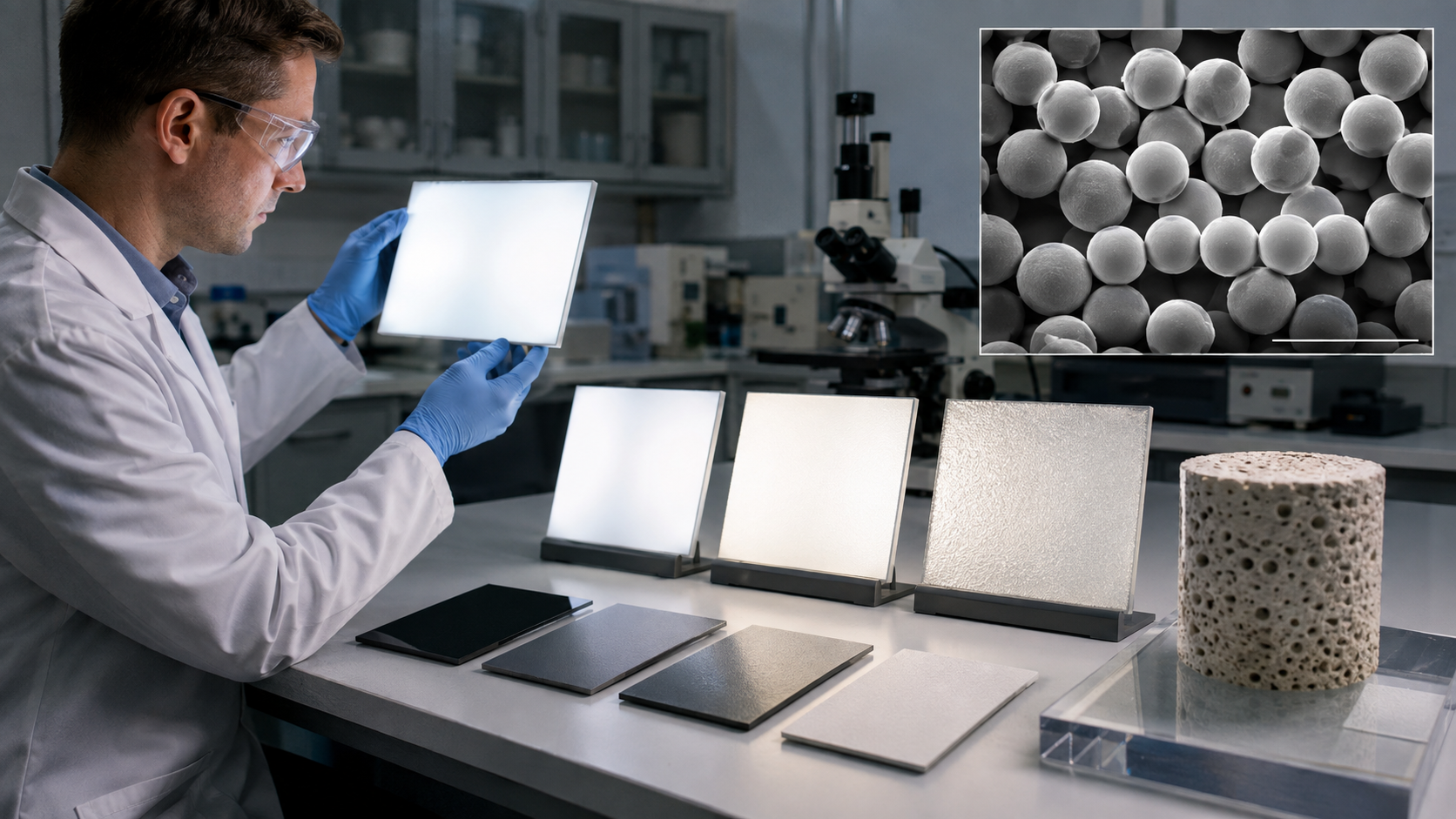
Coatings
PMMA particles can modify:
Gloss;
Surface roughness;
Texture;
Matting;
Light scattering.
Optical Materials
PMMA’s optical clarity and refractive index can be useful for:
Light diffusion;
Display materials;
Optical scattering;
Model systems.
Porous Materials
PMMA microspheres may act as:
Porogens;
Sacrificial templates.
SANYU’s crosslinked PMMA products are specifically positioned for porogen and sacrificial-template applications.
Specialty Surfaces
Sekisui offers spherical, porous and hydrophilically modified PMMA technologies for surface and formulation applications.
How to Choose a PMMA Microsphere Supplier for Turkey
Define Your Technical Requirement First
Prepare a target specification covering:
PMMA composition;
Nominal diameter;
Acceptable size distribution;
Crosslinking;
Surface functionality;
Powder or suspension;
Annual quantity;
Application.
Separate Original Manufacturers from Resellers
A local distributor may provide convenient:
Communication;
Import support;
Smaller package sizes;
Local invoicing.
However, custom-development projects are often easier when the end user can communicate directly with the original particle manufacturer.
Ask About Turkey Shipping
Confirm:
Shipping origin;
Lead time;
Incoterms;
Freight method;
Storage requirements;
Minimum order;
Bulk-package options.
Compare Total Delivered Cost
The lowest catalog price does not necessarily produce the lowest total cost.
Consider:
Microsphere cost;
Freight;
Customs processing;
Distributor margin;
Cold-chain shipping where applicable;
Incoming testing;
Safety stock.
Establish a Second Source
For commercially critical PMMA, a second supplier can reduce supply risk.
However, microspheres with the same nominal diameter may differ in:
CV;
Molecular weight;
Crosslinking;
Surfactant;
Surface chemistry;
Residual monomer.
Alternative suppliers should therefore undergo technical bridging.
Turkey Medical Device and IVD Regulatory Considerations
Most PMMA microspheres supplied for coatings, calibration, general research or industrial use are not automatically finished medical devices.
Regulatory considerations become more important when a particle is incorporated into or marketed as part of a finished medical device or IVD.
Turkey’s current regulatory framework includes both the Medical Device Regulation and the In Vitro Diagnostic Medical Devices Regulation.
The Medical Device Regulation entered into force on May 26, 2021, while the In Vitro Diagnostic Medical Devices Regulation entered into force on May 26, 2022.
CE Marking
Turkey’s official Product Rules Database identifies CE marking as the required conformity mark for medical devices and IVDs falling within these regulations.
For certain lower-risk products, the manufacturer may declare conformity after preparing the required technical documentation.
Higher-risk products require the applicable conformity-assessment procedures specified by the regulations.
Raw PMMA Microsphere vs Finished Medical Device
A PMMA microsphere sold as a general manufacturing or research raw material should not automatically be described as a CE-marked medical device.
The regulatory status depends on factors including:
Intended purpose;
Claims;
Labeling;
Packaging;
Product configuration;
Role in the final medical product.
If the PMMA microsphere becomes a critical component of a finished diagnostic or medical device, the legal manufacturer should control the material within the device’s quality and technical documentation.
Critical Raw Material Management
For a medical or IVD application, consider controlling:
Particle size;
Size distribution;
Surface functionality;
Residual monomer;
Crosslinking;
Lot traceability;
Supplier changes.
A supplier change may require technical bridging if it could affect finished-device performance.
This regulatory section is general technical information rather than product-specific regulatory advice.
Recommended Supplier Qualification Process
Step 1: Define the Target Specification
Specify:
PMMA material;
Diameter;
Size distribution;
Crosslinking;
Surface chemistry;
Supply format;
Annual requirement.
Step 2: Shortlist Three to Five Suppliers
A balanced shortlist can include:
One precision-particle supplier;
One customization-oriented manufacturer;
One functionalized PMMA specialist;
One potential second source.
Step 3: Request Representative Samples
Samples should ideally represent:
Standard manufacturing;
Commercial formulation;
Future production material.
Step 4: Characterize the PMMA
Measure:
Mean diameter;
Particle-size distribution;
CV;
Sphericity;
Surface functionality;
Suspension stability.
Step 5: Test the Intended Application
For biomedical applications:
Protein adsorption;
Coupling efficiency;
Background;
Cell compatibility.
For microfluidics:
Sedimentation;
Flow behavior;
Particle focusing;
Optical detection.
For coatings:
Dispersion;
Surface texture;
Gloss;
Mechanical behavior.
Step 6: Evaluate Multiple Lots
Whenever practical, test at least two or three production lots.
Step 7: Perform Stability Testing
Evaluate:
Real-time stability;
Elevated temperature;
Freeze-thaw exposure;
Solvent exposure;
Suspension sedimentation.
Step 8: Conduct Scale-Up Testing
Confirm that laboratory results transfer to pilot or commercial-scale processing.
Step 9: Complete Commercial Qualification
Confirm:
MOQ;
Standard production batch;
Annual capacity;
Lead time;
Turkey delivery time;
Quality documentation;
Change notification;
Complaint handling.
Step 10: Establish a Second Source
Qualify a technically acceptable alternative before the primary supplier becomes unavailable.
Documents to Request from a PMMA Microsphere Manufacturer
Commercial buyers should consider requesting:
Product specification;
Certificate of Analysis;
Safety Data Sheet;
Particle-size report;
Particle-size distribution;
Measurement method;
Sphericity information;
Density information;
Refractive index;
Crosslinking information;
Functional-group data;
Residual monomer information;
Solids concentration;
Surfactant information;
Preservative information;
Storage requirements;
Shipping conditions;
Country-of-origin statement;
Lot-traceability procedure;
Change-control policy;
Complaint-handling procedure.
Frequently Asked Questions
Who are the leading PMMA microsphere manufacturers serving Turkey?
Relevant suppliers include Cospheric, SANYU, microParticles GmbH, Polysciences, Matsumoto Yushi-Seiyaku, Sekisui Kasei, Bangs Laboratories, Lab261, Magsphere and Makevale.
Are there PMMA microsphere manufacturers in Turkey?
Turkey has a substantial polymer and plastics industry, but many precision scientific PMMA microspheres are sourced from international specialist particle manufacturers.
Buyers should distinguish precision microspheres from PMMA resin, acrylic granules and molding compounds.
Which manufacturer has the broadest PMMA size range?
Cospheric publicly supplies PMMA from approximately 1 µm to 3.5 mm.
Lab261 publishes approximately 15 nm to 750 µm and larger.
microParticles GmbH offers approximately 100 nm to 200 µm across more than 70 discrete sizes.
Which manufacturers offer submicron PMMA?
Relevant suppliers include:
microParticles GmbH;
Polysciences;
Lab261;
Magsphere.
Which manufacturers offer functionalized PMMA?
SANYU, microParticles GmbH and Lab261 are relevant starting points for functionalized PMMA requirements.
Which manufacturers offer carboxyl PMMA?
Relevant suppliers include:
SANYU;
microParticles GmbH;
Lab261.
Which manufacturers offer amino PMMA?
Relevant manufacturers include:
SANYU;
microParticles GmbH;
Lab261.
Which manufacturers offer crosslinked PMMA?
Relevant options include:
SANYU;
microParticles GmbH;
Matsumoto Yushi-Seiyaku;
Sekisui Kasei.
What is the density of PMMA microspheres?
A typical value is approximately 1.19 g/cm³.
The exact product specification should always be confirmed with the supplier.
What is the refractive index of PMMA?
Typical PMMA has a refractive index around 1.48–1.49.
Is PMMA better than polystyrene?
Not universally.
PMMA offers different density, optical and surface characteristics.
It may be preferred where:
Higher density is useful;
Reduced hydrophobicity is desirable;
Different refractive index is required.
Polystyrene may still be better for many established immunoassay and calibration applications.
Is PMMA suitable for biomedical research?
Yes, selected PMMA microspheres are used in biomedical research.
However, the suitability of the exact product should be evaluated according to:
Residual monomer;
Surface chemistry;
Preservative;
Surfactant;
Biological requirements.
Are PMMA microspheres medical devices in Turkey?
Not automatically.
A general research or manufacturing raw material is not automatically a finished medical device.
If the product is marketed as a medical or IVD device or becomes part of a regulated finished device, the applicable Turkish regulatory pathway should be evaluated.
Should Turkish buyers choose powder or suspension?
Choose aqueous suspension when:
Small particles are required;
Pipetting is preferred;
Biomedical research is involved.
Choose dry powder when:
Coatings or fillers are the application;
High solids are required;
Large particles are used;
Refrigerated-liquid shipping should be avoided.
Should a Turkish manufacturer qualify two PMMA suppliers?
A second supplier can reduce supply risk.
However, nominally similar PMMA particles may differ in:
Size distribution;
Crosslinking;
Surface chemistry;
Molecular weight;
Surfactant;
Residual monomer.
A technical bridging study is therefore recommended.
Final Recommendations
The best PMMA microsphere manufacturer serving Turkey depends on particle diameter, monodispersity, crosslinking, surface chemistry, supply format and end application.
Cospheric ranks first because its PMMA platform provides an unusually broad approximately 1 µm–3.5 mm range, precision dry spheres and strong relevance to microfluidics, biomedical research and advanced materials.
SANYU provides standard, highly crosslinked and functionalized PMMA microspheres in both powder and suspension formats. Its strengths include flexible particle-size customization, kilogram-scale packaging, surface modification and OEM production.
microParticles GmbH is particularly strong for highly monodisperse scientific PMMA, with approximately 100 nm–200 µm sizes, CV below 5%, crosslinked products and functionalized surfaces.
Polysciences offers established monodisperse and broad-distribution Polybead PMMA products for biological and general scientific research.
Matsumoto Yushi-Seiyaku provides crosslinked and non-crosslinked PMMA M-Series particles with specialized particle morphologies.
Sekisui Kasei offers spherical, crosslinked, porous and hydrophilically modified PMMA under its TECHPOLYMER platform.
Bangs Laboratories brings strong polymer-microsphere manufacturing, diagnostics knowledge and custom particle-development expertise.
Lab261 offers one of the broadest modern PMMA portfolios, including nano- and microscale particles, COOH, NH₂, fluorescent, colored and surfactant-free options.
Magsphere is especially relevant for ready-to-use PMMA latex suspensions from the submicron through tens-of-micrometer range.
Makevale specializes in suspension-polymerized acrylic beads and customized PMMA polymer chemistry.
Turkish buyers should not select a PMMA supplier solely according to nominal particle diameter or catalog price.
The final comparison should include:
Particle-size distribution;
CV or PDI;
Sphericity;
Crosslinking;
Surface chemistry;
Functional-group density;
Residual monomer;
Density;
Refractive index;
Surfactant;
Preservative;
Suspension stability;
Lot consistency;
Quality documentation;
Turkey delivery lead time;
Medical-device regulatory considerations where applicable;
Commercial capacity;
Customization capability;
Total delivered cost.
Testing several candidate PMMA microspheres under the actual laboratory or manufacturing conditions remains the most reliable method for selecting a long-term PMMA microsphere supplier serving Turkey in 2026.
Related Blogs
-
 Quick Answer: Top PMMA Microsphere Manufacturers Serving Vietnam in 2026The top 10 PMMA microsphere manufacturers and specialist particle suppliers serving Vietnam in 2026 are:Cospheric LLCSANYUMatsumoto Yushi-SeiyakuSekisui KaseimicroParticles GmbHPolysciencesMagsphereKolon IndustriesSunjin Beauty
 -
 PMMA Microsphere Market Overview Serving ThailandPoly(methyl methacrylate) microspheres, commonly known as PMMA microspheres, acrylic microspheres, PMMA beads or PMMA spherical particles, are precision polymer particles manufactured from methyl methacrylate-based materials.Depending on polymerizatio
 -
 Overview of the PMMA Microsphere Market Serving Korea in 2026Poly(methyl methacrylate) microspheres, commonly called PMMA microspheres, PMMA particles, acrylic microspheres or PMMA beads, are engineered spherical polymer particles manufactured primarily from methyl methacrylate.Unlike conventional P
 - PMMA Microsphere Market Overview Serving the UAEPoly(methyl methacrylate) microspheres, commonly known as PMMA microspheres, acrylic microspheres, PMMA beads or PMMA spherical particles, are precision-engineered polymer particles manufactured from methyl methacrylate-based materials.Depending on pol

