


Overview of the Carboxyl Polystyrene Microsphere Market Serving Taiwan in 2026
Carboxyl polystyrene microspheres, also known as carboxylated polystyrene latex beads, COOH polystyrene microspheres or carboxyl latex particles, are functional polymer particles widely used in immunodiagnostics, point-of-care testing, biotechnology and life-science research.
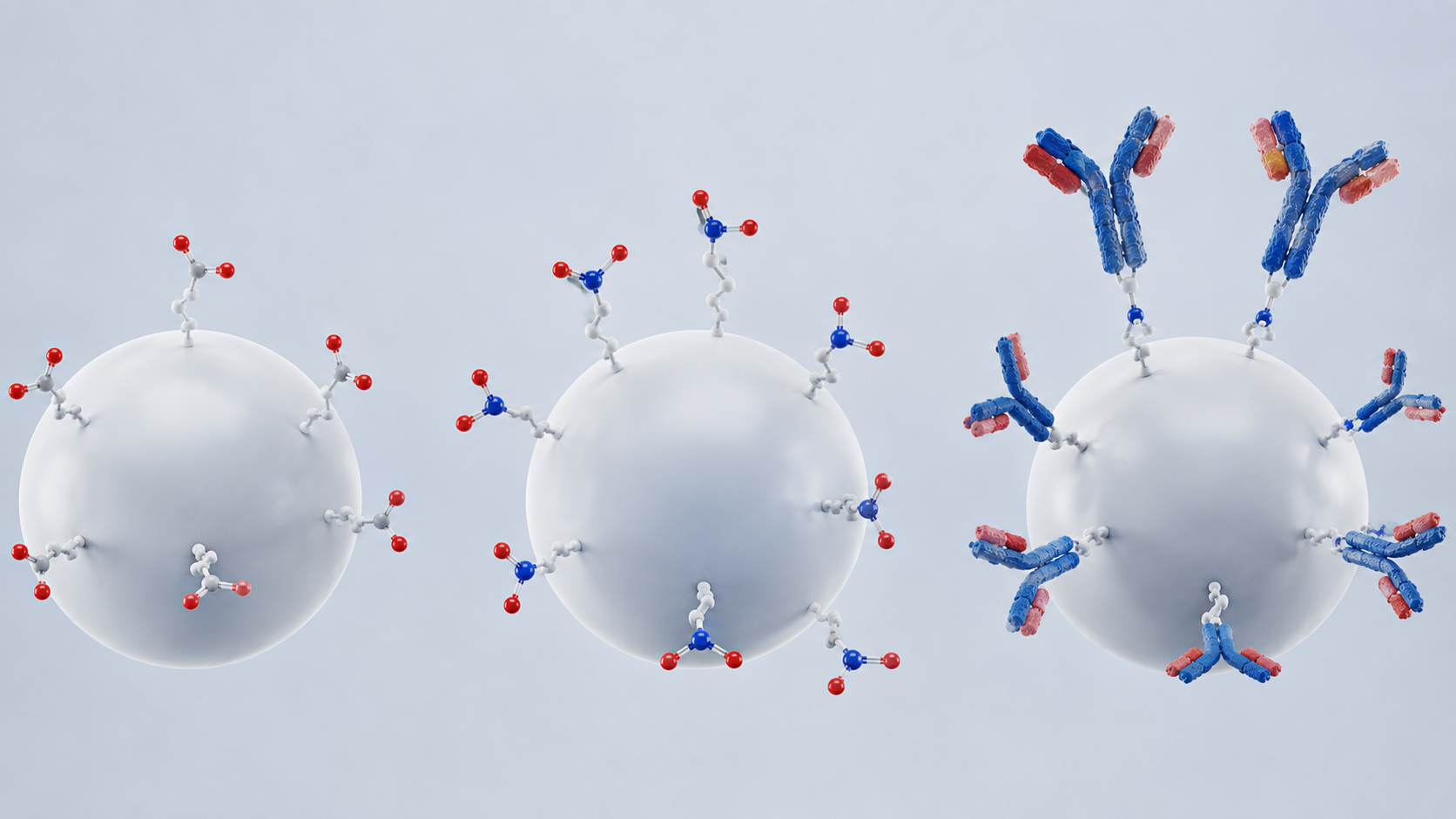
The particles typically consist of a polystyrene core carrying reactive carboxyl groups on the outer surface.
These carboxyl groups provide chemical sites that can be activated for covalent attachment of biomolecules including:
Antibodies;
Antigens;
Proteins;
Peptides;
Enzymes;
Amino-modified oligonucleotides.
Carboxyl-functionalized polystyrene microspheres are particularly useful when passive adsorption onto plain polystyrene does not provide sufficient conjugate stability or manufacturing reproducibility.
Major applications include:
Latex turbidimetric immunoassays (LTIA);
Latex agglutination tests (LAT);
Lateral flow assays (LFA);
Particle-enhanced immunoassays;
Nephelometric assays;
Biomolecule immobilization;
Biosensors;
Fluorescent immunoassays;
Diagnostic reagent development.
For Taiwan-based IVD companies, the main purchasing challenge is not simply finding a supplier that sells “carboxyl beads.”
Particle diameter, carboxyl density, colloidal stability, surfactant level, solids concentration and lot-to-lot reproducibility can all materially affect final assay performance.
This guide compares ten manufacturers serving Taiwan in 2026 and focuses specifically on suppliers with documented carboxyl-functionalized polystyrene or closely related diagnostic latex platforms.
SANYU GROUP ranks second and is the only Chinese manufacturer included.
Why Carboxyl Polystyrene Microspheres Are Important for IVD Applications
Plain polystyrene particles can bind proteins through passive hydrophobic adsorption.
This is simple and inexpensive, but protein orientation and desorption may be difficult to control.
Carboxyl polystyrene particles provide an alternative.
Their surface –COOH groups can be activated using carbodiimide chemistry and reacted with primary amino groups on proteins to form covalent bonds.
This allows developers to create more permanently immobilized antibody or antigen coatings.
Carboxylated particles are consequently widely used in diagnostic systems requiring controlled biomolecule coupling. Bangs Laboratories, for example, explicitly positions its carboxylated polystyrene particles for covalent immobilization of proteins, peptides and nucleic acids using EDAC-mediated coupling.

How We Selected the Top Carboxyl Polystyrene Microsphere Manufacturers
The manufacturers were evaluated using publicly available product information reviewed in 2026.
The main criteria included:
Confirmed carboxylated polystyrene particle technology;
Relevance to immunodiagnostic assays;
Availability of multiple particle diameters;
Control of carboxyl surface density;
Particle-size uniformity;
Lot-to-lot consistency;
Colloidal stability;
Compatibility with antibody and antigen coupling;
LTIA, LAT or LFA application experience;
Dyed or fluorescent carboxyl particle options;
Technical documentation;
Custom manufacturing;
Bulk and OEM supply;
Availability to customers serving Taiwan.
This ranking is an editorial procurement guide rather than a market-share ranking.
Final supplier approval should always be based on experimental performance in the buyer's actual assay.
Quick Comparison of the Top 10 Manufacturers
Rank | Manufacturer | Country | Main Strength | Best-Suited Applications |
|---|---|---|---|---|
1 | Merck Estapor | Europe | Dedicated IVD carboxyl latex platform | LTIA, LAT and diagnostic manufacturing |
2 | SANYU GROUP | China | Broad sizes, customization and OEM supply | LTIA, LFA, bioconjugation and IVD |
3 | MBL Materials / IMMUTEX | Japan | Precise diameter and COOH-density control | LTIA and latex agglutination |
4 | Bangs Laboratories | USA | Diagnostic particle and conjugation expertise | Immunoassays, LFA and custom development |
5 | PolyMicrospheres | USA | Tunable carboxyl density and low-surfactant options | LTIA, nephelometry and OEM diagnostics |
6 | Thermo Fisher Scientific | USA | Multiple surface charge densities | Protein coupling and assay development |
7 | Magsphere | USA | White and colored carboxyl latex | LFA, LAT and custom diagnostic particles |
8 | Spherotech | USA | Broad functionalized PS size range | Immunoassays, coated beads and research |
9 | Polysciences | USA | Dyed and functionalized carboxyl PS | LFA and research assay development |
10 | microParticles GmbH | Germany | Highly monodisperse functionalized PS | Precision immunoassays and analytical research |
1. Merck Estapor
Merck Estapor ranks first because it provides one of the most established dedicated polymer microsphere platforms for in vitro diagnostic manufacturers.
Estapor offers white carboxylated polystyrene microspheres specifically developed for latex turbidimetric immunoassays.
The company's Taiwan-facing product pages describe carboxylated microspheres designed for coating with antibodies or antigens through a standard two-step EDC/NHS conjugation procedure.
Estapor Carboxylated Microspheres
The platform includes different:
Particle diameters;
Polymer matrices;
Carboxyl contents;
Surface characteristics.
For example, Merck currently lists a 120 nm white carboxylated polystyrene grade at 10% solids for latex turbidimetric immunoassays.
This ability to combine particle diameter and surface carboxyl density is important because both parameters affect assay sensitivity.
Main Applications
Estapor carboxylated particles are particularly relevant to:
CRP assays;
D-dimer assays;
Rheumatoid factor;
Cardiac biomarkers;
Immunoturbidimetry;
Latex agglutination;
Other clinical chemistry reagents.
Why Merck Estapor Ranks First
Its major strengths include:
Long-established IVD positioning;
Multiple particle sizes;
Different carboxyl densities;
10% solids products;
Industrial manufacturing experience;
Conjugation documentation;
Commercial diagnostic support.
Best for Taiwan Buyers
Merck may be particularly attractive to established Taiwan diagnostic manufacturers that prioritize:
Long-term supply;
Strong documentation;
Lot consistency;
Existing diagnostic application history;
Commercial-scale manufacturing.
2. SANYU GROUP
SANYU GROUP is a specialist manufacturer of carboxyl polystyrene microspheres, functional microspheres and magnetic beads for IVD, POCT, bioseparation and research applications.
Its carboxyl polystyrene platform includes both nanoscale and submicron particles, giving assay developers flexibility to optimize sensitivity, light scattering and analytical range.
The company publicly lists carboxylated polystyrene microspheres from very small nanoparticle sizes upward and supports custom particle size, solids concentration and packaging.
20 nm Carboxyl Polystyrene Microspheres
SANYU's CP020-10 product has:
Nominal diameter: 20 nm;
Surface: carboxyl / COOH;
Solids content: 5%;
Material: polystyrene;
Format: aqueous dispersion.
The company positions the material for bioconjugation, diagnostic reagent development and immunoassay research.
110 nm Carboxyl Polystyrene Microspheres
CP110-10 is a 110 nm carboxyl polystyrene microsphere supplied as a 10% aqueous suspension.
Its surface carboxyl groups can be activated using EDC or EDC/NHS chemistry for covalent conjugation of antibodies, proteins, peptides and other suitable biomolecules.
250 nm Carboxyl Polystyrene Microspheres
CP250-10 has:
Nominal diameter: 250 nm;
Surface functionality: –COOH;
Solids content: 10%;
Dispersion medium: water.
SANYU identifies applications including immunoassay development, lateral flow, diagnostic reagents, antibody immobilization and biosensors.
Colored Carboxyl Microspheres
SANYU also offers colored carboxylated polystyrene particles for lateral flow.
Public products include blue and red carboxyl latex particles at diameters including approximately:
100 nm;
200 nm;
300 nm;
400 nm;
Larger micrometer sizes.
These products expand the platform beyond white LTIA particles into visual rapid-test applications.
Why SANYU Ranks Second
SANYU's main advantages include:
Wide particle-size selection;
Small nanoparticle grades;
5% and 10% solids options;
White carboxyl particles;
Colored carboxyl particles;
Fluorescent carboxyl microspheres;
Custom diameter;
Custom concentration;
Custom packaging;
OEM/ODM support;
Pilot and bulk quantities.
Best for Taiwan Buyers
SANYU may be especially suitable for:
New LTIA reagent development;
POCT development;
Lateral flow;
Antibody coupling studies;
Custom particle screening;
OEM/private-label projects;
Alternative supplier qualification.
For Taiwan manufacturers comparing several particle diameters before locking the final assay design, flexible sampling and customization can be particularly useful.
SANYU is the only Chinese manufacturer included in this ranking.
3. MBL Materials / IMMUTEX
IMMUTEX is a highly specialized Japanese polystyrene latex platform designed for immunodiagnostic applications.
MBL describes IMMUTEX as uniform-sized polystyrene latex particles for agglutination tests, with different particle sizes and surface chemistries available to control assay sensitivity and dynamic range.
IMMUTEX Carboxy Series
The Carboxy Series is specifically designed for covalent coupling of antibodies and antigens.
A major advantage is the unusually detailed specification of carboxyl density.
For example, IMMUTEX P0001 provides:
Particle diameter: approximately 0.05–0.09 µm;
COOH content: 0.15–0.22 mmol/g;
Parking Area: 60–90 Ų/COOH;
Solids: approximately 5–5.4%.
Another product, P0112, provides:
Diameter: approximately 0.12–0.18 µm;
COOH: 0.08–0.12 mmol/g;
Parking Area: 47–71 Ų/COOH;
Solids: approximately 5–5.4%.
Why IMMUTEX Ranks Third
IMMUTEX is particularly strong in:
Uniform particle diameter;
Clearly specified COOH content;
Published Parking Area;
LTIA and agglutination applications;
Japanese diagnostic raw-material experience.
Best for Taiwan Buyers
IMMUTEX may be especially attractive for:
Clinical chemistry manufacturers;
Particle-enhanced immunoturbidimetry;
High-volume latex reagents;
Developers that need systematic control of both particle size and COOH density.
4. Bangs Laboratories
Bangs Laboratories is a U.S. microsphere manufacturer specializing in diagnostic, biomedical and analytical particle technologies.
Its carboxylate-modified polystyrene latex microspheres are explicitly designed for covalent immobilization of:
Proteins;
Peptides;
Nucleic acids.
Bangs recommends carbodiimide-mediated coupling and also provides a protein coupling kit for developers new to covalent conjugation.
Broader Carboxyl Particle Platform
Bangs also supplies:
Fluorescent carboxyl PS;
Dyed carboxyl PS;
Protein-coated microspheres;
Other functionalized particles.
Its fluorescent carboxyl microspheres retain the external surface for covalent biomolecule attachment because the fluorophore is incorporated into the particle matrix.
Dyed Carboxyl Beads
Dyed carboxyl particles are available for applications requiring visible detection, including rapid diagnostic assay development.
Why Bangs Ranks Fourth
Bangs' strength is not just the particle catalog.
The company has a strong technical focus on:
Protein coupling;
Surface chemistry;
Diagnostic assay development;
Particle characterization;
Custom microspheres.
Best for Taiwan Buyers
Bangs may be particularly appropriate for:
Difficult conjugation projects;
Lateral flow;
Fluorescent assays;
Diagnostic R&D;
Custom surface modification.
5. PolyMicrospheres
PolyMicrospheres is a U.S. manufacturer with a particularly strong portfolio of carboxyl-functionalized microspheres for clinical diagnostics.
Its standard carboxyl particles are designed for covalent coupling of:
Antibodies;
Antigens;
Proteins;
Peptides;
Nucleic acids.
The manufacturer explicitly lists applications including light-scattering assays, turbidimetry, nephelometry, lateral flow and latex agglutination.
Wide Particle-Size Range
PolyMicrospheres publishes carboxyl particle sizes from approximately:
20 nm;
Up to 2 µm.
It also states that carboxyl-group levels can be tuned from approximately 50 to 300 µEq/g for different particle sizes.
Near-Soap-Free Carboxyl Microspheres
An especially interesting option is the Near-Soap-Free platform.
The manufacturer reports very low surfactant levels of approximately 0.01–0.05%.
Reduced surfactant can be valuable because residual surfactants may interfere with:
Protein adsorption;
Coupling;
Blocking;
Colloidal stability;
Downstream assay performance.
Hydrophilic Carboxyl Microspheres
PolyMicrospheres also provides hydrophilic carboxyl particles intended to reduce aggregation during and after ligand coupling.
Why PolyMicrospheres Ranks Fifth
Key strengths include:
Diagnostic specialization;
20 nm–2 µm range;
Tunable COOH density;
Near-soap-free technology;
Hydrophilic carboxyl particles;
Custom development.
Best for Taiwan Buyers
PolyMicrospheres is particularly interesting when:
Surfactant interference is a concern;
High COOH loading is required;
Coupling causes aggregation;
Turbidimetric sensitivity must be optimized.
6. Thermo Fisher Scientific
Thermo Fisher offers carboxyl-modified polystyrene latex particles through its Invitrogen particle technology portfolio.
Its High Activity Latex Beads are carboxyl charge-stabilized hydrophobic polystyrene microspheres with carboxyl groups on the particle surface.
Surface Charge Selection
One distinguishing characteristic is the availability of different surface-charge densities.
Thermo Fisher describes carboxyl latex products ranging from approximately:
70 Ų per charge group;
To 3,000 Ų per charge group.
This allows researchers to study how surface functionality influences:
Protein adsorption;
Covalent attachment;
Particle stability;
Assay response.
Technical Conjugation Guidance
Thermo Fisher's particle technical guide discusses protein adsorption and covalent coupling on carboxylate-modified polystyrene particles and emphasizes the effects of pH, ionic strength and buffer composition.
Why Thermo Fisher Ranks Sixth
Strengths include:
Extensive surface chemistry expertise;
Multiple surface charge levels;
Strong technical documentation;
Global distribution;
Broad research support.
Best for Taiwan Buyers
Thermo Fisher is particularly relevant to:
Assay-development laboratories;
Universities;
Biotechnology R&D;
Protein-coupling studies;
Projects comparing different surface densities.
Commercial IVD manufacturers should verify the intended-use status and commercial supply conditions of the selected catalog product.
7. Magsphere
Magsphere manufactures monodisperse polystyrene latex particles for medical and scientific applications.
The company's standard PS platform spans approximately 30 nm to 15 µm and includes both carboxylated and aminated surfaces.
Carboxylated White Latex
Magsphere supplies carboxylated PS particles for covalent biomolecule coupling.
The company also recommends carboxylated or aminated latex when covalent attachment is required in diagnostic applications.
Colored Carboxyl Latex
Magsphere is especially interesting for lateral flow.
Its colored carboxyl PS beads are produced by incorporating dyes into carboxylated white polystyrene particles.
The company states that approximately 300 nm and 400 nm particles are widely used in rapid lateral flow tests.
Custom Synthesis
Magsphere also supports:
Custom sizes;
Custom colors;
Custom surface functionality;
OEM;
Private labeling;
Bulk supply.
Why Magsphere Ranks Seventh
The combination of white carboxyl latex, colored carboxyl beads and custom synthesis makes Magsphere particularly useful for developers working across both agglutination and lateral flow platforms.
8. Spherotech
Spherotech manufactures polystyrene, functionalized, coated, fluorescent and magnetic microspheres.
Its functionalized polymer microspheres range from approximately 0.05 µm to 140 µm and include carboxyl surfaces for covalent protein or ligand coupling.
Carboxyl Density
For a representative 0.8 µm carboxyl-polystyrene particle, Spherotech reports approximately 50 µEq/g of carboxyl functionality.
Colored Carboxyl Particles
Spherotech also offers blue and red colored carboxyl-polystyrene particles, extending its usefulness to visible assay formats.
Why Spherotech Ranks Eighth
Spherotech is particularly attractive when a project needs more than one surface chemistry.
Its broader platform includes:
Carboxyl;
Amino;
Click-reactive surfaces;
Streptavidin;
Protein-coated beads.
Best for Taiwan Buyers
Potential applications include:
Immunoassays;
Multiplexing;
Latex agglutination;
Biomolecule immobilization;
Research assay development.
9. Polysciences
Polysciences maintains a large portfolio of polystyrene microspheres and specialty functionalized particles.
Its dyed carboxylate polystyrene microspheres are monodisperse polystyrene beads internally dyed in multiple colors and modified with surface –COOH groups for biomolecule coupling.
The company's current polystyrene microsphere catalog includes numerous dyed carboxylate products and other specialty carboxyl particle formats.
Main Advantages
Polysciences is especially useful for:
Research-scale ordering;
Multiple colors;
Multiple particle diameters;
Proof-of-concept development;
Lateral flow;
Academic research.
Why Polysciences Ranks Ninth
Its catalog accessibility is a major advantage during early-stage development.
For large commercial diagnostic programs, buyers should separately confirm:
Bulk manufacturing options;
Long-term supply;
Change control;
Quality agreements.
10. microParticles GmbH
microParticles GmbH is a German manufacturer specializing in highly monodisperse polymer and inorganic microspheres.
The company's functionalized polystyrene particles are available with:
Carboxyl;
Amino;
Streptavidin.
Additional custom modifications can include epoxy, maleimide, sulfonic acid and hydroxyl groups.
Diagnostic Applications
microParticles specifically identifies functionalized polystyrene particles for:
Latex agglutination;
ELISA;
Lateral flow;
Bioconjugation;
Protein binding;
Calibration.
Main Advantage
Its greatest strength is precision particle manufacturing.
microParticles emphasizes:
Monodispersity;
Precise size control;
Customized surface chemistry;
Functionalized particles for diagnostics and analytical applications.
Best for Taiwan Buyers
microParticles may be particularly suitable for:
High-precision assay development;
Analytical research;
Calibration;
Custom functionalization;
Research requiring very narrow particle distributions.
Which Manufacturer Is Best for Each IVD Application?
Different immunoassays require different particle properties.
The best supplier for a 100 nm immunoturbidimetric bead may not be the best supplier for a 400 nm colored lateral flow particle.
Best Carboxyl Microspheres for LTIA
Strong candidates include:
Merck Estapor;
SANYU GROUP;
MBL Materials / IMMUTEX;
PolyMicrospheres;
Magsphere.
Important parameters include:
Particle diameter;
COOH density;
Solids concentration;
Optical scattering;
Suspension stability;
Antibody loading.
LTIA developers should generally screen several particle diameters because increasing particle size can increase scattering intensity while also changing analytical range.
Best Carboxyl Microspheres for Latex Agglutination
Strong suppliers include:
MBL Materials / IMMUTEX;
Merck Estapor;
Bangs Laboratories;
PolyMicrospheres;
Spherotech.
The particles should provide:
Stable dispersion before reaction;
Efficient antibody loading;
Visible or measurable aggregation after analyte binding;
Low spontaneous agglutination.
Best Carboxyl Microspheres for Lateral Flow
Strong options include:
SANYU GROUP;
Bangs Laboratories;
Magsphere;
Polysciences;
Spherotech.
Colored carboxyl beads allow the reporter particle to provide both:
A visible color signal;
Covalent antibody coupling.
Magsphere specifically identifies 300 nm and 400 nm colored latex as commonly used rapid-test sizes.
Best for Precise COOH Density Control
MBL Materials / IMMUTEX and PolyMicrospheres are particularly noteworthy.
IMMUTEX publishes COOH content and Parking Area for individual products.
PolyMicrospheres states that carboxyl levels can be tuned from approximately 50 to 300 µEq/g.
Best for Custom Sizes and OEM Supply
SANYU is particularly competitive when a project requires:
Custom diameter;
Custom solids content;
Modified surface functionality;
Customized packaging;
Pilot supply;
Bulk manufacturing.
Magsphere, Bangs and PolyMicrospheres also provide significant customization capabilities.
Best for Low-Surfactant Carboxyl Latex
PolyMicrospheres is particularly interesting because of its Near-Soap-Free carboxyl product line with reported surfactant levels down to approximately 0.01–0.05%.
Low-surfactant particles may be valuable when residual surfactant contributes to:
Conjugation variability;
Protein interactions;
Background;
Colloidal instability.
How Particle Size Affects IVD Performance
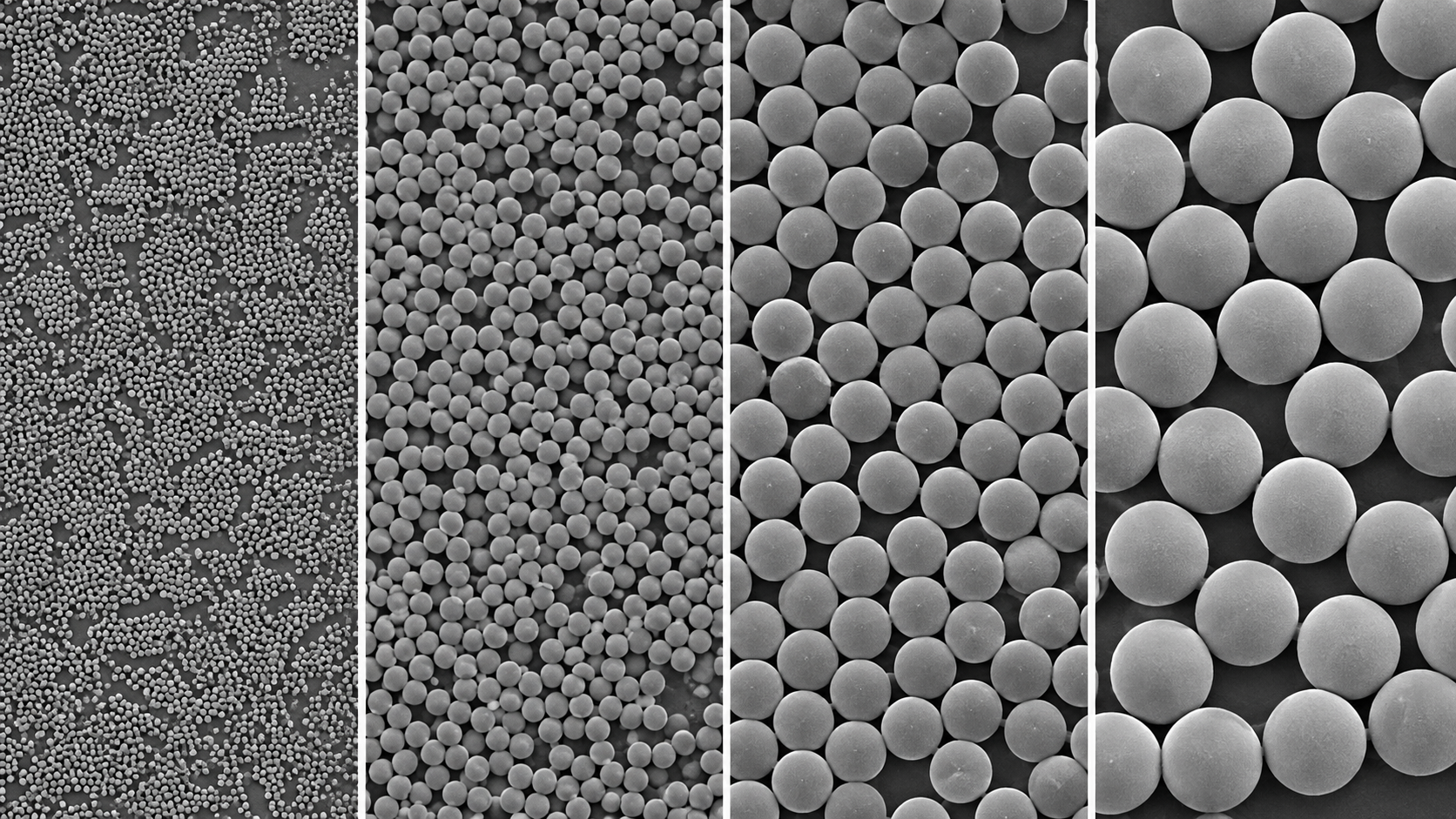
Particle diameter is one of the most important variables in particle-enhanced immunoassays.
Below 100 nm
Very small particles provide:
High particle count;
High total surface area;
Low individual scattering intensity.
They can be useful in specialized immunoassays and high-surface-area conjugation systems.
SANYU offers carboxyl particles down to approximately 20 nm.
Approximately 100–200 nm
This size region is widely relevant to immunoturbidimetric assays.
Merck and IMMUTEX both provide carboxylated products in this general region.
This range can provide a useful balance between:
Particle count;
Surface area;
Light scattering;
Colloidal stability.
Approximately 200–500 nm
This size region can be particularly useful for:
Lateral flow;
Latex agglutination;
Stronger optical response.
SANYU's 250 nm carboxyl product and Magsphere's 300–400 nm colored carboxyl beads illustrate commercially available products in this range.
Above 500 nm
Larger particles may be useful for:
Visual agglutination;
Particle-based instrument assays;
Specialized capture systems.
However, larger particles may sediment faster and can require more careful suspension control.
Why COOH Density Matters
Particle diameter alone does not determine conjugation performance.
Two 200 nm carboxylated polystyrene particles can behave differently if their surface-group densities differ.
Higher COOH density may provide more theoretical conjugation sites.
However, excessive ligand density may also contribute to:
Steric crowding;
Antibody orientation problems;
Particle aggregation;
Increased nonspecific background.
The optimum COOH density should therefore be determined experimentally.
What Is Parking Area?
Parking Area is one way of describing surface functional-group density.
It expresses the approximate surface area associated with each functional group.
A smaller Parking Area generally means carboxyl groups are positioned more densely on the particle surface.
IMMUTEX provides Parking Area values alongside particle size and COOH concentration for multiple carboxyl grades.
This can make systematic assay optimization easier than working with a supplier that reports only “high carboxyl” or “low carboxyl.”
How EDC/NHS Coupling Works with Carboxyl Microspheres
Carboxylated particles are commonly used with carbodiimide coupling chemistry.
A typical development workflow includes:
Wash or equilibrate the microspheres;
Activate surface carboxyl groups using EDC, often together with NHS or sulfo-NHS;
Add the antibody, antigen or other amino-containing ligand;
Allow covalent coupling;
Block remaining reactive or exposed particle surface;
Wash the conjugated beads;
Transfer the beads into the final storage buffer.
Merck's Estapor Taiwan product information specifically describes a two-step EDC/NHS conjugation protocol for antibody or antigen coating.
The optimum conditions depend on:
Particle diameter;
COOH density;
Ligand concentration;
Protein isoelectric point;
Activation pH;
Coupling pH;
Buffer composition.
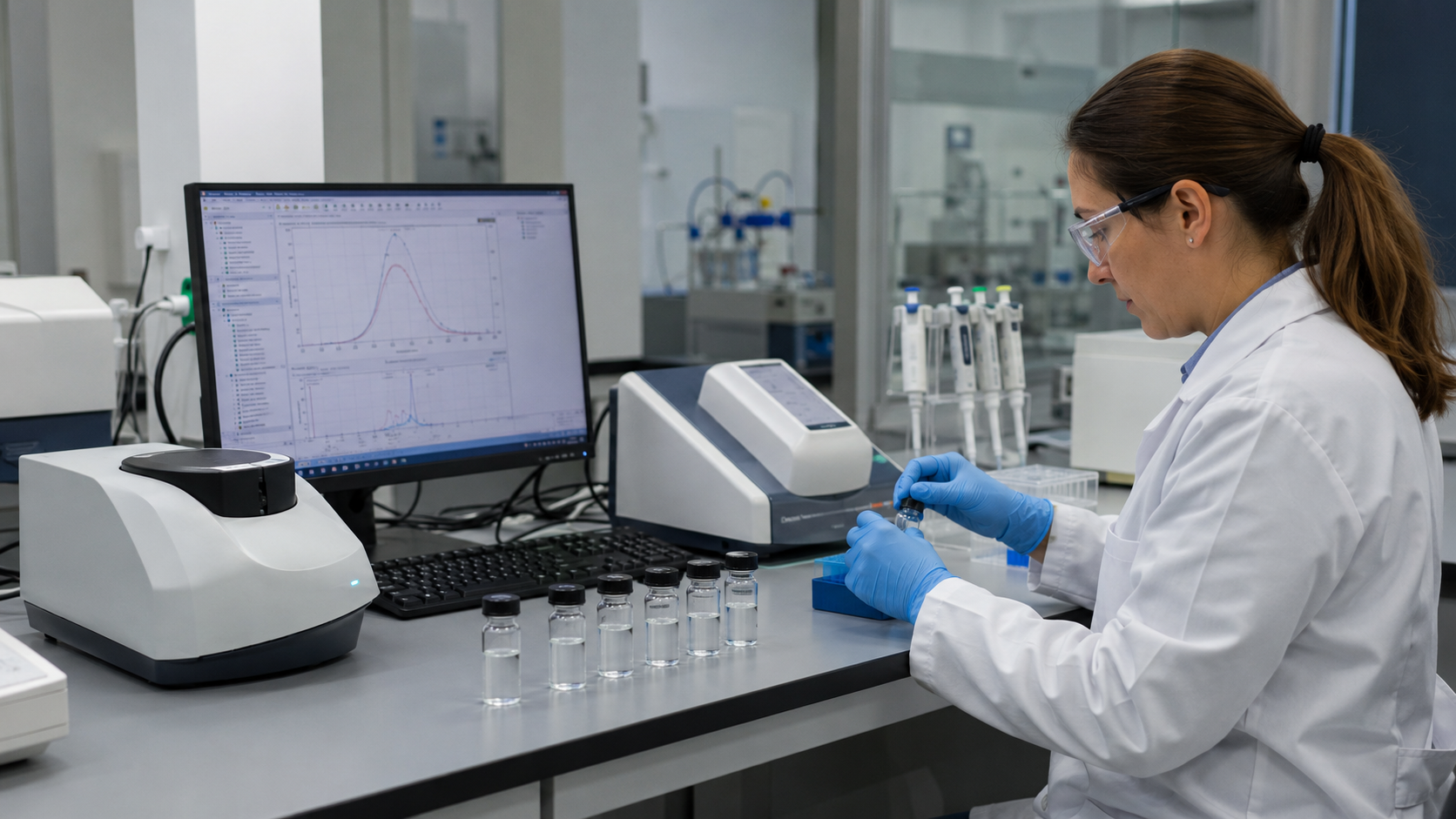
Critical Specifications Taiwan Buyers Should Compare
Particle Diameter
Request actual particle-size data rather than only a nominal catalog designation.
Useful parameters include:
Mean diameter;
D10;
D50;
D90;
CV.
Carboxyl Content
Ask how surface functionality is specified.
Possible units include:
µEq/g;
mmol/g;
µmol/g;
Parking Area.
Comparisons should be made carefully because suppliers may use different measurement methods.
Solids Content
Commercial products may be supplied at:
1%;
2.5%;
5%;
10%;
Other custom concentrations.
Cost comparisons should therefore be normalized to particle mass rather than bottle volume.
Surfactant Level
Surfactants help stabilize latex particles but can influence biological coupling.
Ask about:
Surfactant identity;
Surfactant concentration;
Whether washing is recommended before conjugation.
Preservative
Products may contain preservatives such as sodium azide.
Confirm compatibility with:
Enzymes;
Antibodies;
Final reagent formulation;
Regulatory requirements.
Suspension Stability
Evaluate:
Sedimentation;
Aggregation;
Redispersibility;
Freeze-thaw sensitivity;
Long-term storage.
Lot-to-Lot Consistency
Commercial IVD manufacturing requires consistent control of:
Diameter;
Distribution;
COOH density;
Solids concentration;
pH;
Surfactant;
Preservative.
Taiwan IVD Procurement Considerations
Taiwan has an established biotechnology and medical-device ecosystem, and its life-science industry includes diagnostic, medical-device and biotechnology product development.
For Taiwan IVD manufacturers, microsphere procurement usually needs to support several stages.
Early Development
Priorities often include:
Small samples;
Multiple particle diameters;
Technical consultation;
Fast screening.
Assay Optimization
Priorities shift toward:
COOH density;
Coupling performance;
Stability;
Signal-to-background ratio.
Pilot Manufacturing
Buyers need:
Larger lot sizes;
More consistent specifications;
CoA;
Manufacturing documentation.
Commercial Production
The major requirements become:
Long-term availability;
Lot consistency;
Bulk pricing;
Change notification;
Supplier quality control;
Second-source strategy.
Taiwan TFDA Considerations for Microsphere-Based IVD Products
Taiwan's regulatory framework treats in vitro diagnostic reagents and systems as medical devices when they meet the applicable medical-device definition and intended use.
TFDA defines an IVD as a reagent, instrument, software or system used to collect, prepare or test human specimens for diagnostic purposes.
TFDA also requires manufacturers to determine the applicable medical-device classification before registration. Medical devices may be divided into Class I and Class II/III according to risk, with the applicable registration pathway depending on classification.
A bottle of carboxyl polystyrene microspheres sold as a raw material or research reagent should therefore not automatically be treated as equivalent to a finished registered IVD product.
For a commercial diagnostic kit, the manufacturer should evaluate the raw microsphere as part of the complete product and establish appropriate controls for:
Supplier qualification;
Raw-material specifications;
Analytical performance;
Stability;
Manufacturing consistency;
Finished-device regulatory requirements.
The exact regulatory pathway depends on the finished product and its intended use.
Recommended Supplier Qualification Process
Stage 1: Define the Assay
Specify:
LTIA;
LAT;
LFA;
Nephelometry;
Other particle-based assay.
Stage 2: Screen Multiple Particle Sizes
For example, an LTIA developer may compare:
80 nm;
100 nm;
120 nm;
150 nm;
200 nm.
Particle diameter should be optimized rather than assumed.
Stage 3: Compare COOH Density
Where available, screen:
Low COOH;
Medium COOH;
High COOH.
Do not assume the highest density will provide the highest diagnostic sensitivity.
Stage 4: Optimize Coupling
Compare:
EDC concentration;
NHS concentration;
Activation pH;
Antibody loading;
Coupling time;
Blocking chemistry.
Stage 5: Evaluate Analytical Performance
Test:
Sensitivity;
Limit of detection;
Precision;
Linearity;
Recovery;
Interference;
Cross-reactivity;
Hook effect.
Stage 6: Compare Multiple Lots
Evaluate at least several production lots where practical before approving commercial supply.
Stage 7: Conduct Stability Testing
Evaluate:
Real-time storage;
Accelerated temperature;
Freeze-thaw exposure;
Shipping simulation.
Stage 8: Scale Up
Confirm that results remain consistent when moving from:
Milliliter samples;
Pilot quantities;
Production quantities.
Stage 9: Review Supplier Quality
Request:
TDS;
SDS;
CoA;
Particle-size data;
COOH specification;
Shelf-life information;
Quality certification;
Change-control policy.
Stage 10: Develop a Second Source
A second qualified supplier can reduce risks from:
Product discontinuation;
Capacity shortages;
Logistics delays;
Quality failures;
Pricing changes.
However, a new particle supplier may change assay performance and should be validated before substitution.
RFQ Checklist for Taiwan Carboxyl Polystyrene Microsphere Buyers
A detailed RFQ should include:
Application: LTIA, LFA, LAT, nephelometry or another immunoassay.
Target analyte: CRP, D-dimer, cardiac marker, hormone, infectious disease antigen or other analyte.
Particle material: Polystyrene.
Surface: Carboxyl / COOH.
Nominal diameter: Required size or screening range.
Size distribution: Required CV or D10/D50/D90.
COOH density: Required level or supplier recommendation.
Parking Area: Required where relevant.
Solids content: Required concentration.
Surfactant: Specify maximum level if important.
Preservative: Confirm acceptable type.
Conjugation chemistry: EDC or EDC/NHS.
Sample quantity: Initial evaluation volume.
Pilot quantity: Validation requirement.
Annual demand: Expected commercial volume.
Packaging: Standard, bulk or custom.
Required documents: TDS, SDS, CoA and particle-size report.
Regulatory stage: R&D, validation or commercial IVD.
Customization: Diameter, COOH density, solids concentration or packaging.
Destination: Taiwan.
Frequently Asked Questions About Carboxyl Polystyrene Microspheres
What Are Carboxyl Polystyrene Microspheres?
They are polystyrene nano- or microparticles carrying carboxyl functional groups on their surfaces.
The COOH groups can be used for covalent biomolecule immobilization.
Are Carboxyl Polystyrene Microspheres the Same as Latex Beads?
They are a type of polymer latex bead.
Terms commonly used include:
Carboxyl latex;
Carboxylated polystyrene latex;
COOH polystyrene beads;
Carboxyl PS microspheres.
Why Are Carboxyl Groups Added to Polystyrene Microspheres?
They provide reactive sites for covalent immobilization of antibodies, antigens, proteins and other suitable biomolecules.
What Is the Difference Between Plain and Carboxyl Polystyrene?
Plain PS commonly relies primarily on passive protein adsorption.
Carboxyl PS allows covalent conjugation after chemical activation.
Which Manufacturer Is Best for LTIA?
Merck Estapor and IMMUTEX are especially established for immunoturbidimetric and agglutination applications.
SANYU and PolyMicrospheres provide useful alternatives where custom sizes or surface properties are required.
Which Manufacturer Is Best for Custom Carboxyl Microspheres?
SANYU is particularly competitive for custom diameter, solids content, packaging and OEM supply.
Bangs, PolyMicrospheres and Magsphere also offer extensive custom capabilities.
Which Manufacturer Provides the Best COOH-Density Data?
IMMUTEX provides particularly detailed specifications, including COOH content and Parking Area.
PolyMicrospheres also provides tunable carboxyl levels across a broad published range.
Which Manufacturer Offers Very Small Carboxyl Particles?
SANYU publishes a 20 nm carboxyl polystyrene product.
PolyMicrospheres also reports carboxyl microsphere sizes beginning around 20 nm.
What Particle Size Is Best for Immunoturbidimetry?
There is no universal optimum.
Smaller particles provide higher particle counts and surface area, while larger particles generally produce stronger light scattering.
Several diameters should be screened experimentally.
What Size Is Best for Lateral Flow?
Colored particles around a few hundred nanometers are commonly evaluated.
Magsphere specifically identifies approximately 300 nm and 400 nm colored particles as widely used in rapid tests.
Is Higher Carboxyl Density Always Better?
No.
More COOH groups may increase theoretical protein-loading capacity, but excessive ligand coverage can cause steric crowding, aggregation or increased background.
What Is Parking Area?
Parking Area describes the average surface area associated with each surface functional group.
It can be used as an alternative way to compare surface carboxyl density.
What Solids Concentration Should I Buy?
It depends on manufacturing volume and the conjugation protocol.
Higher-solids products can reduce freight and storage requirements, but accurate dilution and mixing are essential.
Can Carboxyl Microspheres Be Used for Lateral Flow?
Yes.
Colored or fluorescent carboxyl polystyrene particles are particularly useful when covalent antibody attachment is required.
Can They Be Used for Latex Agglutination?
Yes.
Carboxylated PS is widely used in latex agglutination and particle-enhanced immunoassays.
What Documents Should a Taiwan IVD Manufacturer Request?
Important documents include:
TDS;
SDS;
CoA;
Particle-size specification;
COOH-density information;
Storage conditions;
Shelf-life data;
Quality certificates;
Change-control information.
Final Recommendations
The carboxyl polystyrene microsphere market serving Taiwan includes established European IVD particle manufacturers, Japanese diagnostic latex specialists, U.S. microsphere companies and specialized Asian custom manufacturers.
Merck Estapor ranks first because it provides one of the most established dedicated IVD carboxylated latex platforms, including products specifically positioned for latex turbidimetric immunoassays and antibody or antigen conjugation.
SANYU GROUP ranks second and is the only Chinese manufacturer included. Its major strengths are its broad particle-size platform, very small carboxyl nanoparticles, 5% and 10% solids options, white, colored and fluorescent carboxyl particles, flexible customization and OEM manufacturing.
MBL Materials / IMMUTEX ranks third because its Carboxy Series provides unusually detailed control of particle diameter, COOH content and Parking Area.
Bangs Laboratories ranks fourth for its strong combination of diagnostic microsphere manufacturing, biomolecule-coupling expertise and dyed or fluorescent carboxyl particles.
PolyMicrospheres ranks fifth because of its broad 20 nm–2 µm carboxyl platform, tunable surface-group levels, Near-Soap-Free particles and hydrophilic options.
Thermo Fisher Scientific ranks sixth because it provides multiple carboxyl surface-charge densities and extensive technical information on protein adsorption and covalent coupling.
Magsphere ranks seventh for its white, colored and custom carboxylated latex products, particularly for lateral flow.
Spherotech ranks eighth because of its broad functionalized polystyrene size range and multiple surface chemistries.
Polysciences ranks ninth as an accessible supplier of dyed and specialty carboxylate polystyrene microspheres for research and rapid assay development.
microParticles GmbH ranks tenth because of its highly monodisperse functionalized polystyrene particles and strong precision-particle capabilities.
For Taiwan IVD manufacturers, the best supplier should not be selected by nominal particle diameter alone.
The most important comparison criteria are:
Mean particle diameter;
Particle-size distribution;
COOH density;
Parking Area;
Solids concentration;
Surfactant level;
Suspension stability;
Antibody-coupling efficiency;
Nonspecific binding;
Lot-to-lot reproducibility;
Documentation;
Manufacturing scale;
Customization;
Long-term commercial supply.
The best carboxyl polystyrene microsphere manufacturer is ultimately the supplier whose particles consistently deliver the required analytical performance after conjugation and throughout the full commercial life cycle of the finished IVD reagent.
Related Blogs
-
 The carboxylated styrene butadiene latex manufacturing process has become a cornerstone of modern polymer production, driving innovation and efficiency across multiple industries. This sophisticated process enhances the properties of traditional styrene butadiene latex by incorporating carboxyl func
 -
 The gradient of a magnetic field particle is a fundamental concept that underpins many physical phenomena and technological applications. As magnetic fields exert forces on charged particles, understanding how these gradients influence motion is crucial for advancements in various fields such as phy
 -
 Quick Answer: Leading IVD Magnetic Bead Manufacturers Serving ThailandThe leading IVD magnetic bead manufacturers serving Thailand in 2026 include Thermo Fisher Scientific, SANYU, Merck Estapor, Cytiva, JSR Life Sciences, Bangs Laboratories, Revvity, micromod Partikeltechnologie, Magtivio and QIAGEN


