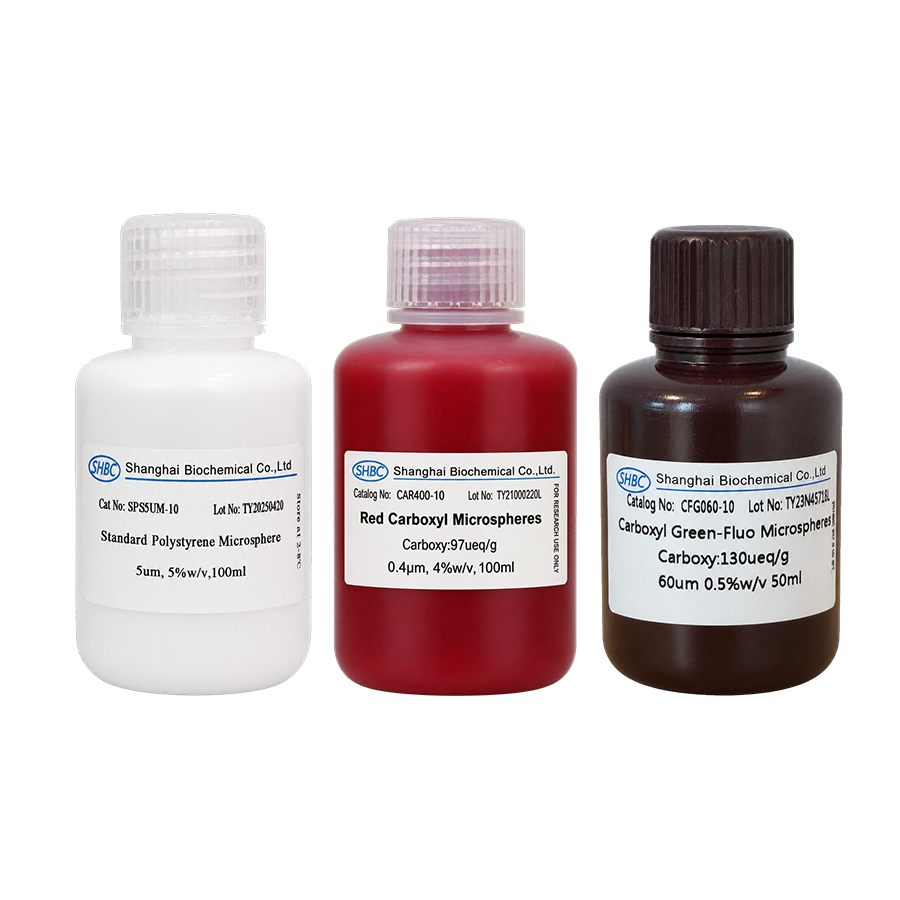
Overview of the IVD Microsphere Market in Saudi Arabia
Microspheres are precision-engineered polymer, silica or magnetic particles used as solid supports, visual labels, fluorescent reporters, magnetic carriers and calibration materials in in-vitro diagnostic assays.
They are commonly used in:
Lateral flow immunoassays;
Latex agglutination tests;
Particle-enhanced immunoturbidimetric assays;
Chemiluminescent immunoassays;
Fluorescent immunoassays;
Molecular diagnostic sample preparation;
DNA and RNA extraction;
Protein and antibody purification;
Flow cytometry;
Multiplex bead assays;
Instrument calibration;
Antibody and antigen immobilization.
Demand for advanced diagnostic materials in Saudi Arabia is supported by continuing investment in healthcare, genomics, biotechnology and local manufacturing. The Saudi National Biotechnology Strategy identifies biomanufacturing and localization as important priorities for improving national self-sufficiency and strengthening domestic biotechnology capabilities.
For Saudi IVD companies, laboratories, universities and diagnostic start-ups, selecting a microsphere supplier involves more than finding a suitable catalog particle.
Buyers must also evaluate:
Particle-size consistency;
Surface functional-group density;
Signal intensity and stability;
Nonspecific binding;
Lot-to-lot reproducibility;
Quality documentation;
Commercial production capacity;
International lead time;
Temperature-controlled transportation;
Technical support;
Long-term supply continuity.
This guide compares ten notable microsphere manufacturers that Saudi Arabian buyers can consider in 2026.
The manufacturers are:
Merck Estapor;
Thermo Fisher Scientific;
JSR Life Sciences;
Bangs Laboratories;
SANYU;
Polysciences;
Cytiva;
Spherotech;
microParticles GmbH;
micromod Partikeltechnologie.
Most companies on this list are international manufacturers rather than Saudi-based producers. The title therefore refers to manufacturers serving or potentially supplying the Saudi Arabian market.
Buyers should confirm current Saudi availability, distributor authorization, shipping arrangements, country of origin and regulatory responsibilities directly with each supplier.
This ranking is an editorial comparison based on publicly available product information reviewed in 2026. It is not based on audited revenue, Saudi market share or independent laboratory testing.
How We Selected the Top IVD Microsphere Manufacturers
The manufacturers were evaluated according to criteria relevant to IVD developers, reagent manufacturers, POCT companies, research institutes and diagnostic laboratories in Saudi Arabia.
Relevance to IVD Applications
Priority was given to manufacturers that publicly support one or more of the following applications:
Clinical diagnostics;
Lateral flow testing;
Latex agglutination;
Immunoturbidimetry;
Chemiluminescence;
Fluorescent immunoassays;
Magnetic bioseparation;
Molecular diagnostics;
Flow cytometry;
Instrument calibration.
Breadth of Microsphere Technology
The comparison considered whether each manufacturer supplies:
Plain polystyrene microspheres;
Carboxyl polystyrene microspheres;
Amino-functionalized particles;
Colored latex microspheres;
Fluorescent microspheres;
Europium or time-resolved fluorescent particles;
Magnetic polymer beads;
Silica magnetic beads;
Streptavidin-coated beads;
Protein-coated particles;
Particle-size standards.
Customization Capability
Manufacturers received additional consideration when they publicly offered customization involving:
Mean particle diameter;
Particle-size distribution;
Surface chemistry;
Functional-group density;
Visible color;
Fluorescence wavelength;
Magnetic content;
Solids concentration;
Buffer composition;
Packaging format.
Quality and Commercial Supply
Important commercial factors included:
Quality-management systems;
Certificate of Analysis availability;
Batch traceability;
Change-control procedures;
Lot consistency;
Pilot-batch availability;
OEM manufacturing;
Scale-up capability;
Long-term commercial supply.
Suitability for Saudi Arabian Buyers
Saudi-specific purchasing considerations included:
International export capability;
Technical communication in English;
Sample availability;
Direct and distributor purchasing options;
Shipping stability;
support for commercial-scale diagnostic manufacturing;
Compatibility with local supplier-qualification procedures.
Quick Comparison of the Top 10 Manufacturers
Rank | Manufacturer | Main Microsphere Technologies | Main Strength | Best Suited For |
|---|---|---|---|---|
1 | Merck Estapor | White, colored, fluorescent and magnetic microspheres | Broad, established IVD portfolio | Lateral flow, agglutination, CLIA and large diagnostic programs |
2 | Thermo Fisher Scientific | Dynabeads, polymer particles and custom magnetic beads | Magnetic-bead and OEM expertise | Molecular diagnostics, immunoassays and automated systems |
3 | JSR Life Sciences | Polystyrene latex and magnetic microparticles | Diagnostic-focused particle design | Agglutination, immunoturbidimetry and CLIA |
4 | Bangs Laboratories | Polymer, silica, fluorescent and magnetic microspheres | Custom and OEM particle engineering | Lateral flow, TRF, turbidimetry and calibration |
5 | Carboxyl, colored, fluorescent and magnetic microspheres | Flexible customization and broad portfolio | POCT, lateral flow, immunoturbidimetry and molecular diagnostics | |
6 | Polysciences | Plain, functionalized, dyed, europium and magnetic particles | Large specialty particle catalog | Agglutination, membrane assays and fluorescent testing |
7 | Cytiva | Sera-Mag magnetic beads | High-binding magnetic bead technology | Molecular diagnostics and immunodiagnostic separation |
8 | Spherotech | Fluorescent, magnetic and coated microspheres | Flow cytometry and specialty bead range | Flow cytometry, cell separation and assay research |
9 | microParticles GmbH | PS, PMMA, silica, dyed and fluorescent particles | Highly monodisperse custom particles | Diagnostics, calibration and specialty fluorescence |
10 | micromod Partikeltechnologie | Magnetic and nonmagnetic nano- and microparticles | Customized biomedical particle engineering | Specialized IVD and magnetic bioseparation projects |
1. Merck Estapor
Merck’s Estapor brand is one of the most established international suppliers of polymeric microspheres for in-vitro diagnostic manufacturing.
The Estapor portfolio includes more than 100 types of magnetic, white, dyed and fluorescent microspheres. Merck organizes its products around applications including lateral flow, chemiluminescent immunoassays, latex turbidimetric immunoassays and latex agglutination tests.
Main Microsphere Products
Merck Estapor offers:
Plain polymer microspheres;
Carboxylated microspheres;
Colored microspheres;
Fluorescent microspheres;
Europium fluorescent microspheres;
Magnetic microspheres;
Aminated magnetic particles;
Streptavidin-coated particles;
Customized microspheres.
Internally colored particles are particularly relevant to lateral flow assays because the visible label can be incorporated within the polymer particle while leaving the external surface available for biomolecule conjugation.
Merck also supplies europium fluorescent carboxylated particles for quantitative lateral flow applications. The company positions these particles as high-sensitivity labels with reduced background fluorescence and long fluorescence lifetimes.
Key Strengths
Established IVD microsphere brand;
Broad selection of particle types;
Colored, fluorescent and magnetic technologies;
Products designed for multiple diagnostic formats;
Custom microsphere development;
International commercial infrastructure;
Extensive application documentation.
Best Suited For
Merck Estapor is particularly suitable for established Saudi diagnostic manufacturers requiring:
A recognized international supplier;
Multiple signal technologies;
Commercial-scale supply;
Lateral flow materials;
Magnetic CLIA particles;
Long-term diagnostic programs.
Considerations for Saudi Buyers
Saudi buyers should confirm:
Whether the selected product is stocked regionally;
Minimum order quantity;
Sample availability;
Manufacturing lead time;
Storage and transport requirements;
Change-notification procedures;
Whether the exact product is supported for further IVD manufacturing.
2. Thermo Fisher Scientific
Thermo Fisher Scientific is especially strong in paramagnetic bead technology through its Dynabeads product platform.
The company states that its Dynabeads OEM business has more than 35 years of experience designing, developing and manufacturing magnetic particles for biotechnology, pharmaceutical, diagnostic and healthcare companies. It supports standard products, customized bead development and commercial OEM supply.
Main Particle Technologies
Thermo Fisher offers technologies relevant to:
Magnetic immunoassays;
Nucleic acid extraction;
Target capture;
Protein purification;
Cell isolation;
Automated sample preparation;
Molecular diagnostics;
OEM diagnostic manufacturing.
Available particle formats include:
Carboxyl-functionalized magnetic beads;
Epoxy-activated beads;
Tosyl-activated beads;
Streptavidin-coated beads;
Oligo(dT)-coated beads;
Protein A and Protein G beads;
Custom magnetic particles.
Dynabeads are described as uniform, nonporous, superparamagnetic polymer particles with magnetic material distributed throughout the bead structure.
Key Strengths
Strong magnetic-bead expertise;
International OEM supply;
Custom product development;
Support for commercialization;
Established quality infrastructure;
Compatibility with automated workflows;
Broad scientific and diagnostic product ecosystem.
Best Suited For
Thermo Fisher is a strong candidate for Saudi companies developing:
Molecular diagnostic kits;
Automated nucleic acid extraction systems;
Magnetic immunoassays;
Target-enrichment workflows;
High-value diagnostic instruments;
Commercial OEM diagnostic products.
Considerations for Saudi Buyers
Not every Dynabeads product has the same intended use or commercial supply status.
Saudi buyers should verify:
Whether the product is research-grade, OEM-grade or supported for IVD manufacturing;
Commercial pack sizes;
OEM supply conditions;
Quality agreements;
Custom development costs;
Regional inventory;
Local technical support.
3. JSR Life Sciences
JSR Life Sciences supplies particle technologies designed specifically for research, clinical diagnostics and automated immunoassays.
Its IMMUTEX product family includes uniform polystyrene latex particles. Available options include plain particles with no or very low surface carboxyl groups and functionalized particle series for diagnostic assay development.
JSR also supplies MAGNOSPHERE magnetic microparticles for life-science and diagnostic applications.
Main Particle Technologies
Relevant JSR products include:
Plain polystyrene latex particles;
Carboxylated latex microspheres;
Low-carboxyl particles;
Magnetic microparticles;
Hydrophilic magnetic particles;
Hydrophobic magnetic particles;
Tosyl-functionalized magnetic beads;
Particles for clinical agglutination;
Particles for automated immunoassays.
Key Strengths
Strong focus on clinical diagnostics;
Uniform latex particle manufacturing;
Surface chemistries for antibody and antigen immobilization;
Particle technologies for adjusting assay sensitivity;
Magnetic particles for automated platforms;
Experience in research, CDx and IVD applications.
Best Suited For
JSR is particularly suitable for Saudi manufacturers developing:
Latex agglutination reagents;
Immunoturbidimetric assays;
Clinical chemistry reagents;
Chemiluminescent immunoassays;
Automated diagnostic platforms.
Considerations for Saudi Buyers
Buyers should compare:
Available particle sizes;
Surface carboxyl density;
Passive adsorption performance;
Covalent coupling performance;
Buffer compatibility;
Commercial pack sizes;
Availability through regional channels.
Companies requiring custom visible colors or extensive fluorescent wavelength options may need to evaluate additional manufacturers.
4. Bangs Laboratories
Bangs Laboratories is a US manufacturer specializing in polymer, silica and magnetic microspheres for diagnostics, instrument manufacturing, life sciences and flow cytometry.
The company has more than 35 years of experience in microsphere synthesis and particle analysis. Its quality-management system is certified to ISO 13485:2016 for the manufacture, processing and distribution of microspheres and related products.
Main Microsphere Products
Bangs Laboratories offers:
Plain polymer microspheres;
Functionalized polymer particles;
Dyed microspheres;
Fluorescent microspheres;
Europium-containing particles;
Time-resolved fluorescent particles;
Magnetic microspheres;
Silica microspheres;
Protein-coated particles;
Flow cytometry beads;
Instrument calibration standards.
Custom and OEM Capability
Bangs Laboratories provides custom and OEM support for diagnostic companies and instrument manufacturers.
Potentially customizable parameters include:
Particle material;
Mean particle diameter;
Size distribution;
Surface functional groups;
Visible dye;
Fluorescent label;
Magnetic properties;
Protein coating;
Suspension buffer;
Solids concentration;
Packaging.
The company states that it can synthesize magnetic microspheres at scales supporting projects from research through manufacturing under its ISO 13485 quality system.
Key Strengths
Diagnostic-focused microsphere manufacturing;
Polymer, magnetic and silica platforms;
Strong custom-development capability;
Time-resolved fluorescence expertise;
Calibration-particle experience;
ISO 13485-certified quality system;
R&D-to-manufacturing scale support.
Best Suited For
Bangs Laboratories is a strong option for Saudi companies needing:
A custom particle rather than a standard catalog product;
Time-resolved fluorescent labels;
Instrument calibration beads;
Specialized magnetic microspheres;
Assay-development support;
An ISO 13485-controlled supplier.
Considerations for Saudi Buyers
Custom particle development may involve:
Development charges;
Technical feasibility studies;
Minimum annual commitments;
Longer lead times;
Pilot-batch qualification;
Product-specific quality agreements.
These commercial conditions should be clarified before the assay formulation is locked.
5. SANYU
SANYU is a specialized Chinese manufacturer of functional microspheres and magnetic beads for IVD, POCT, bioseparation and diagnostic assay development.
The company’s product platform includes colored microspheres, fluorescent microspheres, time-resolved fluorescent microspheres, polystyrene microspheres, magnetic beads and silica particles. It also promotes particle-size, surface-chemistry, color, fluorescence and magnetic-core customization.
SANYU is the only China-based manufacturer included in this ranking.
Main IVD Microsphere Products
SANYU supplies:
Plain polystyrene microspheres;
Carboxyl polystyrene microspheres;
High-carboxyl-content microspheres;
Colored carboxyl microspheres;
Fluorescent polymer microspheres;
Carboxyl fluorescent microspheres;
Time-resolved fluorescent microspheres;
Flow cytometry microspheres;
Carboxyl magnetic beads;
Silica magnetic beads;
Streptavidin magnetic beads;
Magnetic silica microspheres.
IVD Application Areas
SANYU particles can be evaluated for:
Latex agglutination;
Immunoturbidimetric assays;
Lateral flow immunoassays;
Fluorescent POCT;
Antibody and antigen coupling;
Chemiluminescent immunoassays;
Molecular diagnostic sample preparation;
DNA and RNA extraction;
Protein purification;
Flow cytometry.
The company’s silica magnetic bead range includes products designed for magnetic separation and nucleic acid purification, with customization available for particle size, concentration and surface requirements.
Customization Capability
SANYU can support customized requirements involving:
Particle diameter;
Particle-size distribution;
Carboxyl-group density;
Visible color;
Fluorescence wavelength;
Magnetic response;
Surface chemistry;
Solids concentration;
Suspension buffer;
Packaging quantity;
OEM labeling.
Key Strengths
Broad range of functional microspheres;
Multiple carboxyl particle sizes;
Colored and fluorescent particle technologies;
Magnetic polymer and silica beads;
Flexible product customization;
OEM and ODM support;
Sample-to-commercial scale options;
Potentially competitive sourcing for Saudi projects.
Best Suited For
SANYU is well suited to Saudi Arabian:
IVD reagent developers;
POCT manufacturers;
University laboratories;
Biotechnology start-ups;
Lateral flow developers;
Molecular diagnostic companies;
OEM diagnostic projects.
It may be especially useful when a project requires:
A nonstandard particle diameter;
Different carboxyl densities;
Custom visible colors;
Specific fluorescence characteristics;
Flexible sample quantities;
Customized magnetic beads;
OEM packaging.
Considerations for Saudi Buyers
Before supplier approval, buyers should request:
Particle-size test data;
Size-distribution results;
Surface functional-group data;
Solids concentration;
Buffer composition;
Magnetic-content data where applicable;
Fluorescence specifications;
Certificate of Analysis;
Safety Data Sheet;
Batch traceability;
Stability information;
Change-control arrangements;
Manufacturing lead time;
Shipping and temperature requirements.
Saudi buyers should also clarify responsibility for international freight, customs documentation, import clearance and local inventory.
6. Polysciences
Polysciences is a US specialty particle and chemical manufacturer offering a broad portfolio of microspheres for diagnostics, life sciences, calibration and research.
Its product range includes plain, carboxylated, dyed, fluorescent, europium-containing and magnetic particles.
Polysciences positions its dyed microspheres for latex agglutination and membrane-based immunoassay applications.
Main Microsphere Products
Polysciences offers:
Plain polystyrene microspheres;
Carboxylate microspheres;
Carboxyl-sulfate particles;
Amino-functionalized particles;
Colored carboxylated microspheres;
Fluorescent microspheres;
Multifluorescent particles;
Europium chelate microspheres;
Magnetic particles;
Streptavidin-coated beads;
Particle-size standards.
Its europium chelate microspheres are available as monodisperse carboxylated particles for immunochromatographic, microwell and other diagnostic assay-development formats.
Key Strengths
Extensive specialty particle catalog;
Multiple sizes and surface chemistries;
Strong dyed microsphere range;
Stable internally fluorescent particles;
Europium labels for sensitive detection;
Magnetic particle options;
Diagnostic and research products.
Best Suited For
Polysciences is suitable for Saudi developers working on:
Latex agglutination;
Immunoturbidimetry;
Lateral flow assays;
Fluorescent immunoassays;
Europium-based POCT;
Instrument calibration;
General assay research.
Considerations for Saudi Buyers
The Polysciences portfolio includes products intended for different research and manufacturing purposes.
Buyers should verify:
Intended-use statement;
Product quality classification;
Commercial supply status;
Available documentation;
Long-term manufacturing continuity;
International shipping conditions.
7. Cytiva
Cytiva is best known in the microsphere segment for its Sera-Mag magnetic bead technology.
Sera-Mag beads are used in molecular and immunodiagnostic assays. Their irregular, cauliflower-like surface is designed to provide a relatively large binding area and high binding capacity.
Main Sera-Mag Chemistries
Available Sera-Mag bead chemistries include:
Carboxyl;
Streptavidin;
Blocked streptavidin;
Oligo(dT);
NeutrAvidin;
Amine-blocked;
Protein A;
Protein G.
Application Areas
Sera-Mag beads may be evaluated for:
DNA and RNA purification;
Nucleic acid clean-up;
NGS size selection;
mRNA isolation;
Target enrichment;
Immunoprecipitation;
Protein isolation;
Molecular diagnostic assays;
Immunodiagnostic separation;
Automated magnetic workflows.
Cytiva offers carboxyl-modified Sera-Mag particles in multiple pack sizes and provides high-speed bead variations for applications requiring faster magnetic separation.
Key Strengths
Established magnetic-bead platform;
Multiple surface chemistries;
High binding surface area;
Molecular-diagnostic relevance;
Large-volume commercial packs;
Compatibility with automation;
International diagnostic support.
Best Suited For
Cytiva is particularly suitable for Saudi:
Molecular diagnostic manufacturers;
Nucleic acid extraction kit developers;
NGS workflow developers;
Automated sample-preparation companies;
Magnetic immunoassay developers.
Considerations for Saudi Buyers
Cytiva is more specialized in magnetic particles than in colored latex microspheres.
Companies developing visual lateral flow tests, colored agglutination reagents or nonmagnetic latex assays may need an additional supplier.
8. Spherotech
Spherotech manufactures microspheres, nanospheres and coated particles for flow cytometry, fluorescence analysis, cell separation, molecular biology and diagnostic research.
Its portfolio includes polystyrene, silica, fluorescent, magnetic and protein-coated microspheres.
Main Particle Technologies
Spherotech offers:
Plain polystyrene microspheres;
Carboxylated microspheres;
Amino-functionalized particles;
Fluorescent microspheres;
Colored microspheres;
Magnetic particles;
Superparamagnetic particles;
Silica microspheres;
Streptavidin-coated beads;
Antibody-coated particles;
Flow cytometry standards.
Key Strengths
Strong flow cytometry portfolio;
Fluorescent calibration particles;
Magnetic cell-separation products;
Functionalized and protein-coated beads;
Broad specialty particle catalog;
More than 30 years of microsphere manufacturing experience;
Custom particle capabilities.
Best Suited For
Spherotech is a strong option for Saudi organizations involved in:
Flow cytometry;
Instrument quality control;
Cell separation;
Fluorescence assays;
Molecular biology;
Specialty diagnostic research;
University and clinical research laboratories.
Considerations for Saudi Buyers
Not every product is specifically positioned for commercial IVD manufacturing.
Saudi buyers should verify:
Product intended use;
Further-manufacturing conditions;
Quality documentation;
Batch continuity;
Commercial pack availability;
International transportation requirements.
9. microParticles GmbH
microParticles GmbH is a German manufacturer of monodisperse nano- and microparticles for diagnostics, pharmaceuticals, biotechnology, calibration and research.
The company supplies particle platforms based on polystyrene, PMMA, silica and melamine-formaldehyde materials. Its product range includes functionalized, dyed, fluorescent and paramagnetic particles.
Main Microsphere Products
microParticles offers:
Monodisperse polystyrene particles;
PMMA microspheres;
Silica microspheres;
Melamine-formaldehyde particles;
Dyed microspheres;
Fluorescent microspheres;
Paramagnetic particles;
Functionalized particles;
Particle-size standards;
Flow cytometry particles.
Some of its standard polystyrene particles are manufactured with coefficients of variation below 2%, making them relevant to applications requiring narrow particle-size distributions.
Key Strengths
Precise particle-size control;
Multiple particle materials;
Functionalized surfaces;
Visible and fluorescent labels;
Diagnostic and calibration applications;
Custom particle development;
European manufacturing.
Best Suited For
microParticles GmbH is especially suitable for Saudi customers requiring:
Highly monodisperse particles;
Certified size standards;
Custom fluorescence;
PMMA microspheres;
Silica particles;
Flow cytometry controls;
Specialized analytical materials.
Considerations for Saudi Buyers
Because the company serves diagnostics, pharmaceuticals, biotechnology and material-science applications, buyers should clearly state the intended IVD use when requesting technical and quality documentation.
10. micromod Partikeltechnologie
micromod Partikeltechnologie is a German manufacturer of functionalized magnetic and nonmagnetic nano- and microparticles for biomedical applications.
The company develops particles as precursors and system components for in-vitro diagnostics and medical devices.
Main Particle Technologies
micromod supplies:
Magnetic nano- and microparticles;
Fluorescent magnetic particles;
Polymer magnetic particles;
Silica magnetic particles;
Dextran-coated particles;
Starch-coated magnetic particles;
Functionalized particles;
Bioconjugation-ready particles;
Customized biomedical particle systems.
The company’s online catalog contains more than 600 particle types ranging from approximately 10 nm to 100 µm, using multiple materials and surface functionalities.
Quality and IVD Capability
micromod states that its quality certification enables the development and production of sterile and nonsterile, magnetic and nonmagnetic particles as components for medical devices and in-vitro diagnostics.
Key Strengths
Specialized magnetic particle engineering;
Wide selection of particle materials;
Multiple coating technologies;
Biomedical surface functionalization;
Custom product development;
IVD component manufacturing;
European quality infrastructure.
Best Suited For
micromod is best suited to Saudi projects involving:
Specialized magnetic diagnostics;
Magnetic bioseparation;
Novel instrument-based assays;
Custom nanoparticle development;
Advanced biomedical research;
Diagnostic system components.
Considerations for Saudi Buyers
The micromod portfolio includes particles for diagnostics, imaging, therapy and scientific research.
Buyers should define:
Intended diagnostic application;
Required particle format;
Surface chemistry;
Quality classification;
Commercial volume;
Regulatory documentation;
Required customization.
Best Manufacturers by IVD Application
The best supplier depends on the assay format and technical requirements rather than the overall size of the manufacturer.
IVD Application | Manufacturers to Consider |
|---|---|
Visual lateral flow assays | Merck Estapor, Bangs Laboratories, SANYU, Polysciences |
Fluorescent lateral flow assays | Merck Estapor, Bangs Laboratories, SANYU, Polysciences, microParticles |
Time-resolved fluorescence | Merck Estapor, Bangs Laboratories, SANYU, Polysciences |
Latex agglutination | JSR Life Sciences, Merck Estapor, Polysciences, SANYU |
Immunoturbidimetric assays | JSR Life Sciences, Bangs Laboratories, SANYU, Merck Estapor |
Chemiluminescent immunoassays | JSR Life Sciences, Merck Estapor, Thermo Fisher, SANYU |
Magnetic immunoassays | Thermo Fisher, Cytiva, JSR Life Sciences, SANYU, micromod |
Nucleic acid extraction | Thermo Fisher, Cytiva, SANYU, Spherotech |
Flow cytometry | Bangs Laboratories, Spherotech, SANYU, microParticles |
Instrument calibration | Bangs Laboratories, Spherotech, microParticles |
Customized microspheres | Bangs Laboratories, SANYU, microParticles, micromod, Thermo Fisher |
How to Choose Microspheres for an IVD Assay
1. Define the Role of the Microsphere
A microsphere may function as:
A visual reporter;
A fluorescent reporter;
A magnetic carrier;
A solid phase for biomolecule immobilization;
An agglutination reagent;
A calibration standard;
A multiplex identification code.
The correct particle must be selected according to its function in the finished assay.
2. Match the Particle to the Assay Format
Common combinations include:
Assay Format | Common Particle Type |
|---|---|
Visual lateral flow | Colored latex microspheres |
Quantitative fluorescent lateral flow | Fluorescent or europium microspheres |
Latex agglutination | Plain or functionalized polystyrene latex |
Immunoturbidimetry | Small, uniform carboxyl or plain latex particles |
Chemiluminescent immunoassay | Functionalized magnetic microspheres |
Nucleic acid extraction | Silica magnetic beads |
Immunomagnetic separation | Carboxyl, tosyl or protein-coated magnetic beads |
Flow cytometry | Fluorescent calibration or antibody-coated beads |
3. Select the Particle Material
Common particle materials include:
Polystyrene;
Crosslinked polystyrene;
Styrene copolymers;
PMMA;
Silica;
Magnetic polymer composites;
Dextran-coated magnetic particles;
Starch-coated magnetic particles.
Polystyrene is commonly used for passive protein adsorption and surface functionalization.
Silica particles are useful when silanol chemistry, nucleic acid binding or specific optical properties are required.
Magnetic particles are preferred when the assay requires rapid separation, concentration or washing.
4. Define the Mean Particle Diameter
Particle diameter affects:
Surface area;
Antibody loading;
Membrane migration;
Agglutination response;
Optical scattering;
Magnetic separation;
Sedimentation;
Reaction kinetics;
Signal intensity.
A particle suitable for immunoturbidimetry may not be suitable for lateral flow or magnetic extraction.
Buyers should evaluate measured particle-size data rather than relying only on the nominal product name.
5. Evaluate Particle-Size Distribution
A narrow particle-size distribution can improve:
Assay reproducibility;
Membrane migration;
Optical consistency;
Coupling consistency;
Magnetic separation behavior;
Calibration accuracy.
Useful parameters include:
Coefficient of variation;
Polydispersity index;
Standard deviation;
D10;
D50;
D90.
The measurement method should also be documented because results obtained by dynamic light scattering, electron microscopy and laser diffraction may differ.
6. Choose the Correct Surface Chemistry
Common surface options include:
Plain;
Sulfate;
Carboxyl;
Amino;
Aldehyde;
Epoxy;
Tosyl;
Chloromethyl;
NHS-activated;
Streptavidin-coated;
Protein A coated;
Protein G coated.
Plain polystyrene particles are often used for passive adsorption.
Carboxyl microspheres allow covalent attachment of proteins using coupling chemistry such as EDC or EDC/NHS activation.
7. Compare Functional-Group Density
Two carboxyl microspheres with the same diameter may produce different results because of differences in surface carboxyl density.
Functional-group density can affect:
Antibody loading;
Coupling efficiency;
Particle charge;
Colloidal stability;
Background binding;
Analytical sensitivity;
Dynamic range.
Saudi buyers should ask how the manufacturer measures and reports functional-group density.
8. Check Surfactants, Buffers and Preservatives
Microsphere suspensions may contain surfactants, salts, buffers and preservatives.
These ingredients can affect:
Protein adsorption;
Covalent conjugation;
Membrane migration;
Enzyme activity;
Agglutination;
Background signal;
Long-term stability.
Request information about:
Surfactant type;
Approximate surfactant concentration;
Buffer composition;
Suspension pH;
Preservative;
Ionic strength;
Recommended washing procedure.
9. Evaluate Signal Performance
For colored or fluorescent microspheres, evaluate:
Signal intensity;
Signal-to-background ratio;
Excitation wavelength;
Emission wavelength;
Photostability;
Dye leakage;
Reader compatibility;
Batch consistency;
Stability in the final reagent.
The brightest particle in a clean buffer is not necessarily the best particle in serum, plasma, saliva or another real clinical matrix.
10. Evaluate Magnetic Performance
For magnetic particles, compare:
Magnetic response time;
Magnetic content;
Separation efficiency;
Resuspension behavior;
Binding capacity;
Bead recovery;
Nonspecific binding;
Compatibility with the intended instrument;
Performance in viscous samples.
The selected bead should achieve acceptable recovery and purity within the required assay cycle time.
Saudi Arabia-Specific Purchasing Considerations
Temperature and Transport Stability
Saudi Arabia’s climate and long international shipping routes make transportation studies especially important.
Buyers should determine whether the particles are sensitive to:
High temperatures;
Freezing;
Repeated temperature changes;
Prolonged transit;
Direct sunlight;
Delayed customs clearance.
Recommended supplier questions include:
What is the recommended shipping temperature?
Is refrigerated transportation required?
How long can the product remain outside its recommended storage range?
Is freeze-thaw exposure acceptable?
Are temperature indicators available?
Has transport simulation been conducted?
What action is required after a temperature excursion?
Transport stability should be verified experimentally before a microsphere becomes part of a commercial Saudi IVD formulation.
Direct Import vs Local Distributor
Saudi buyers may purchase directly from the original manufacturer or through a local distributor.
Factor | Direct Manufacturer | Saudi Distributor |
|---|---|---|
Technical communication | Direct contact with particle specialists | Communication may pass through local sales staff |
Customization | Usually more flexible | Depends on distributor relationship |
Minimum quantity | May be higher | Smaller quantities may be available |
Local stock | Not always available | May provide faster delivery |
Import responsibility | Often handled by buyer | Frequently supported locally |
Payment | International payment terms | Local payment may be possible |
Complaint handling | Direct factory investigation | Requires distributor coordination |
Commercial price | Potentially lower at high volume | Includes distribution margin |
Quality agreement | Direct negotiation | May involve three parties |
Technical samples | Manufacturer dependent | May be available from local stock |
A local distributor may be convenient for early-stage testing and small orders.
Direct manufacturer communication is generally important for:
Customized particles;
Commercial scale-up;
Quality agreements;
Technical investigations;
Long-term supply planning;
Change control.
Local Manufacturing and Localization Projects
Saudi Arabia’s biotechnology strategy emphasizes domestic capability, biomanufacturing and reduced dependence on imported products.
For Saudi diagnostic manufacturers planning local production, the microsphere supplier should be able to support:
Technology transfer;
Stable commercial supply;
Local incoming quality control;
Defined raw-material specifications;
Technical documentation;
Quality agreements;
Batch traceability;
Change notifications;
Forecast-based production;
Safety-stock arrangements.
A supplier relationship that works for laboratory research may not be sufficient for localized commercial IVD manufacturing.
SFDA and Regulatory Considerations
The Saudi Food and Drug Authority defines an IVD medical device as a device intended for the in-vitro examination of specimens derived from the human body to provide diagnostic, monitoring or compatibility information. The definition includes reagents, calibrators, control materials, specimen receptacles, software and related instruments.
The SFDA is responsible for:
Medical-device classification;
Medical Devices Marketing Authorization;
Establishment licensing;
Authorized-representative licensing;
Importer and distributor licensing;
IVD import licensing;
Medical-device listings.
SFDA marketing-authorization requirements state that medical-device manufacturers should maintain technical documentation demonstrating conformity with essential safety and performance principles and an effective quality-management system. Applications may involve the overseas manufacturer or its licensed Saudi authorized representative, depending on the applicable route.
Microspheres may be supplied as:
Research-use particles;
Industrial raw materials;
OEM diagnostic components;
Components for further manufacturing;
Calibrators;
Control materials;
Finished diagnostic reagents.
The regulatory treatment may differ according to the particle’s intended use, labeling, claims and position within the finished diagnostic product.
Saudi buyers should therefore:
Define the intended use clearly;
Determine whether the material is a raw material or regulated IVD component;
Confirm the supplier’s intended-use statement;
Maintain an approved raw-material specification;
Document supplier qualification;
Establish incoming quality-control tests;
Evaluate multiple production lots;
Maintain traceability;
assess whether material changes require assay bridging or revalidation;
Obtain professional regulatory advice when necessary.
Research-use-only materials should not automatically be treated as suitable for commercial diagnostic manufacturing.
Quality Documents Saudi Buyers Should Request
Before approving a supplier, request the following documents where applicable:
Product specification;
Certificate of Analysis;
Safety Data Sheet;
Particle-size report;
Particle-size distribution;
Functional-group density;
Solids concentration;
Buffer composition;
Surfactant information;
Preservative information;
Fluorescence data;
Magnetic-content data;
Stability data;
Storage requirements;
Shipping requirements;
Quality-management certificate;
Manufacturing-site information;
Country-of-origin statement;
Batch-traceability procedure;
Change-control policy;
Complaint-handling procedure;
Business-continuity plan;
Regulatory support statement;
Quality-agreement template.
The exact documentation required depends on the intended assay, product classification and the buyer’s quality-management system.
Recommended Supplier-Qualification Process
Step 1: Prepare a Target Particle Specification
Define:
Particle material;
Target diameter;
Acceptable size distribution;
Surface chemistry;
Functional-group density;
Color or fluorescence;
Magnetic requirements;
Solids concentration;
Suspension buffer;
Storage conditions;
Annual quantity.
Step 2: Shortlist Multiple Suppliers
Select three to five technically relevant suppliers.
Do not select a microsphere based only on:
Brand reputation;
Website descriptions;
Nominal particle diameter;
Unit price.
Step 3: Obtain Technical Samples
Request enough material for:
Conjugation optimization;
Assay feasibility;
Matrix testing;
Repeatability studies;
Accelerated stability;
Preliminary manufacturing trials.
Step 4: Optimize Each Particle Separately
Different microspheres may require different:
Activation conditions;
Reaction pH;
Protein-to-particle ratios;
Coupling times;
Blocking reagents;
Washing procedures;
Storage buffers.
A protocol optimized for one supplier should not automatically be transferred to another supplier.
Step 5: Test Under Real Assay Conditions
Use:
The intended antibody or antigen;
The real sample matrix;
The selected membrane;
The final analyzer;
The intended magnetic separator;
The planned production process;
The proposed storage conditions.
Step 6: Evaluate Multiple Production Lots
Testing only one sample lot is not sufficient for commercial supplier approval.
Evaluate several representative lots for:
Particle size;
Coupling performance;
Signal;
Background;
Sensitivity;
Precision;
Recovery;
Stability.
Step 7: Conduct Saudi Transport Studies
Simulate realistic conditions involving:
International transport;
Customs delays;
High-temperature exposure;
Warehouse storage;
Last-mile delivery;
Temperature excursions.
Step 8: Complete the Commercial Review
Confirm:
Sample price;
Commercial price;
Minimum order quantity;
Standard batch size;
Annual capacity;
Manufacturing lead time;
Shipping lead time;
Lot reservation;
Safety stock;
Quality agreement;
Change notification;
Complaint investigation;
Backup supply plan.
Standard Microspheres vs Custom Microspheres
Standard catalog particles are usually preferable during early development because they offer:
Faster availability;
Lower initial cost;
Existing specifications;
Easier comparison;
Established manufacturing history.
Custom microspheres may be required when the assay needs:
A nonstandard diameter;
A narrower size distribution;
A specific functional-group density;
Reduced surfactant content;
A custom color;
A specific fluorescence wavelength;
Higher magnetic content;
A special buffer;
A custom solids concentration;
OEM packaging.
Before requesting customization, define which specifications are essential.
Overly narrow specifications may:
Increase cost;
Extend development time;
Increase minimum orders;
Reduce manufacturing flexibility;
Create unnecessary supply risk.
Frequently Asked Questions
Who Are the Leading Microsphere Manufacturers Serving Saudi Arabia in 2026?
Notable suppliers include Merck Estapor, Thermo Fisher Scientific, JSR Life Sciences, Bangs Laboratories, SANYU, Polysciences, Cytiva, Spherotech, microParticles GmbH and micromod Partikeltechnologie.
The best manufacturer depends on the assay format, particle chemistry, documentation, required quantity and customization needs.
Are These Manufacturers Based in Saudi Arabia?
Most companies in this ranking are international manufacturers rather than Saudi-based microsphere producers.
They may supply Saudi customers through direct exports, regional offices or local distributors. Availability should be confirmed for each product.
Which Manufacturer Is Best for Lateral Flow Microspheres?
Merck Estapor, Bangs Laboratories, SANYU and Polysciences provide colored or fluorescent particles relevant to lateral flow development.
Selection should be based on:
Particle diameter;
Membrane migration;
Antibody coupling;
Signal intensity;
Background;
Stability;
Required detection limit.
Which Manufacturer Is Best for Latex Agglutination?
JSR Life Sciences has a strong diagnostic latex portfolio.
Merck Estapor, Polysciences and SANYU also provide microspheres that can be evaluated for latex agglutination and immunoturbidimetric assays.
Which Manufacturers Supply Microspheres for CLIA?
Merck Estapor, JSR Life Sciences, Thermo Fisher Scientific, Cytiva and SANYU provide magnetic particle technologies relevant to chemiluminescent immunoassays.
The final selection depends on:
Magnetic response;
Surface chemistry;
Ligand loading;
Nonspecific binding;
Analyzer compatibility.
Which Manufacturers Supply Magnetic Beads for DNA and RNA Extraction?
Thermo Fisher Scientific, Cytiva, SANYU, Spherotech and micromod provide magnetic particle technologies that may be evaluated for molecular diagnostic sample preparation.
Silica-coated magnetic beads are commonly evaluated for nucleic acid extraction.
What Is the Difference Between Plain and Carboxyl Microspheres?
Plain polystyrene microspheres usually support passive adsorption of proteins.
Carboxyl microspheres contain reactive surface groups that can be activated for covalent attachment of antibodies, antigens and other amine-containing biomolecules.
Carboxyl particles may provide stronger attachment, but the conjugation process requires optimization.
Are Fluorescent Microspheres Better Than Colloidal Gold?
Fluorescent microspheres can provide:
Higher analytical sensitivity;
Quantitative detection;
Reader-based interpretation;
Multiplexing capability.
Colloidal gold remains useful for simple visual tests that do not require a reader.
The best label depends on detection-limit, cost and workflow requirements.
What Particle Size Is Best for Lateral Flow Assays?
There is no universal best particle size.
The optimal diameter depends on:
Membrane pore structure;
Conjugate-pad release;
Sample viscosity;
Antibody loading;
Signal intensity;
Test speed;
Reader design.
Several candidate sizes should be compared in the actual strip configuration.
Are All Catalog Microspheres Suitable for Commercial IVD Manufacturing?
No.
Some particles are intended only for research or feasibility testing.
Buyers must verify:
Intended use;
Quality status;
Manufacturing continuity;
Documentation;
Further-manufacturing permission;
Commercial supply conditions.
Should Saudi Buyers Use a Local Distributor?
A local distributor may provide:
Faster delivery;
Smaller quantities;
Local payment;
Import support;
Regional inventory.
Direct relationships with the original manufacturer are often more suitable for:
Custom particles;
Scale-up;
Quality agreements;
Technical investigations;
Long-term supply.
How Should Microspheres Be Shipped to Saudi Arabia?
Shipping conditions depend on the particle formulation.
Buyers should confirm whether the product requires:
Ambient shipping;
Refrigerated transport;
Protection from freezing;
Protection from excessive heat;
Temperature monitoring.
A transport-stability study should be completed before commercial use.
How Many Suppliers Should Be Evaluated?
At least three technically suitable suppliers should normally be evaluated during development.
A secondary qualified supplier can reduce supply-chain risk, but particles from different manufacturers should not be assumed to be interchangeable.
Final Recommendations
Saudi Arabia’s healthcare and biotechnology strategies are creating opportunities for local diagnostic development, advanced laboratory testing, molecular diagnostics and domestic manufacturing.
The strongest microsphere supplier will depend on the intended assay.
Merck Estapor ranks first in this editorial comparison because of its broad combination of colored, fluorescent, magnetic and plain microspheres for lateral flow, chemiluminescence, immunoturbidimetry and latex agglutination.
Thermo Fisher Scientific is particularly strong in Dynabeads magnetic technology, molecular diagnostics and commercial OEM support.
JSR Life Sciences provides diagnostic-focused latex and magnetic particles for clinical chemistry, agglutination and automated immunoassays.
Bangs Laboratories combines diagnostic specialization, custom development, multiple particle materials and an ISO 13485-certified quality-management system.
At number five, SANYU provides carboxyl, colored, fluorescent, time-resolved fluorescent and magnetic microspheres for IVD, POCT and molecular diagnostic development. Its flexible customization and OEM options make it a practical candidate for Saudi assay developers requiring specifications that are not available from standard catalogs.
Polysciences offers a broad range of dyed, fluorescent and europium particles.
Cytiva is especially strong in magnetic separation for molecular and immunodiagnostic workflows.
Spherotech provides specialized particles for flow cytometry, cell separation and fluorescence analysis.
microParticles GmbH and micromod Partikeltechnologie offer precise European particle manufacturing and specialized custom particle development.
Saudi buyers should not select a supplier based only on company size, brand recognition or initial price.
The final comparison should include:
Particle diameter;
Size distribution;
Surface chemistry;
Functional-group density;
Surfactant content;
Signal stability;
Magnetic response;
Nonspecific binding;
Lot consistency;
Quality documentation;
Commercial capacity;
International lead time;
Temperature-controlled shipping;
Change-control procedures;
Technical support.
Testing several candidate particles under the actual assay, sample matrix, instrument, production process, transport conditions and storage environment remains the most reliable method for selecting microspheres for long-term IVD manufacturing in Saudi Arabia.
Related Blogs
-
Overview of the PMMA Microsphere Market Serving Korea in 2026Poly(methyl methacrylate) microspheres, commonly called PMMA microspheres, PMMA particles, acrylic microspheres or PMMA beads, are engineered spherical polymer particles manufactured primarily from methyl methacrylate.Unlike conventional P -
PMMA Microsphere Market Overview Serving the UAEPoly(methyl methacrylate) microspheres, commonly known as PMMA microspheres, acrylic microspheres, PMMA beads or PMMA spherical particles, are precision-engineered polymer particles manufactured from methyl methacrylate-based materials.Depending on pol -
Quick Answer: Top Carboxyl Polystyrene Microsphere Manufacturers Serving Brazil in 2026The top 10 carboxyl polystyrene microsphere manufacturers and specialist particle suppliers serving Brazil in 2026 are:Thermo Fisher ScientificSANYUPolysciencesJSR Life SciencesMerck EstaporBangs LaboratoriesMagsp