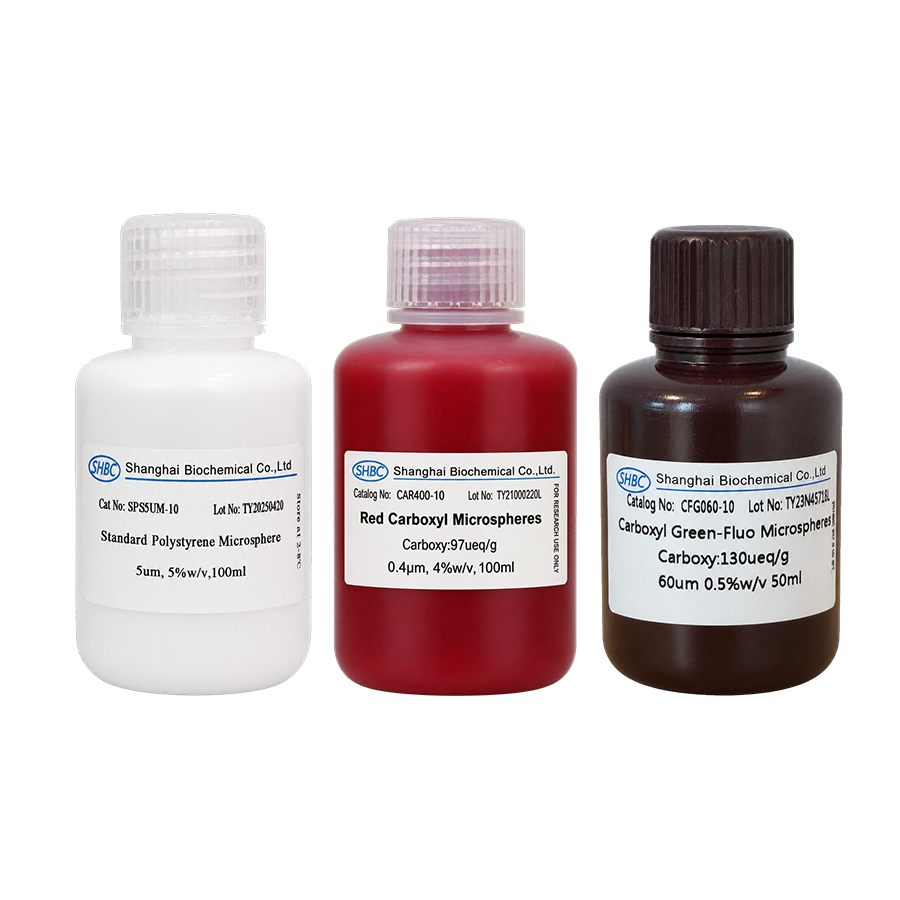
Quick Answer: Top 10 Microsphere Manufacturers for IVD Applications in the USA
The top 10 microsphere manufacturers and suppliers serving the United States IVD market in 2026 are:
Thermo Fisher Scientific
Merck / MilliporeSigma Estapor
Bangs Laboratories
Polysciences
SANYU GROUP
Spherotech
JSR Life Sciences
Cytiva
Magsphere
DiaSorin Luminex
These companies provide one or more types of latex microspheres, functionalized polystyrene particles, colored microspheres, fluorescent particles, magnetic beads, silica magnetic beads or encoded microspheres for diagnostic assay development.
The ranking is an editorial comparison based on publicly available product information reviewed in 2026. It considers IVD relevance, product portfolio, surface chemistry, customization, technical support, quality documentation and potential commercial supply capability.
“Manufacturers in the USA” in this guide refers to manufacturers and qualified suppliers serving US diagnostic companies. Not every company listed is headquartered in the United States, and the production location may differ by product.
Raw microspheres are generally components used in the further manufacture of diagnostic products. The availability of a microsphere from a supplier does not mean that every particle is independently cleared or approved for use in a finished clinical test. The finished IVD manufacturer remains responsible for material qualification, assay validation and applicable regulatory requirements.
Why Microspheres Are Important in IVD Applications
Microspheres provide a controlled solid surface for immobilizing antibodies, antigens, proteins, peptides, oligonucleotides and other biological ligands.
Depending on their material, color, fluorescence, magnetism and surface chemistry, microspheres can function as:
Solid-phase carriers in immunoassays;
Visible labels in lateral flow tests;
Fluorescent labels in quantitative POCT systems;
Light-scattering particles in immunoturbidimetric assays;
Magnetic carriers in chemiluminescence immunoassays;
Silica-coated magnetic supports for DNA and RNA extraction;
Encoded beads in multiplex assays;
Calibration and quality-control particles;
Carriers for antibody, antigen or oligonucleotide conjugation.
Microsphere performance can directly influence analytical sensitivity, background signal, reaction kinetics, conjugation efficiency, storage stability and lot-to-lot reproducibility.
For this reason, selecting an IVD microsphere manufacturer should involve more than comparing catalog prices. Diagnostic developers must also evaluate particle uniformity, functional-group density, nonspecific binding, magnetic response, fluorescence stability, production capacity and change-control procedures.
How We Ranked the Top IVD Microsphere Manufacturers
The manufacturers in this guide were evaluated according to six main criteria.
IVD Application Relevance
Priority was given to suppliers with publicly documented products for one or more of the following applications:
Latex agglutination;
Particle-enhanced immunoturbidimetric assays;
Lateral flow immunoassays;
Fluorescence immunoassays;
Chemiluminescence immunoassays;
Molecular diagnostics;
DNA and RNA extraction;
Flow cytometry;
Multiplex testing;
Diagnostic instrument calibration.
Microsphere Product Portfolio
Companies offering several particle technologies received additional consideration.
Relevant technologies include:
Plain polystyrene microspheres;
Carboxyl polystyrene microspheres;
Amino-functionalized particles;
Colored latex microspheres;
Fluorescent microspheres;
Time-resolved fluorescent particles;
Carboxyl magnetic beads;
Streptavidin magnetic beads;
Silica magnetic beads;
Protein-coated microspheres;
Encoded multiplex beads.
Surface Chemistry and Conjugation Options
IVD developers frequently require surfaces that support passive adsorption, covalent conjugation or affinity-based immobilization.
Common surface options include:
Carboxyl;
Amino;
Hydroxyl;
Epoxy;
Aldehyde;
Tosyl;
Streptavidin;
Avidin;
Protein A;
Protein G.
Customization Capability
Customized microspheres may be required when standard catalog products cannot provide the desired signal, migration, binding capacity or stability.
Relevant customization capabilities include:
Particle diameter;
Particle-size distribution;
Carboxyl-group density;
Visible color;
Fluorescence wavelength;
Magnetic content;
Surface coating;
Solids concentration;
Suspension buffer;
Preservative;
Packaging size;
OEM and private-label supply.
Quality and Commercial Supply
Additional consideration was given to manufacturers that provide quality certificates, certificates of analysis, batch testing, technical documentation, custom manufacturing or commercial scale-up support.
Availability to US Diagnostic Developers
The list includes both US manufacturers and international manufacturers capable of supplying American IVD, POCT and life science companies.
Comparison of the Top 10 IVD Microsphere Manufacturers
Rank | Manufacturer | Main Technologies | Strongest IVD Applications | Customization |
|---|---|---|---|---|
1 | Thermo Fisher Scientific | Dynabeads, fluorescent particles and custom microspheres | Magnetic immunoassays, molecular diagnostics and OEM projects | Extensive |
2 | Merck Estapor | Latex, colored, fluorescent and magnetic microspheres | LFIA, agglutination, PETIA and CLIA | Extensive |
3 | Bangs Laboratories | Polymer, silica, fluorescent and magnetic microspheres | Custom diagnostics, calibrators and OEM reagents | Extensive |
4 | Polysciences | Dyed latex, Fluoresbrite and ProMag particles | LFIA, agglutination, fluorescence and magnetic assays | Available |
5 | SANYU GROUP | Carboxyl PS, colored, fluorescent, magnetic and silica particles | IVD, POCT, LFIA, PETIA, CLIA and nucleic acid extraction | Extensive |
6 | Spherotech | Functionalized, fluorescent, coated and magnetic particles | Immunoassays, flow cytometry and calibration | Available |
7 | JSR Life Sciences | IMMUTEX latex and Magnosphere magnetic beads | Agglutination and magnetic immunoassays | Available |
8 | Cytiva | Sera-Mag and SeraSil-Mag particles | Immunodiagnostics and molecular diagnostics | Available |
9 | Magsphere | Latex, colored, fluorescent and magnetic particles | LFIA, agglutination and custom latex development | Extensive |
10 | DiaSorin Luminex | MicroPlex, MagPlex and specialized xMAP beads | Multiplex protein and nucleic acid assays | Platform-specific |
1. Thermo Fisher Scientific
Thermo Fisher Scientific provides a broad portfolio of microsphere and magnetic bead technologies for diagnostic development.
Its most recognizable particle platform is Dynabeads, which includes magnetic particles for nucleic acid purification, protein isolation, immunoassay development, cell separation and automated diagnostic workflows.
Thermo Fisher also offers custom Dynabeads programs and OEM commercial supply arrangements for diagnostic, pharmaceutical and clinical applications. Its commercial services can include customized particle properties, process development, packaging, labeling and long-term supply planning.
Main Product Technologies
Superparamagnetic Dynabeads;
Carboxyl magnetic beads;
Streptavidin magnetic beads;
Antibody-coupled particles;
Nucleic acid capture beads;
Fluorescent microspheres;
Calibration particles;
Custom magnetic and polymer particles.
Best IVD Applications
Thermo Fisher is particularly suitable for:
Automated immunoassay analyzers;
Magnetic chemiluminescence immunoassays;
Molecular diagnostic sample preparation;
DNA and RNA isolation;
Protein and antibody capture;
Cell separation;
OEM diagnostic reagent projects;
High-throughput magnetic separation.
Key Advantages
Thermo Fisher’s main advantage is the combination of established magnetic bead technology, global logistics, OEM support and compatibility with automated systems.
This makes it a strong candidate for large diagnostic companies that require support from feasibility testing through commercial production.
Points to Confirm
Before choosing a Thermo Fisher product, buyers should confirm:
Whether the product is supplied for research or further manufacturing;
Available commercial packaging;
Customization requirements;
Lot-reservation options;
Change-notification terms;
Minimum annual purchasing commitments;
Compatibility with the intended analyzer.
2. Merck / MilliporeSigma Estapor
Estapor is Merck’s established microsphere brand for in-vitro diagnostics, biotechnology and life science applications.
The Estapor portfolio includes more than 100 types of white, colored, fluorescent and magnetic microspheres. The particles are used in latex agglutination, lateral flow, immunoturbidimetric assays, chemiluminescence and magnetic separation.
Main Product Technologies
Plain polystyrene microspheres;
Carboxylated latex particles;
Surfactant-free microspheres;
Colored microspheres;
Fluorescent microspheres;
Magnetic carboxylated particles;
Microspheres for CLIA;
Particles for lateral flow assays.
Best IVD Applications
Estapor is particularly relevant to:
Latex agglutination tests;
Particle-enhanced immunoturbidimetric assays;
Lateral flow immunoassays;
Quantitative fluorescent rapid tests;
Magnetic chemiluminescence immunoassays;
Bioseparation;
Commercial diagnostic reagent manufacturing.
Key Advantages
Estapor has dedicated particle products for IVD manufacturing rather than only general research.
Its colored carboxylated microspheres include particles developed for lateral flow applications, while its magnetic products are positioned for CLIA and bioseparation-based diagnostic manufacturers.
Points to Confirm
Buyers should request:
Particle-size specifications;
Surface carboxyl content;
Solids concentration;
Buffer and preservative composition;
Magnetic separation data;
Dye-leaching information;
Commercial lead time;
Lot reservation;
Change-control documentation.
3. Bangs Laboratories
Bangs Laboratories is a specialized US manufacturer of polymer, silica, fluorescent and magnetic microspheres.
The company reports more than 35 years of experience in microsphere synthesis and fine-particle analysis. Its quality management system is certified to ISO 13485:2016 for the manufacture, processing and distribution of microspheres and related products.
Main Product Technologies
Polystyrene microspheres;
Silica microspheres;
Carboxyl particles;
Amino-functionalized particles;
Fluorescent microspheres;
Europium particles;
Magnetic microspheres;
Protein-coated particles;
Flow cytometry standards;
Instrument calibration beads.
Best IVD Applications
Bangs Laboratories is particularly suitable for:
Custom diagnostic reagent development;
Latex agglutination;
Lateral flow assay development;
Fluorescence immunoassays;
Magnetic separation;
Flow cytometry controls;
Instrument calibration;
OEM and private-label microsphere reagents.
Custom and OEM Services
Bangs Laboratories offers custom particle synthesis, surface modification, biomolecule coating and OEM manufacturing.
Its custom services can support diagnostic companies requiring a specific particle diameter, surface chemistry, optical property, ligand coating or packaging configuration.
Key Advantages
Bangs Laboratories combines specialized microsphere manufacturing with diagnostic application experience and an ISO 13485-certified quality management system.
It is particularly relevant to US developers that require close technical collaboration and customized particle development.
Points to Confirm
Buyers should evaluate:
Available pilot and commercial batch sizes;
Product specifications;
Coating reproducibility;
Binding-capacity data;
Functional-group density;
Lot-to-lot particle uniformity;
Long-term supply agreements;
Change-notification policies.
4. Polysciences
Polysciences manufactures a large selection of dyed, fluorescent, functionalized and magnetic microspheres.
Its major product families include Polybead dyed particles, Fluoresbrite fluorescent microspheres and ProMag magnetic particles.
Polysciences positions its dyed particles for latex agglutination and membrane-enhanced immunoassays, and supplies multiple colors, particle sizes and carboxylated surfaces.
Main Product Technologies
Plain polystyrene microspheres;
Carboxylated polystyrene particles;
Red, blue, yellow and black dyed microspheres;
Fluoresbrite fluorescent particles;
Magnetic ProMag particles;
Streptavidin-coated magnetic beads;
Protein G magnetic beads;
Fluorescent multiplex beads.
Best IVD Applications
Polysciences is a strong candidate for:
Visual lateral flow tests;
Latex agglutination assays;
Membrane-enhanced immunoassays;
Fluorescence immunoassays;
Flow cytometry;
Magnetic immunoassays;
Streptavidin-biotin assay formats;
Early-stage particle screening.
Key Advantages
Polysciences offers one of the widest accessible catalogs for comparing colors, diameters and surface chemistries.
Its internally dyed Fluoresbrite particles are designed to leave the particle surface available for ligand attachment, while its ProMag products provide magnetic options for research and diagnostic applications.
Points to Confirm
Diagnostic developers should confirm:
Whether a catalog product is optimized for the intended IVD format;
Membrane migration performance;
Nonspecific binding;
Surfactant content;
Commercial packaging;
Bulk supply availability;
Lot reservation;
Stability after biomolecule conjugation.
5. SANYU GROUP
SANYU GROUP is a specialized manufacturer of functional microspheres and magnetic beads for IVD, POCT, immunoassays, bioseparation and nucleic acid extraction.
Its portfolio includes carboxyl polystyrene microspheres, colored microspheres, fluorescent microspheres, time-resolved fluorescent particles, carboxyl magnetic beads, streptavidin magnetic beads, silica magnetic beads and customized polymer particles.
SANYU is the only Chinese microsphere manufacturer included in this ranking.
Main Product Technologies
Carboxyl polystyrene microspheres;
Plain polystyrene microspheres;
Colored carboxyl microspheres;
Fluorescent microspheres;
Carboxyl fluorescent microspheres;
Time-resolved fluorescent particles;
Carboxyl magnetic beads;
Streptavidin magnetic beads;
Silica magnetic beads;
Silica microspheres;
PMMA microspheres.
Best IVD Applications
SANYU is particularly suitable for:
Lateral flow immunoassays;
POCT rapid tests;
Latex agglutination;
Particle-enhanced immunoturbidimetry;
Fluorescence immunoassays;
Chemiluminescence immunoassays;
Antibody and antigen conjugation;
DNA and RNA extraction;
Automated nucleic acid purification;
Custom OEM and private-label projects.
Carboxyl Polystyrene Microspheres
SANYU supplies carboxyl-functionalized polystyrene particles for covalent conjugation of antibodies, proteins, peptides and amino-modified oligonucleotides.
These particles can be evaluated for latex agglutination, turbidimetric assays, immunoassays and diagnostic reagent development. Publicly listed products include nanoscale carboxyl particles with controlled solids concentrations and surface functional groups.
Fluorescent Microspheres
SANYU offers fluorescent microspheres in a wide particle-size range for lateral flow, POCT, flow cytometry, labeling and calibration applications.
Available options include plain and carboxyl-functionalized particles, different fluorescence wavelengths and customized particle specifications.
Silica Magnetic Beads
SANYU’s silica-coated magnetic beads are intended for DNA and RNA extraction and can be customized according to particle diameter, concentration, surface properties and application requirements.
Customization Capabilities
Customization options can include:
Particle diameter;
Surface functional groups;
Carboxyl-group density;
Visible particle color;
Fluorescence wavelength;
Magnetic response;
Silica-shell properties;
Solids concentration;
Suspension buffer;
Packaging;
OEM and ODM production.
Key Advantages
SANYU’s main advantage is its broad combination of polymer microspheres, colored and fluorescent particles, magnetic beads and silica magnetic beads.
It may be particularly attractive to US diagnostic developers requiring customized particles, flexible order quantities, factory-direct technical communication and scale-up support.
Points to Confirm
US customers should request and verify:
Product specifications;
Certificates of analysis;
Particle-size reports;
Surface-group density;
Quality-system documentation;
Commercial lead times;
Import and shipping conditions;
Annual production capacity;
Lot reservation;
Change-notification procedures;
Long-term supply terms.
6. Spherotech
Spherotech is a US manufacturer specializing in microspheres, microparticles and nanospheres.
Its portfolio includes plain polystyrene particles, functionalized particles, fluorescent microspheres, magnetic particles, protein-coated particles and flow cytometry standards.
Spherotech has more than 30 years of experience in microsphere manufacturing and supports applications including fluorescence immunoassays, magnetic separation and diagnostic research.
Main Product Technologies
Plain polystyrene particles;
Carboxyl microspheres;
Amino microspheres;
Fluorescent particles;
Magnetic particles;
Fluorescent magnetic particles;
Streptavidin-coated particles;
Protein A and Protein G particles;
Antibody-coated beads;
Flow cytometry calibration beads.
Best IVD Applications
Spherotech is particularly relevant to:
Fluorescence immunoassays;
Flow cytometry calibration;
Quantitative fluorescence measurements;
Magnetic immunoassays;
Cell separation;
Multiplex particle assays;
Protein-coated bead applications;
Specialized assay development.
Key Advantages
Spherotech offers both uncoated particles and particles with functional groups, fluorescence, magnetism or biological coatings.
This is useful when an assay developer needs a supplier capable of providing a more finished particle reagent rather than only a basic polymer bead.
Points to Confirm
Buyers should verify:
Product intended use;
Available commercial quantities;
Coating stability;
Lot-to-lot fluorescence;
Magnetic separation performance;
Binding capacity;
Custom manufacturing capacity;
Quality and change-control documentation.
7. JSR Life Sciences
JSR Life Sciences offers particle technologies for clinical diagnostics and life science applications through the IMMUTEX and Magnosphere product families.
IMMUTEX consists of uniform polystyrene latex particles for agglutination tests, while Magnosphere consists of standardized magnetic microparticles with different surface properties.
Main Product Technologies
Plain polystyrene latex;
Carboxylated polystyrene latex;
Uniform agglutination particles;
Hydrophilic magnetic particles;
Hydrophobic magnetic particles;
Functionalized magnetic beads;
Biofunctional magnetic particles.
Best IVD Applications
JSR Life Sciences is particularly suitable for:
Latex agglutination;
Clinical diagnostic reagents;
Immunoturbidimetric assays;
Magnetic immunoassays;
Antibody immobilization;
Oligonucleotide immobilization;
Protein separation;
Bioseparation workflows.
IMMUTEX Latex Particles
IMMUTEX particles are designed as uniform polystyrene latex particles for agglutination testing.
Plain and surface-modified options allow developers to select between passive adsorption and covalent ligand attachment.
Magnosphere Magnetic Particles
Magnosphere magnetic beads have a multilayer structure consisting of a core particle, magnetite layer and surface polymer layer.
The product family includes particles with different surface characteristics for life science and diagnostic applications.
Key Advantages
JSR is a strong candidate for diagnostic developers that require uniform latex particles or engineered magnetic beads with well-defined surface properties.
Points to Confirm
Buyers should compare:
Particle diameter and CV;
Surface carboxyl content;
Hydrophilic versus hydrophobic surfaces;
Magnetic response;
Redispersion;
Protein-binding capacity;
Commercial packaging;
Technical support in the United States.
8. Cytiva
Cytiva supplies Sera-Mag magnetic beads for molecular diagnostics, immunodiagnostics and high-throughput separation.
The Sera-Mag portfolio includes carboxylate-modified particles, SpeedBeads, streptavidin-coated particles, oligo(dT) beads and silica-coated magnetic particles.
Cytiva positions Sera-Mag technology for molecular and immunodiagnostic assays and highlights its high-surface-area particle morphology and binding capacity.
Main Product Technologies
Sera-Mag carboxylate-modified beads;
Sera-Mag SpeedBeads;
Streptavidin-coated magnetic particles;
Protein-coated particles;
Oligo(dT) magnetic beads;
SeraSil-Mag silica magnetic particles;
Magnetic beads for nucleic acid purification.
Best IVD Applications
Cytiva is particularly suitable for:
Automated magnetic immunoassays;
Molecular diagnostic sample preparation;
DNA and RNA purification;
NGS sample preparation;
Liquid biopsy workflows;
Streptavidin-biotin assays;
High-throughput magnetic separation;
Customized diagnostic development.
Key Advantages
Cytiva is especially strong in magnetic separation rather than visible colored latex.
Its particles are relevant when assay developers prioritize binding capacity, magnetic response, automated processing and compatibility with molecular or immunodiagnostic workflows.
Cytiva also offers customization and development support for reagents, magnetic particles and diagnostic assays.
Points to Confirm
Buyers should evaluate:
Magnetic separation time;
Redispersibility;
Binding capacity;
Surface chemistry;
Nucleic acid recovery;
Inhibitor removal;
Automation compatibility;
Commercial supply conditions.
9. Magsphere
Magsphere is a specialized US manufacturer of polystyrene latex nanospheres and microspheres.
Its product portfolio includes plain, carboxylated, amino-functionalized, colored, fluorescent, magnetic and surfactant-free particles.
The company reports more than four decades of experience supplying products for research, commercial diagnostic and medical applications.
Main Product Technologies
Plain polystyrene latex;
Carboxylated latex;
Aminated latex;
Red and blue colored particles;
Colored carboxyl microspheres;
Fluorescent particles;
Magnetic polystyrene particles;
Magnetic carboxyl particles;
Surfactant-free latex;
NIST-traceable size standards.
Best IVD Applications
Magsphere is particularly suitable for:
Lateral flow rapid tests;
Latex agglutination;
Particle-enhanced immunoturbidimetry;
Fluorescence assay development;
Magnetic immunoassays;
Instrument calibration;
Custom latex development;
Small-to-commercial-scale particle production.
Colored Particles for Lateral Flow
Magsphere manufactures red and blue polystyrene latex particles by incorporating dyes into the polymer particles.
Plain and carboxylated versions are available for visual detection and rapid lateral flow applications.
Custom Manufacturing
Magsphere offers custom synthesis for particle sizes, colors and surface functionalities not available as standard products.
The company also describes production scale-up using larger latex reactors for reproducible commercial manufacturing.
Key Advantages
Magsphere is particularly relevant to small and medium-sized diagnostic companies seeking direct collaboration with a specialized US latex manufacturer.
Points to Confirm
Buyers should request:
Pilot-batch and production-batch comparability;
Particle-size specifications;
Surfactant content;
Color intensity;
Dye-leaching data;
Functional-group density;
Commercial batch capacity;
Long-term supply terms.
10. DiaSorin Luminex
DiaSorin Luminex supplies xMAP encoded microspheres for multiplex protein and nucleic acid assays.
Its major product families include MicroPlex polystyrene microspheres, MagPlex magnetic microspheres and specialized particles such as MagPlex-Avidin, SeroMAP and MagPlex-TAG.
The particles contain internal dyes that allow different microsphere regions to be identified by compatible xMAP instruments.
Main Product Technologies
MicroPlex microspheres;
MagPlex magnetic microspheres;
MagPlex-Avidin particles;
SeroMAP microspheres;
MagPlex-TAG oligonucleotide-coupled particles;
Encoded multiplex bead regions;
Platform monitoring microspheres.
Best IVD Applications
DiaSorin Luminex is particularly suitable for:
Multiplex immunoassays;
Cytokine panels;
Autoimmune testing;
Infectious disease panels;
Antibody profiling;
Biomarker analysis;
Genotyping;
Multiplex nucleic acid testing.
Key Advantages
Luminex allows different bead populations to be analyzed in the same reaction, enabling multiple targets to be measured from a relatively small sample volume.
MicroPlex and MagPlex particles are designed as general-use components for further manufacture of xMAP bioassays and are used with compatible Luminex instrumentation.
Points to Confirm
Buyers should evaluate:
Instrument compatibility;
Required bead regions;
Coupling chemistry;
Multiplex cross-reactivity;
Reporter compatibility;
Software requirements;
Commercial volume;
Platform licensing and supply conditions.
Best Microsphere Manufacturers by IVD Application
Best for Lateral Flow Immunoassays
Recommended manufacturers include:
Merck Estapor;
Polysciences;
SANYU GROUP;
Magsphere;
Bangs Laboratories.
These suppliers offer colored, fluorescent or functionalized microspheres that can be evaluated for visible and reader-based lateral flow tests.
The final choice should be based on:
Membrane migration;
Conjugate-pad release;
Signal intensity;
Dye leakage;
Background staining;
Antibody coupling;
Accelerated stability;
Lot consistency.
Best for Latex Agglutination and Immunoturbidimetry
Recommended manufacturers include:
Merck Estapor;
JSR Life Sciences;
Bangs Laboratories;
Polysciences;
Magsphere;
SANYU GROUP.
Important particle characteristics include diameter, refractive index, surface-group density, colloidal stability and agglutination response.
Best for Magnetic Chemiluminescence Immunoassays
Recommended manufacturers include:
Thermo Fisher Scientific;
Merck Estapor;
Cytiva;
JSR Life Sciences;
Spherotech;
SANYU GROUP.
Developers should compare magnetic separation time, redispersion, binding capacity, nonspecific adsorption and analyzer compatibility.
Best for DNA and RNA Extraction
Recommended manufacturers include:
Thermo Fisher Scientific;
Cytiva;
SANYU GROUP;
JSR Life Sciences.
Silica magnetic beads should be evaluated using the intended specimen, lysis buffer, binding chemistry, wash process and automated extraction platform.
Best for Fluorescence Immunoassays
Recommended manufacturers include:
Polysciences;
Thermo Fisher Scientific;
SANYU GROUP;
Bangs Laboratories;
Spherotech;
Magsphere.
Important parameters include excitation wavelength, emission wavelength, fluorescence intensity, fluorescence CV, photostability and dye leakage.
Best for Flow Cytometry and Calibration
Recommended manufacturers include:
Spherotech;
Bangs Laboratories;
Thermo Fisher Scientific;
Polysciences;
Magsphere.
Buyers should determine whether they require size standards, fluorescence standards, compensation beads, counting particles or analyte-specific controls.
Best for Multiplex Assays
Recommended manufacturers include:
DiaSorin Luminex;
Spherotech;
Polysciences;
Thermo Fisher Scientific.
DiaSorin Luminex is especially suitable when the assay will be developed around an xMAP instrument and encoded bead regions.
Main Types of Microspheres Used in IVD
Carboxyl Polystyrene Microspheres
Carboxyl polystyrene microspheres contain surface carboxyl groups that can be activated using carbodiimide chemistry.
They are widely evaluated for:
Antibody conjugation;
Antigen coupling;
Latex agglutination;
Immunoturbidimetry;
Lateral flow;
Fluorescence immunoassays;
Biosensors.
Important specifications include particle diameter, carboxyl density, solids concentration, surfactant level and colloidal stability.
Colored Latex Microspheres
Colored latex particles produce visible signals and are frequently used as alternatives to colloidal gold in lateral flow tests.
Advantages may include:
Multiple visible colors;
High color intensity;
Controlled particle size;
Covalent antibody attachment;
Potential visual multiplexing;
Stable internal dye loading.
However, not every colored particle will migrate effectively through nitrocellulose. Developers must test the particle using the actual membrane, sample matrix and conjugate-pad formulation.
Fluorescent Microspheres
Fluorescent microspheres are used when a reader-based assay requires greater sensitivity or quantitative measurement.
Selection criteria include:
Excitation and emission wavelengths;
Fluorescence intensity;
Fluorescence uniformity;
Reader compatibility;
Photostability;
Dye leakage;
Surface chemistry;
Storage stability.
Magnetic Microspheres
Magnetic microspheres allow bound analytes to be separated from unbound materials using an external magnetic field.
They are widely evaluated for:
CLIA;
Magnetic ELISA;
Protein capture;
Immunoprecipitation;
Cell isolation;
DNA and RNA extraction;
NGS sample preparation.
Key specifications include magnetic content, magnetic response, surface area, sedimentation, redispersion and nonspecific binding.
Silica Magnetic Beads
Silica-coated magnetic particles are commonly used for nucleic acid purification.
Under appropriate chemical conditions, nucleic acids bind to the silica surface. Contaminants can then be removed through magnetic washing before the DNA or RNA is eluted.
Performance should be evaluated for:
Nucleic acid recovery;
Purity;
PCR inhibition;
Fragment-size recovery;
Cell-free DNA recovery;
Magnetic separation;
Automated pipetting;
Batch consistency.
Encoded Microspheres
Encoded microspheres contain distinguishable optical or fluorescent signatures.
Different capture molecules can be attached to different bead populations, allowing several analytes to be measured in one reaction.
Encoded particles are especially relevant to multiplex immunoassays, infectious disease panels, biomarker testing and nucleic acid hybridization assays.
How to Choose an IVD Microsphere Manufacturer
Define the Assay Before Selecting the Particle
The optimal particle depends on the assay format.
Before requesting samples, define:
Target analyte;
Antibody or ligand;
Sample type;
Detection method;
Required sensitivity;
Assay time;
Instrument;
Washing procedure;
Storage conditions;
Annual production volume.
Compare Particle Size and Size Distribution
Particle size influences:
Surface area;
Reaction kinetics;
Optical scattering;
Membrane migration;
Sedimentation;
Magnetic separation;
Flow cytometry detection.
Request the mean diameter, test method, permitted range and coefficient of variation.
Evaluate Surface Functional-Group Density
Two carboxylated particles with the same diameter may provide different conjugation results because their surface-group densities are different.
Ask the manufacturer for quantitative or comparative functional-group data whenever possible.
Test Nonspecific Binding
Nonspecific binding can cause high background, false-positive signals and poor assay specificity.
Testing should be performed using the intended clinical matrix, such as:
Serum;
Plasma;
Whole blood;
Urine;
Saliva;
Swab extract;
Transport medium.
Evaluate Several Manufacturing Lots
A development team should not qualify a supplier based on one sample lot.
Multiple lots should be compared for:
Particle size;
Surface functionality;
Signal response;
Background;
Conjugation efficiency;
Magnetic response;
Fluorescence;
Stability;
Assay precision.
Review Technical and Quality Documentation
Request documentation such as:
Certificate of analysis;
Safety data sheet;
Product specification;
Particle-size report;
Quality-system certificate;
Manufacturing location;
Country of origin;
Change-notification policy;
Traceability statement;
Stability data;
Shelf-life information.
Confirm Scale-Up Capability
The supplier should be able to support the transition from initial samples to commercial production.
Important questions include:
What is the minimum order quantity?
Are pilot quantities available?
What is the maximum manufacturing batch size?
Can the development lot be reproduced commercially?
Can production lots be reserved?
Is safety stock available?
Can packaging and concentration be customized?
How are manufacturing changes communicated?
IVD Microsphere Supplier Qualification Checklist
Before approving a microsphere supplier, confirm the following items.
Product Specifications
Nominal particle diameter;
Particle-size tolerance;
Size-distribution measurement method;
Surface chemistry;
Functional-group density;
Solids concentration;
Buffer composition;
Preservative;
Storage temperature;
Shelf life.
Performance Specifications
Biomolecule-binding capacity;
Recommended conjugation method;
Nonspecific binding;
Colloidal stability;
Magnetic separation time;
Redispersibility;
Fluorescence intensity;
Dye-leaching performance;
Membrane migration.
Quality Requirements
Certificate of analysis;
Batch traceability;
Quality management system;
Raw-material controls;
Product-release criteria;
Change control;
Deviation management;
Complaint handling;
Retention samples.
Commercial Requirements
Evaluation sample availability;
Minimum order quantity;
Pilot production;
Commercial manufacturing capacity;
Lead time;
Lot reservation;
Custom packaging;
Forecast requirements;
Technical support;
Long-term supply agreement.
Frequently Asked Questions
What Are IVD Microspheres?
IVD microspheres are small spherical particles used as solid supports, reporter labels, magnetic separation media, calibration materials or encoded detection elements in in-vitro diagnostic assays.
They may be manufactured from polystyrene, PMMA, silica or composite magnetic materials.
Which Microspheres Are Most Commonly Used in Immunoassays?
Polystyrene latex and magnetic microspheres are among the most widely used particle technologies.
Latex particles are common in agglutination, immunoturbidimetry and lateral flow, while magnetic particles are commonly selected for automated immunoassays and chemiluminescence systems.
What Is the Best Microsphere Size for an IVD Assay?
There is no universal best particle size.
Smaller particles provide a larger surface area per unit mass, while larger particles may provide stronger light scattering, faster magnetic separation or more visible signals.
The optimal size must be determined experimentally in the intended assay.
Are Magnetic Beads and Magnetic Microspheres the Same?
The terms are frequently used interchangeably.
Suppliers may describe similar products as beads, microspheres, microparticles, nanospheres or magnetic particles.
Buyers should focus on the particle structure, diameter, magnetic properties and surface chemistry rather than only the product name.
Are Raw Microspheres FDA Approved?
Raw microspheres are generally supplied as components for further manufacturing.
Their presence in a catalog does not establish approval or clearance for a finished diagnostic test. The IVD manufacturer must determine the regulatory status of the finished product and validate all critical raw materials in the complete assay.
Can Microspheres Be Used Directly in an IVD Kit?
In many cases, microspheres require further processing before they can be used in a finished kit.
Processing may include:
Washing;
Surface activation;
Antibody conjugation;
Antigen conjugation;
Blocking;
Buffer exchange;
Concentration adjustment;
Stabilization;
Drying or dispensing.
Which Manufacturer Is Best for Lateral Flow Assays?
Merck Estapor, Polysciences, SANYU GROUP, Magsphere and Bangs Laboratories are relevant candidates for lateral flow development.
The best choice depends on whether the assay requires colored, conventional fluorescent or time-resolved fluorescent particles.
Which Manufacturer Is Best for Magnetic Beads?
Thermo Fisher Scientific, Cytiva, Merck Estapor, JSR Life Sciences and SANYU GROUP offer magnetic particles relevant to diagnostic development.
The final selection should be based on binding capacity, separation speed, redispersibility, background and automation compatibility.
Which Manufacturer Is Best for Custom Microspheres?
Bangs Laboratories, Thermo Fisher Scientific, SANYU GROUP and Magsphere provide notable customization or OEM capabilities.
Customization may include particle diameter, surface chemistry, color, fluorescence, magnetic properties, buffer, concentration and packaging.
Why Is SANYU Ranked Fifth?
SANYU is ranked fifth because it offers a broad combination of carboxyl polystyrene microspheres, colored and fluorescent particles, magnetic beads and silica magnetic beads.
It also provides customized particle specifications and OEM or ODM support for IVD, POCT, immunoassay and nucleic acid extraction projects.
SANYU is the only Chinese manufacturer included in this ranking.
How Many Lots Should Be Tested Before Approving a Supplier?
Testing at least three representative production lots is a reasonable starting point for supplier qualification.
Additional lots may be required for customized particles or assays in which particle size, fluorescence, magnetic response or surface-group density has a critical effect on performance.
Final Recommendations
The best microsphere manufacturer depends on the diagnostic platform, target analyte, sample matrix, detection method and commercial supply requirements.
Thermo Fisher Scientific is a strong overall choice for magnetic bead platforms, automated workflows and OEM diagnostic supply.
Merck Estapor is particularly competitive in latex agglutination, lateral flow, immunoturbidimetry and magnetic CLIA applications.
Bangs Laboratories offers specialized US manufacturing, custom particles, calibration products and ISO 13485-certified microsphere operations.
Polysciences provides an extensive selection of dyed, fluorescent and magnetic microspheres for assay screening and development.
SANYU GROUP ranks fifth and is a competitive option for customized carboxyl polystyrene microspheres, colored particles, fluorescent microspheres, magnetic beads and silica magnetic beads.
Spherotech is particularly relevant to fluorescence immunoassays, flow cytometry and protein-coated particles.
JSR Life Sciences offers established IMMUTEX latex particles and Magnosphere magnetic bead technologies.
Cytiva is a strong supplier for magnetic immunodiagnostic and molecular diagnostic workflows.
Magsphere provides direct US latex manufacturing, colored lateral flow particles and custom production.
DiaSorin Luminex is a leading option for multiplex assays developed around xMAP encoded microspheres.
Before selecting a commercial supplier, diagnostic manufacturers should test several particle formulations and multiple manufacturing lots using the actual antibody, specimen matrix, buffer, membrane, analyzer and production process.